The best of times

8 March, 2015            The best of times

“It was the best of times,

it was the worst of times…” – Charles Dickens, A Tale of Two Cities (1859)

Or from a less (to some) classic piece of literature:

“…We’ll take the best, forget the rest

And someday we’ll find these are the best of times

These are the best of times…” – Styx, The Best of Times, (1981) 

I’m a snow lover so I’ve enjoyed this winter. I’m not a pollen lover but I am a flower fanatic – and they come together. I’m not a humidity lover but I love warm, late summer evenings – and they come together. I don’t love when the days get shorter but I love the first cool days of autumn and the first fires in my woodstove – and they come together. So I “take the best, forget the rest” when I’m able. And the snow’s been great. I suspect it may be gone until November or December (or later) but we’re not out of the woods (in a manner of speaking) until I believe early April. Looks like a pretty week ahead though.

Tuesday (3/3) at the river I was surprised to look up and see this handsome fellow sitting on a branch hanging over the water. The Osprey (Pandion haliaetus ) looks great – his lunch, not so much: 
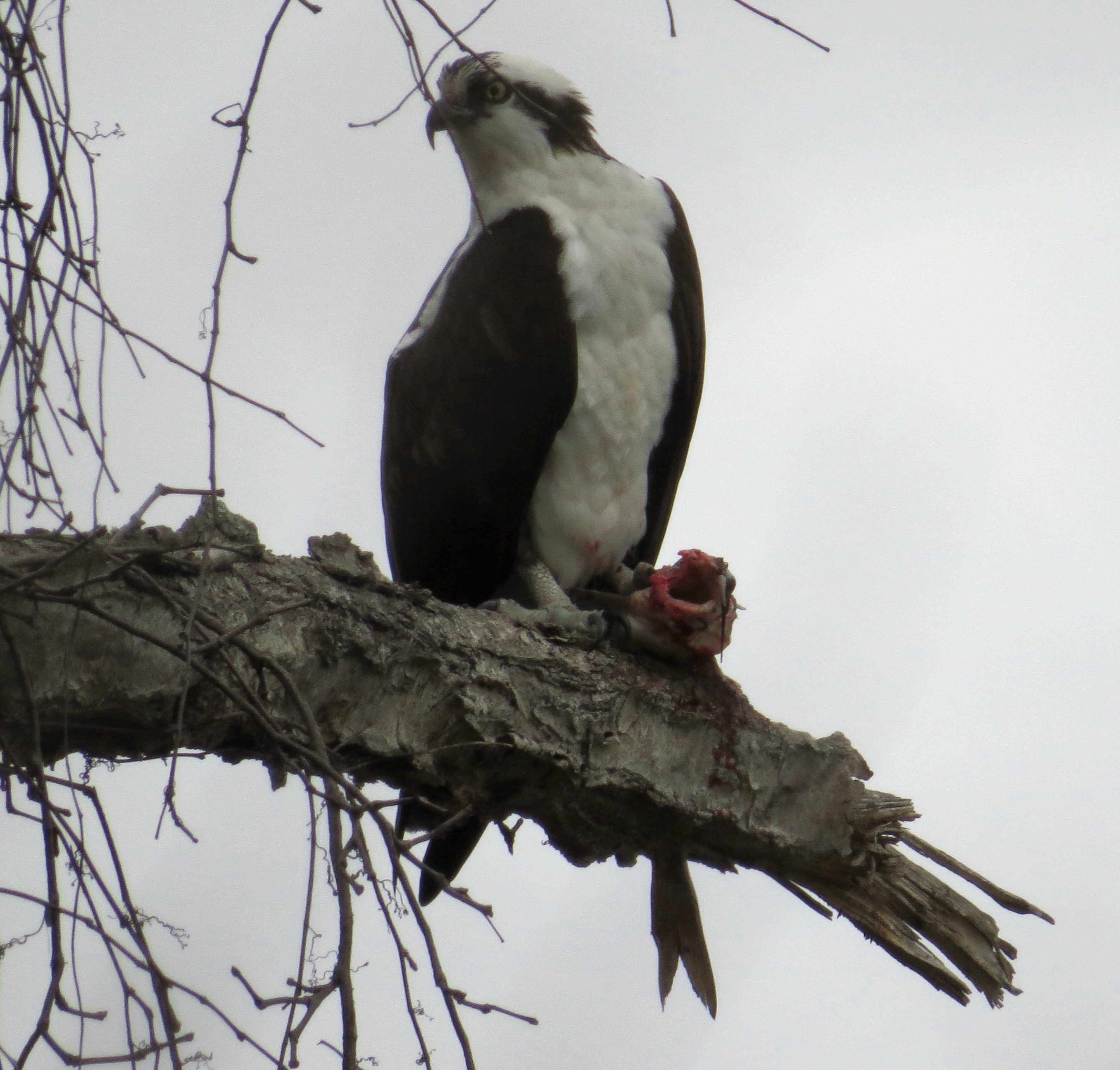
Late afternoon dining:

Late afternoon dining:

I believe this is a male osprey because the Cornell Lab of Ornithology says “Females usually show dark necklace across white breast.” And this guy has no dark necklace. Here’s another picture. If you look closely on the left you can see the hapless fish’s tail hanging down over the branch. This was not a small fish: 
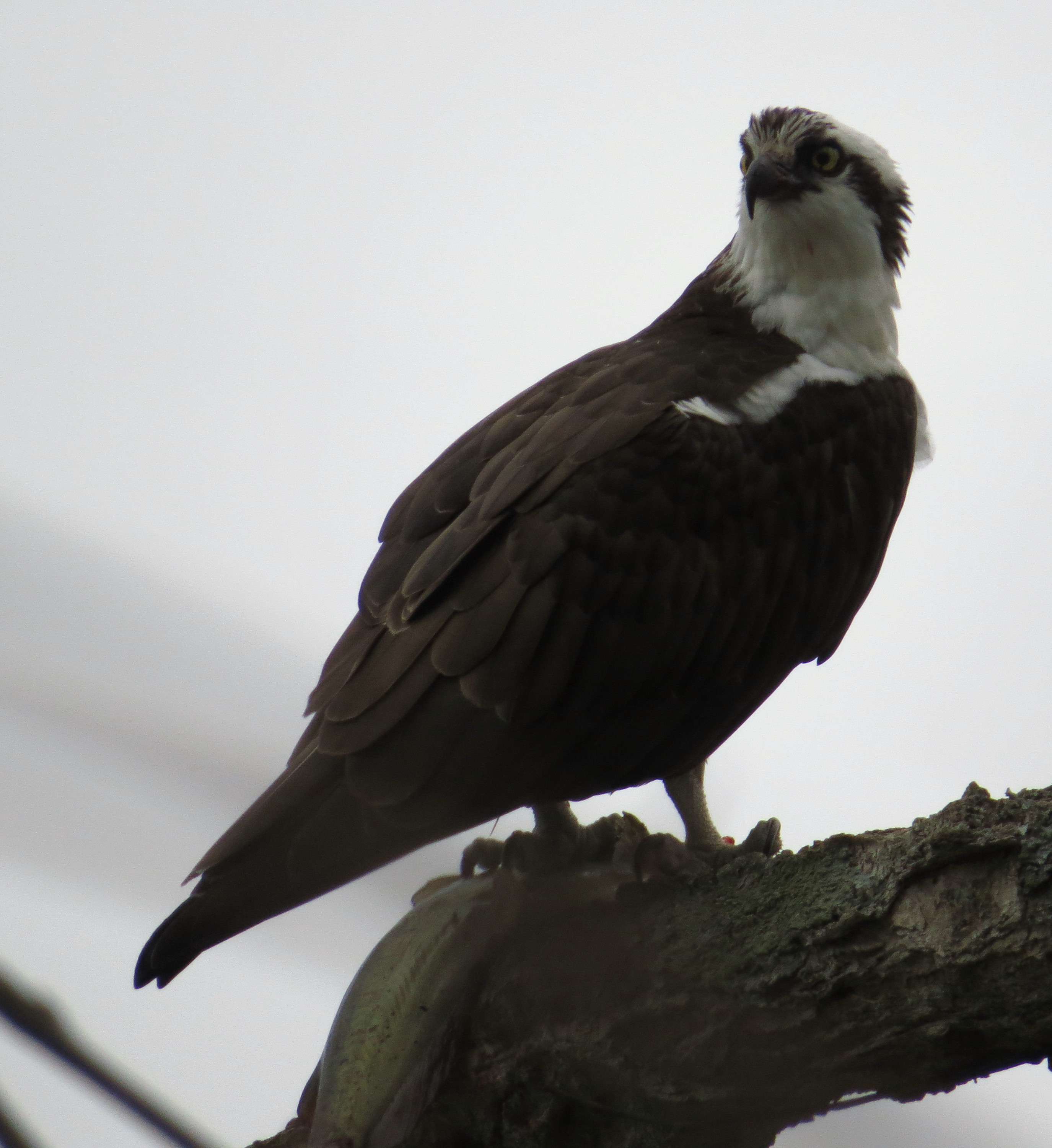
See the fish's tail hanging down to the left?

See the fish’s tail hanging down to the left?

I had a surprising lesson while I watched him. He must have sat there for fifteen minutes while I snapped away, changing angles for better light, etc. I was amazed how patient he was. We weren’t twelve feet away. I looked up as he finally flew off. Much to my dismay my camera wasn’t pointed his way. Anyway, to my amazement, a crow swooped in and landed on the branch to gobble up leftover chunks of catfish. The branch had not stopped swaying from the Osprey’s departure – the crow landed probably two seconds later. Or less. Amazingly – I hadn’t known there was a crow in the area. But it had obviously been watching the osprey. 

Crows go after owls and hawks because owls and hawks raid crow nests and eat their eggs and young. You can always tell when there’s a hawk or a crow in sight in PP – the crows “mob” it. The crows just go berserk – one hundred percent of the time. But this crow was invisible (to me) near the osprey.

Further research revealed (to me; you may have known this) that ospreys eat one thing: fish. Hawks and owls and ospreys are all raptors so I assumed (oops) that crows would go after ospreys just as they do the other two. But at least in this case, they left it alone.  

I discovered some other fascinating (again, to me – ymmv) information about ospreys when I began my research following this photograph. Ospreys catch fish that weigh as much as 50% of their own body weight. And they have to lift them out of the water. Flying. Think about something that weighs half as much as you do. And picking it up out of the water and jumping up. Unbelievable. Anyway, their wings are specially shaped and adapted for just that task. I never cease to be amazed at the way evolution fills niches.

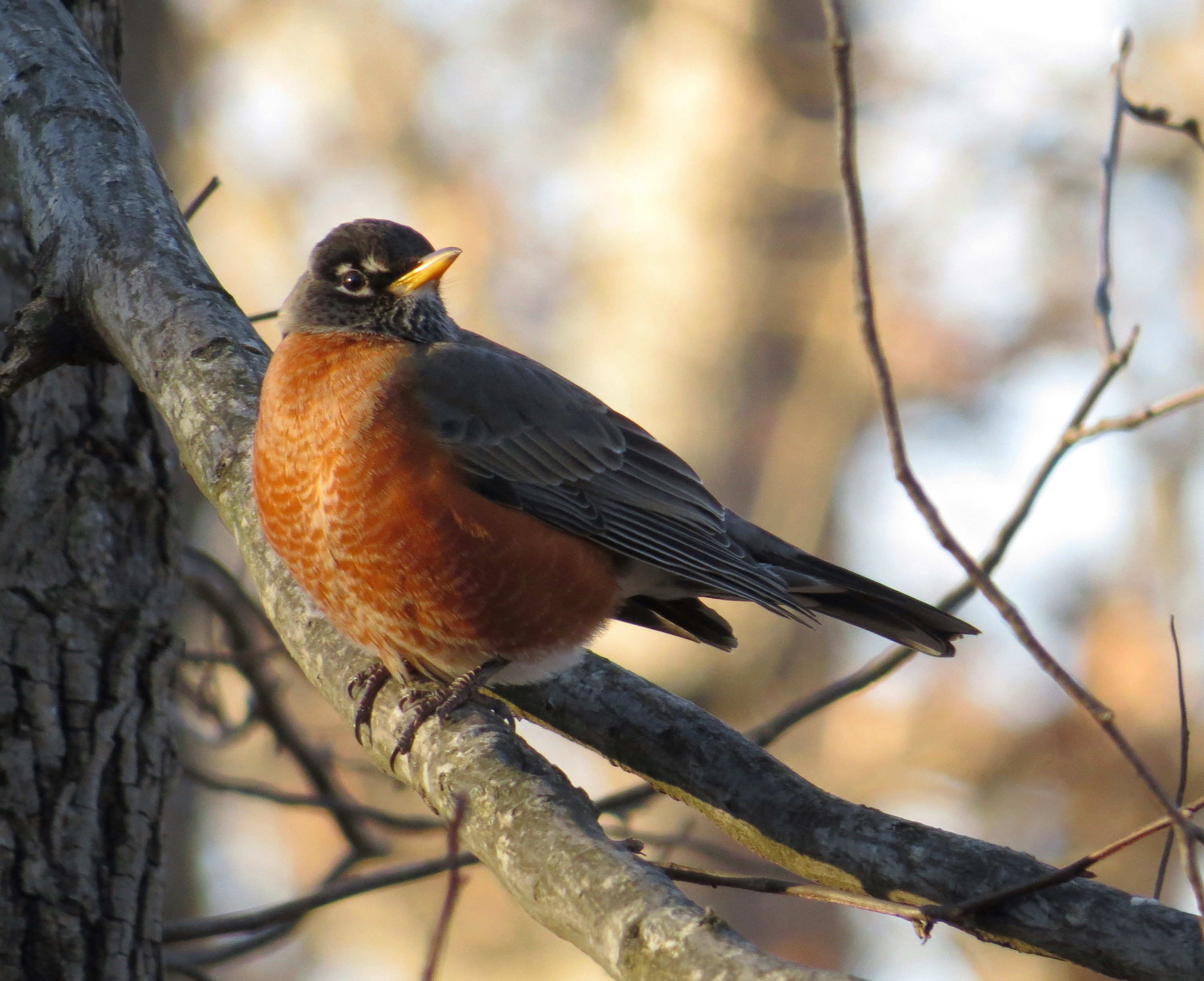
Here’s a different evolutionary niche. This focus is a bit off, which I apologize for and am irritated by, but what can I say. This is the ultimate in slacker photography. I came home from work the other day and I had my camera in my car. There was a flock of robins in the snow in my front yard. I’m sitting on my heated seats, with the car heater on, listening to NPR, I lower my power windows, point the camera out and voila. Slacker photography extraordinaire:
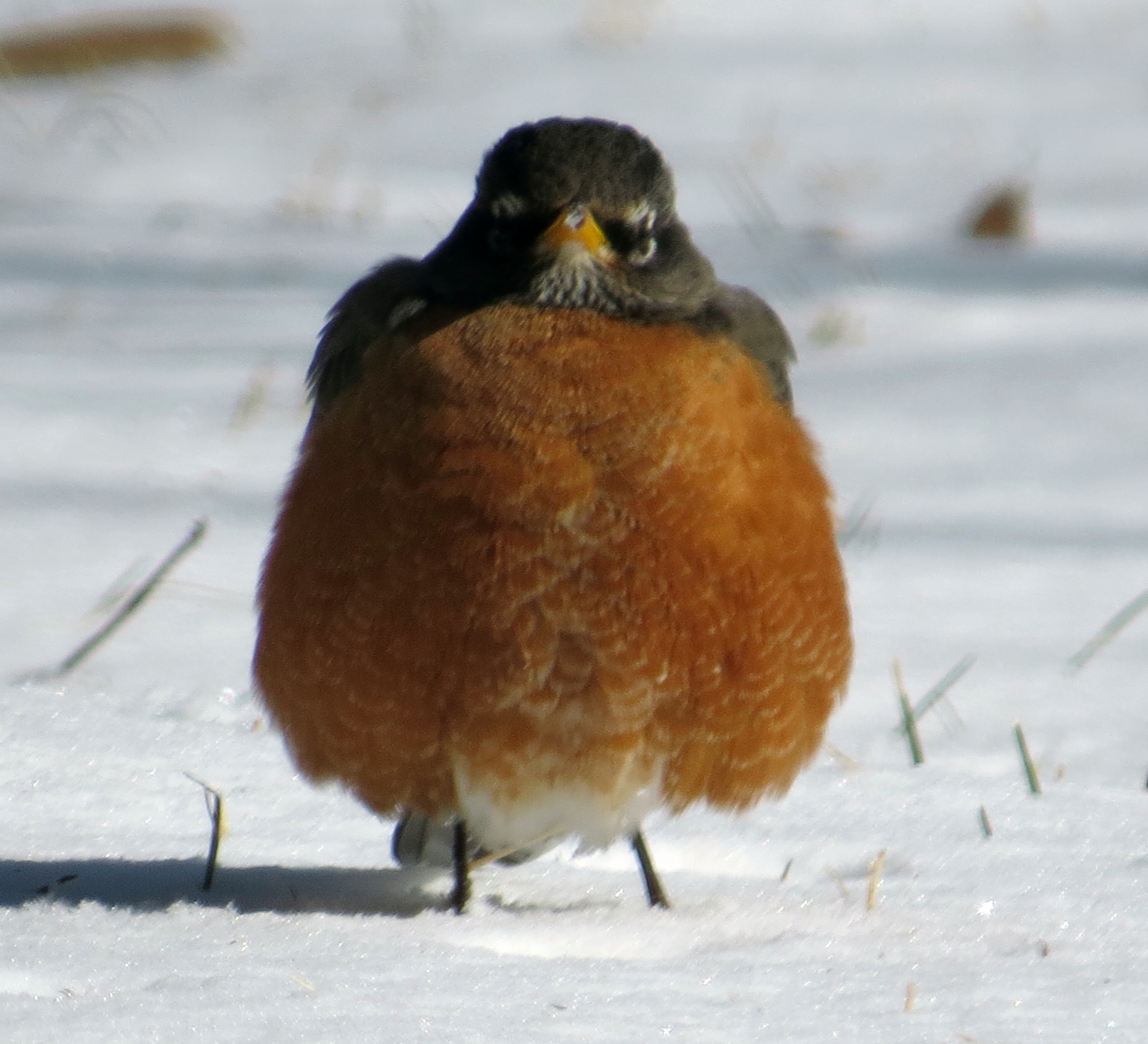
It looks fat. But I believe it just had its feathers puffed out to keep warm. Spring is almost here, but not almost enough to keep warm in the snow.

It looks fat. But I believe it just had its feathers puffed out to keep warm. Spring is almost here, but not almost enough to keep warm in the snow.

As long as I’m displaying slacker photographs this is the perfect time to put in a picture of – a fencepost. This is in the woods at Pony Pasture. It’s a pretty picture. But I believe that taking a picture of a fencepost may be the very definition of slacker photography: 
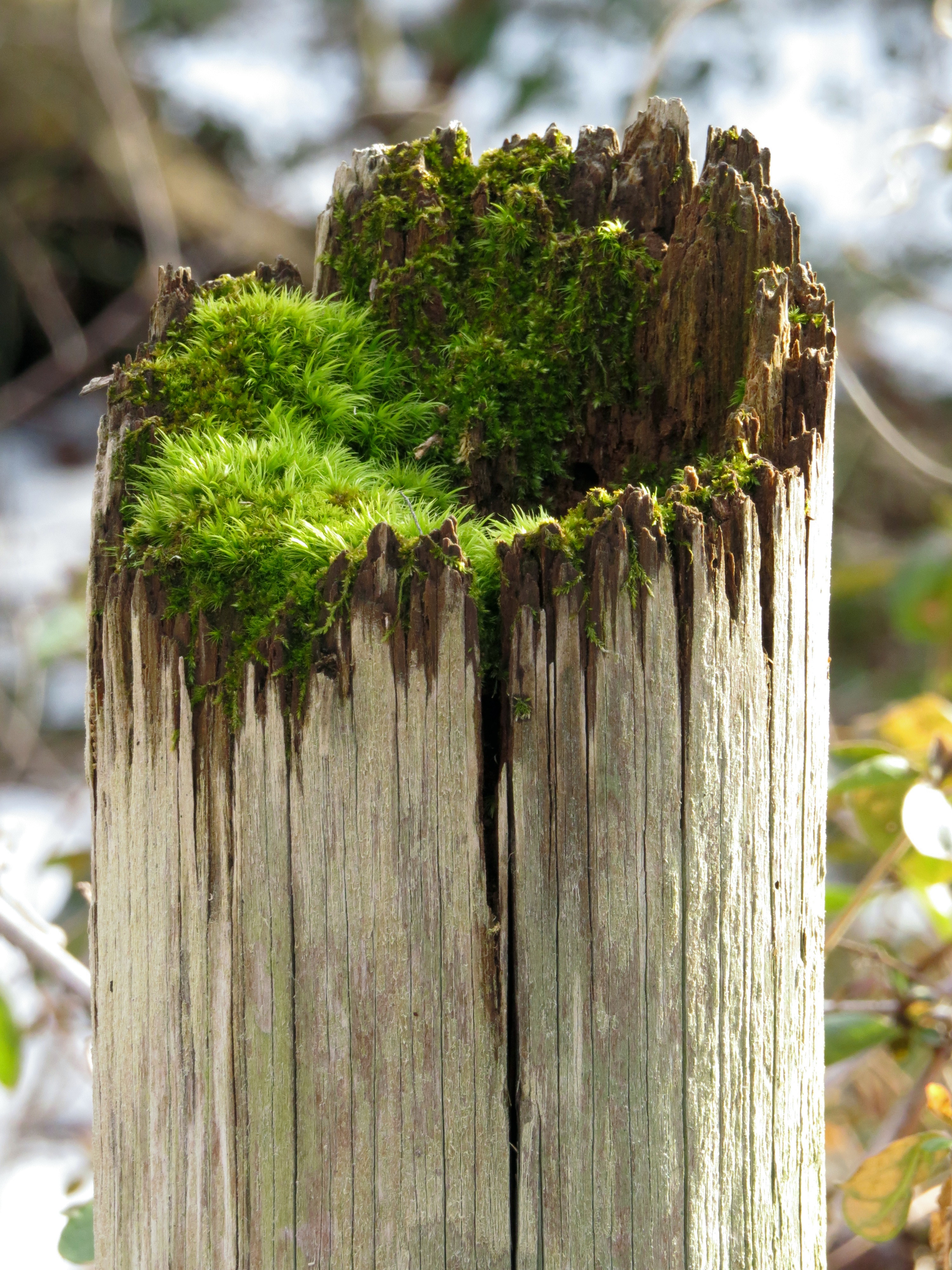
I find this image pleasing. I like the light. It's deep in the woods.

I find this image pleasing. I like the light. It’s deep in the woods.

For some reason recently I’ve seen more female birds than I’m used to. I see Downy woodpeckers (Picoides pubescens) on approximately 100% of hikes at Pony Pasture. Males are identical to this lovely lady except males have a “small red patch on the back of the head.” She doesn’t: 
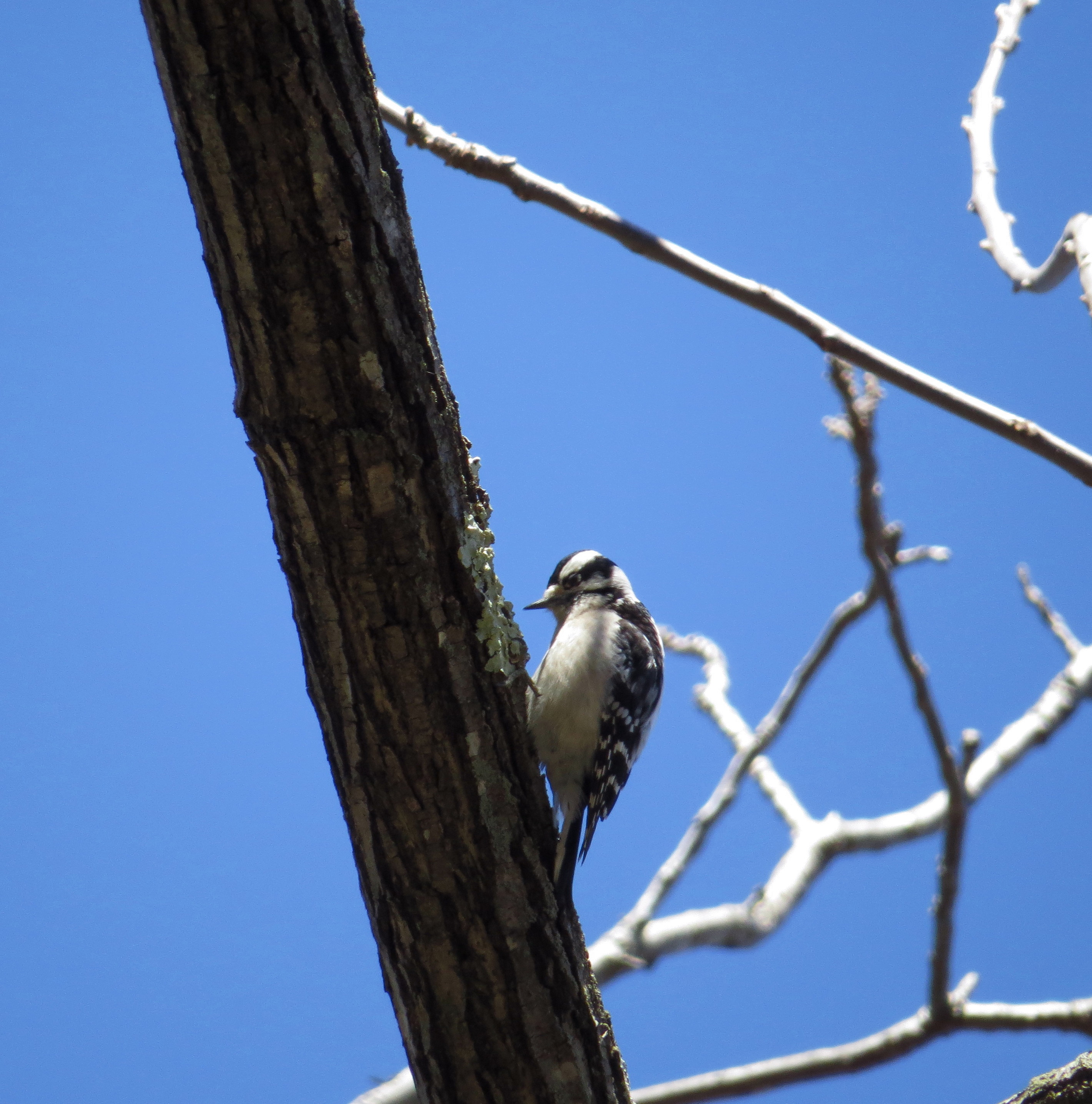
Elegantly attired in black and white

Elegantly attired in black and white

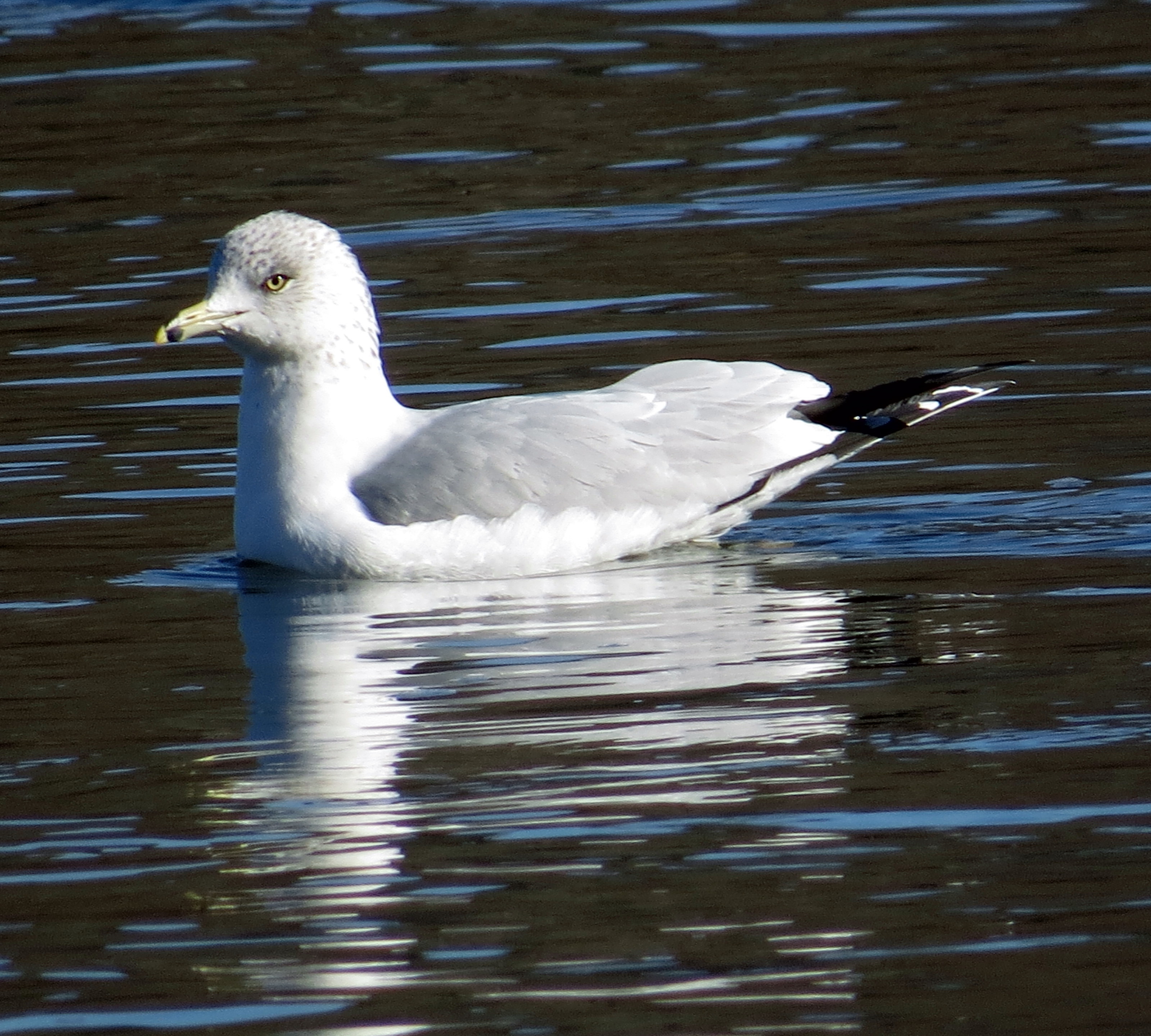
I also “got” a new seagull this week – but I have no idea what it is. Of the seagulls I’ve seen in Richmond, I have identified one – the Ring-billed gull (Larus delawarensis). I don’t know what this gull is, but I know it is not a Ring-bill. It’s big. I may spend time this week learning more about gulls. Nice looking bird though: 
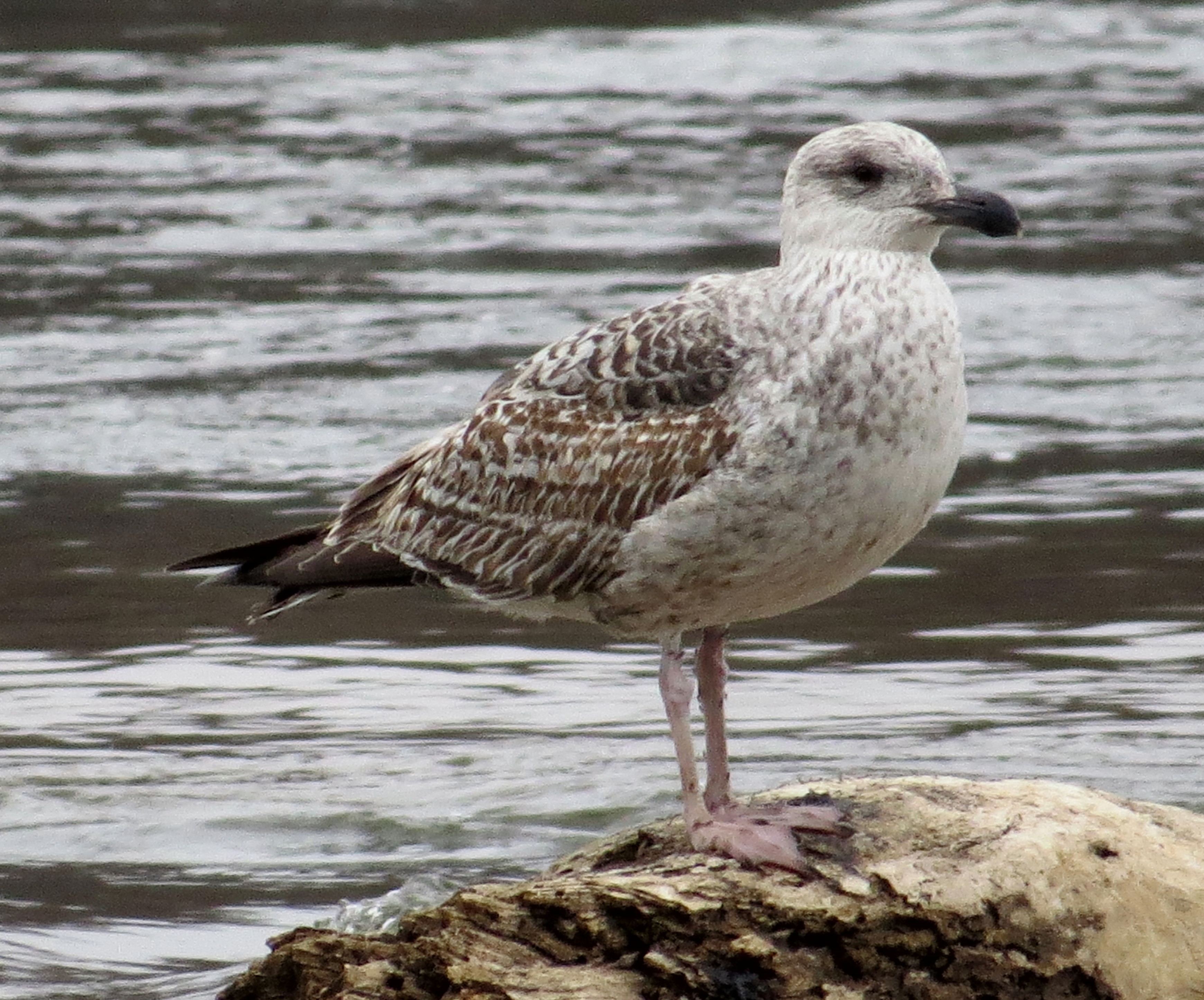
An as-yet unidentified gull. It's a big one.

An as-yet unidentified gull. It’s a big one.

So far in the past thirty-ish days, I have had three opportunities for extended photo “sessions” with wildlife. First with a small herd of whitetail deer, then with that osprey, and a couple of days ago with a mating/nesting pair of Pileated woodpeckers (Dryocopus pileatus). When I say “sessions,” I’m talking about these animals sitting still – one hundred percent aware I’m standing there, with Mackey and Turner, taking lots of photographs – and they don’t leave. I cannot properly express how much I enjoy those experiences. With the deer I got one photograph that was out of this world (My favorite place) plus I’m happy with the osprey pictures. These pileated woodpeckers gave me an eternity and none of the shots are spectacular but they’re not bad. I saw the male pileated first but he was in deep woods and the picture is marginal. Plus the sun was behind him which is terrible for photography. You can tell he’s a male by the red spot in the black line below his eye: 
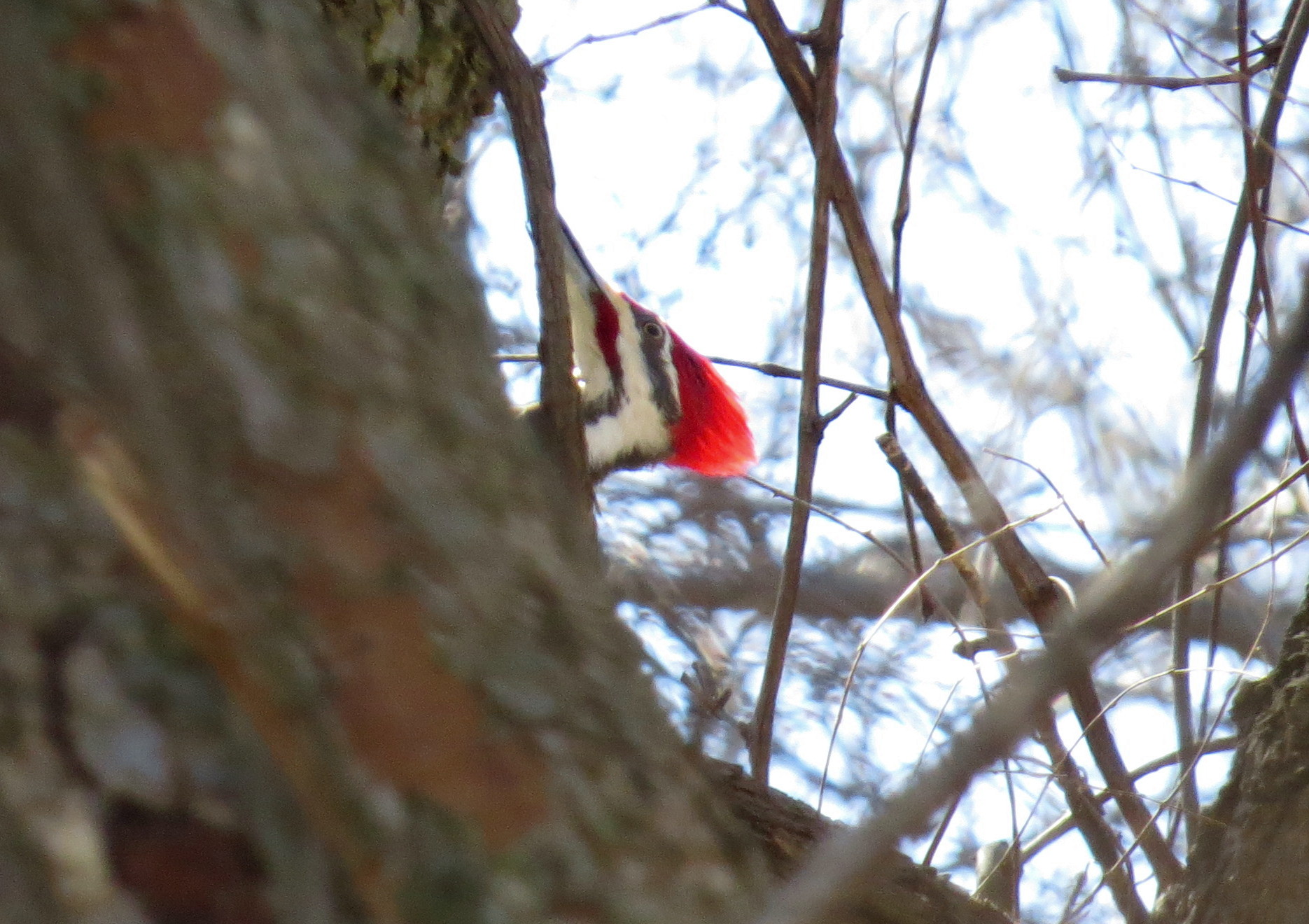
Male Pileated woodpecker, from the shady side

Male Pileated woodpecker, from the shady side

I looped around and came up on the other side; the female was tap-tap-tapping away on the sunny side of a big sycamore: 
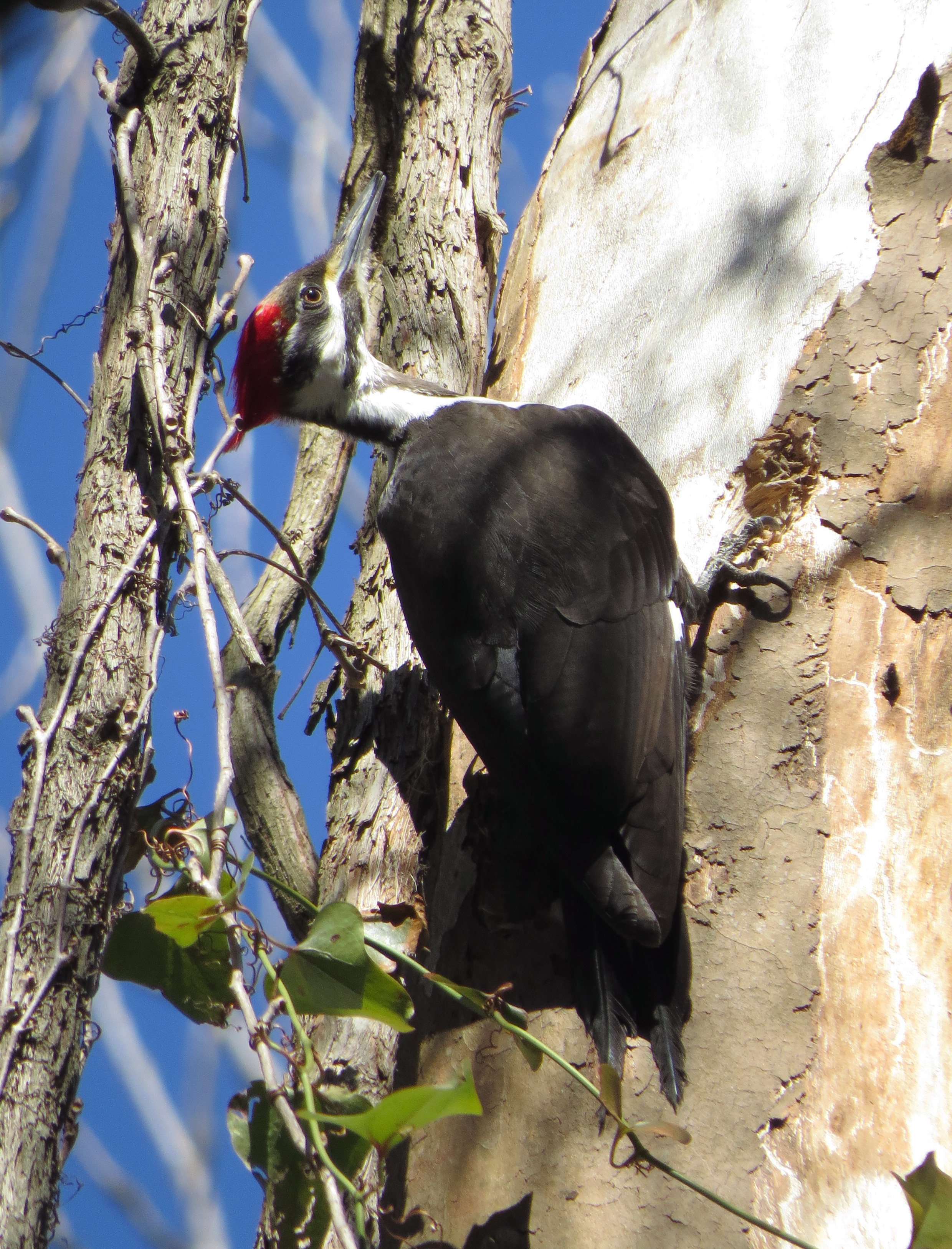
Female Pileated woodpecker, from the sunny side:

Female Pileated woodpecker, from the sunny side:

There are two obvious Pileated woodpecker sounds. You cannot miss either one if you’re in the park. Cornell says that “They are loud birds with whinnying calls. They also drum on dead trees in a deep, slow, rolling pattern, and even the heavy chopping sound of foraging carries well.” You might even refer to their calls as “obnoxious.” “Raucous,” certainly. They have a “call” that is their version of a sparrow’s chirp or a crow’s caw but it is amazingly loud and sometimes grating. And when they’re drumming on trees, it is so loud that I’m sure you can hear it for a mile – it’s just incredible. It sounds like the drummer in a college marching band at halftime of a football game. I believe (not positive) that it is used to attract mates. The interesting thing was – one interesting thing was – that these two were tapping so softly and tentatively and you may even say conversationally – or contemplatively (awkward word) that you could hardly tell they were in the woods. The sound of the pieces of bark dropping from the trees was louder than their drumming. It takes a long time to figure all this stuff out! 

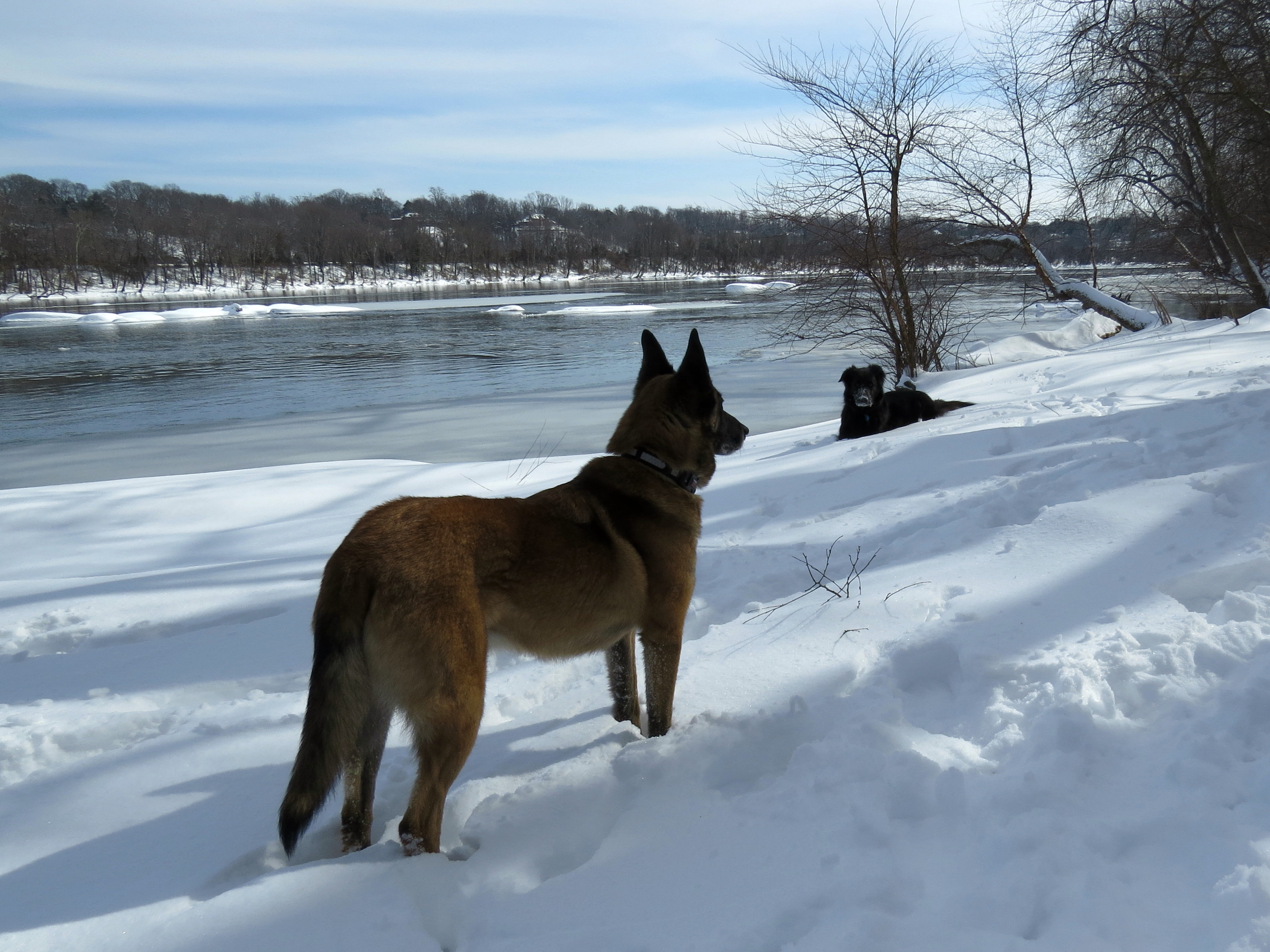
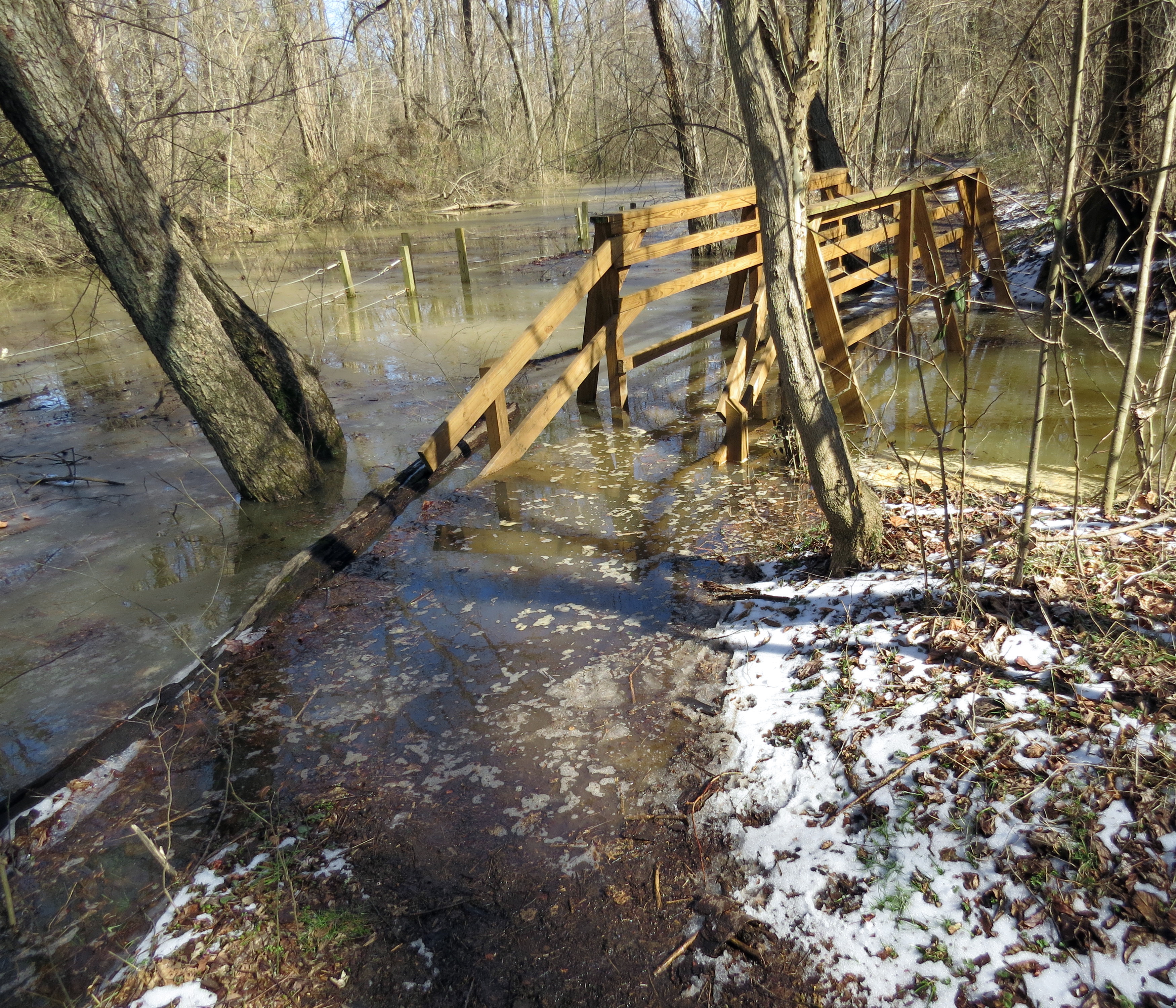
Moderately deep flooding yesterday (the river crested just below 13 feet) pushed a lot of birds and animals into atypical areas. Our hike was somewhat soggy. This is Turner surveying a foot bridge in the back of the park. Mackey had already loped nonchalantly (another awkward word) across; he’s more comfortable with water. That is Turner’s posture of mild trepidation, a sensation he doesn’t often experience. He doesn’t like it when Mackey is out of sight. Unless a squirrel is in sight, and Turner’s focus becomes laser like and nothing else (including Mackey) exists. But here he’s anxious:
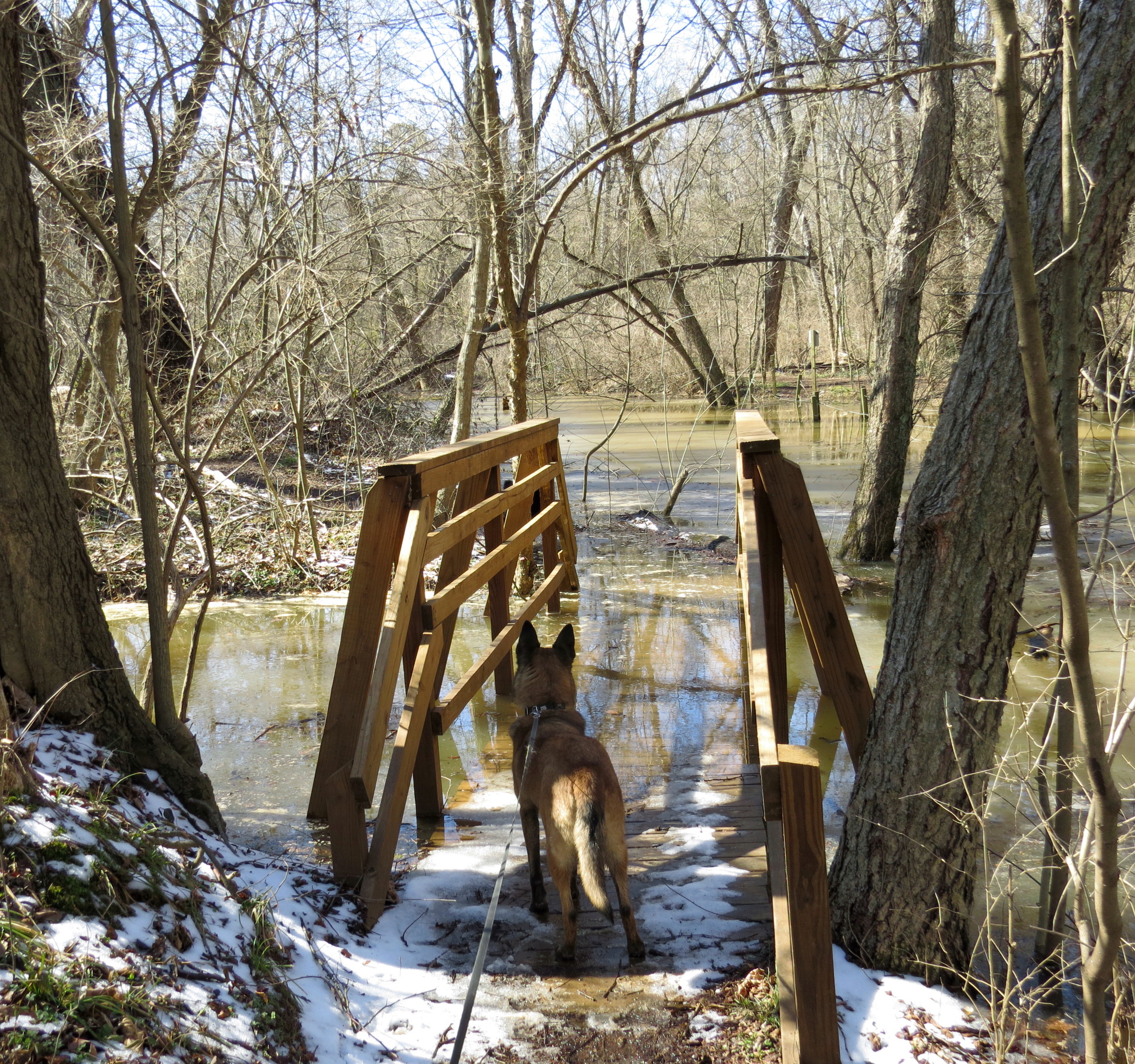
Mackey is on the other side, and Turner wishes he was too.

Mackey is on the other side, and Turner wishes he was too.

This is looking back at the bridge. If you’re a Pony Pasture hiker, you may be familiar with this area. And if you look to the left, you can see 4×4’s and wires sticking out of the water; those are handrails along a large pipe that is normally two or three feet above the surface of the water. Rather than a foot below it:
Soggy!

Soggy!

Have a great week! All best,

Jay

PS If you’re here on the East Coast of the United States, we changed to Eastern Daylight Time this weekend. At least in my case that means I wake up well before dawn on weekdays. And Spring is coming along fast – there’s a warm week in the forecast – and there will be lots of songbirds coming in. In the morning listen outdoors for the “dawn chorus.” You’ll hear it soon. This is what Cornell says:

Sounding Out the Dawn Chorus

The dawn chorus is one of the most conspicuous vocal behaviors of birds, and one of the least understood. Near sunrise, birds often sing more loudly and vigorously than they do at other times of the day. Recent studies have suggested that these intense bouts of song may help male birds exchange information about their social standing. However, because so many birds sing at once, sorting out these vocal interactions has been difficult using traditional techniques such as observation and simple audio recordings.”  

It’s worth listening for – check it out during the next couple of weeks. It will begin soon, and happen every day through mid-May here in Richmond. It is a real sign of Spring.        

Posted in Birds, Dogs, Fun, James River, Pony Pasture, Rivers | Tagged , , , , , , , , , , , | 5 Comments

The low hanging fruit

1 March, 2015           The low hanging fruit

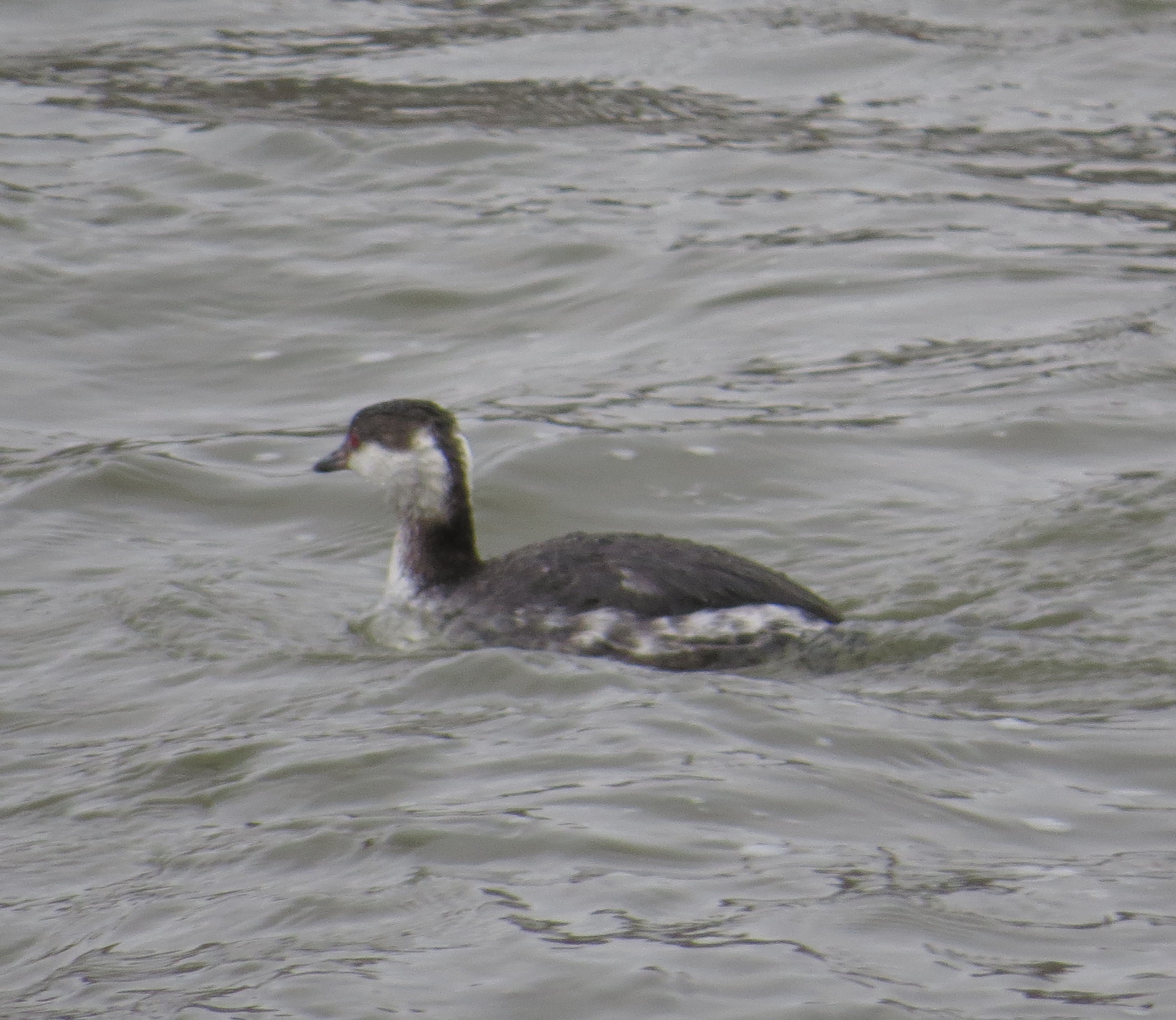
In the first few months of my Every living thing/Pony Pasture Flora and Fauna project I identified and photographed many plants and animals quickly. Canada Geese, Mallards, Robins, they’re in the park every day. Sycamores, Pawpaws, Black Walnuts, they’re the signature plants of Pony Pasture. In my Every Living Thing page I have to date identified (and photographed) forty-five different plants and forty-seven different “animals” (including insects, reptiles, mammals, everything else). That was the “low hanging fruit” of this project – I’ve gotten all the easy stuff. I’ve even gotten some not-so-easy stuff, e.g. Northern river otters. I thought a few more items would trickle in over the course of the year, beginning in April or May when the weather warms up. Imagine my surprise when I photographed three new birds this week! Fortunately my friend Betsy from the Friends of the James River Park identified two for me. But the third is still unidentified – put a note in the comments section if you can enlighten me!

This is the first unidentified bird – I took this picture Thursday (2/26) afternoon at Pony Pasture: 

The first unidentified bird - Pied-billed Grebe  Podilymbus podiceps

The first unidentified bird – Pied-billed Grebe Podilymbus podiceps – Thanks Betsy! 

I described it to Betsy thus “Just a few yards down from Half Moon Beach, this is a dedicated diver – I had to stand there with my hands freezing and my lens pointed while I hoped for it to come up. Then click in about the three seconds before it disappeared again. Any guesses? Very small, maybe not even as big as a Bufflehead:”

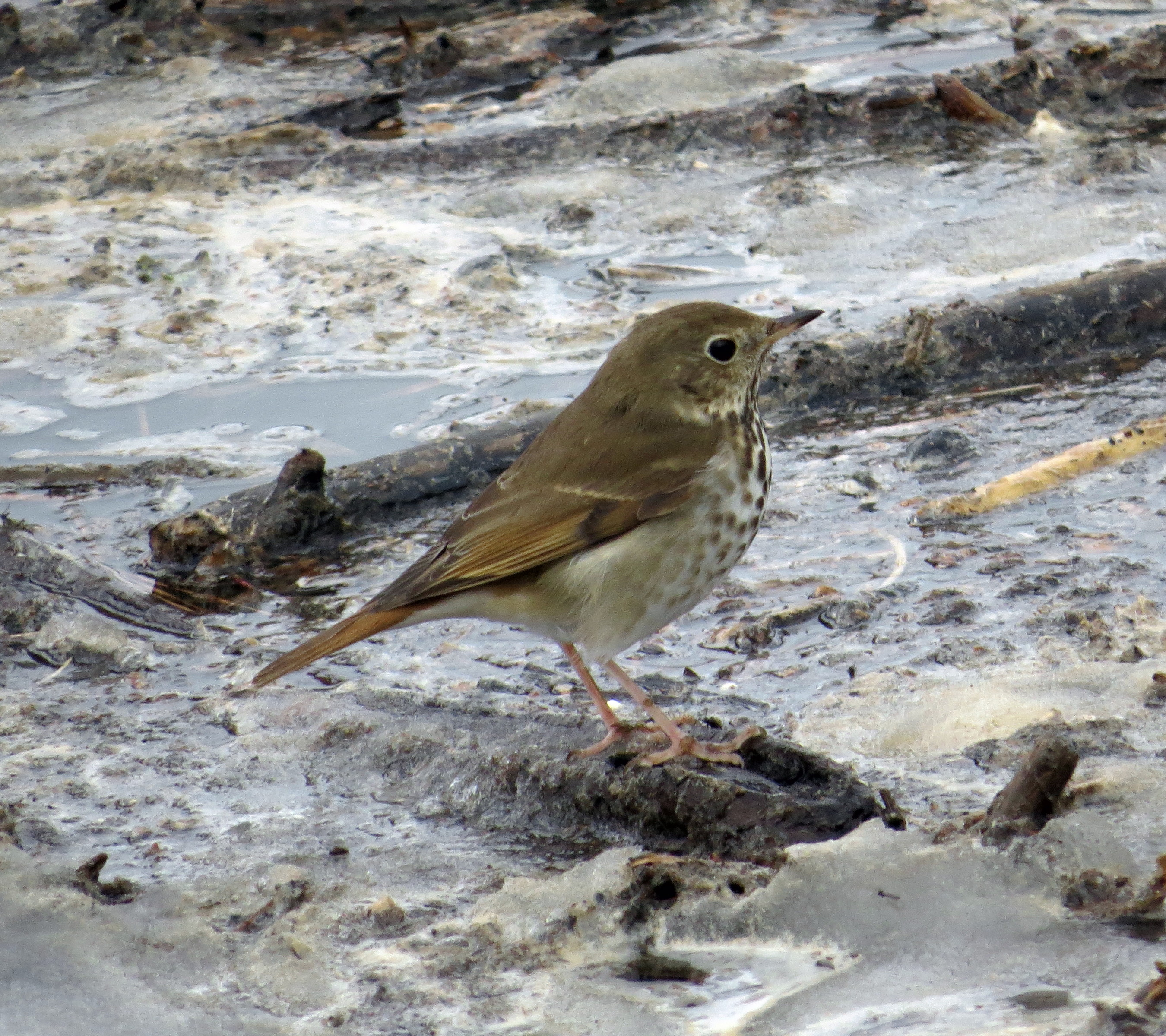
On the same trip I photographed this little gem:

Hermit Thrush  Catharus guttatus

Hermit Thrush (Catharus guttatus) – thanks again Betsy! 

There’s a lot of spots on the river that have those unappetizing-appearing clumps frozen into them. They look a lot like suet, although I wince when I imagine what the coagulated matter might be. Floating in the lovely river. And I guess it has seeds and bugs and stuff in it because I have dozens of pictures of birds enthusiastically munching away. In several different spots. They’re getting their calories where they can. It is cold down there!

When I started this project (Every living thing) in early December of 2014 Betsy sent me a note that said “Let me know if I can help with ID of the flora.” She helped with most of the identification on the Pony Pasture Flora page. Now she’s helping with the ID on the Pony Pasture Fauna page! Thank you Betsy!

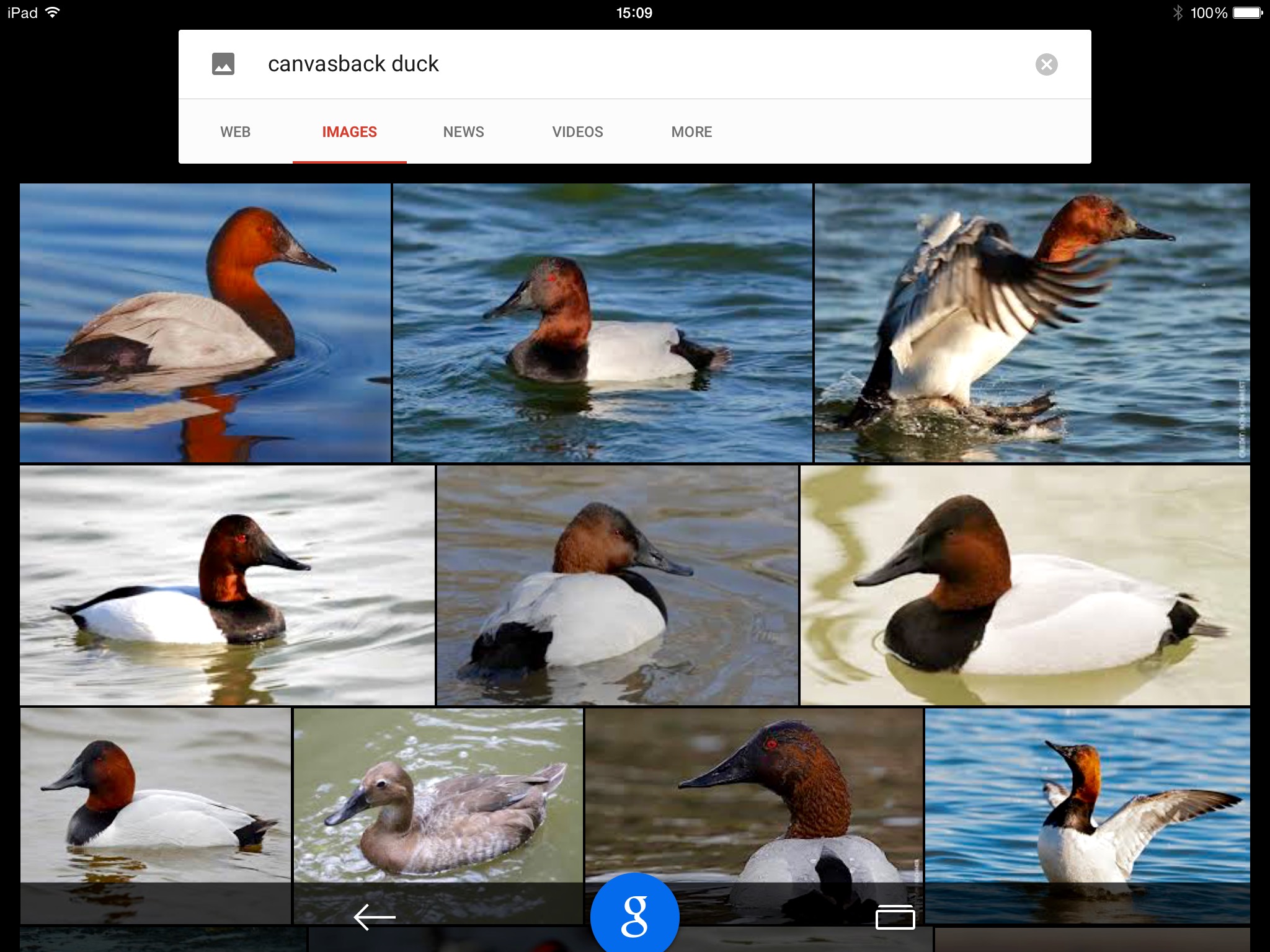
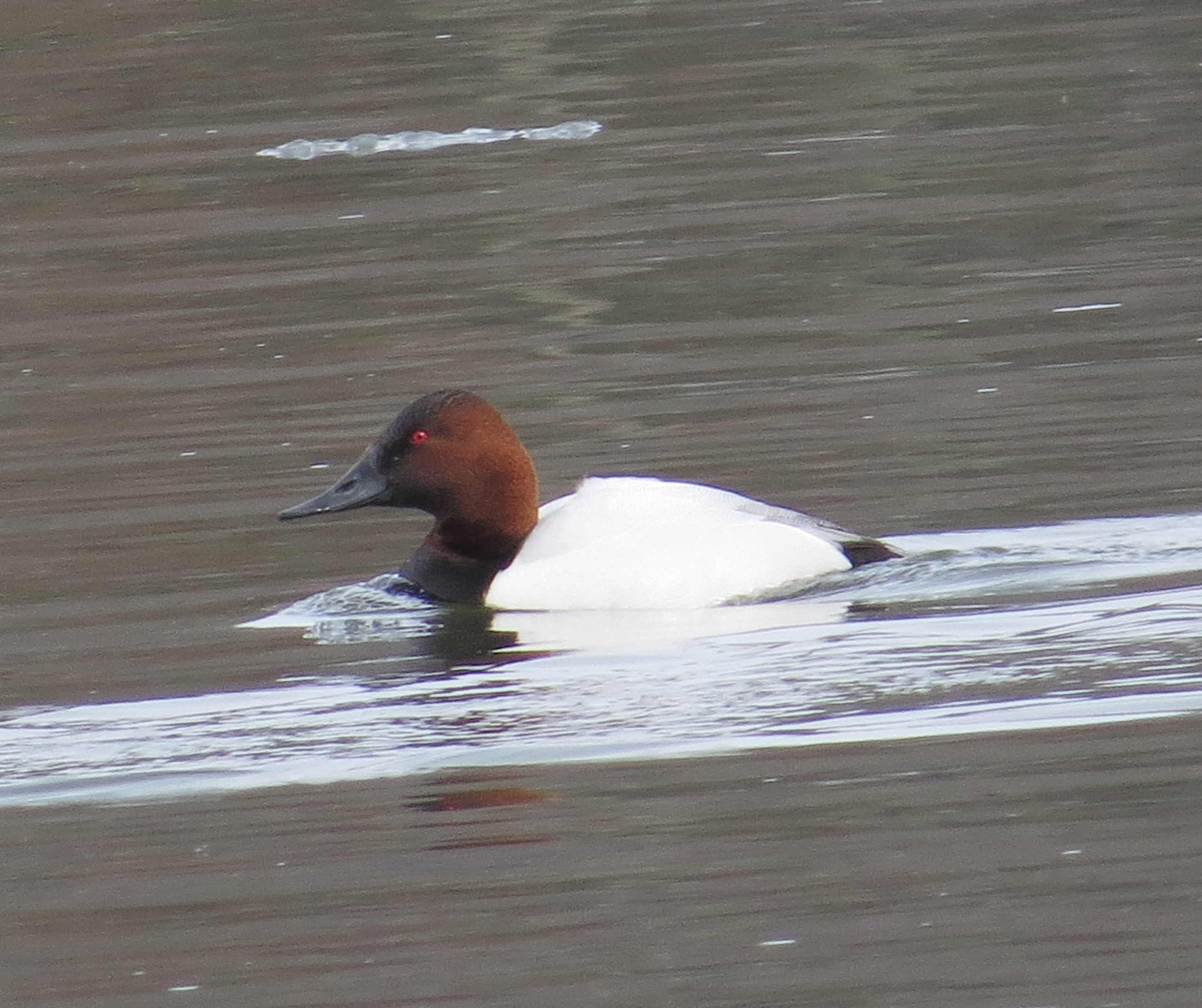
While I’m thanking her, please also look at the duck I misidentified in last week’s post, My favorite place. When I first saw this duck I said it was a Redhead (Aythya americana). Betsy sent me a note that said in fact it was a Canvasback (Aythya valisineria). The difference (she pointed out) is in the beak. 

Here are the “image” pages from google when you search first Redhead then Canvasback:

Redheads - by Google - look closely at the beaks.

Redheads – by Google – look closely at the beaks.

Canvasbacks - again by Google - again look closely at the beaks.

Canvasbacks – again by Google – again look closely at the beaks.

An honest mistake! Thanks for the correction Betsy! 

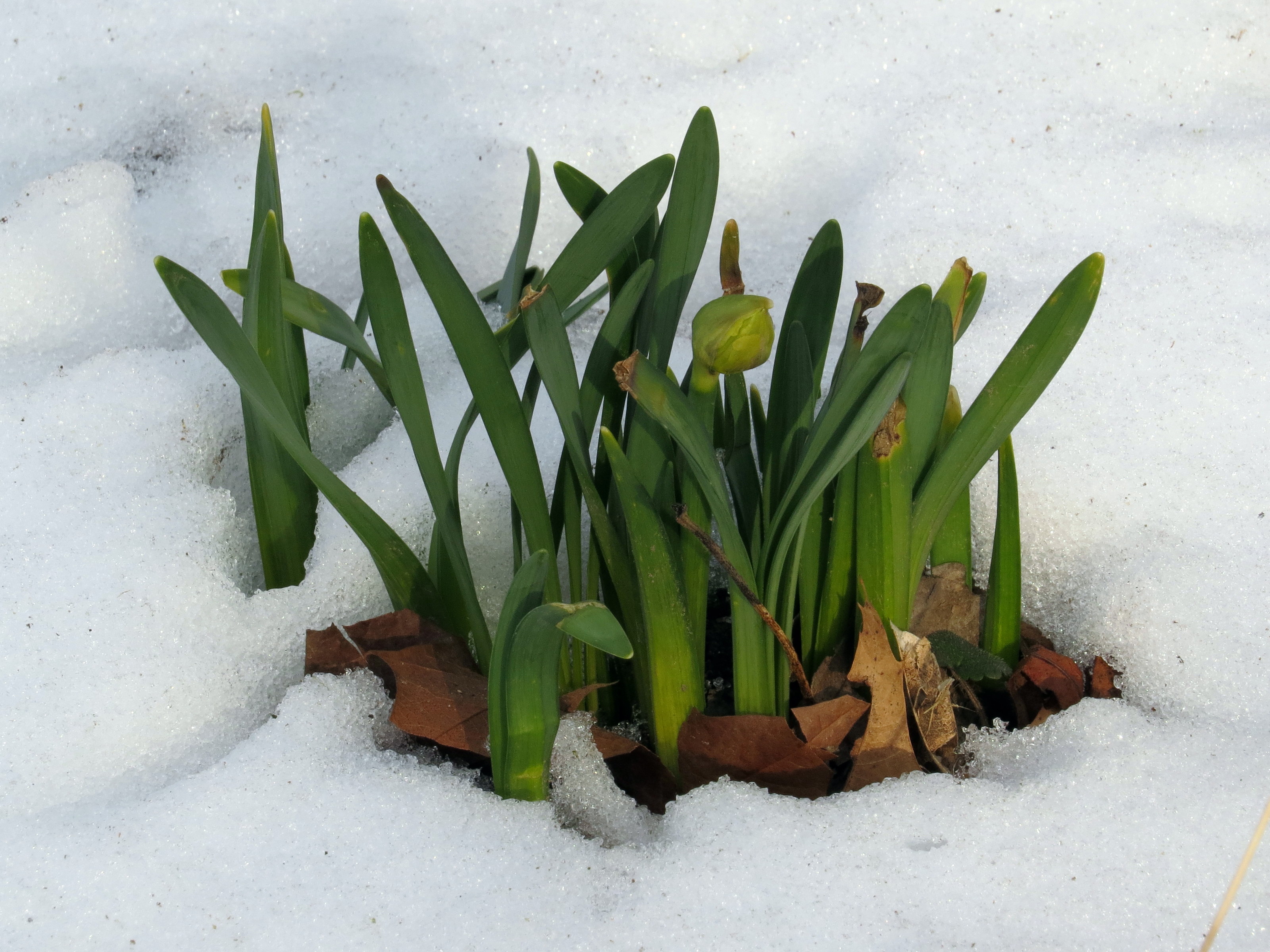
And now for something unmistakable – the first daffodil (for me) of 2015. I took this in Pony Pasture near the main parking lot Monday (2/23/2015) afternoon. It’s just about to open up:

First daffodil (Narcissus) of 2015:

First daffodil (Narcissus) of 2015:

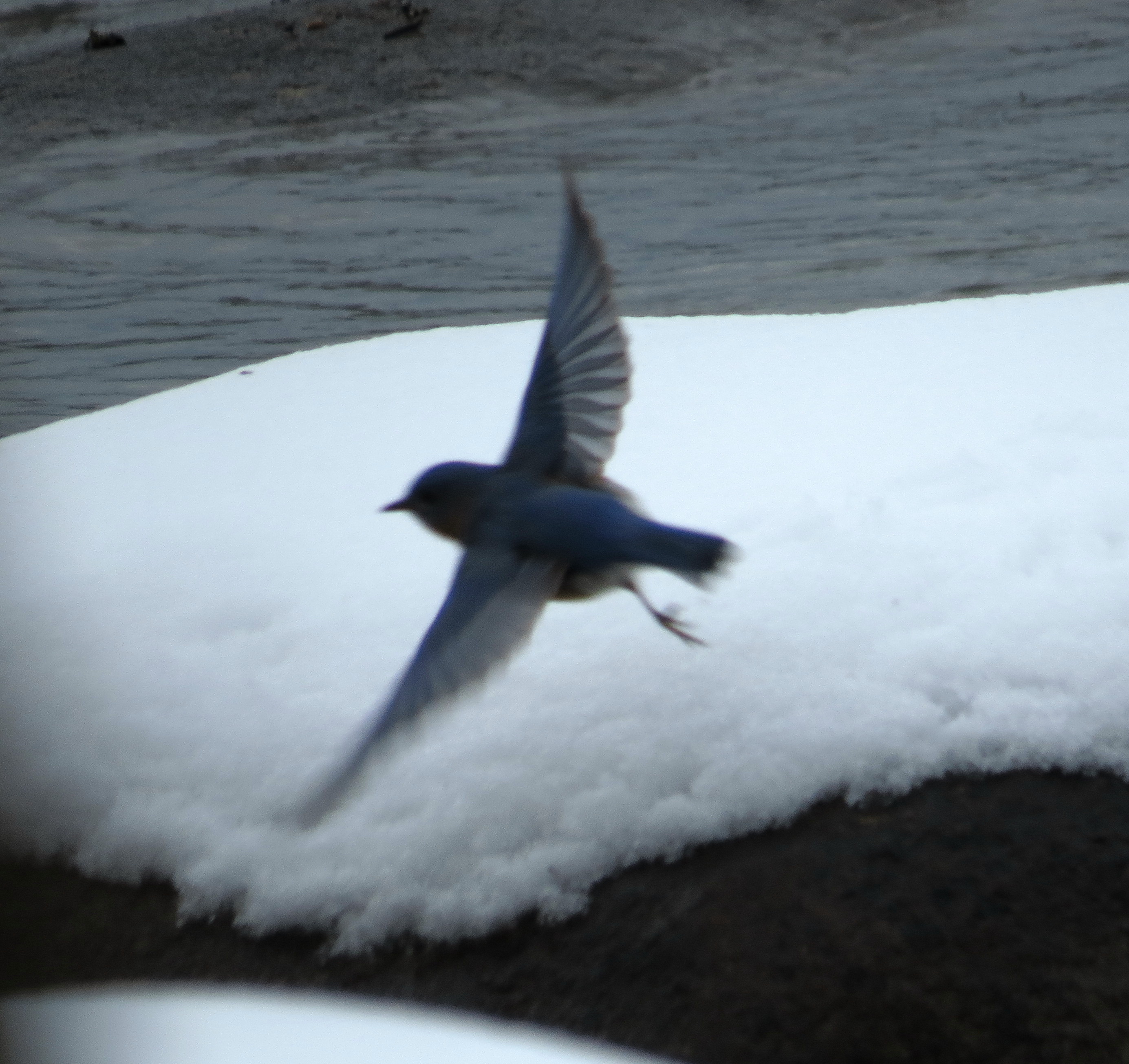
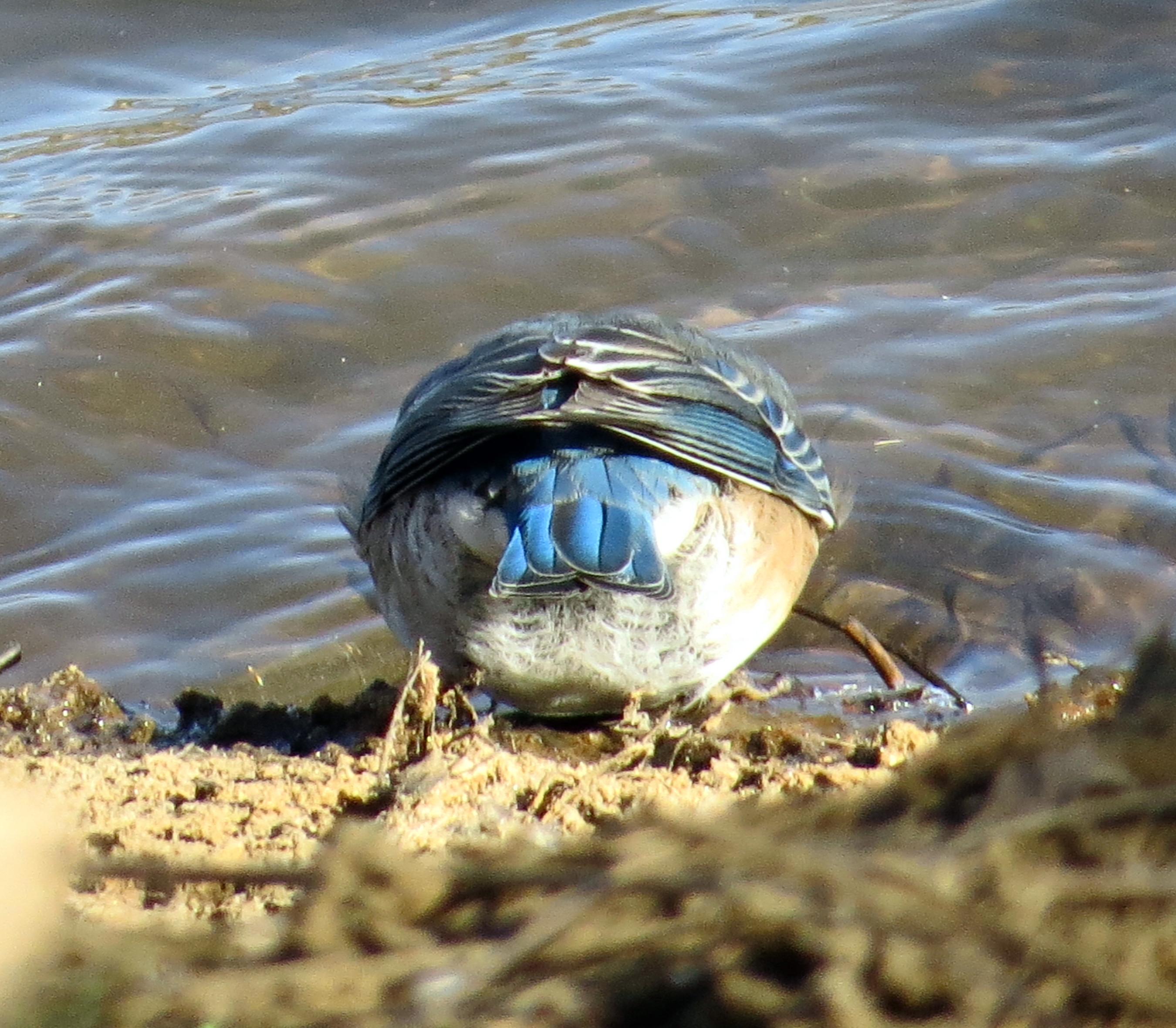
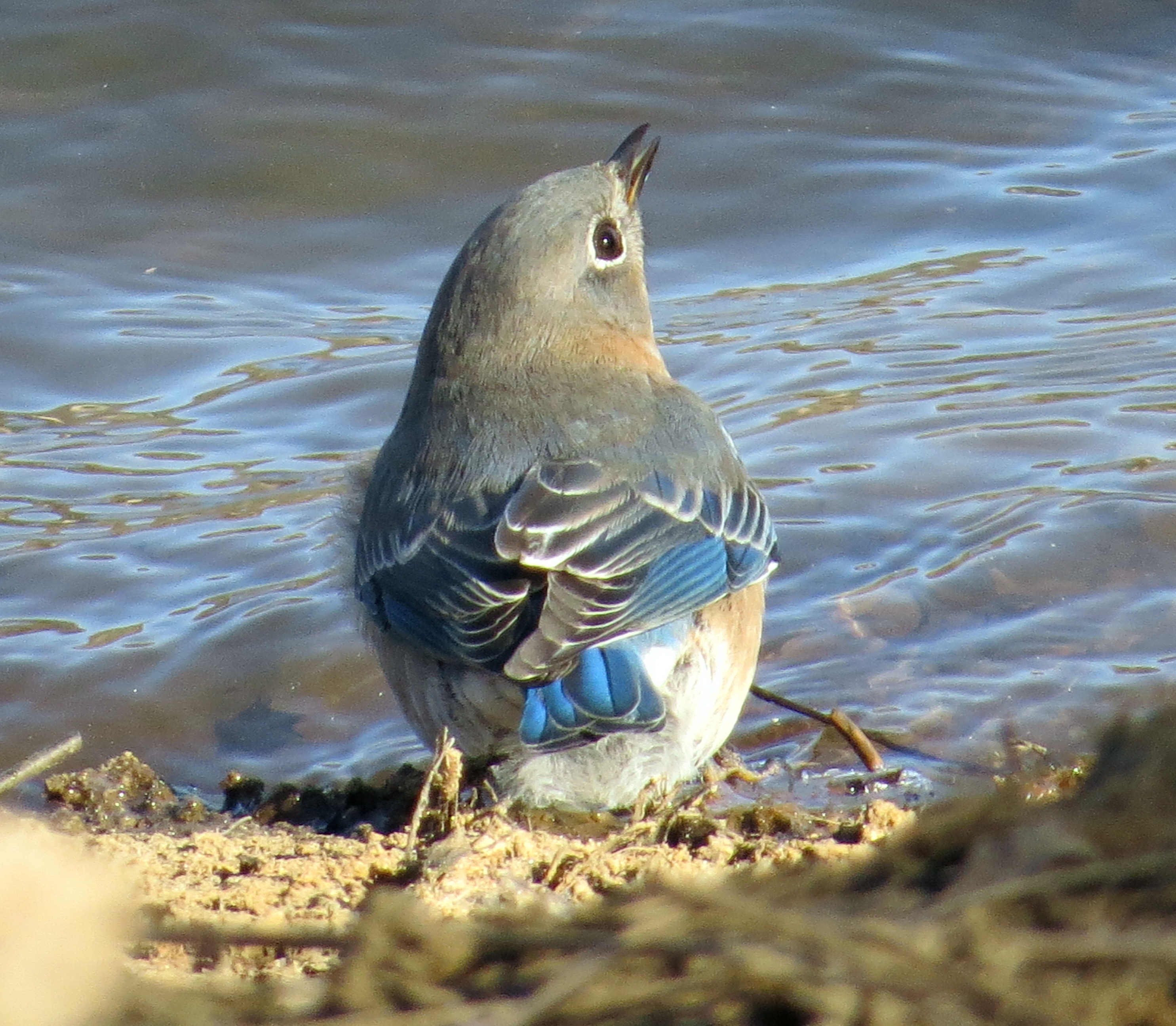
I also got a lucky picture of a bluebird on Thursday. It’s not technically proficient but I don’t get flying pictures often: 

Flying bluebird - isn't that elegant?

Flying bluebird – isn’t that elegant?

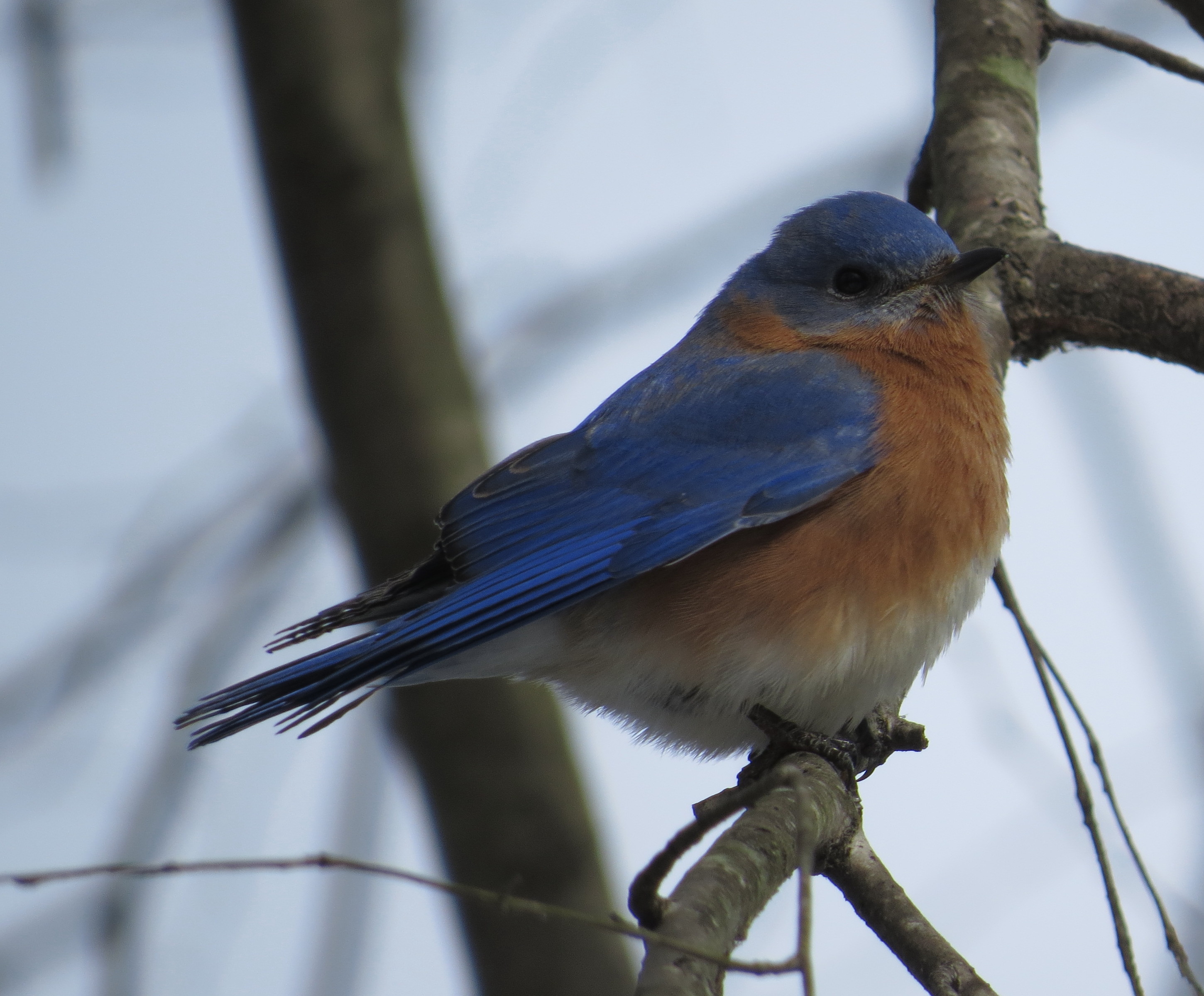
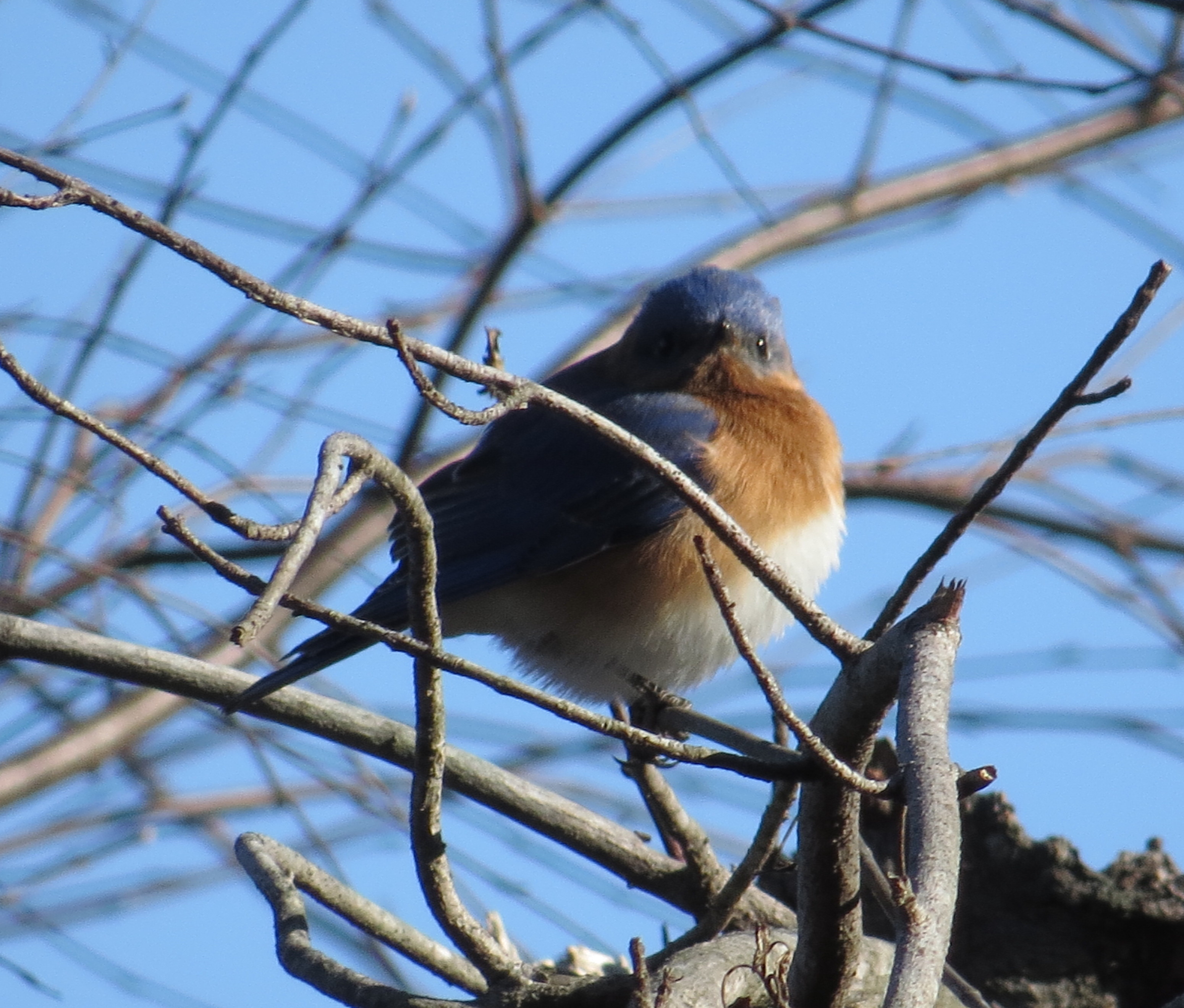
Yesterday (Saturday, 2/28/2015) I was at Pony Pasture again and took this picture:

An image I'll never tire of:

An image I’ll never tire of:

It’s possible I’ve said this in previous posts. But I’ll say it again – if you don’t like pictures of bluebirds, this is not the blog for you. If I get a decent bluebird picture, it’s going in here – if I live to be a hundred. I won’t post junk shots (and I take about fifty for every decent shot I get) but if I get a bluebird picture I like, I’m posting it. It’s impossible for me to look at a bluebird and not smile. 

Anyway, back to the reason I named this post “Low hanging fruit.” It’s all gone – the easy stuff’s identified. Here is this week’s mystery bird – does anyone have any idea? I took this picture at Pony Pasture Saturday (yesterday) at around 11:15. Please help me identify this “mystery bird.” It was swimming alone and never dove or flew while I was looking at it:

I have no idea! If you do, please enlighten us all!

I have no idea! If you do, please enlighten us all!

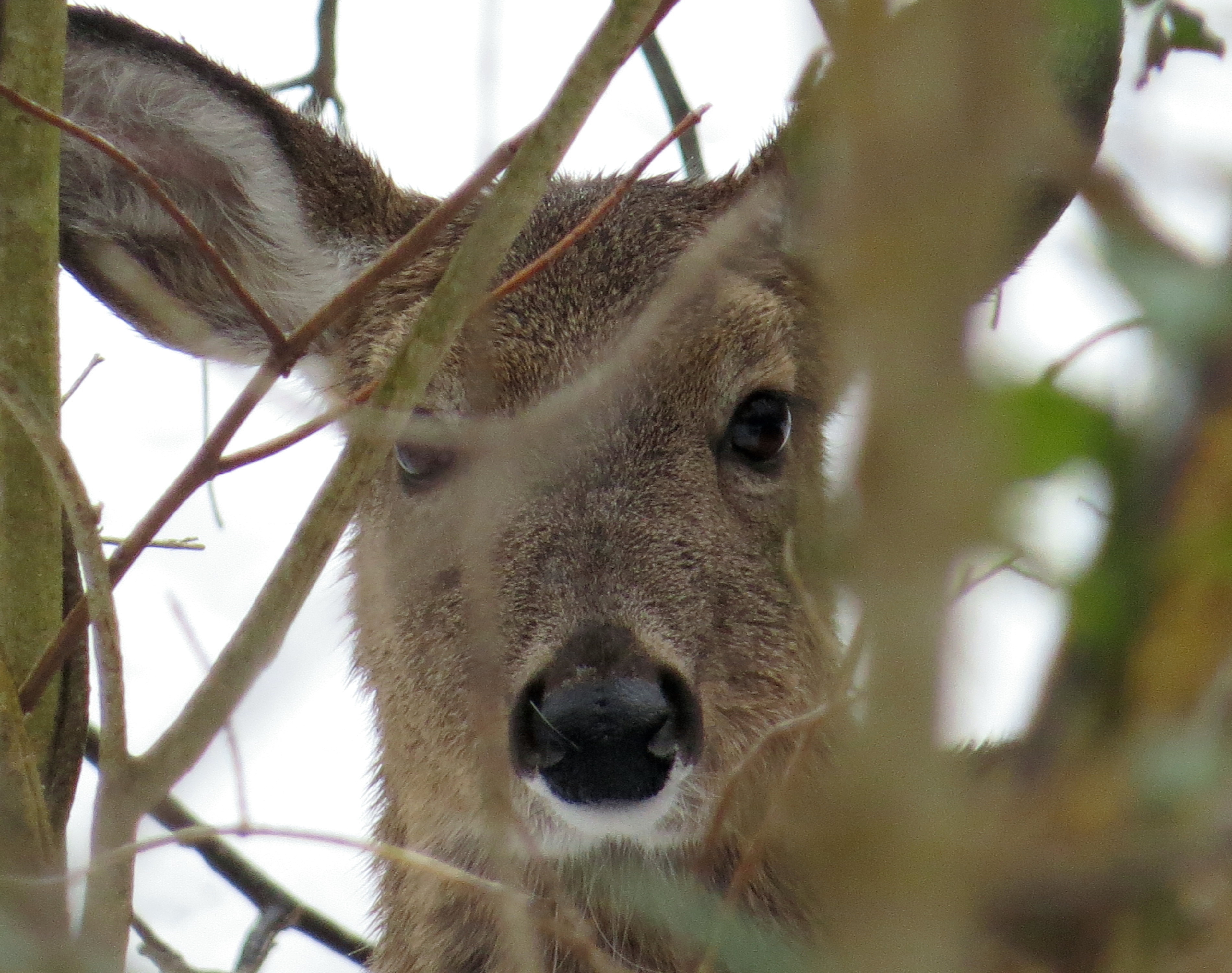
Also if you looked at last week’s blog post (My favorite place) you saw a lovely photograph I took of a deer near Charlie’s Bridge. This afternoon there were three again in the same place – possibly even four. And they stood and sat and lay around while I took pictures again. Although I didn’t linger as long today because it was raining and my camera was getting wet so I didn’t get any perfect pictures. But I got two reasonable ones. This one is similar to last week’s:

Isn't that a nice look? Whitetail deer are "ruminants" and it is my anthropomorphic opinion that is a ruminative expression.

Isn’t that a nice look? Whitetail deer are “ruminants” and this in my anthropomorphic opinion is a ruminative expression. 

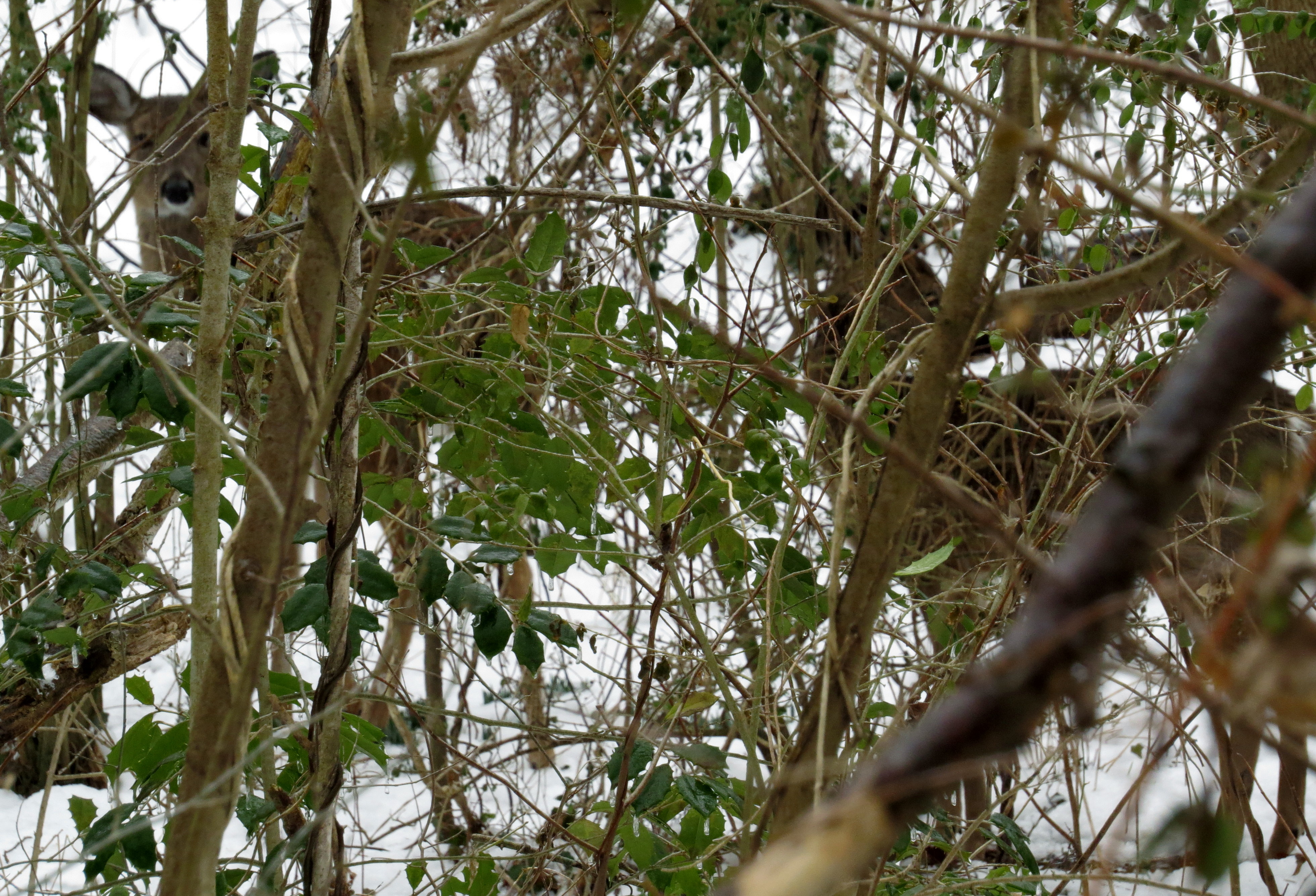
And this one is backed away a bit; you can see two deer. One more obvious on the left and one less obvious on the right: 

Much less obvious when you back away a bit!

Much less obvious when you back away a bit!

All for now! Until next week,

Jay

Posted in Birds, Fun, James River, People, Pony Pasture, Rivers | Tagged , , , , , , , , | 2 Comments

My favorite place

22 February, 2015            My favorite place

I took this picture around 12:30 this afternoon just as Mackey and Turner and I arrived at Pony Pasture. I put it up on instagram/facebook with the caption “My favorite place”:

My favorite place (a.k.a. "Paradise")

My favorite place (a.k.a. “Paradise”)

Of course when we got home and sat down in front of the fire, that was my favorite place! It’s kind of a moving target. 

Part of what I was thinking about when I put up that “my favorite picture” post on instagram/facebook was a quote I saw a number of years ago. It was the first time Evelyn ever took me to Project Yoga Richmond. They had a banner hanging from the wall that said “Wherever my travels may lead, paradise is where I am.” – Voltaire. I was staring at that slushy snowy river this cold gray Sunday morning and just thinking “this is my favorite place.” Where I am. I was fortunate to be there.  

We hiked for a long, slushy time in the snow and about 2:15 we rounded a corner and there were three beautiful whitetail deer lying in the snow watching us. Mackey and Turner were at that point considerably tamer than when we’d arrived (running for an hour in the snow is tiring), and the deer didn’t even get up. But boy they sure did not ignore us. Look at this gaze:

No lack of attention from this lovely animal.

No lack of attention from this lovely animal.

We were on the edge of the water for a long time between those two pictures. I took what I believe is my first picture of an adult male Redhead (Aythya americana):  

[[[I STAND CORRECTED! BY BETSY OF THE FRIENDS OF THE JAMES RIVER PARK! THE DUCK BELOW I MISIDENTIFIED AS A REDHEAD – ITS TRUE IDENTITY (THANK YOU BETSY!) IS A Canvasback (Aythya valisineria) – updated Monday, 2.23.2015 – thank you Betsy!]]]

The appropriately named "Redhead." He's a striking bird.

Thank you for the correction Betsy – this is a Canvasback (Aythya valisineria). He’s a striking bird.

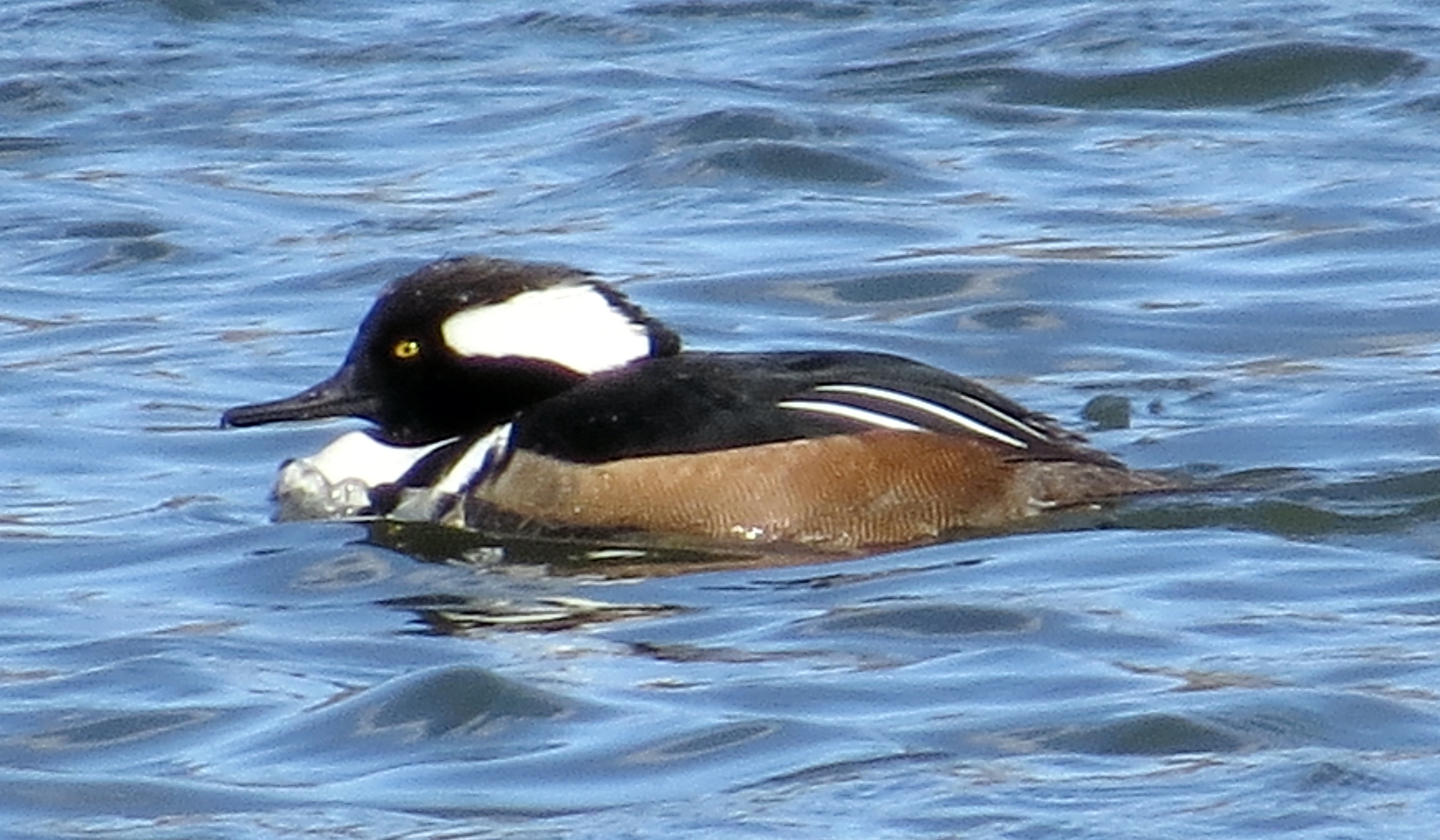
I suspect it’s the time of the year (mid to late winter) but there are a number of interesting birds showing up. It’s the leading edge of the spring migration. The really hardy birds are coming in. I got a decent picture of a male Hooded merganser (Lophodytes cucullatus ) earlier this week:

Handsome male Hooded merganser

Handsome male Hooded merganser

This morning when we were hiking I am nearly 100% certain I saw an American Kestrel (Falco sparverius ) in the woods along the river’s edge. But I was too slow with my camera and it was the first one I’ve ever seen so I am not 100% certain of my ID. I am 100% certain it was a raptor – nothing else looks or flies like a raptor – and it was only the size of a pigeon or a crow. I believe that a Kestrel is the only thing it could have been. Hopefully I’ll get a photograph soon.

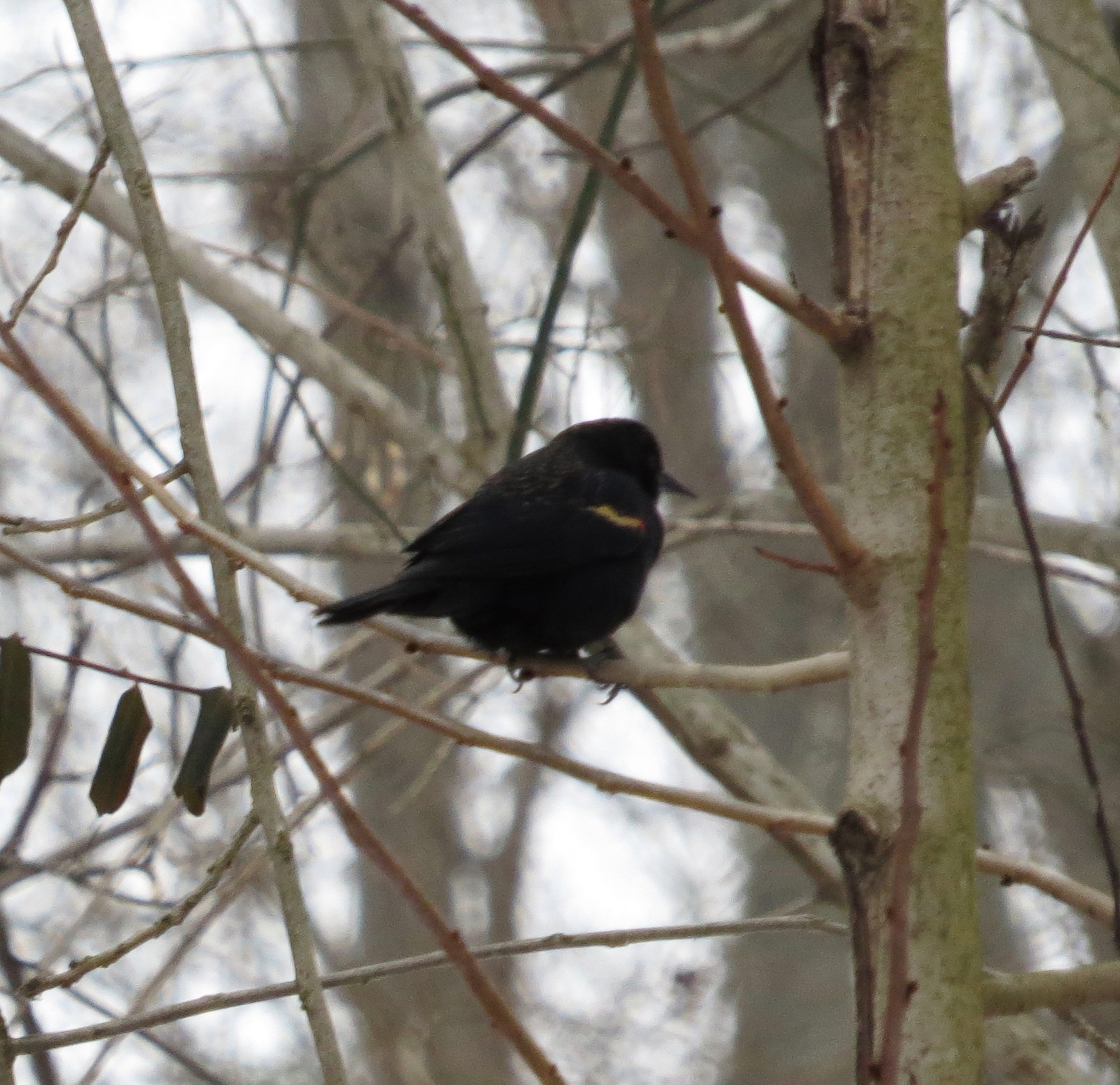
Speaking of photographs I hope to get soon, here’s a Red-winged blackbird (Agelaius phoeniceus) I glimpsed just as we were leaving the park this week. I’ll get a better picture soon:

Glimpse of a Red-winged blackbird (sorry about the poor quality)

Glimpse of a Red-winged blackbird (sorry about the poor quality)

It’s been snowing here in Richmond a lot this week, although since my sister and her husband live in Boston I feel kind of wimpy even bringing it up. Here are Mackey and Turner (Mackey is lying down by the river’s edge, see him there?) enjoying the river in the snow:

Chillin'

Chillin’

All for now – it’s been a long day and a long weekend! Until next week,

Jay and friends.

PS The Yukon Quest, my favorite 1,000 mile sled dog marathon finished earlier this week. Lance Mackey, who my dog Mackey is named after, finished fourteenth out of sixteen teams. He’s won the whole thing four times. This year he won the “Challenge of the North  Award.” The race website describes it as “an award selected by Race Officials for the musher who most exemplifies the Spirit of the Yukon Quest.” More from the Quest website: “Mackey also took home the Sportsmanship Award.

“I’m pretty sure everybody in this field deserves that award,” he said.” They also quoted him saying ““I love this sport, I love this race, and I love the people in it. More importantly, I love the lifestyle.” said Mackey.” That precisely captures what I love about being a triathlete. Primarily that I love the lifestyle. Here’s the article: 

Sass, Mackey Claim 2015 Yukon Quest Hardware

Here is also a tremendous article written by a man named Larry Lowe. It’s from 2007 from when Lance won the first of his consecutive back-to-back Yukon Quest/Iditarod victories. The article is amazing. Lance is amazing. You can read it here (and I highly, highly recommend this) at The Other Lance.
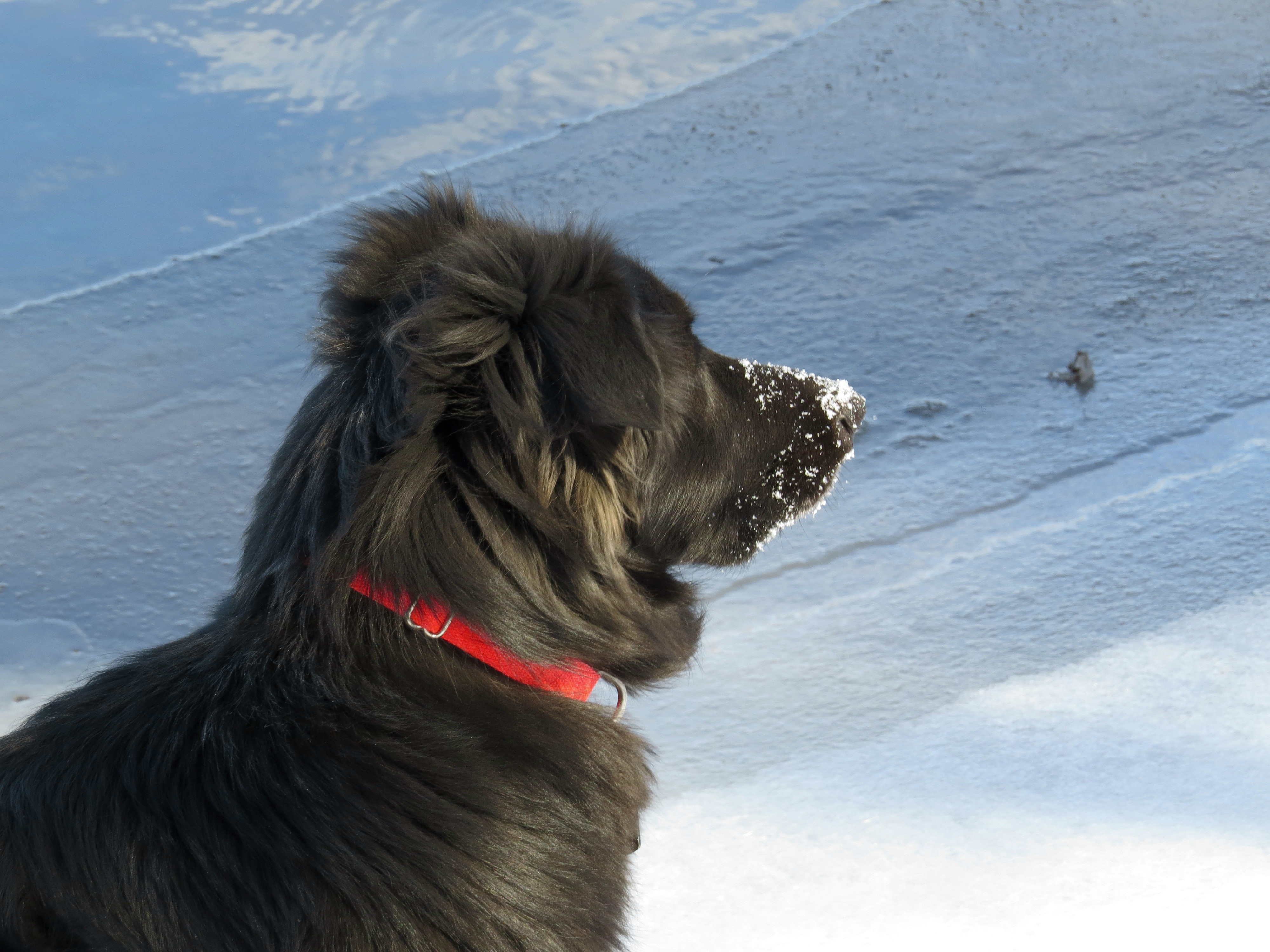
PPS Can’t resist – I had this one of Mackey (my dog Mackey, not the sled dog driver) sitting around. He starts snuffling under the snow and rooting things up the moment he gets there. I guess his nose stays cold: 

Mister snowy-nose

Mister Snowy-nose

Posted in Birds, Dogs, Endurance, Fun, James River, Pony Pasture, Rivers, Smiles (including "dog smiles"!) | Tagged , , , , , , , , , | 4 Comments

Sheer, unmitigated gall

15 February, 2015           Sheer, unmitigated gall

Before I continue – earlier this week I began a new section in the black bar at the top of this page. It’s calledMy favorite pictures and you can click on the link in this sentence or at the top of the page. It currently has what I regard as my seven favorite pictures on this blog (including one beauty taken by my friend Ethan). Watch for it to evolve over the coming months. But those first seven are wonderful. Have a look. You won’t regret it.

Now. On to my sheer, unmitigated gall. On the first of this month I put up this picture with this caption:

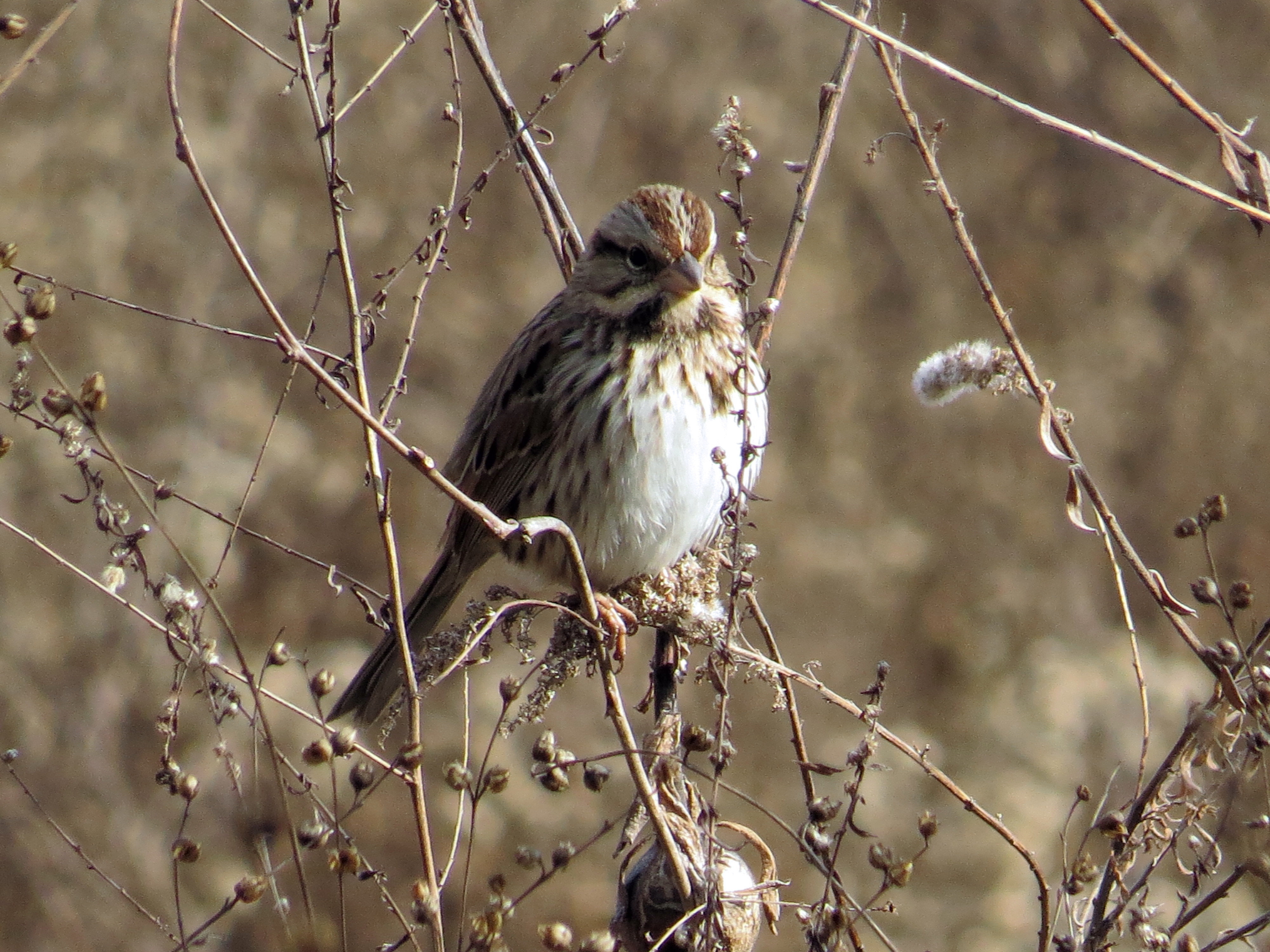
Poorly identified sparrow - can't even tell you the gender - sorry. I think that's an egg case of some sort below it on the stem.

Poorly identified sparrow – can’t even tell you the gender – sorry. I think that’s an egg case of some sort below it on the stem.


In the caption I wrote “I think that’s an insect egg case of some sort below it on the stem.” In my first blog entry of 2015 (Happy New Year!) I wrote:

“I’m learning about animals in the winter. The Wildlife Center of Virginia has an online book club. I just learned about it this week. Their next “meeting” is on Wednesday, 4 February, 2015 at 7:00 PM. The book they’re reading is Winter World: The Ingenuity of Animal Survival by Bernd Heinrich. I’m reading it now. And watching the animals in Pony Pasture prepare to survive the winter. ”

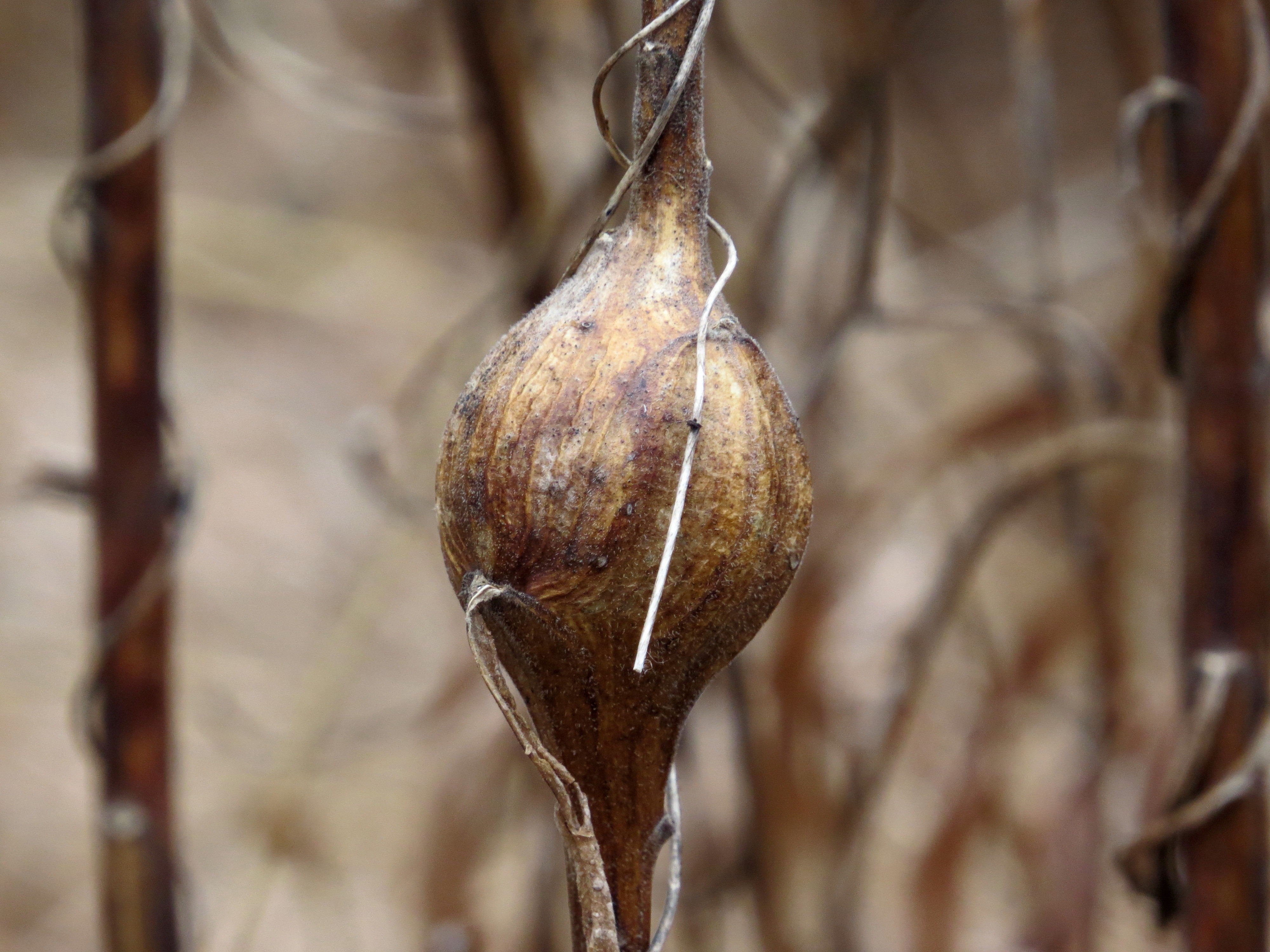
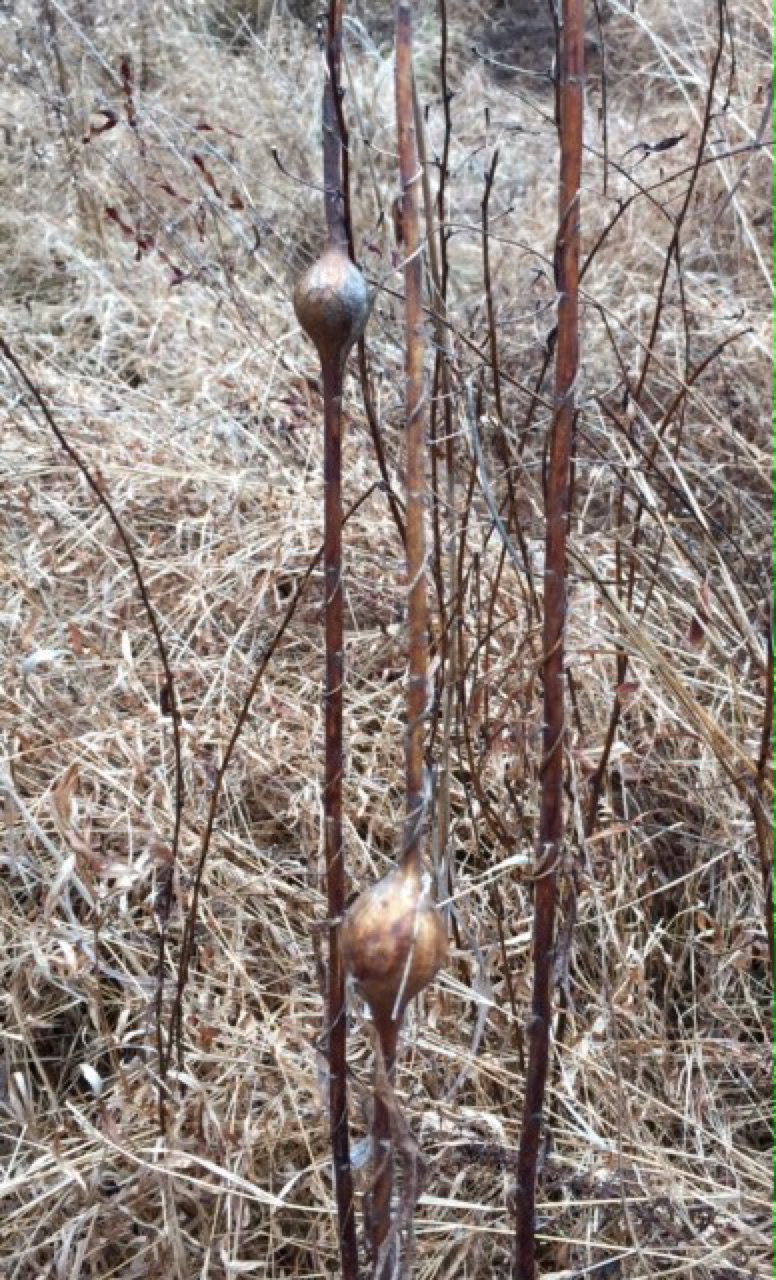
And in that book I recalled reading about galls. So I read up on them again and it turned out that “insect egg case of some sort” is a Goldenrod gall! Winter home of a Goldenrod Gall fly larva!

As it turns out, that “poorly identified sparrow” is a Song Sparrow (Melospiza melodia); the Cornell Lab of Ornithology refers to it as “one of the most diverse and widespread songbirds in North America.” So hardly a surprise to see it. Also – I think that there’s no way to distinguish gender in that picture. If I find out, I’ll put it in a future post. Always learning – I never knew before about Song Sparrows. Even a “common” bird like that. The Cornell Lab went on to say that Song Sparrows are “Often regarded as the most polytypic passerine in North America (Miller 1956) and vies with Horned Lark (Eremophilus alpestris) and Yellow Wagtail (Motacilla flava) as most polytypic bird species worldwide.” Learn something new every day – I didn’t know what “polytypic” meant! I googled it (if you hadn’t noticed I am an obsessive googler) and I still didn’t understand! So I fell back on my trusted American Heritage Dictionary, 5th Edition:

polytypic also polytypical adj. Having several variant forms, especially subspecies or varieties.

That I understand. Anyway, please pardon my extended lexicographical digression, I’m writing here about galls, not ornithology or lexicography. Galls – this is so cool – contain an animal that cannot exist without a plant. How great is that? I’ve been writing about and photographing “Every living thing” in Pony Pasture and breaking it down into “Pony Pasture Flora” and “Pony Pasture Fauna” – and I discover Pony Pasture Flora and Fauna in one place! Fauna that can’t exist without the Flora! It’s a tiny example of the big web of everything that can’t exist without everything else.

See the bulge in that plant stem just underneath the sparrow? Bottom center of the page? That is a gall. The plant is a Goldenrod. The gall is called (unimaginatively in my opinion) a “Goldenrod gall.” Inside it – continuing with unimaginative naming – is a “Goldenrod gall fly larva.” The moniker is bland, but the insect and its life cycle are fascinating. Read about it here, courtesy of the Fairfax [Virginia] County Public Schools: Goldenrod Gall Fly
Here’s a picture of a Goldenrod gall I took at Pony Pasture this week. Amazing I never knew this:
A goldenrod gall - with a goldenrod gallfly larva inside - if a bird hasn't already eaten it!

A goldenrod gall – with a goldenrod gallfly larva inside – if a bird hasn’t already eaten it!

Here’s a little patch of them:

Goldenrod galls in a patch at Pony Pasture

Goldenrod galls in a patch at Pony Pasture

Anyway – I apologize – not a lot of color or fascinating stuff in this post, although that whole Goldenrod gall thing is nothing short of amazing. And the “My favorite pictures” link has terrific beauty in it. 

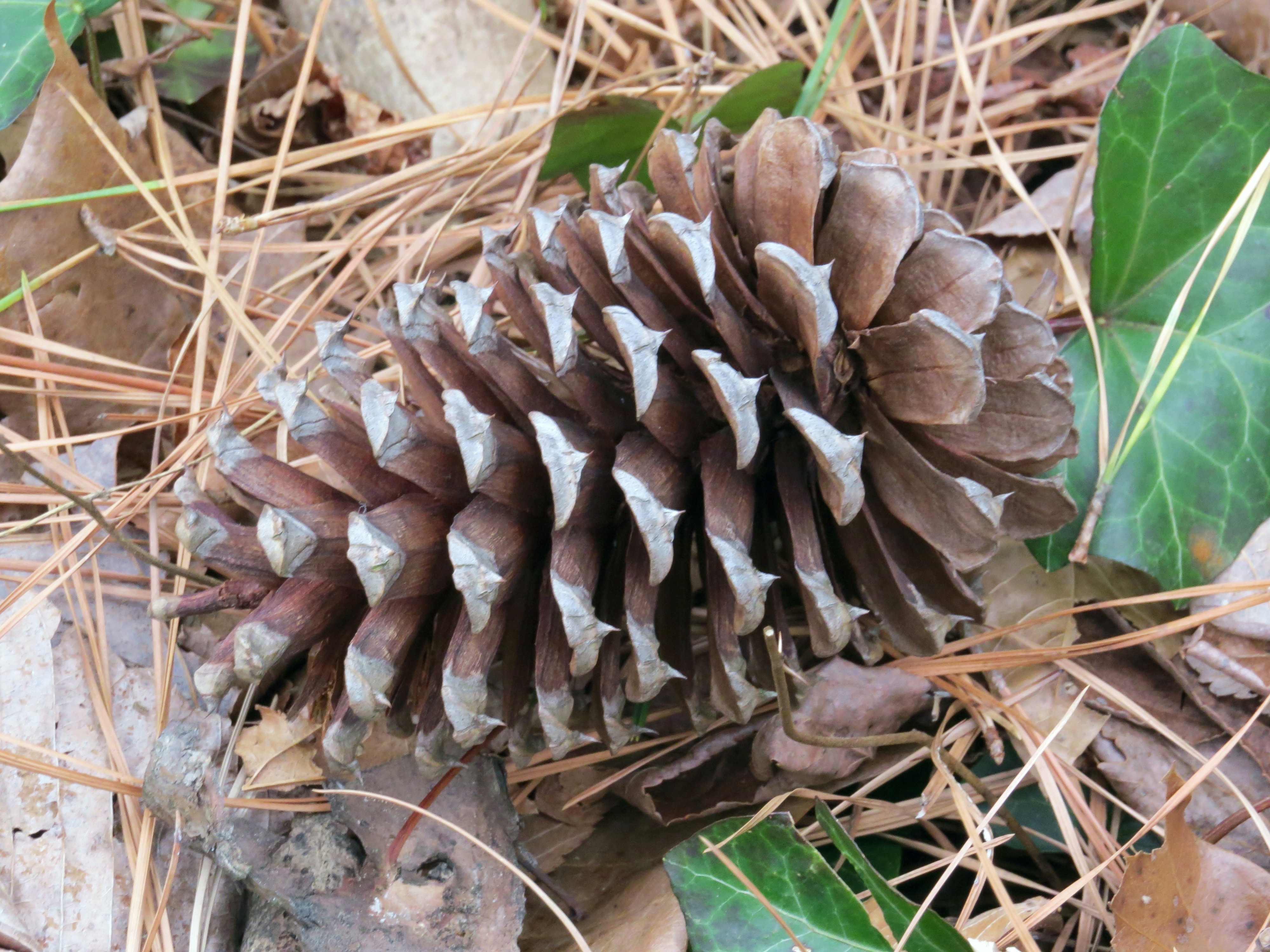
I am also learning – slowly – about what animals eat in the winter. Because I’ll tell you this, there’s not much. Here’s a pine cone from the edge of the woods:

A delicious (possibly) loblolly pine cone. There just HAS to be some calories there!

A delicious (possibly) loblolly pine cone. There just HAS to be some calories there!

Some of these leftover seeds, like acorns and walnuts and hickory nuts are still around. But as this deep, dense cold sets in I become more curious about where these animals are getting their calories. We’re in the beginning of what could easily be a seven day stretch when the temperature never goes above freezing – not even once. It’s going to take a lot of energy (calories) to maintain body temperature in those conditions. Where do the calories come from? I have a lot of birds on my feeder right now! And beginning in around 24 hours we’re supposed to get several inches of snow. Yikes! Keep your bird feeders full! And enjoy the snow! I’ll do both! Have a great week,

Jay

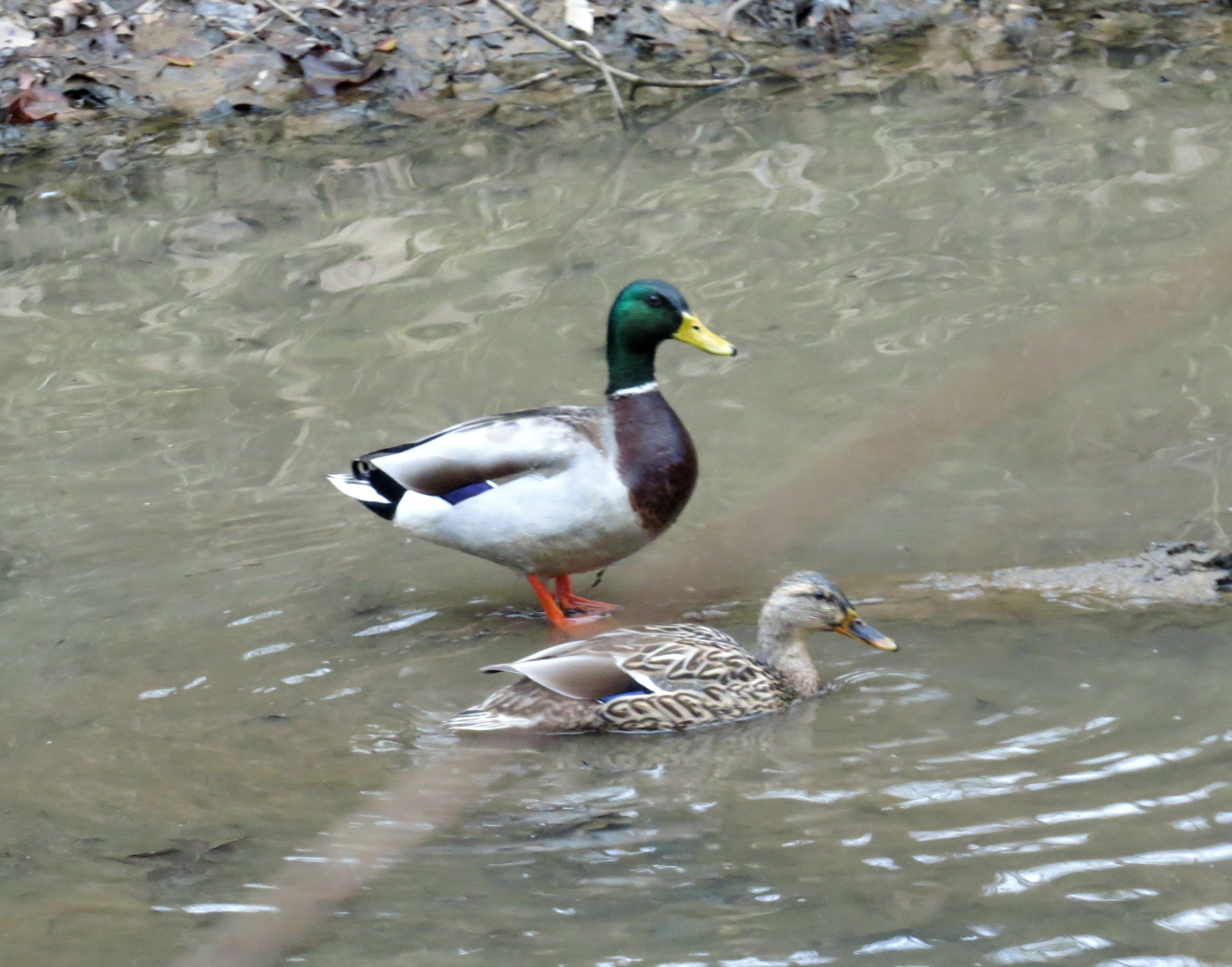
PS There are mallards bunching up in the canals. This pair was in the middle of a group of around a dozen:

A pair of mallards, dabbling. Seriously. That's the verb for what they do to find food - "dabble."

A pair of mallards, dabbling. Seriously. That’s the verb for what they do to find food – “dabble.”

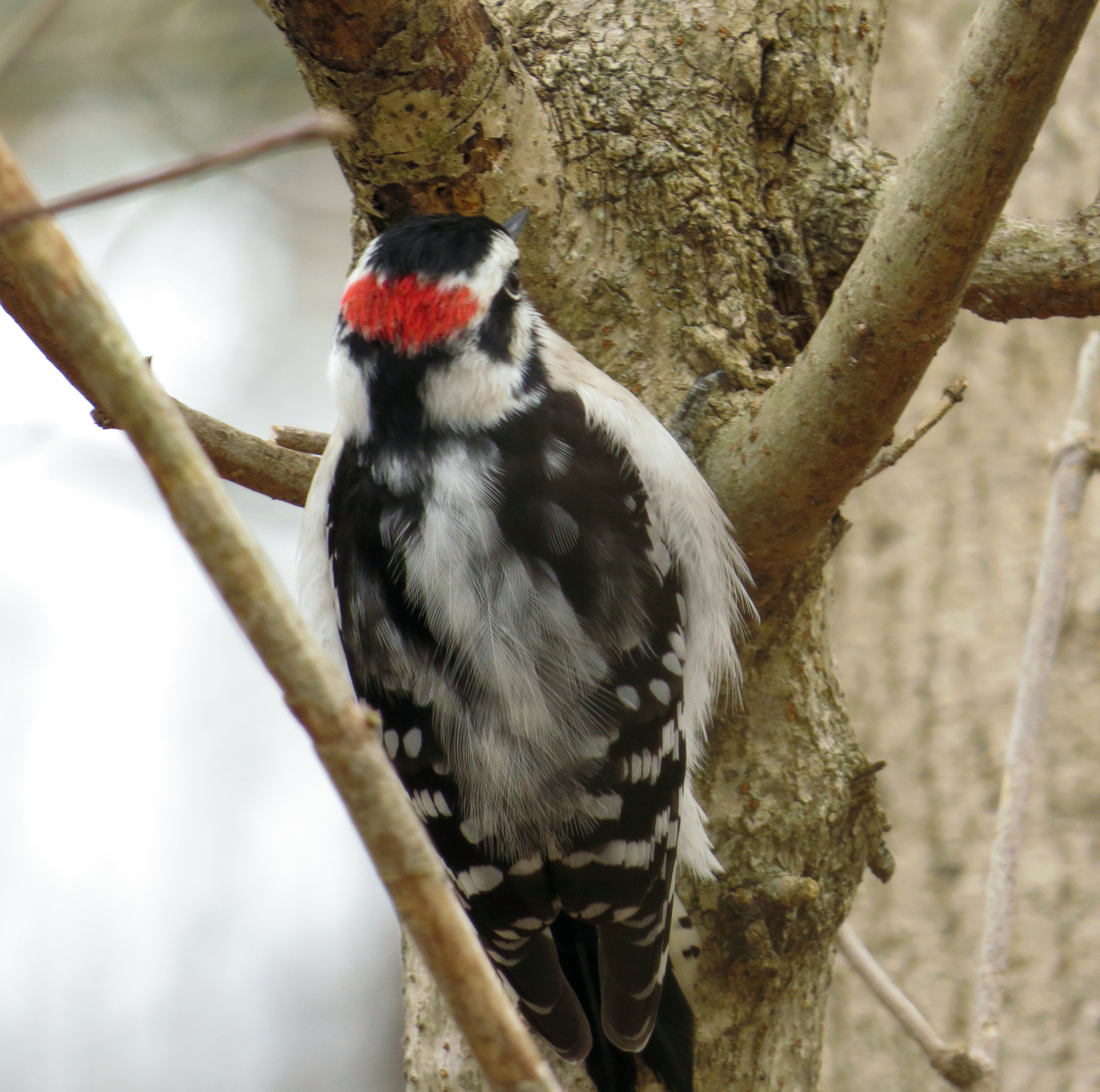
And that same morning I was standing beside a little tree and a male downy woodpecker landed practically on my shoulder:

Male Downy woodpecker. He's a sharp looking little dude isn't he?

Male Downy woodpecker. He’s a sharp looking little dude isn’t he? 

Posted in Birds, Insects, James River, Pony Pasture, Rivers | Tagged , , , , , | 1 Comment

“Gradually and then suddenly”

8 February, 2015                   “Gradually and then suddenly”

That’s the way spring appears here in Richmond – gradually and then suddenly. “Gradually and then suddenly” is how a character in Ernest Hemingway’s 1926 novel The Sun Also Rises describes going bankrupt. But it’s also how spring inevitably happens in Richmond. In my experience.

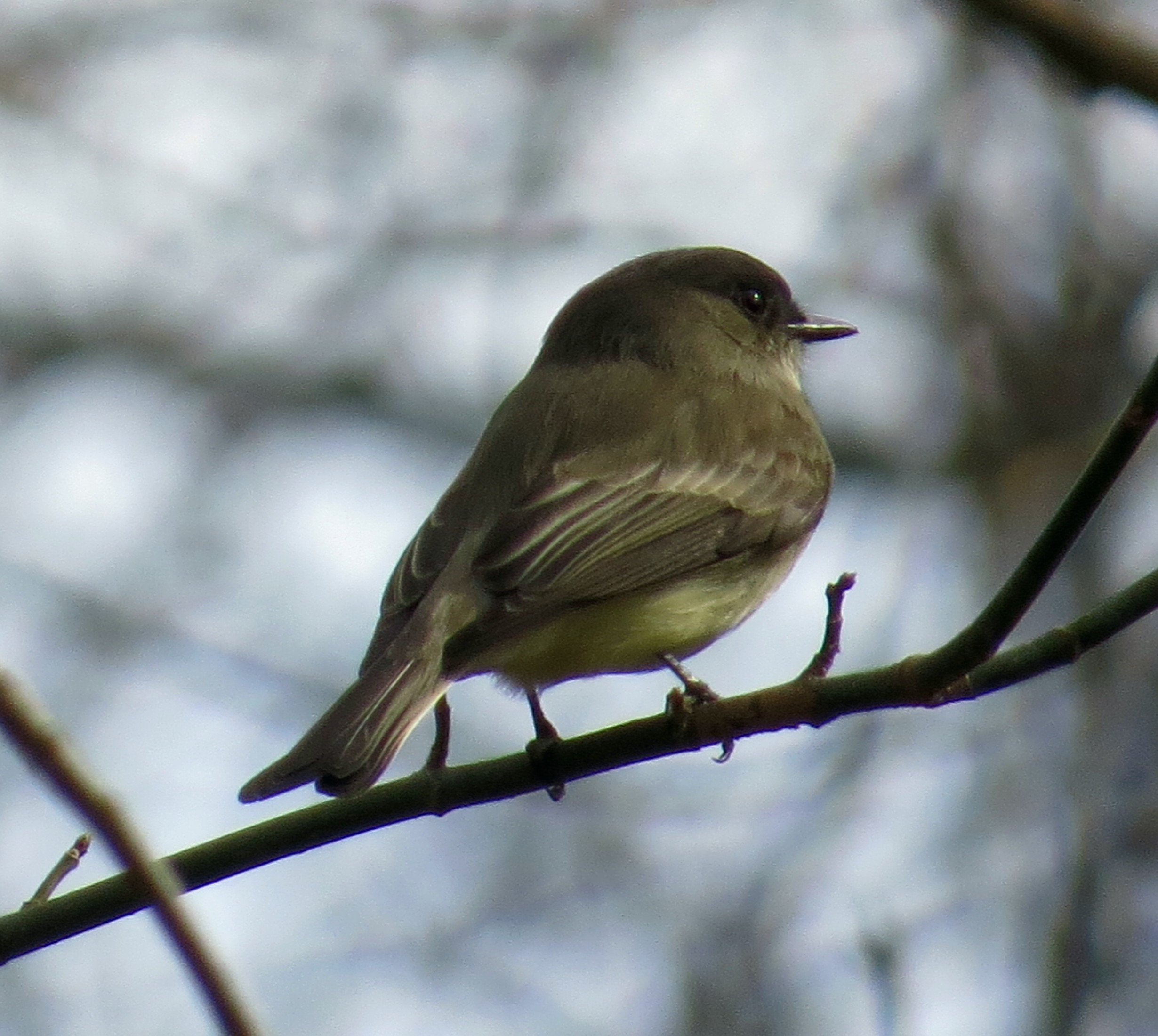
I don’t (yet) have any truly spring like pictures. The first of those are generally daffodils, which have not yet come out of the ground anywhere on my normal circuit. They’ll be up soon – maybe even this week – and I’ll get a picture when they do. Birders (I’m learning) talk a lot about the “spring migration.” According to everything I read, it doesn’t start this early in central Virginia (first week in February). But I photographed this handsome Eastern Phoebe (Sayornis phoebe ) at Pony Pasture this week and I suspect he may be on the thin leading edge of the spring migration:

Delicate and graceful Eastern Phoebe at Pony Pasture

Delicate and graceful Eastern Phoebe at Pony Pasture

That color is a little bit off due to my messing around with it. I’ll get a better one. I don’t know how I got that faint greenish tinge in there. Sorry. 

In the Cornell Lab of Ornithology web site section about phoebes the authors write that “…Eastern Phoebes winter farther north than most other flycatchers and are one of the earliest returning migrants in spring.” So maybe that one stayed here all winter or perhaps it’s an early arrival.

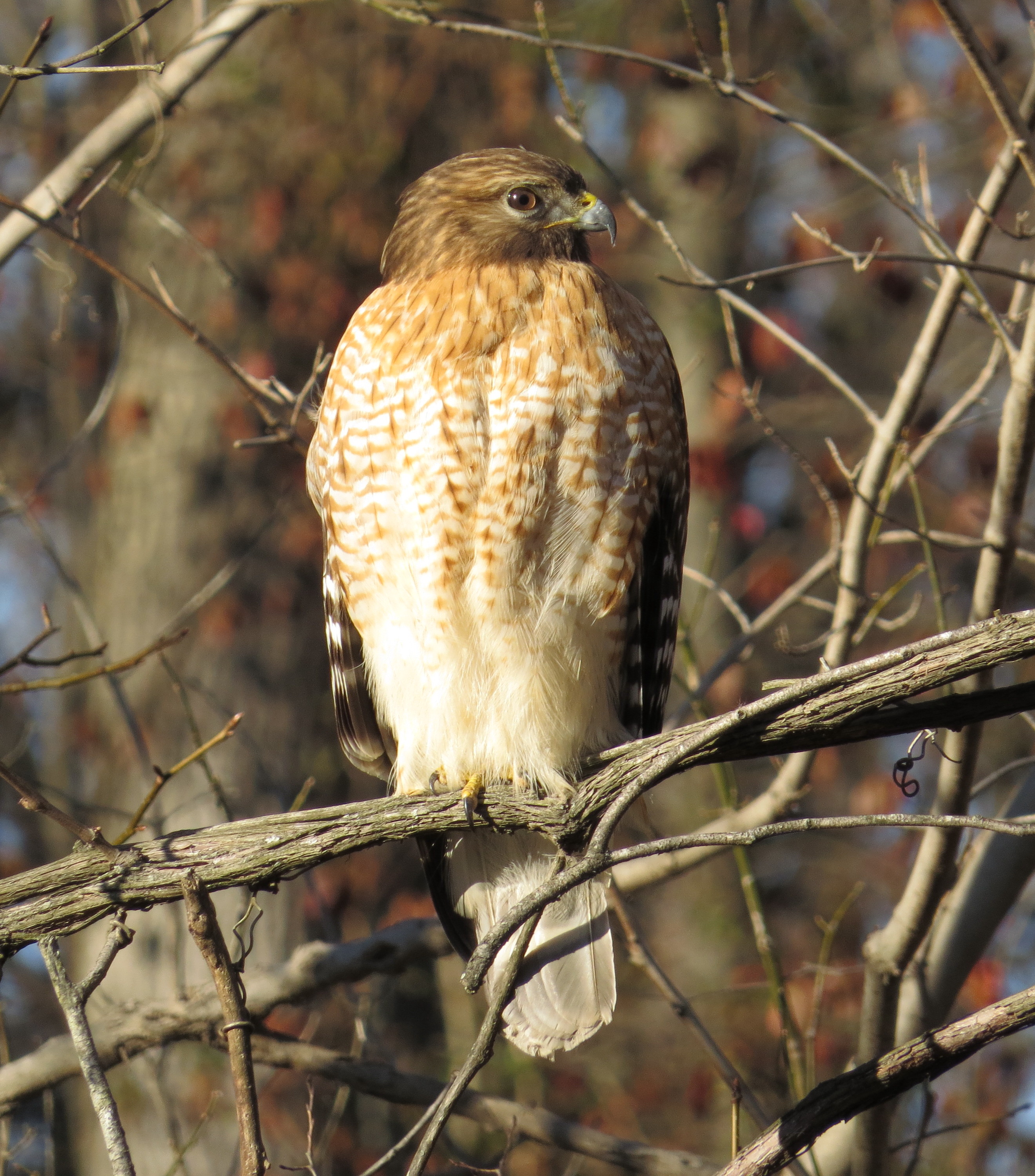
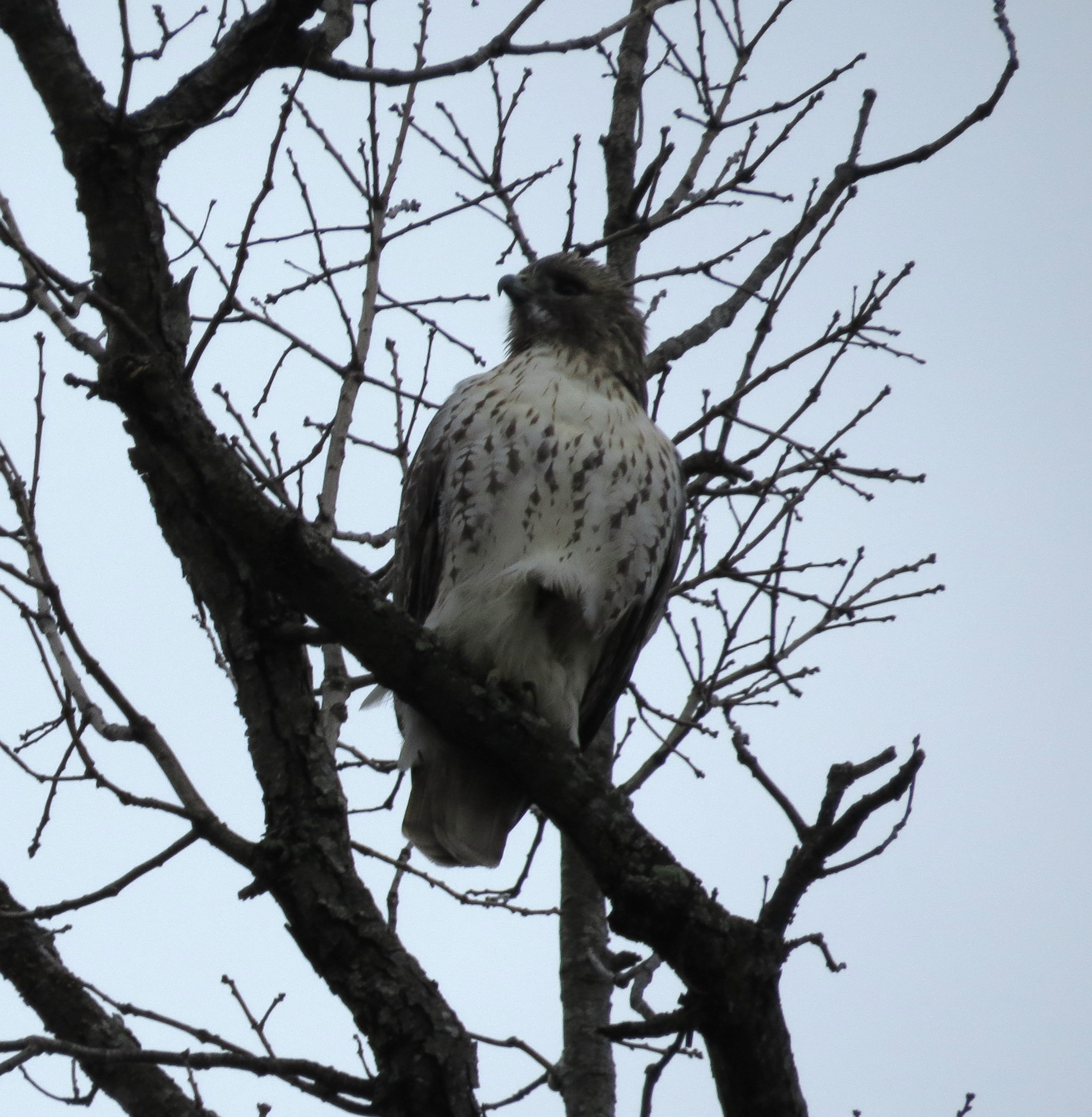
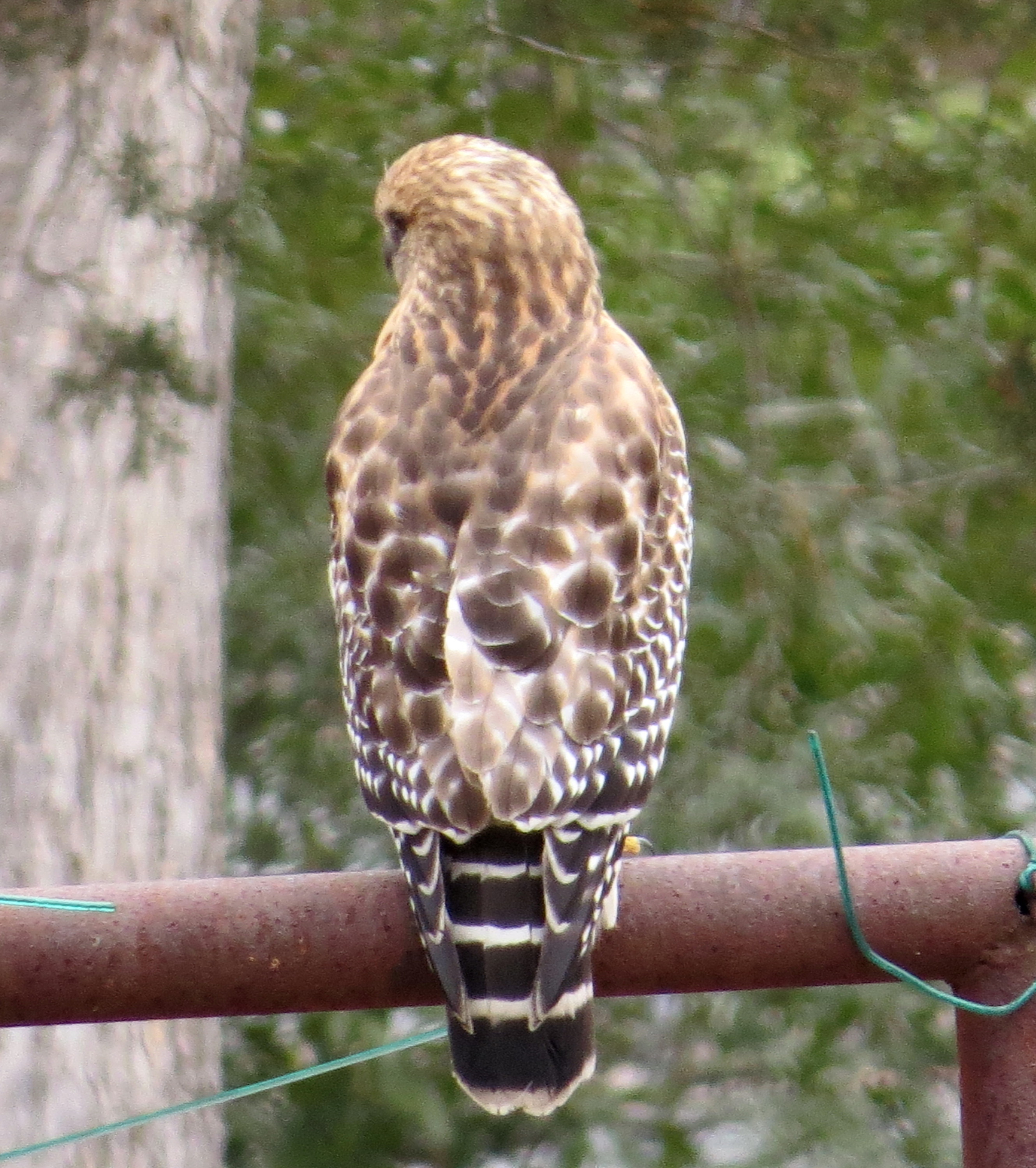
Ethan “got” another great bird photograph earlier this week. When the weather is foul we go to the Y and work out. But this time of year when the weather is cold and fine and bright we enjoy spending time out-of-doors. Some days we go to Bryan Park and some days to Pony Pasture. The birding and hiking and nature watching are enjoyable in both places. Luckily for both of us, Ethan chose Thursday to head over the Huguenot Bridge and see what we could find at Pony Pasture. But we never made it that far! We crossed the bridge and as we were heading down the off ramp to Riverside Drive there was a Red-shouldered Hawk perched in a tree looking directly at us! This was at 3:15 PM and it was facing south, warming up in the afternoon sun. Today (Sunday) is warm and pleasant but Thursday for much of the day it was bitterly cold and the wind was gusting over 35 m.p.h.

Anyway, there were no  cars around so we stopped right there and took several pictures. Then we drove down and turned around to get a better angle – and the hawk was still there. More pictures. Then we parked and walked back – still there! We got behind the guardrail and leaned against it for support – more pictures. Here’s Ethan’s picture:

Red-shouldered hawk

Red-shouldered hawk

I’ll tell you though – and Ethan will tell you too – pictures like that don’t just fall in your lap. Because the bird still had not moved and we crossed the street and climbed over the other guard rail – this time we were quite close. And Ethan said “This is hard!” Because even though you’re “close,” you’re close by the standards of a hawk. This is not a pigeon or some overfed goose in the park. Your camera is zoomed in and your hands are freezing cold and they’re shaking and the lens is shaking and you’re just sure the bird is going to fly away any second and it takes a lot of concentration and self-control. My hat is off to Ethan. We took sixty images to come up with this one. It’s a winner. 

Also – even with a great image like that I couldn’t tell if it was a Red-tailed hawk (Buteo jamaicensis) or a Red-shouldered hawk (Buteo lineatus). Fortunately my friend Kim is an expert birder with a particular expertise in raptors. I sent her that picture to help me understand the difference. Here is her response – used without permission! I hope you won’t mind Kim – you should write a field guide! Here is what she taught me: 

= = = = = = = 

Adult red shoulder. Patterns and color on chest., redder than red-tail’s to me, and finer. Wings and tail large bands of very dark brown interspersed with finer bands of whitish (on tail) and markings (on wings). This shows really clearly in flight with light coming though, as if the wings and tail were zebra like black and white, but a bit more dark than light. But you can sort of make it out here too. Some of it’s just the overall look, which comes with having seen a whole lot of them! Part of what goes into that is the relative size of beak, and feet especially – much more slender toes and legs – when you can see them. Very nice!!!

= = = = = = = 

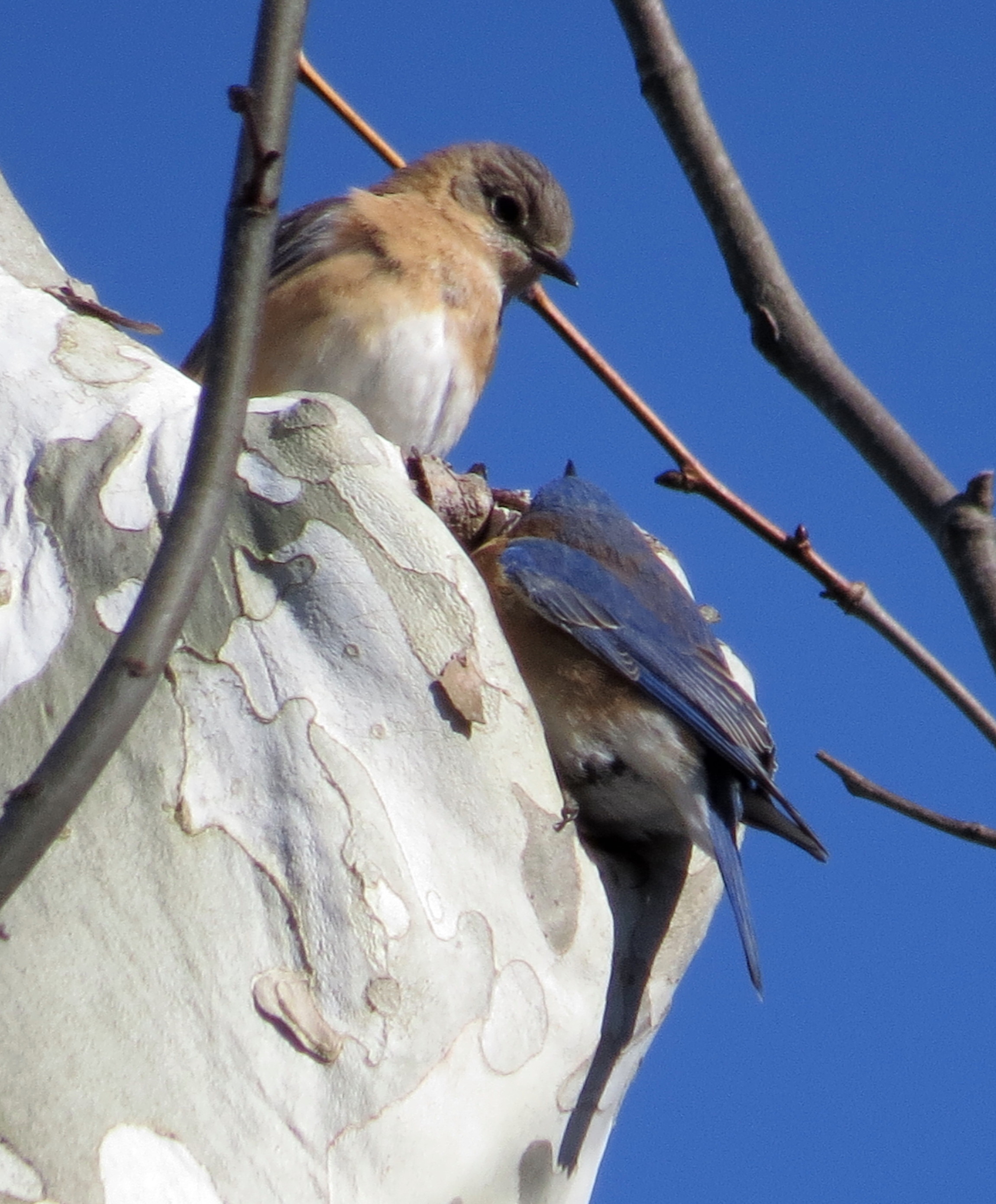
I was hiking with the dogs earlier in the week and it was sunny and frigid. I spotted this pair of bluebirds (Sialia sialis) high in a sycamore on the river’s edge, investigating a cranny:

Pair of bluebirds investigating a cranny

Pair of bluebirds investigating a cranny

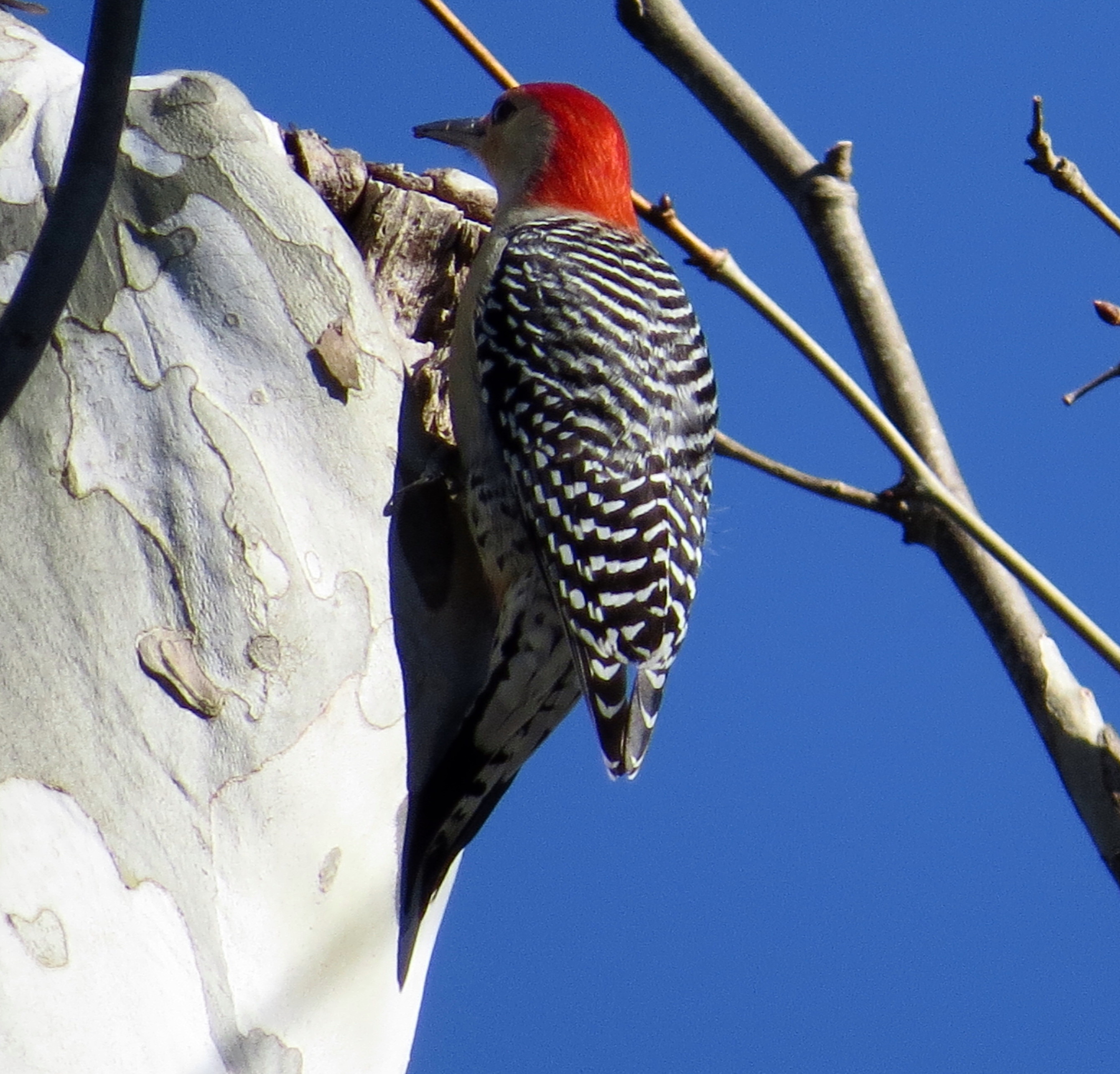
I supposed it might be a nesting site – maybe it is – but three seconds later – according to the time stamp on my camera – this handsome male Red-bellied woodpecker (Melanerpes carolinus) was sticking his nose in the same spot. Possibly the sun was warming it up and bugs were moving around:

Male Red-bellied woodpecker, investigating the cranny the bluebirds had just investigated

Male Red-bellied woodpecker, investigating the cranny the bluebirds had just investigated

True story though – after my last picture of the Red-bellied woodpecker, it was thirty-three seconds before one of the bluebirds was back in. It must have been a great spot. It was quite high up and I’m sure warm on the frigid morning.

Speaking of frigid. The 2015 Yukon Quest began at 2:00 PM EST yesterday in Whitehorse, Yukon Territory. The twenty-six sled dog teams are just over one full day into a 1,000 mile journey to Fairbanks, AK. In odd-numbered years it goes from the Yukon to Alaska. In even-numbered years it goes the opposite direction. It began in 1984 and has been run every year since. The slowest finish ever was in 1986 at over fourteen days. Last year was the fastest ever at eight and a half days. So possibly the winning team will arrive in Fairbanks in the early morning hours Eastern time a week from Monday.

If you look through the current standings you’ll see a musher named Lance Mackey – that’s who my dog Mackey is named after!

There’s a wonderful poem written by Robert W. Service in 1907 called The Cremation of Sam McGee. I suggest you read it; it’s a treasure. Part of the first stanza says:

The Northern Lights have seen queer sights,

     But the queerest they ever did see

Was that night on the marge of Lake Lebarge

I included that reference because all of the teams in the YQ passed “the marge of Lake Lebarge” in the night last night. It’s a lake but it’s really a wide spot in the Yukon River. Reading the poem is great but if you want a real treat, listen to Johnny Cash read it. It’s five minutes and thirty-four seconds of your life you’ll never get back but I assure you it’s time you’ll treasure. Listen to it here: Sam McGee, as read by Johnny Cash. Cris L., I believe you’ll especially appreciate this. His voice reminds me of you!

I was looking for something else and realized I had an old, low quality video I took ten years ago of a beaver swimming in a canal at Pony Pasture. It’s very low quality but there’s no mistaking it’s a beaver – more precisely a North American Beaver (Castor canadensis). The video’s only eighteen seconds long and in the last eight-or-so seconds you can see my old dog Ivory run up to edge of the creek:


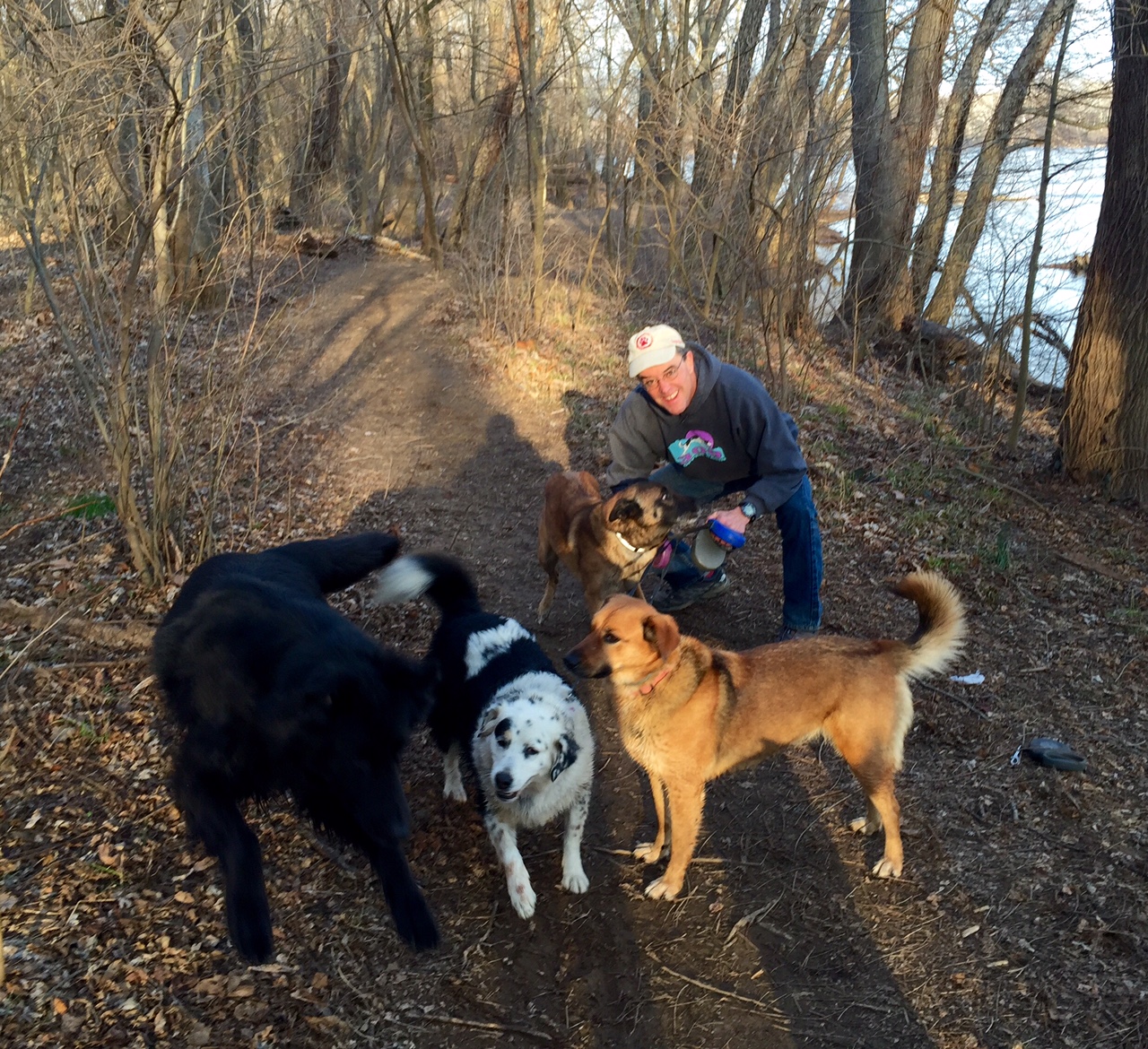
I had the great good fortune of dog-sitting for our old pals Lola and Luna this morning and a friend was kind enough to take our picture: 

Mackey (wild black blur on left), Luna, Lola, Turner in back, and yours truly

Mackey (wild black blur on left), Luna, Lola, Turner in back, and yours truly

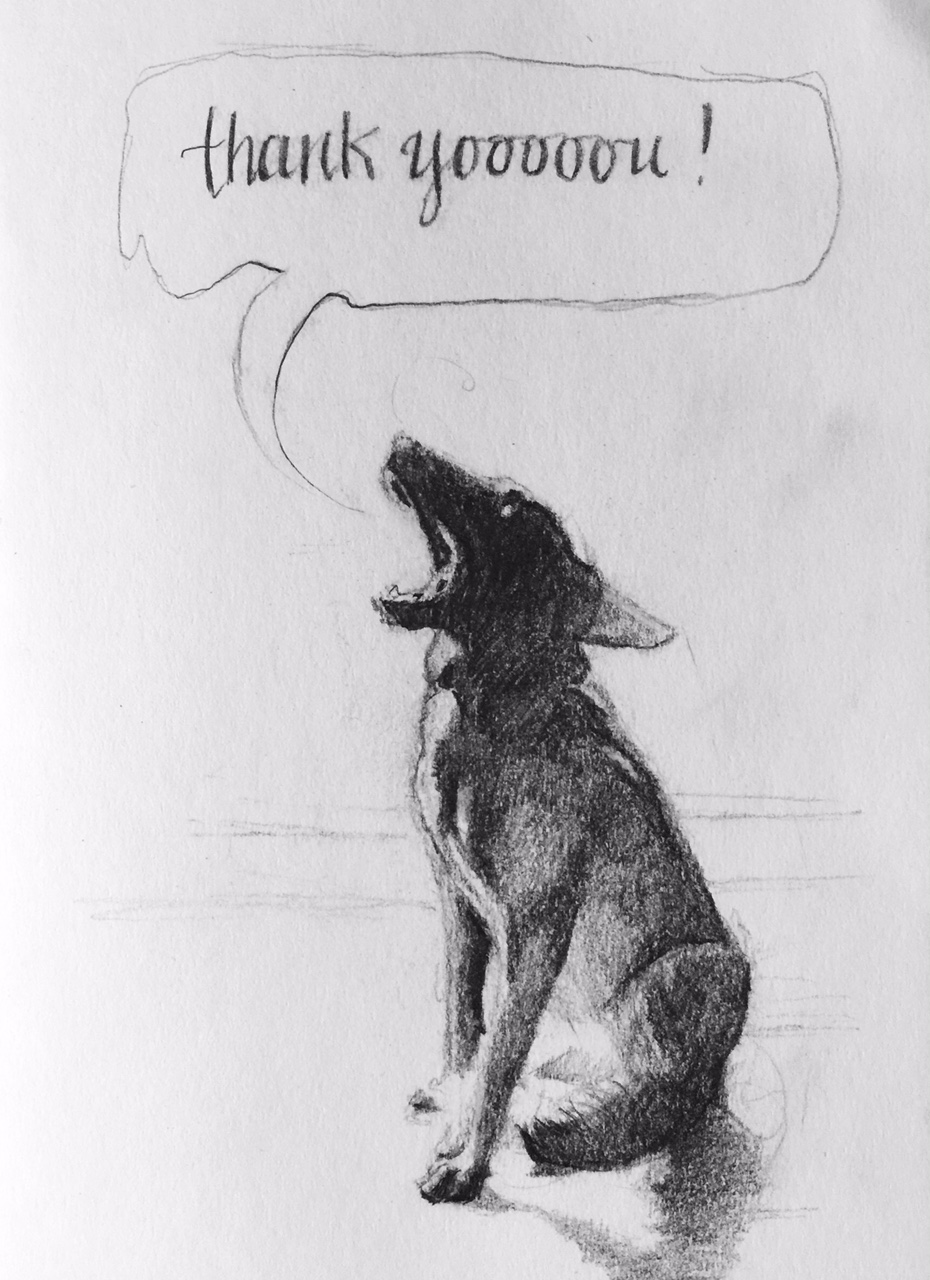
I may have mentioned before that Mackey and Turner howl – loudly and in unison – when certain emergency vehicles pass with lights and sirens. They howl along with the sirens. I think it’s ambulances they prefer to accompany. It’s definitely not police cars and I am relatively certain it’s not firetrucks. Turner sits on his rear end and points his nose at the ceiling and sings. Evelyn took a picture some time ago and posted it on Facebook. It was on my birthday and Turner was wearing a birthday hat! My niece Aileen used the picture and made a great thank you card! Enjoy: 

Aileen's rendition of Turner howling - thank YOU Aileen!!!

Aileen’s rendition of Turner howling – thank YOU Aileen!!!

Have a great week,

Jay  

Posted in Birds, Dogs, Fun, James River | Tagged , , , , , , , , , | 2 Comments

We interrupt our regularly scheduled blog post…

1 February, 2015                       We interrupt our regularly scheduled blog post…

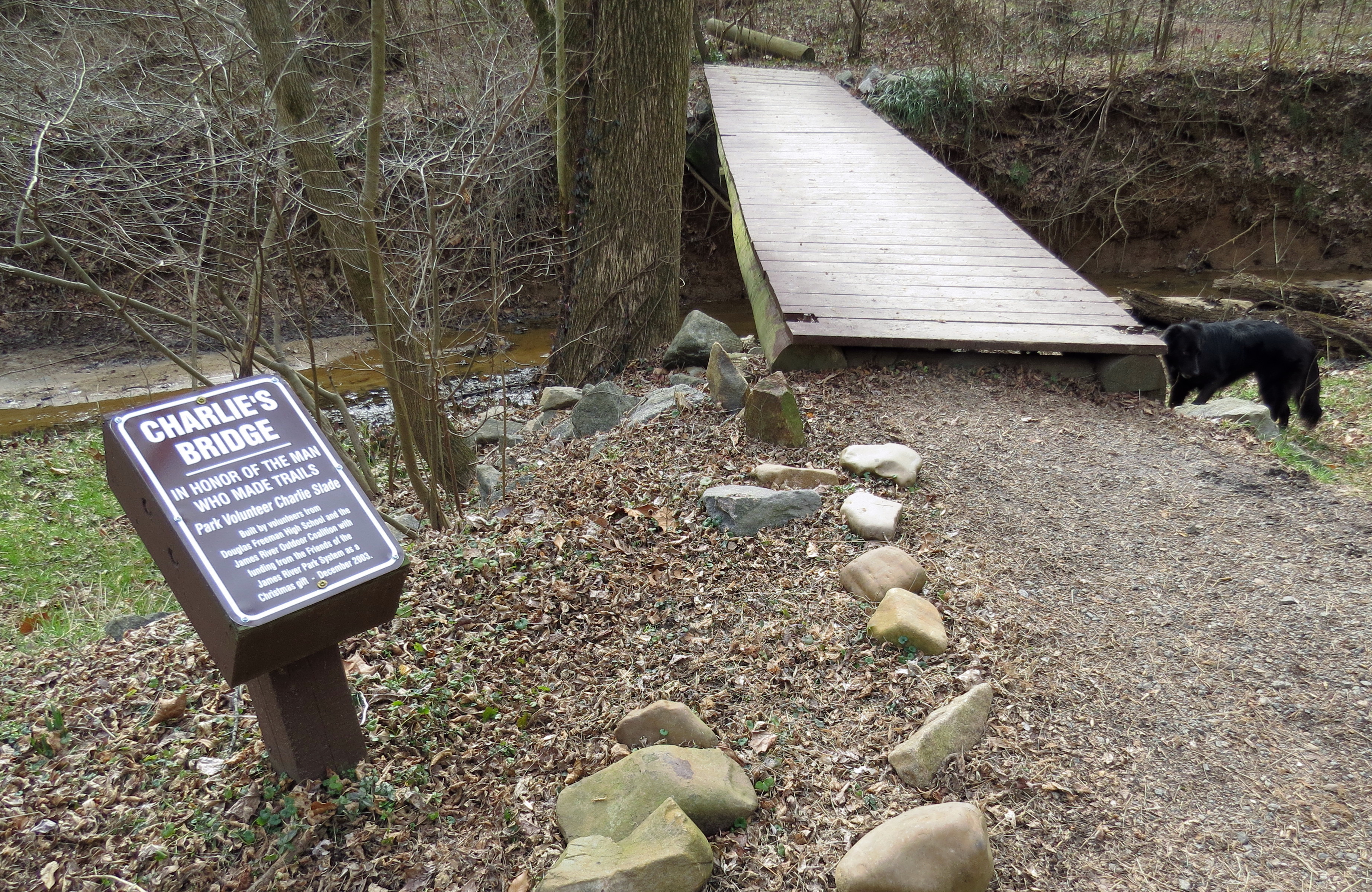
…to bring you this slight change of pace. Today’s the first day of February and it’s still winter. By the calendar the first day of Spring is not until mid-March. But keep your eyes peeled this month. The gray, monochrome colors are still around but in Pony Pasture we’ll see the first “non-winter” colors before February ends. Flowering plants are the first “non-winter” colors. Typically those are dandelions, and they pop up at the slightest provocation. But the first “real” flowers will be either daffodils or crocuses. There are reliable clumps of daffodils in a few places in Pony Pasture. And crocuses and snowdrops will appear beneath this sign soon:

The late, great Charlie Slade's  eponymous bridge. Sign soon to be surrounded by cheerful flowers.

The late, great Charlie Slade’s eponymous bridge. Sign soon to be surrounded by cheerful flowers.

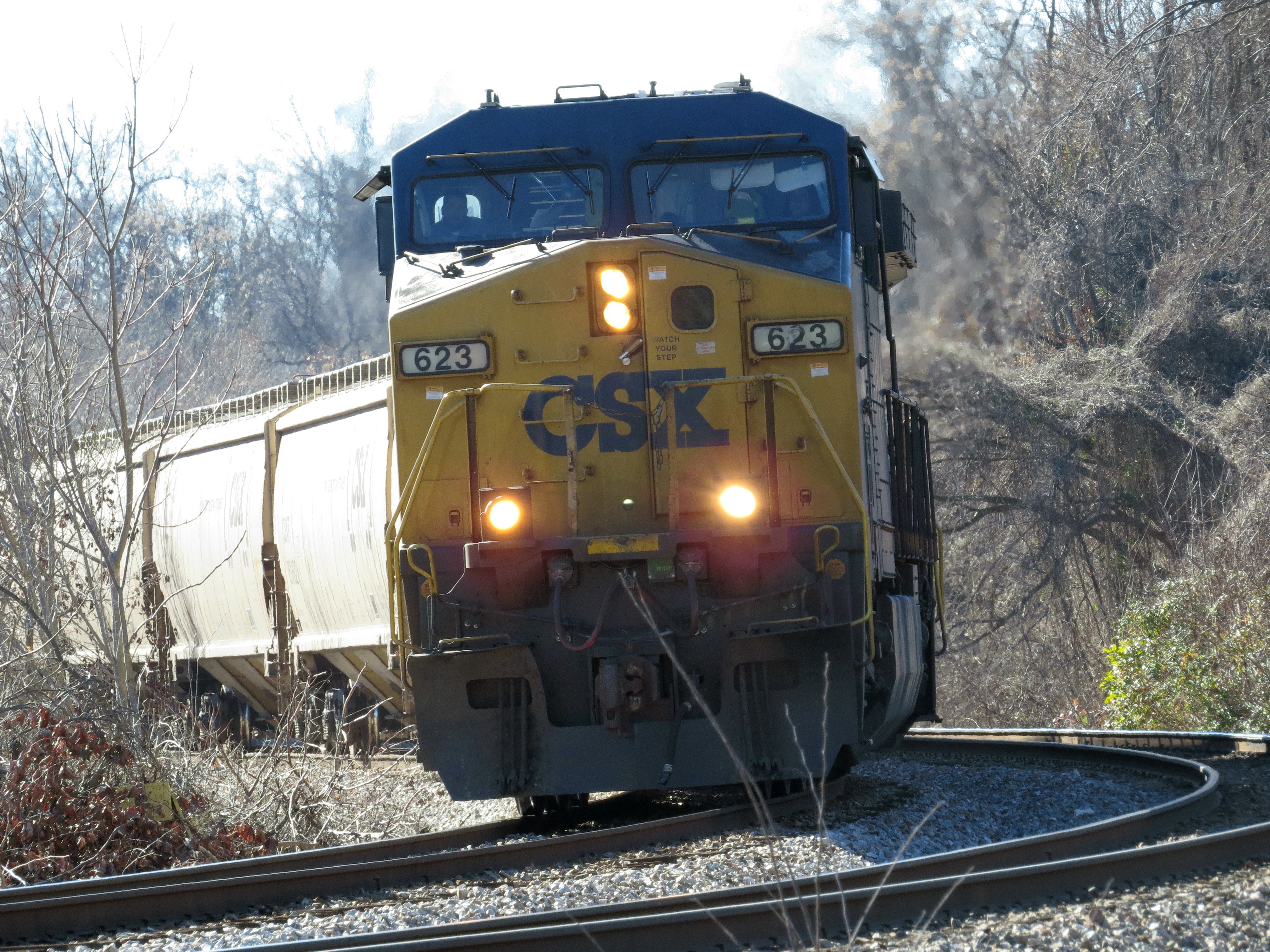
I don’t know if many adults have a favorite train engine (some do, I’m sure) but mine is the GE AC6000CW. CSX only has about a hundred of them. Seeing one is sort of like seeing a Bald Eagle – they’re around, but you don’t get to see them very often. I was hiking with a buddy earlier this week when one came around the bend. If you see a CSX locomotive with a three digit number beginning with “6” it’s an AC6000. Here’s the one we saw:

AC6000CW pulling LOTS of grain into Richmond

AC6000CW pulling LOTS of grain into Richmond

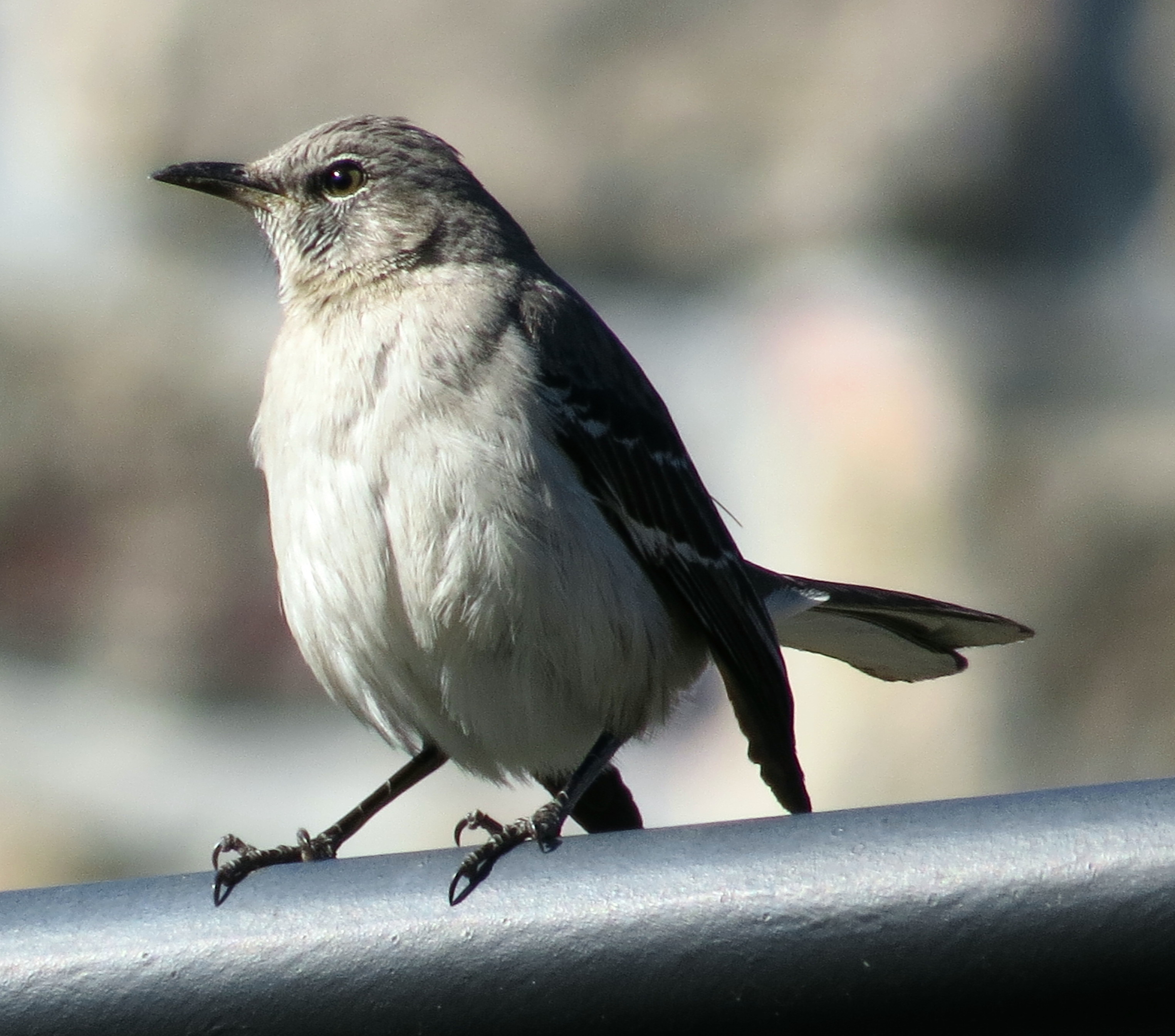
I’ve said this before but (in my experience) the single most important factor in photography is light. For a better photographer than me (there are many) I’m sure other factors come into play. But in my case I want lots of light. From where I was looking at that train I was able to turn around and see this handsome Northern mockingbird (Mimus polyglottos) perched on a handrail. Beautiful light:

Not very artistic, but that light is so beautiful. And so is the mockingbird.

Not artistic, but that light is so beautiful. And so is the mockingbird.

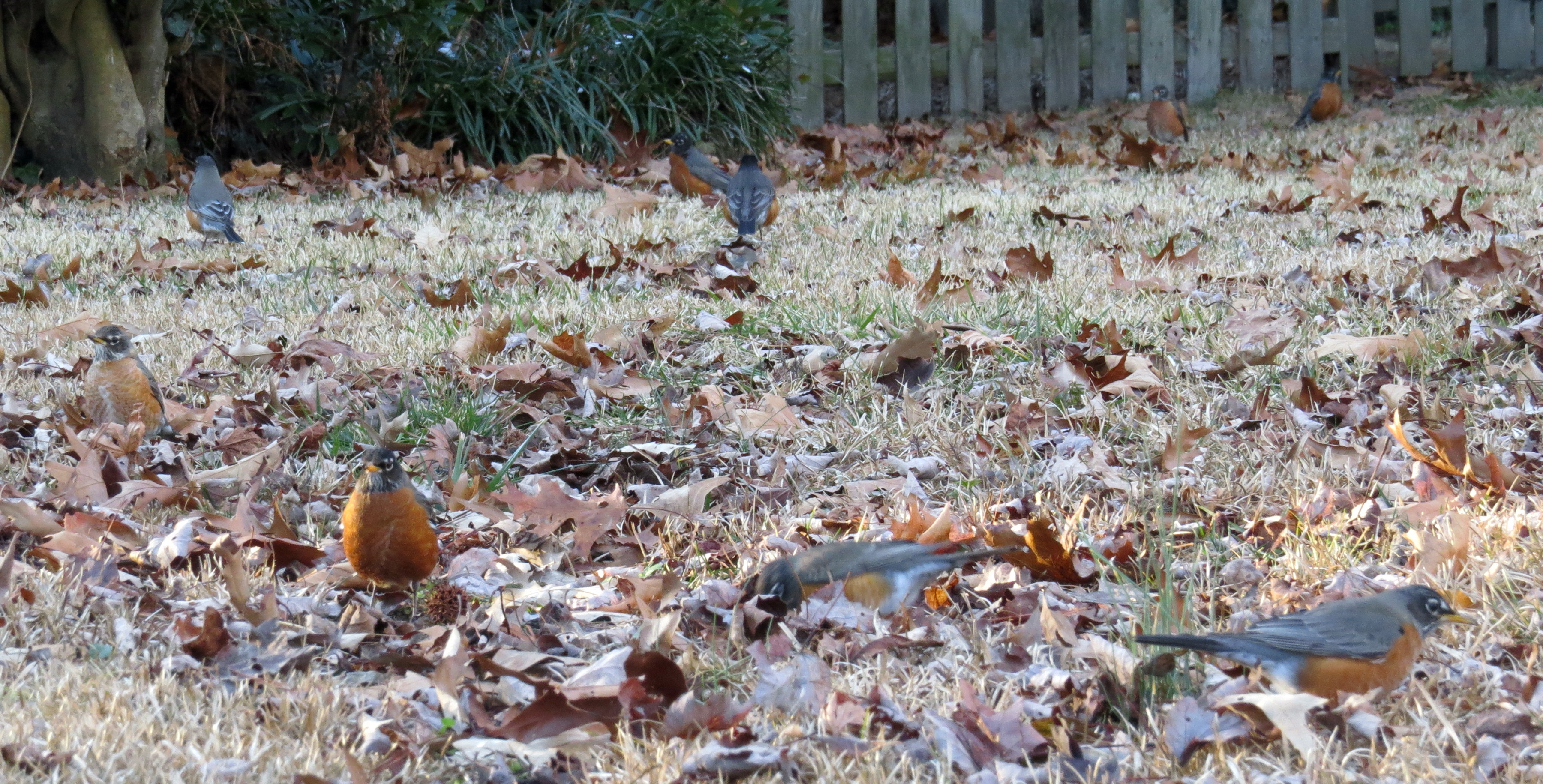
It’s been gray on a lot of days recently but when the sun comes through it’s bright and crisp. The same day I took that mockingbird picture (Wednesday) I pulled up in front of my house and my front yard was filled with American Robins (Turdus migratorius). I rolled down my window and turned off the car and sat there with my camera. In just a minute or two they were acting as if I wasn’t even there. I couldn’t get a picture of all of the robins in the yard – not even close. But if you look closely in this picture you can count nine. These are “overwintering” robins – they live here year round. I’m always happy to see them:

A small sliver of a yard filled with robins.

A small sliver of a yard filled with robins. It’s hard to pick them out from the leaves. 

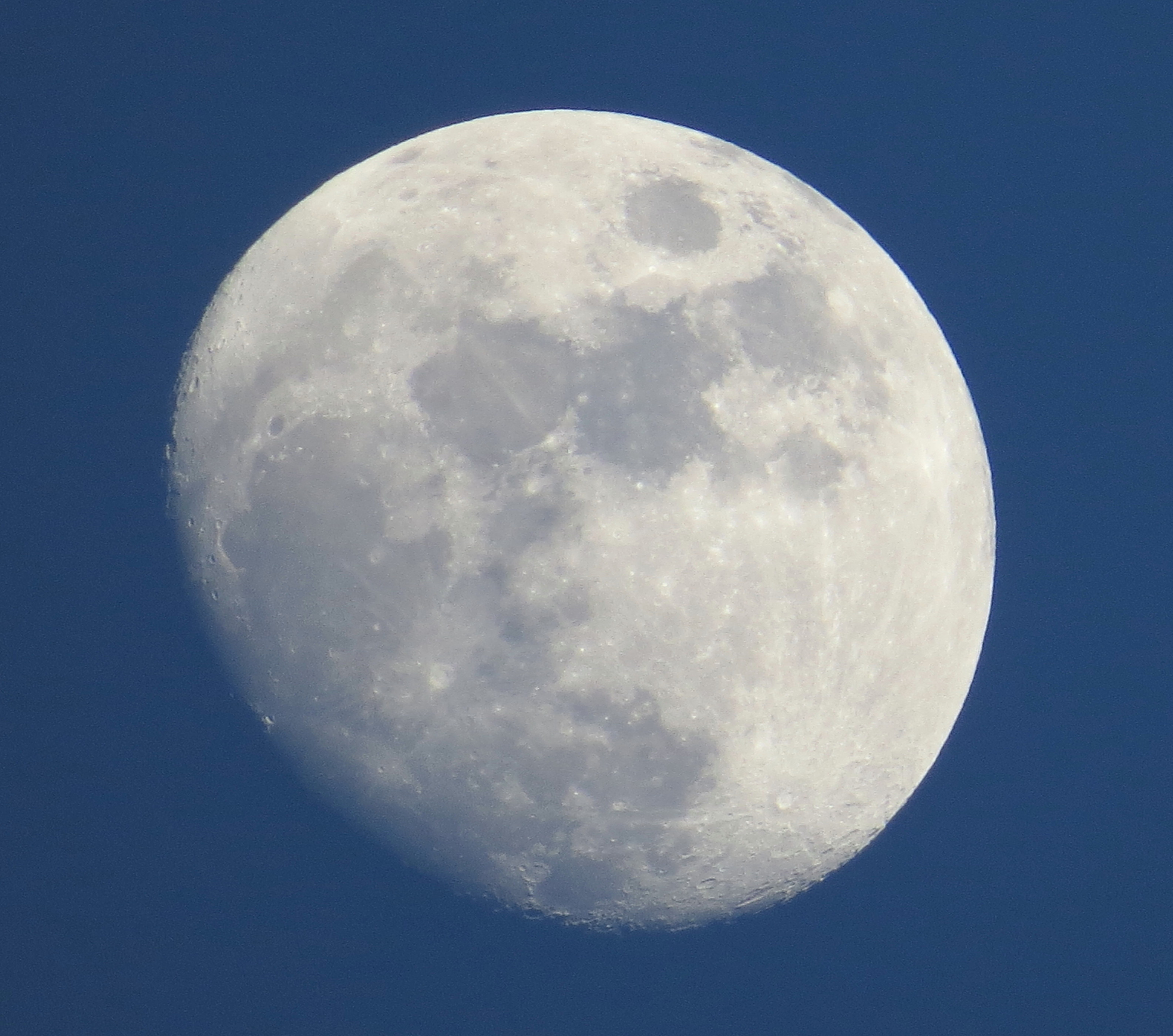
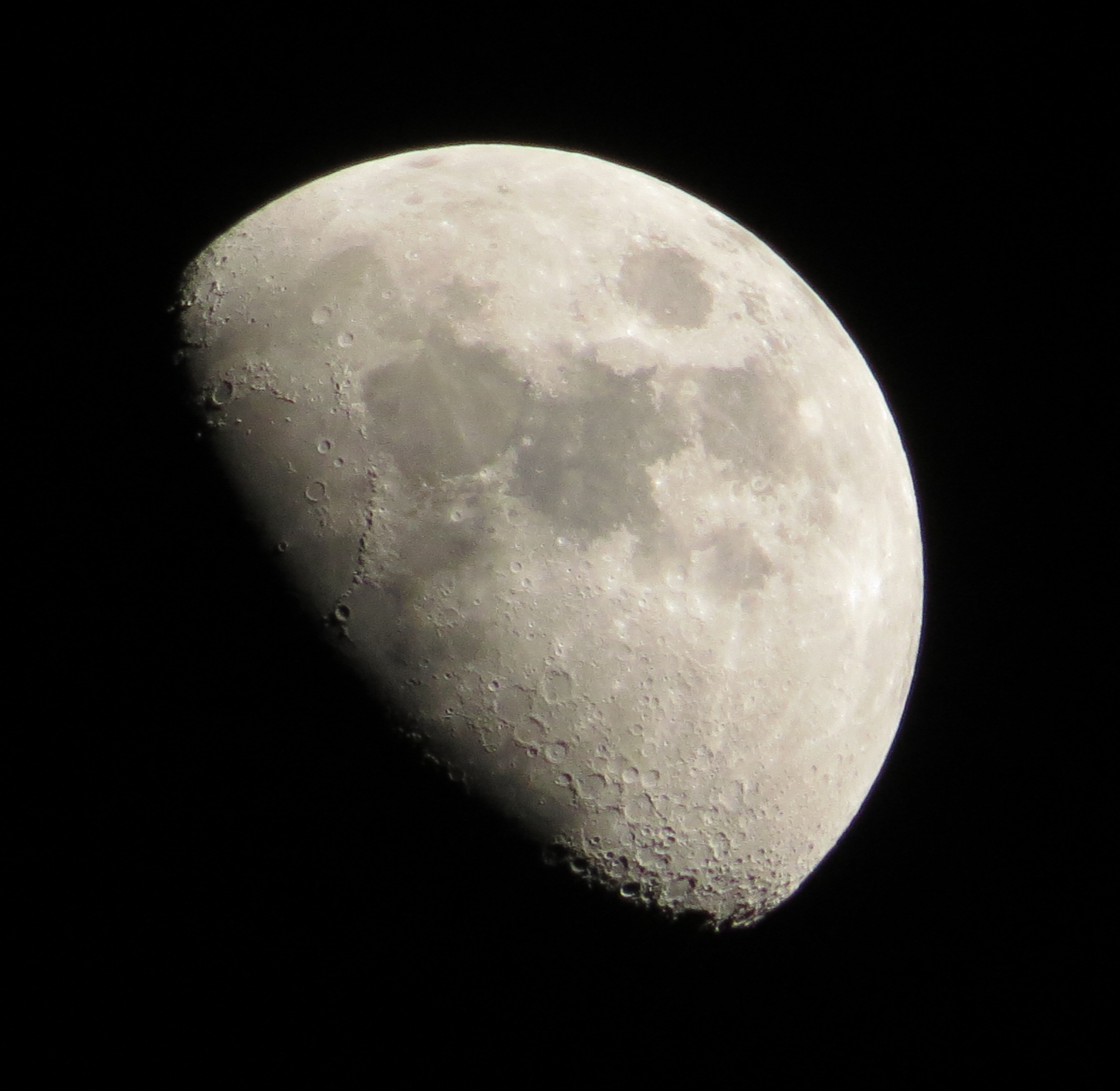
Wednesday was just a good day for photography – very clear air all day. I took this picture of the moon from my front yard around 6:30 in the evening:

Moon against a black sky

Moon against a black sky

At that point it was high in the southeastern sky. The current lunar cycle was about 8.5 days old. The true full moon here in Richmond for this cycle comes at 6:10 PM Tuesday evening (February 3). The moon’s “age” – how far along in its cycle – will be 14 days, 9 hours and 55 minutes when it is completely full. It’ll still appear full tomorrow evening and Wednesday evening though. The current weather forecast for Tuesday evening is clear so we’ll probably be able to see it. The moon will begin its climb above the eastern horizon at 5:40 PM Tuesday. Watch for it if you enjoy the full moon.

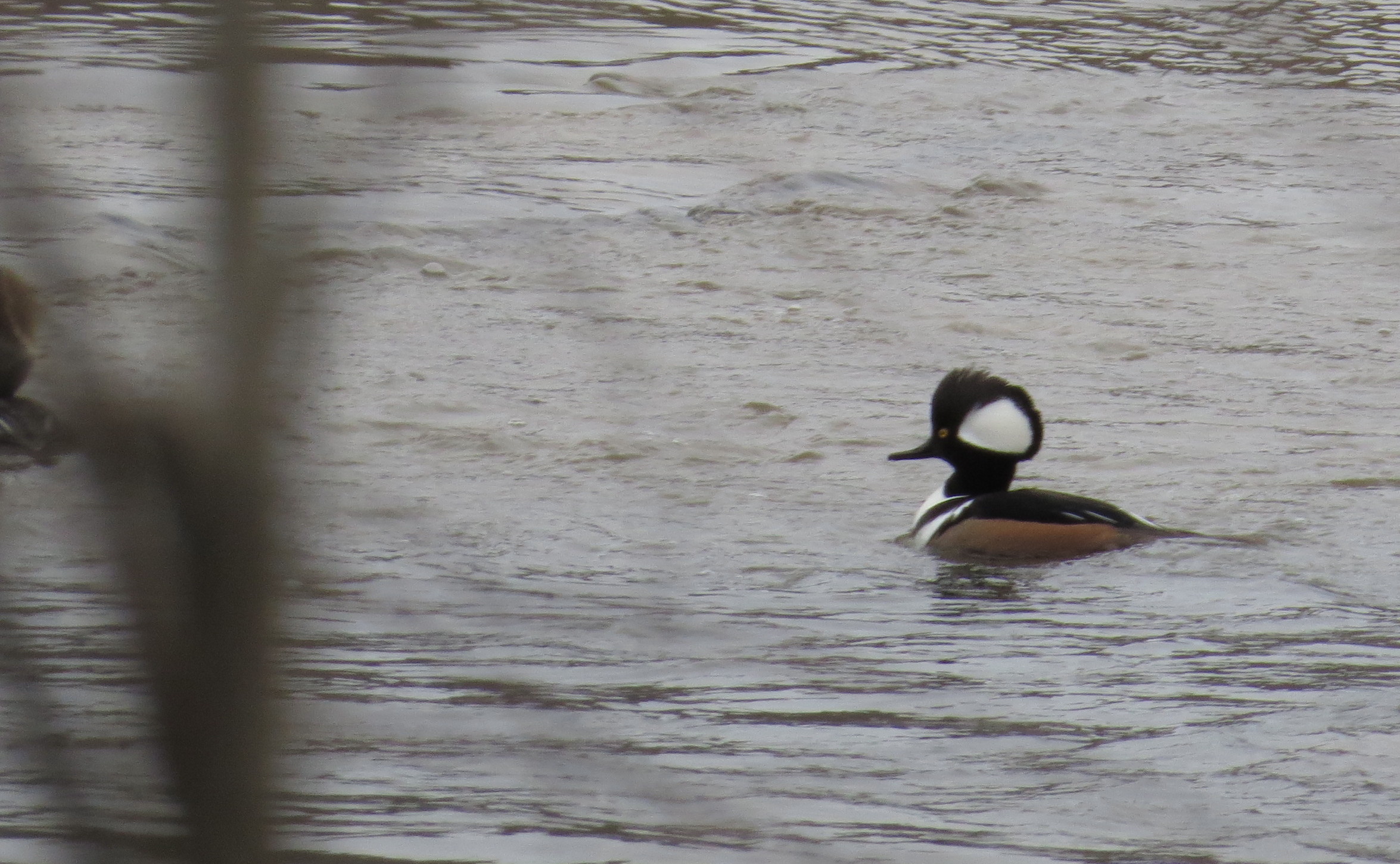
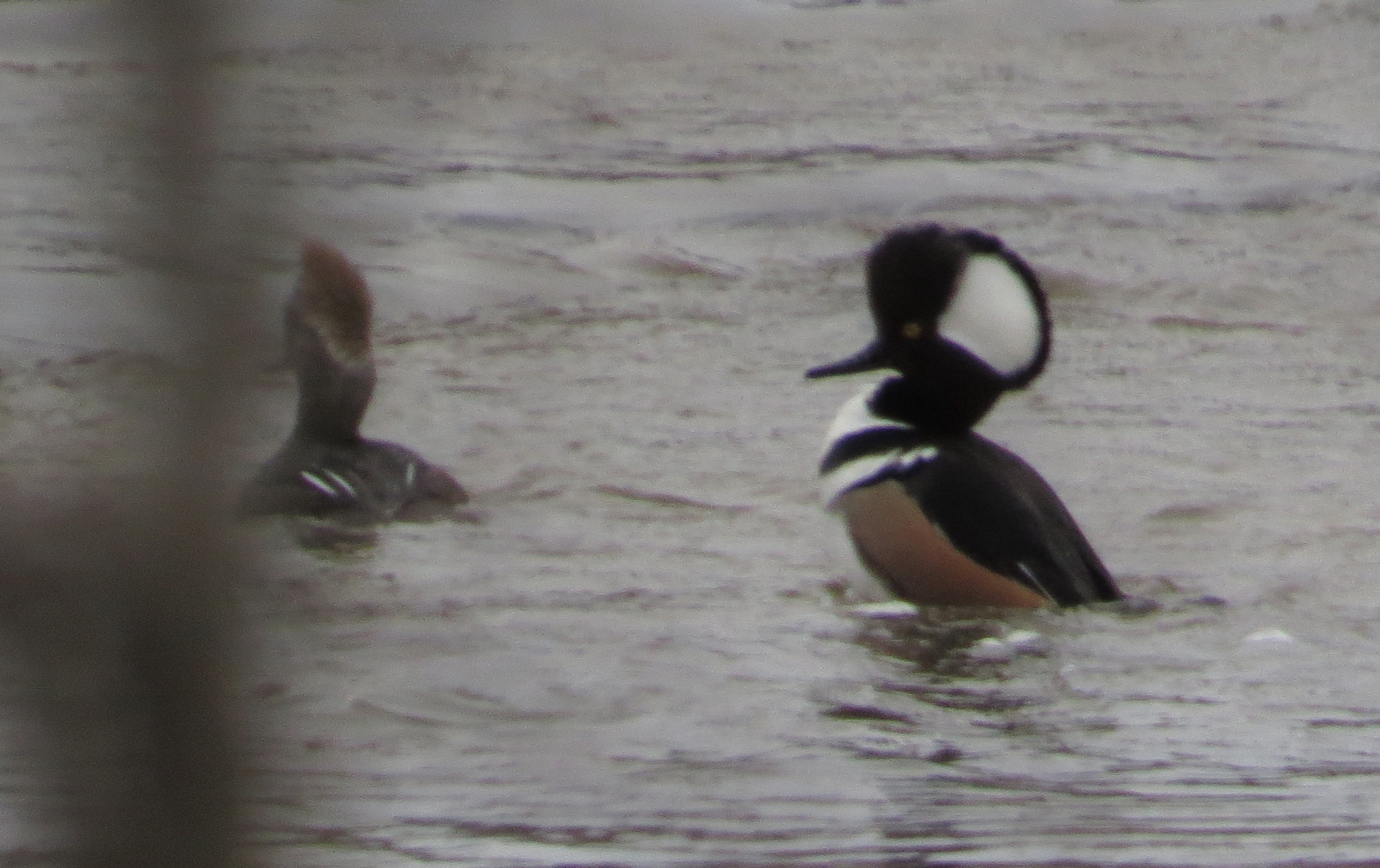
Thursday afternoon at Pony Pasture I photographed a duck I don’t often see. I saw the first pair of Hooded Mergansers (Lophodytes cucullatus ) I’ve ever seen there. Hooded Mergansers aren’t an extremely rare bird – I just don’t see them very often. I got a lucky shot of a female a few years ago but this is my first male. The quality of these images is embarrassingly poor but I was happy to “catch” them all the same. The males in these pictures are obvious. But if you look closely at each one you can just see the female slightly to his left:

Male hooded merganser (tail of a female just to the left)

Male hooded merganser (tail of a female just to the left)


Male merganser strutting his stuff. Female slightly visible on the left.

Male merganser strutting his stuff. Female slightly visible on the left.

I’ll keep my eyes open – hopefully I’ll get better pictures soon.

Here’s a decent picture with pleasant light. Although it’s a perfect example of mid-winter monochrome. There is no color in this picture. I think this is a Song Sparrow (Melospiza melodia). Birders, please correct me if necessary:

Poorly identified sparrow - can't even tell you the gender - sorry. I think that's an egg case of some sort below it on the stem.

Poorly identified sparrow – can’t even tell you the gender – sorry. I think that’s an insect egg case of some sort below it on the stem.

I’ll close with one more moon picture. I took the first moon picture in this blog post at 6:23 PM on the 28th. This one I took at 5:23 PM on the 31st. It was 11 days, 9 hours and 8 minutes old:

Moon against a blue sky

Moon against a blue sky

Enough! Enough for me anyway, for this week. I hope you are gratified by the outcome of the Super Bowl, if you are a fan of NFL football. See you in a week,

Jay

PS It was nine years ago (I am dumbfounded) tomorrow that Ivory and Nicky and I drove away from the Starbucks near the Virginia Eye Institute (still my favorite Starbucks) en route Whitehorse, the capital of the Yukon Territory in Canada to volunteer at the 2006 Yukon Quest. Here’s an old blog I kept that trip: yukonmutts

Here’s a picture I took of the guy Mackey is named after; he won the Yukon Quest that year: Lance Mackey

I also spent a couple of days playing around with the dogs at Muktuk Kennel. It’s owned by 25 time (!) Yukon Quest finisher Frank Turner – and that’s who Turner is named after. Here’s a blog post from when I took a hike on a frozen river with some of his puppies. It was 9º Fahrenheit. I still regard it as one of the peak experiences of my life. Please look at this blog post and if you do, please click on the thumbnails of the pictures. They enlarge and are breathtaking: If the reward for virtuous living…


Posted in Birds, Fun, James River, moon, Pony Pasture, Rivers, Smiles (including "dog smiles"!), Trains | Tagged , , , , , , , , , , , , , | 2 Comments

Bivalves and bryophytes – who even knew?

25 January, 2015             Bivalves and bryophytes – who even knew?

Shellfish were the farthest thing from my mind when I began this project (Every living thing) late last year. Seriously – seafood? Pony Pasture? It was not on my radar. It’ll be a while (if ever) before I produce any living specimens of freshwater mussels. I am not going into that river until April at the earliest. But some industrious eater leaves mussel shells on the riverbank all the time. Raccoons are my first guess, but I’m sure Great Blue Herons eat them too. I find shells every time I’m at Pony Pasture, but there are never any tracks around them.

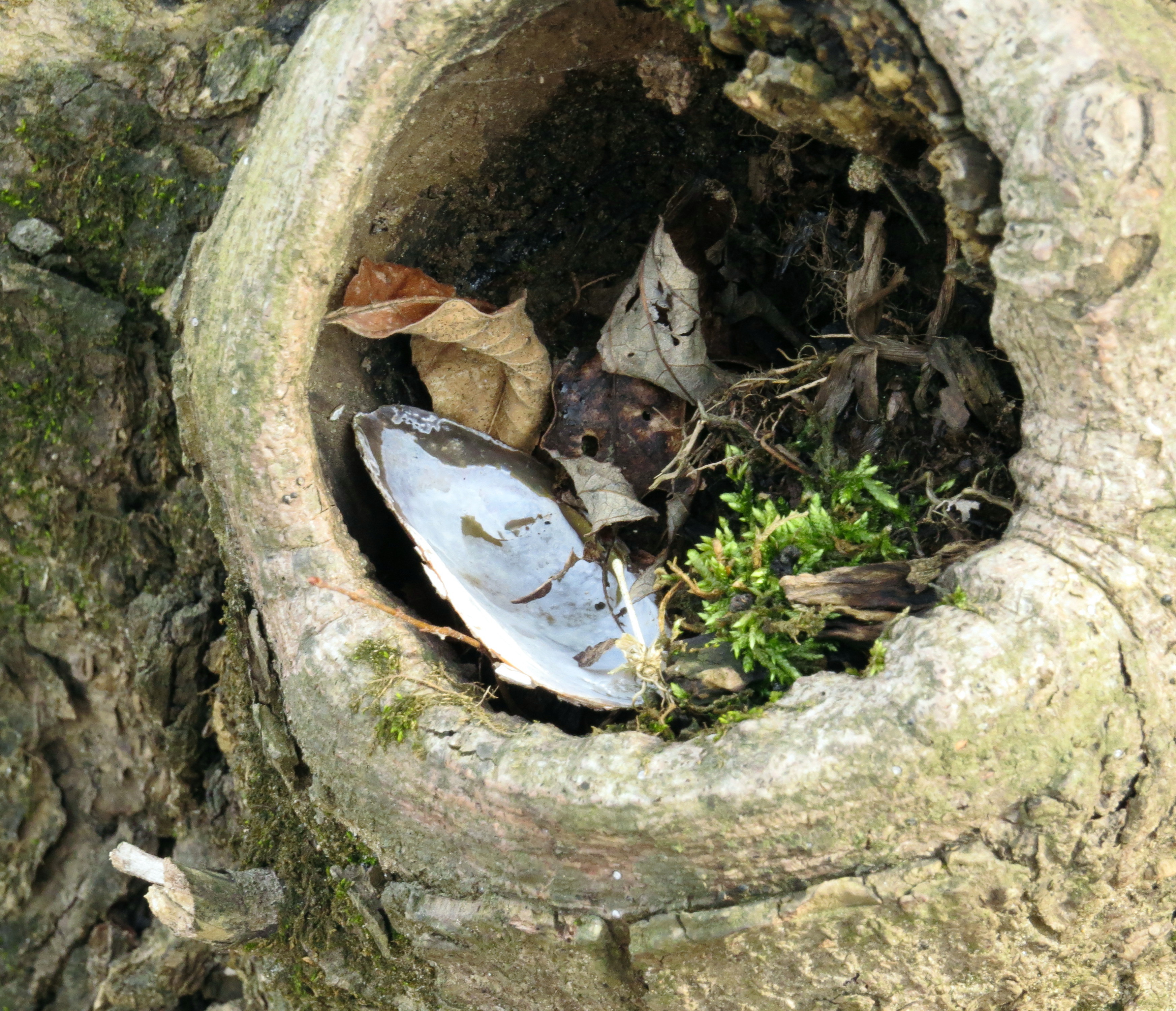
The first one I photographed was, fittingly, in a hole in a tree stump – with a moss. The scientific name for mosses is “bryophytes.” Washed in there from a flood or a bird or a child or who knows how it got in there:

Freshwater mussel (this is the way I found it. With a side order of bryophyte).

Freshwater mussel (this is the way I found it. With a side order of bryophyte).

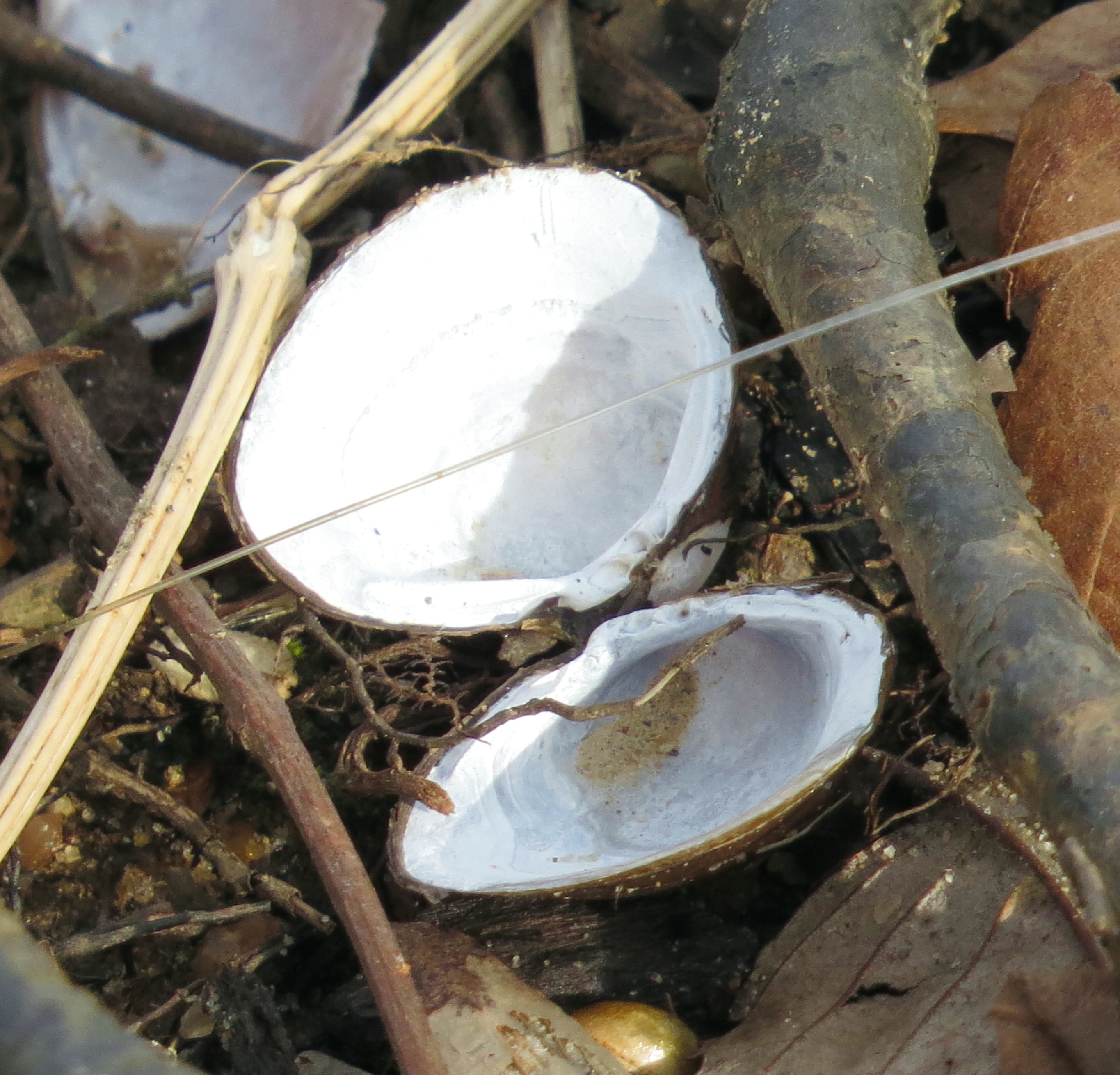
They don’t photograph well. Maybe in the summer when I get some live ones they’ll be more picturesque. That one in the picture is larger than many I’ve found. Although there’s nothing here for scale (I regret to say) this one is smaller than the one in the preceding picture. This one is maybe as big as a quarter:

Two halves of a shell - that puts the "bi" in "bivalve."

Two halves of a shell – that puts the “bi” in “bivalve.”

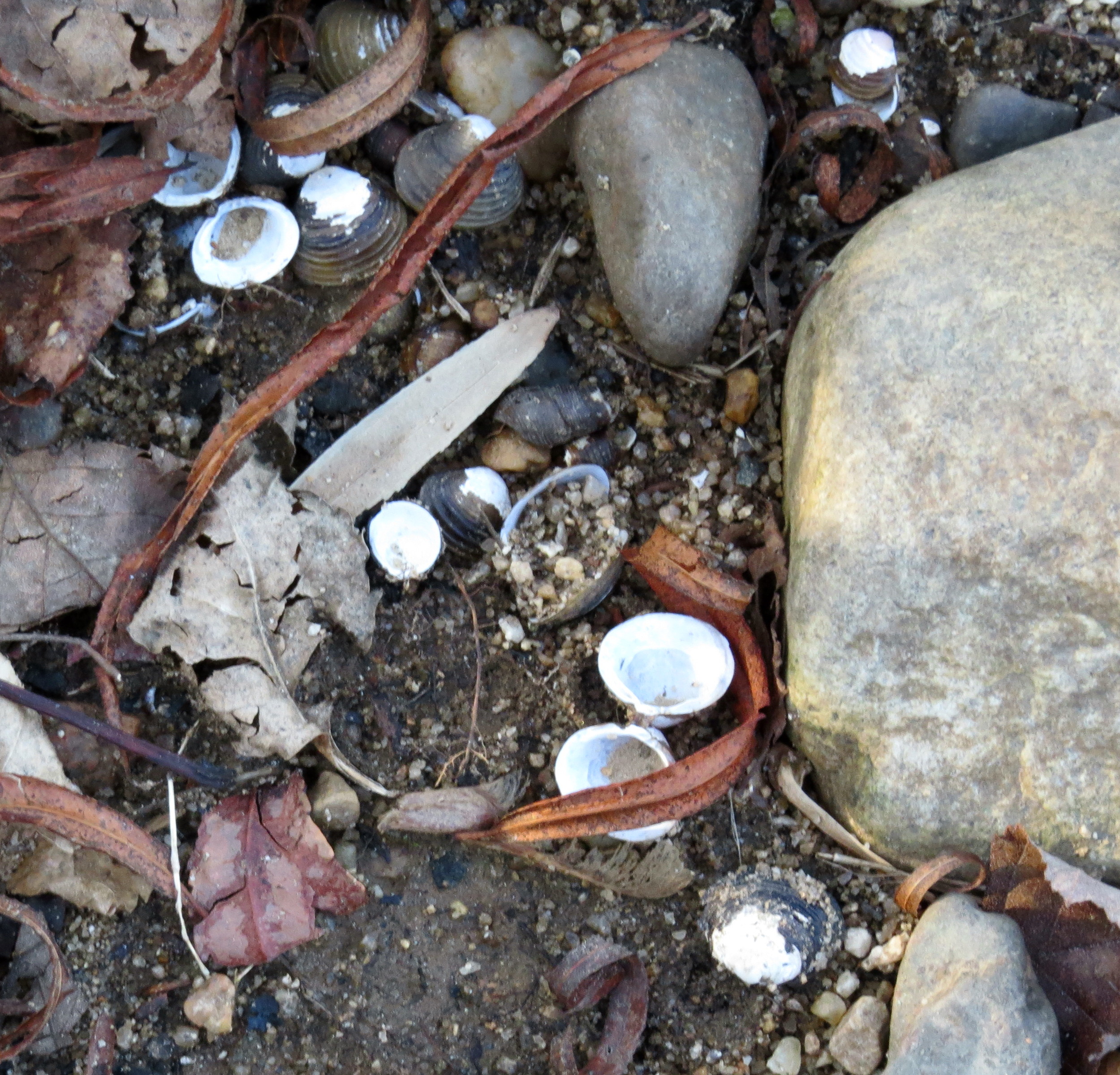
Even a quarter-sized bivalve is larger than the vast majority of clams and mussels I find on the riverbank. Here’s a little pile I ran across – sorry about the quality of the picture. Most are the size of a nickel or a dime or even smaller. There can’t be a whole lot of calories in there but it’s pure protein. And I suppose a bit of fat. And a predator doesn’t burn up any calories chasing after it:

Bivalve remains

Bivalve remains

I learned a few interesting things when I was researching this post. One thing I learned was I have a lot to learn about freshwater mussels! They’re not real popular like butterflies or birds and you don’t see them often. So the available resources are slender. Here’s a fact I find fascinating: The United States has 304 species of freshwater mussels. Africa – the entire continent – is in second place – with 96 species. The continent of Africa is large enough to hold the United States three times inside it. But we have more than three times the number of freshwater mussels. I found this sentence on the Virginia Department of Game and Inland Fisheries (VDGIF) page of freshwater mussels: “The diversity of freshwater mussels in the United States is unmatched.” Exquisite understatement.

Many of the bivalve shells I’ve found – most, really – are clams, not mussels. I put a caveat in a preceding paragraph about the shortage of research resources about freshwater bivalves. That was to set myself up for the fact that I have thus far been unable to make a positive ID on any of them. But I am relatively certain a number of those shells come from the Asian Freshwater Clam (Corbicula fluminea).

The research on their environmental effects is easier to come by. The Zebra mussel (Dreissena polymorpha) is overwhelming some bodies of water in the US but our James River is not one of them. Our freshwater clams and mussels overpopulate intermittently but are generally benign. They’re a food source for so many fish and birds and mammals here that they don’t often go unchecked. They also constantly filter the water and keep particulate matter out of it. They’re called “filter feeders.”

Also – this is important – a lot of this is just my take on it. A conservation expert or even a well informed amateur knows a lot more than I do and may take strong exception to this. If you’re interested, I suggest you research it more. Just because the information is difficult to find doesn’t mean it’s not out there. Here in Virginia, there is a comprehensive program aimed at bringing our freshwater bivalve population back into balance. If you’re interested in learning about the program, I suggest you read up on it in this comprehensive publication by the VDGIF: Regaining Our Freshwater Mussel Heritage

The VDGIF is an informative resource for information about mussels. Recall that the “IF” at the end of that abbreviation stands for “Inland Fisheries.” But it is not for amateurs. And although I am keenly interested, I am in all things regarding mussels an amateur. But I’m going to provide a link to a “freshwater mussel restoration” survey they did in southwest Virginia in 2008. It’s forty-seven pages long, and while it’s written about an animal that spends its entire life underwater, it’s quite dry. Until page 47, when they begin listing the common names of mussels. It lists over thirty different mussels. I’d like to list them all, but here are five favorites – you should check out the list for yourself. They’re all great. Look at these five: purple wartyback, Tennessee pigtoe, Appalachian monkeyface, rayed bean, pink heelsplitter – how could that be any more fun? Trust me, that hardly scratches the surface. Here’s the site; you have to go to the bottom (page 47) to read all these superb names: Freshwater Mussel Survey of Cleveland Island, Clinch River, Virginia: Augmentation Monitoring Site: 2008.

I’m nearly out of time! And I haven’t put in anything about bryophytes! That’s a fancy name for mosses! Possibly because I don’t have a ton of data. I’ll gradually get some in.  

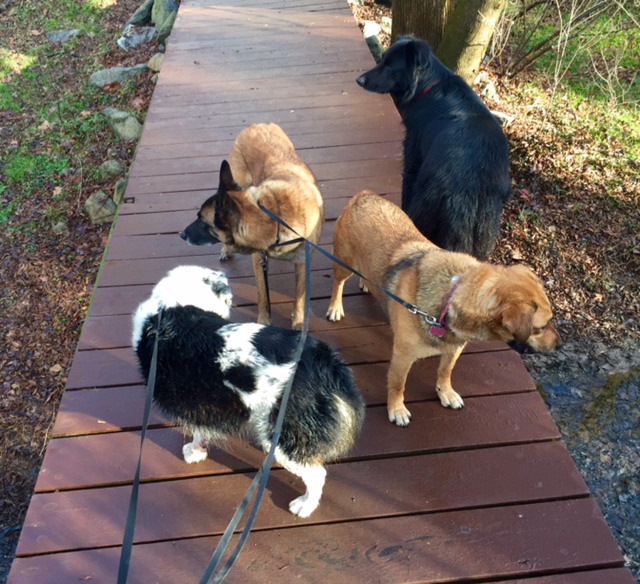
Next week I’ll go back to more traditional (whatever my tradition is) blogging. More pictures. Meanwhile, I got to dog sit this weekend for my friend Pat and Megan’s dogs. It’s always fun to take them to Pony Pasture with Mackey and Turner on Sunday morning. Although believe me, I don’t do much quality photography when I hike with four dogs. Here are two pictures from this morning – one with the four of them crossing Charlie’s Bridge: 

Sixteen furry legs.

Sixteen furry legs.

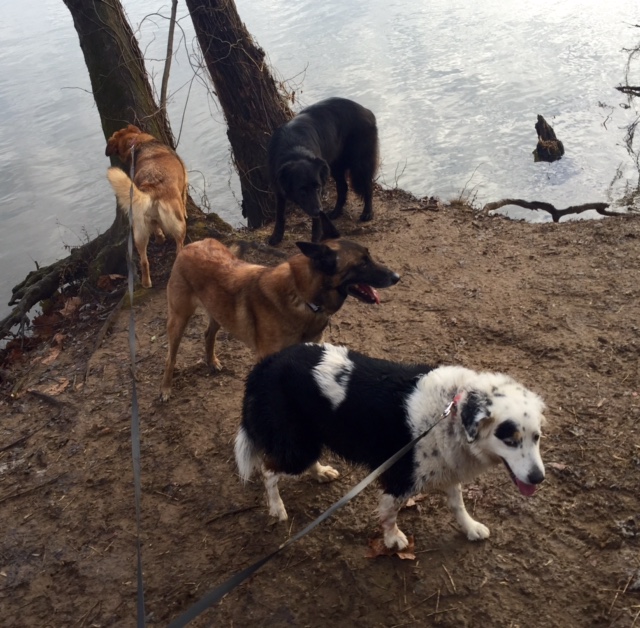
And one with the four of them at the edge of the river: 

Sixteen furry legs about to get very wet!

Sixteen furry legs about to get very wet!

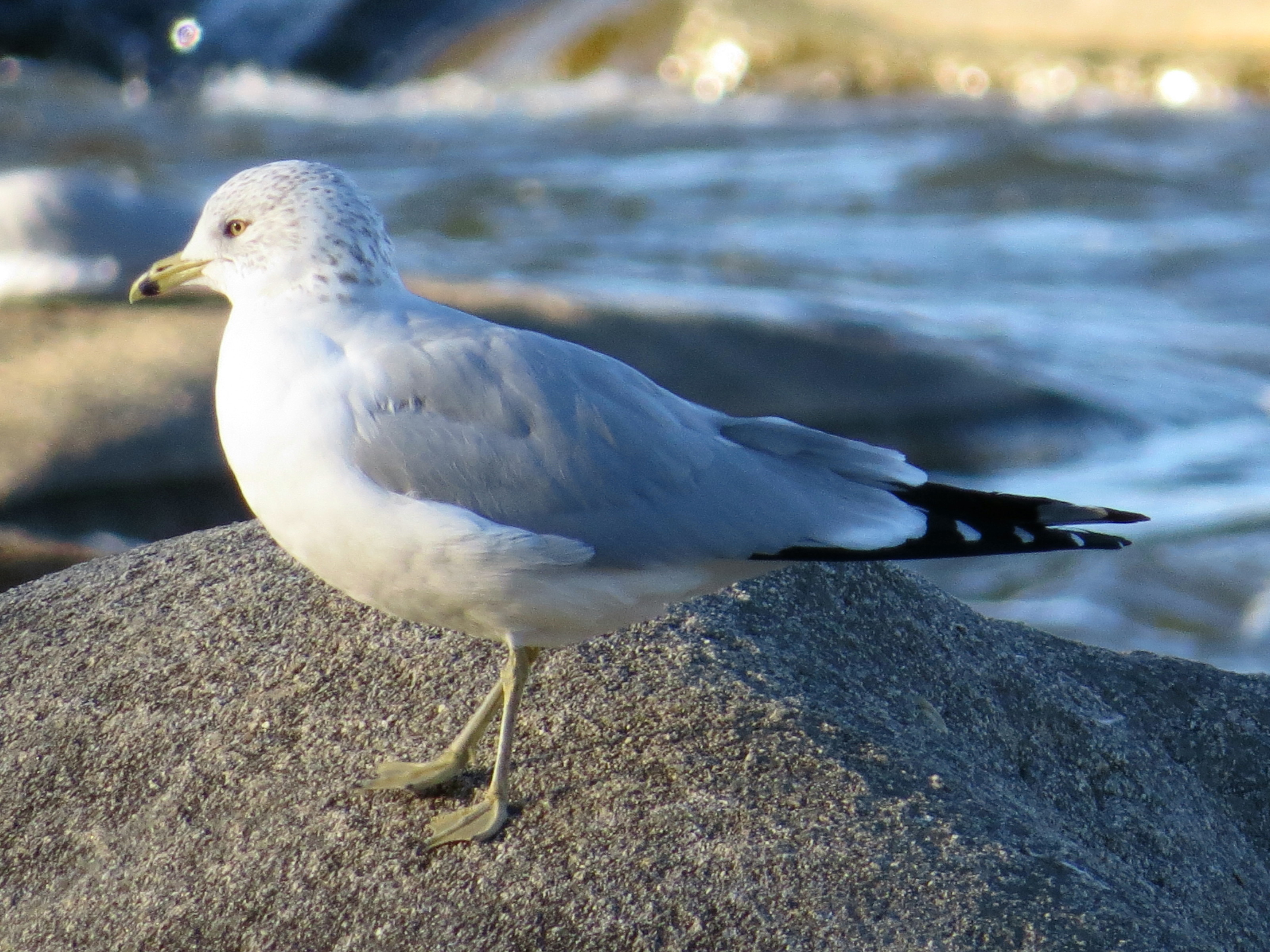
Also, I’ve put way too many pictures of Ring-billed gulls on here, but I took a nice one earlier this week and they’re pleasant. And I’m short on pictures this week!:

Pleasing

Pleasing

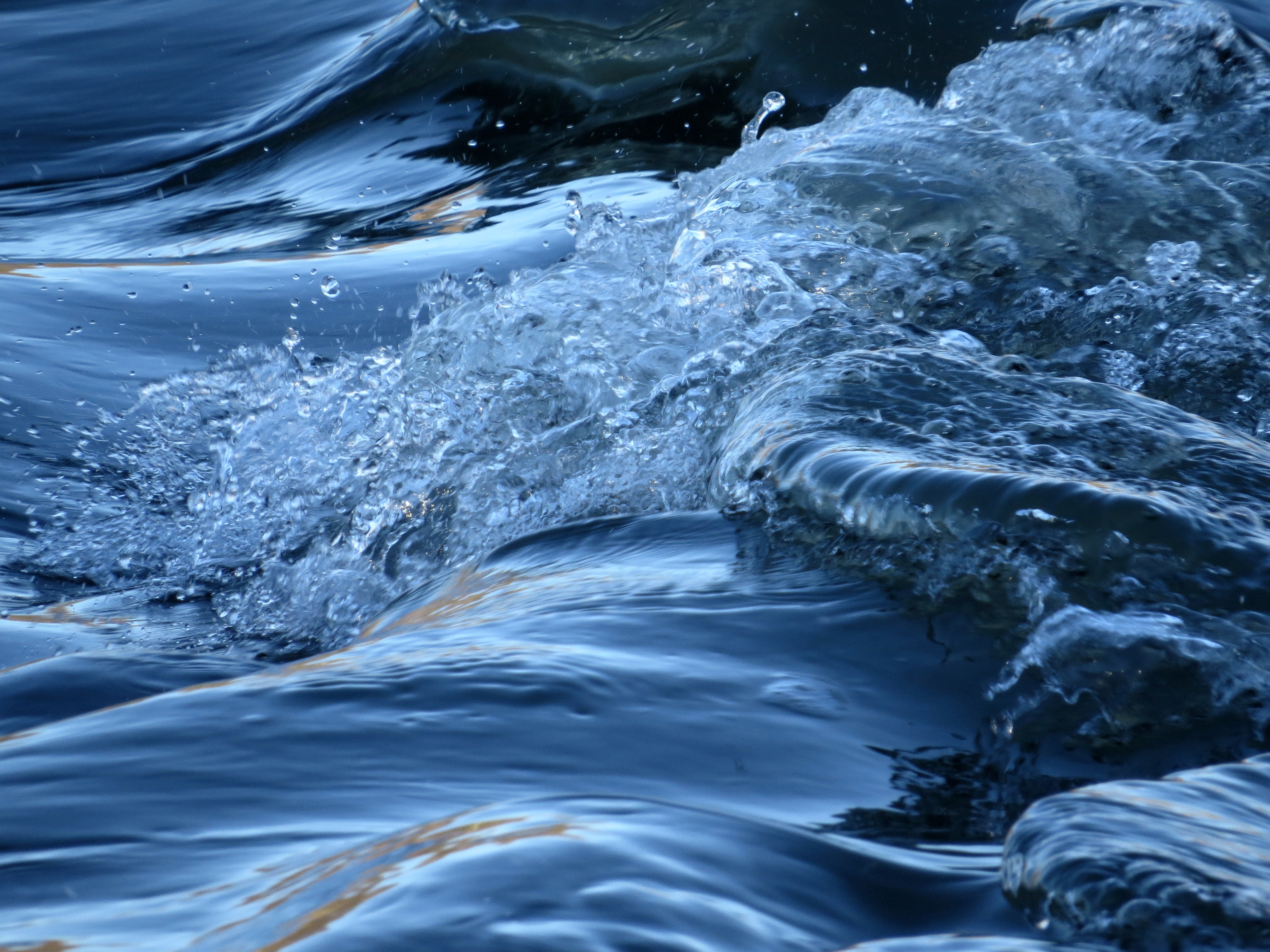
In the same spot I took a quick picture of the water flowing over rocks; I could stare at this all day:

Hypnotic

Hypnotic

See you in a week!

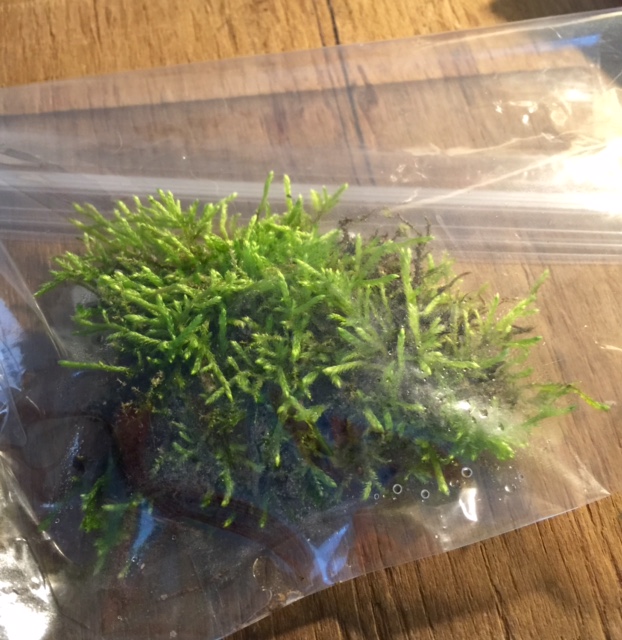
PS I will include a bryophyte after all – although I got this one out of my yard, not from PP. This is the one I’ll use to teach myself to identify mosses. My friend recommended a book called Common Mosses of the Northeast and Appalachians (McKnight, K, 2013).

Take a look: 

As-yet-unidentified bryophyte in low-cost mobile terrarium:

As-yet-unidentified bryophyte in low-cost mobile terrarium:

= = = = = = = = = = = = = = = = = = = = = =

It’s been well over two years since my Dad died, and my current level of sadness is an appropriate one – it’s not that big of a deal. But when I’m researching something arcane for this blog I really miss him. Because he was the most intellectually omnivorous person I’ve ever known. He really didn’t like not knowing something. And if he didn’t know something (say, the common name and scientific name of an obscure freshwater mussel), he’d learn how to learn that. Dad was seventy-seven when he died and although it was sudden and unexpected, I’ll bet he learned something new earlier that day. I think learning was like scratching an itch for dad. He just did it because it felt good. I think if dad wasn’t feeling well, it made him feel better to learn something. 

My “Every living thing” project, a.k.a. “Pony Pasture Flora and Fauna” has completed its main growth stage. I’m close to ninety combined species of plants and animals in Pony Pasture. You can check them out on the “Every living thing” site. I’ll “get” a lot more “specimens” as the year goes on. Lots of insects and lots of flowering plants – you don’t see those in January – and a few more birds and reptiles and amphibians. I always feel like I’m channeling my dad when I’m working on this, and I love that feeling. I’ll keep it up.

Have a great week!

= = = = = = = = = = = = = = = = = = = = = =

Posted in Birds, Dogs, Fun, James River, Pony Pasture, Rivers, Smiles (including "dog smiles"!) | 3 Comments

What does the lichen say?

18 January, 2015                 What does the lichen say?

“The eye often cannot see what the mind does not already know.” – Stephen Sharnoff

I began my “Every living thing” quest late last year. And this week it led to lichens. Which I would not have predicted. If my quest has only taught me one great thing (it’s really taught me a bunch) it’s that I walk past an amazing amount of “stuff” every day – and I’m not even aware it exists. And the more I become aware of, the more I become aware of. That sounds like a tautology (tautology n. pl. tautologies 1. a. Needless repetition of the same sense in different words; redundancy. b. An instance of such repetition. – The Essential American Heritage Dictionary – Houghton Mifflin Harcourt 2011) but I am uncertain how to phrase it more succinctly. More noticing leads to more noticing. As I searched for more “living things” I began noticing mosses and lichens. And reading about them. They are everywhere you turn. And they’re unusual.

Mr. Sharnoff (see quote at top of page) also wrote “Lichens are the most overlooked of the conspicuous organisms in the natural landscape.”

The title of this post is a riff on a song Evie made me aware of this week. It’s a comedy/dance song from 2013 (I’m always on the cutting edge) called “What Does the Fox Say?” by Ylvis. I think (I’m not positive) it’s a little quip about the fact that foxes don’t say much. Watch it here if you have the interest and a spare 3 minutes and 45 seconds: Ylvis – The Fox (What Does The Fox Say?)

The implication (for me) is that foxes fly under the radar and mostly go unnoticed. The same is true for lichen. I mean, seriously, lichen. They’re all over the place all the time but we (I) don’t even notice them. They’re out there but they are certainly in the background. 

I’ve written far too much and not posted picture one – time to correct that. My friend Ethan took a terrific picture of a Red-tailed hawk (Buteo jamaicensis) at Bryan Park last week:

Red-tail hawk - Bryan Park - Richmond, VA - photo by ETHAN!

Red-tail hawk – Bryan Park – Richmond, VA – photo by ETHAN!

Not only did Ethan take that photograph – he was the one who spotted the hawk in the first place! He has very sharp eyes. 

If Ethan’s name sounds familiar related to photography on this blog, it’s because he’s been here before. He took the best picture of a Northern water snake (Nerodia sipedon) that I’ve ever seen. Look at it here if you’re interested; it’s an amazing photograph: Guest photographer

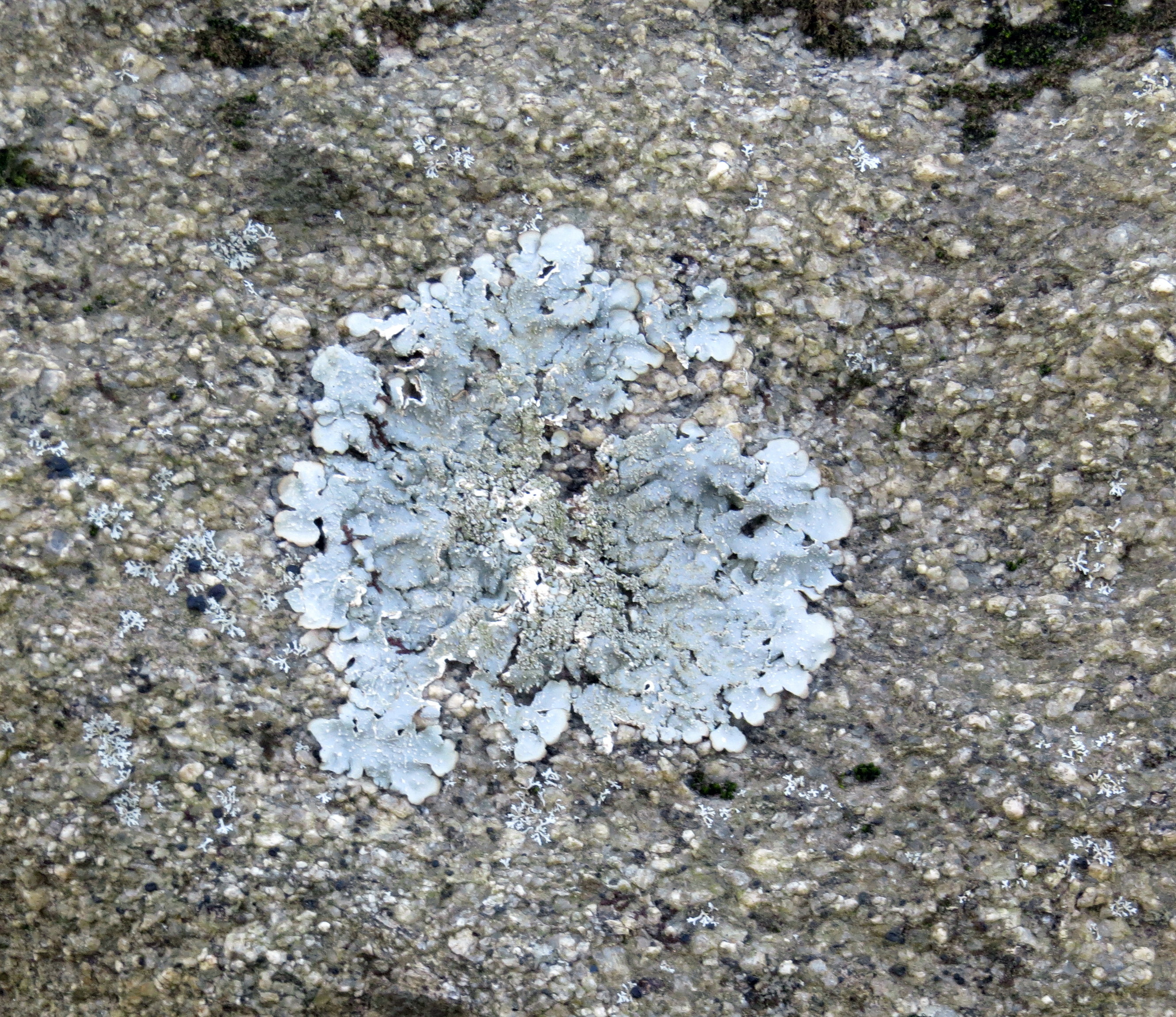
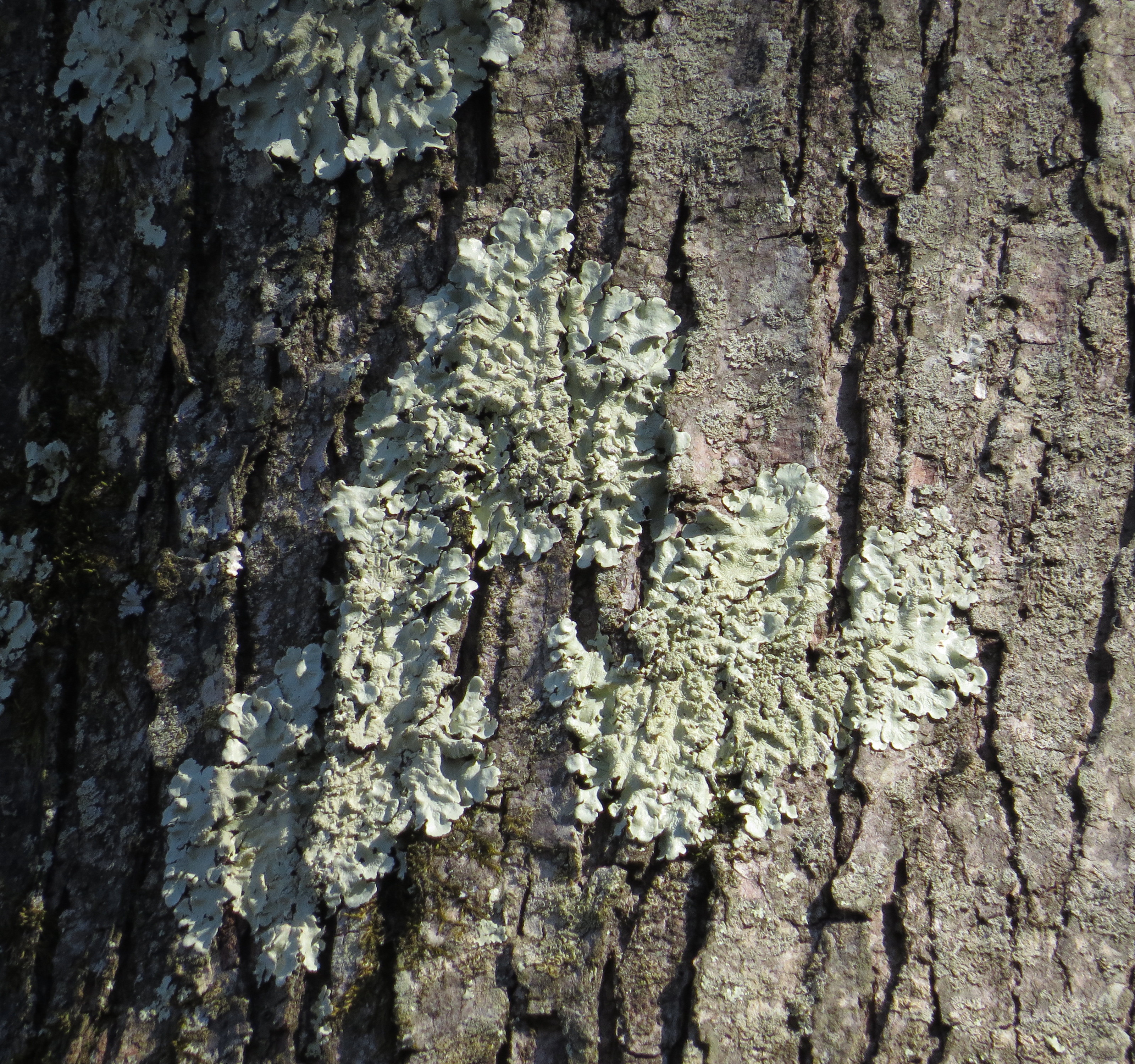
With the exception of Ethan’s great “catch” at Bryan Park, I don’t have a lot of attractive pictures this week. I am just getting into mosses and lichen. Evelyn and Mackey and Turner and I went to Pony Pasture yesterday afternoon because rain was predicted to wash out our traditional Sunday morning hike (it did). I haven’t identified any lichen or moss yet, but I will. Let me put up a couple of the pictures I got yesterday. Here’s a lichen on a rock just at the edge of the river:

Currently and unidentified lichen. But in time I'll know what it is.

Currently and unidentified lichen. But in time I’ll know what it is.

And here is a similar appearing lichen on a tree: 

Lichen on tree bark at Pony Pasture

Lichen on tree bark at Pony Pasture

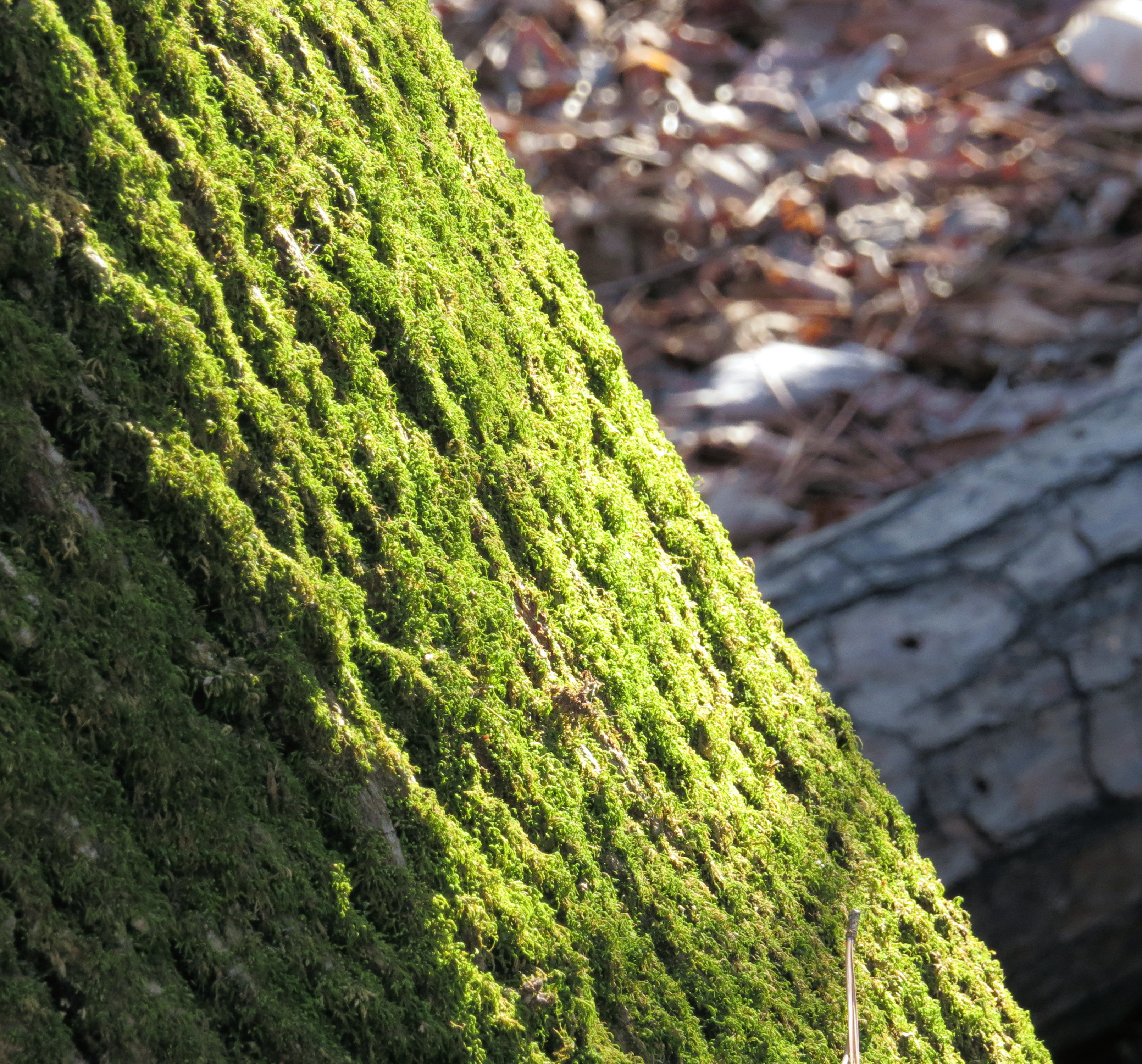
Here’s a glowing moss from the side of a tree on the eastern edge of Pony Pasture: 

Glowing moss. That's so pretty.

Glowing moss. That’s so pretty.

This pursuit is also expanding my vocabulary. Did you know that mosses are called “bryophytes“? I picked up that treasure while researching this blog post. I’m not sure how soon I’ll be able to work it into a conversation but it’s a fun word. 

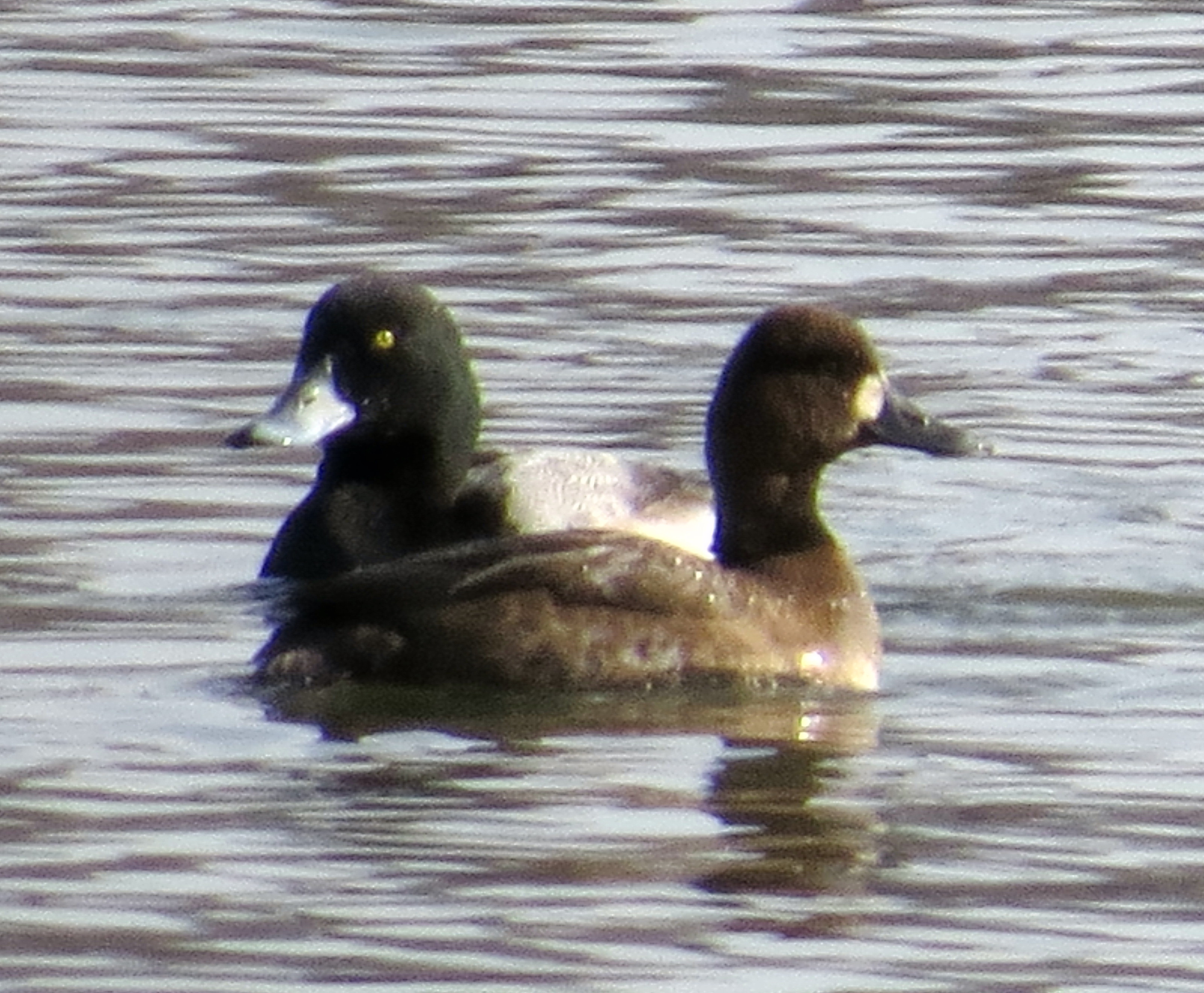
I’m beginning to see more Ring-necked ducks (Aythya collaris) as winter sets in a bit more enthusiastically. This photograph is far from award-winning, but you can easily identify a male (with the yellow eye) and female Ring-neck: 

Male and female Ring-necked duck, James River, Richmond, VA

Male and female Ring-necked duck, James River, Richmond, VA

That’s about all for this week’s relatively thin main section. I have spent a lot of time this week compiling information for my “Every living thing” section. There’s a new link at the top of this page. My friend Betsy really gave me a lot of information. Look below for more information on the “Every living thing” page – it’s coming along great and I’m happy about it. I hope you are too! Meanwhile, until next week,

All best, 

Jay

= = = = = = = = = = =

My “Every living thing” page more than tripled in size this week. My friend Betsy ID’d an amazing nineteen plants for me. Evelyn has been a huge help, as have my friend Kim and my sister Katie. Kim and Katie, be forewarned. This week has been mainly plants (flora), which Betsy specifically offered to help with. In the near future my pursuit will turn to living things that are not plants (fauna) and I’ll be turning to you for assistance. Anyone else who has anything to offer, please let me know. There is a comments section at the end of each blog post. I read it regularly. Or email me.

I started the project on December 7, 2014 with a total of 27 combined flora and fauna. As of this post, the “Pony Pasture Flora” page has 42 species and the “Pony Pasture Fauna” page has 44 species. 86 total as of today. Those numbers will grow each week. For a while. 

My intention for this is to be a reliable guide that anyone can refer to. Please look it over when you have a few minutes. Please offer any corrections you’re aware of. And offer suggestions that may increase the usability. I’m making this up as I go along, and I need lots of help.

Here are links to the two pages – check them out when you have a moment:

Pony Pasture Flora

Pony Pasture Fauna

Each page has two columns. The left hand column has the “common name” of each plant or animal. The “common name” is a link to a blog post where I’ve taken a picture of that living thing.

The right hand column has the “scientific name” of each plant or animal. The “scientific name” is a link to a reputable source of scientific information about that living thing. None of the links are to wikipedia. Not that there’s anything wrong with wikipedia. 

Enjoy!

= = = = = = = = = = =

Posted in Birds, Flowers, Fun, Insects, James River, People, Pony Pasture, Rivers, Smiles (including "dog smiles"!), Spiders, squirrels | Tagged , , , , , , , , , | 2 Comments

Every living thing – the seasons

11 January, 2015               Every living thing – the seasons

Welcome to NEWFAZE! I’d like to thank the Friends of the James River Park (FoJRP) for thoughtfully including my blog in their most recent newsletter. Here is a link to their current newsletter: FoJRP Newsletter. If you’d like to see the specific article they wrote about this blog (forgive my over-enthusiasm; I can’t tell you how exciting this is) click on this link: EVERY LIVING THING – THE PREQUEL.

If you’re new to this blog, thanks for stopping by. I hope you enjoy it and return frequently. And forward it to your friends!

I’m continually revising and updating my “Every living thing” project. The record of revisions and updates can always be followed by clicking on the “PPFF” link in the black bar at the top of this page. “PPFF” stands for “Pony Pasture Flora and Fauna.” When you click on that link it will take you to another page. That page has a link to “Pony Pasture Flora” (plants, think “florist”) and  “Pony Pasture Fauna” (think living things that are not plants – deer, dragonflies, turtles, everything else.) It’s constantly evolving, and will be for a minimum of one year. 

Important – if you know of a plant or animal (or insect or any other living thing) at Pony Pasture – if you’ve seen it – and want it included here, let me know. Scroll down to the very bottom of this post and put it in the comments section. I reply to every comment. Or 95% of them anyway, I lose track a time or two. I only include things in the blog that I photograph. So help me find it! I’ve been told by reputable sources that there are both Cedar waxwings (Bombycilla cedrorum) and Northern Flickers (Colaptes auratus) in Pony Pasture. And this morning I saw either a  Golden-crowned Kinglet (Regulus satrapa) or a Vireo of some sort or possibly some type of warbler – but couldn’t get my lens on it. So watch for those.


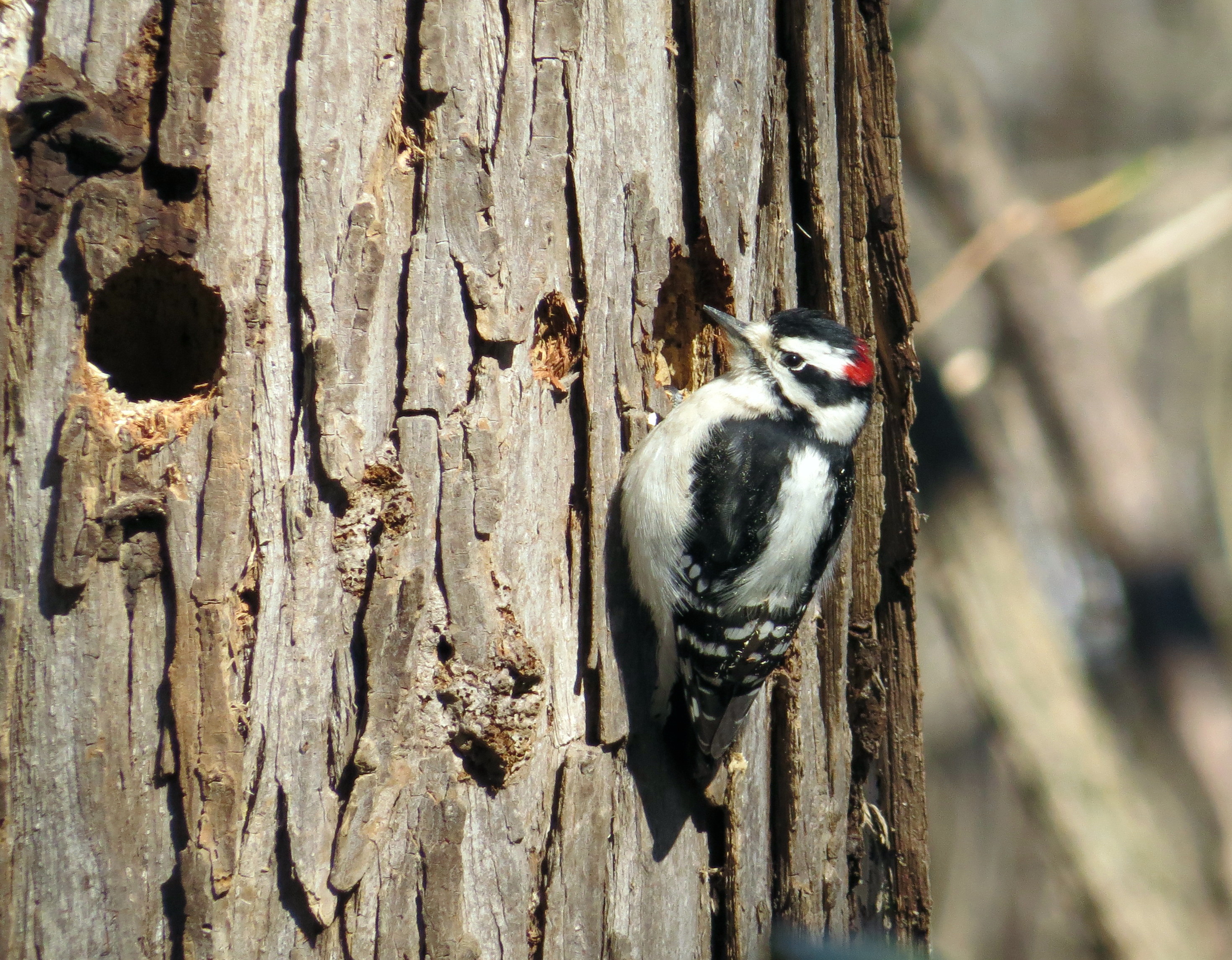
I’m talking (typing) too much. Let me put in a picture then write a bit more. Winter is great for photographing birds because the leaves are mostly gone and it lets in more light. Which makes better pictures. This is a male Downy woodpecker (Picoides pubescens) I saw at Pony Pasture Thursday morning:

Handsome male Downy woodpecker (Picoides pubescens)

Handsome male Downy woodpecker (Picoides pubescens)

As an aside, I believe Downy woodpeckers are the smallest in North America. And I’ve seen before – in that same grove – many a Pileated woodpecker (Dryocopus pileatus). The largest woodpecker in North America. If I ever get both in the same picture – which I will now try to do – you’ll see it in this space. 

It takes a year (at least) to do the full “Every living thing” project because there are always different animals in the park. It’s January and there are Buffleheads everywhere on the river, all the time. Six months from now the nearest Bufflehead will be a thousand miles north. There is not a turtle to be seen in Pony Pasture in January. Six months from now there will be hundreds – probably thousands. And although the same plants (mostly) are at Pony Pasture year round, there are no flowers in January.

So to photograph “every living thing,” you have to be there in every month of the year. Preferably every week. And in January you have to keep your camera inside your coat to keep the battery from freezing. Keeping your camera battery from freezing so you can post pictures on your blog. If you’ve been trying to find a previously undiscovered First World Problem, your search is over. But it was 10º and crystal clear when I woke up Thursday morning and that may be my favorite photography weather.

Here’s another picture from earlier this week – an American robin (Turdus migratorious). “American robins” are the ones you always see – that’s just their official name. There are also European robins but not here. American robins may be the most abundant bird in the world, although I’ve heard that about Red-winged blackbirds (Agelaius phoeniceus ) as well. Robin with chest puffed out to keep warm:

Robin warming up in the sun

Robin warming up in the sun

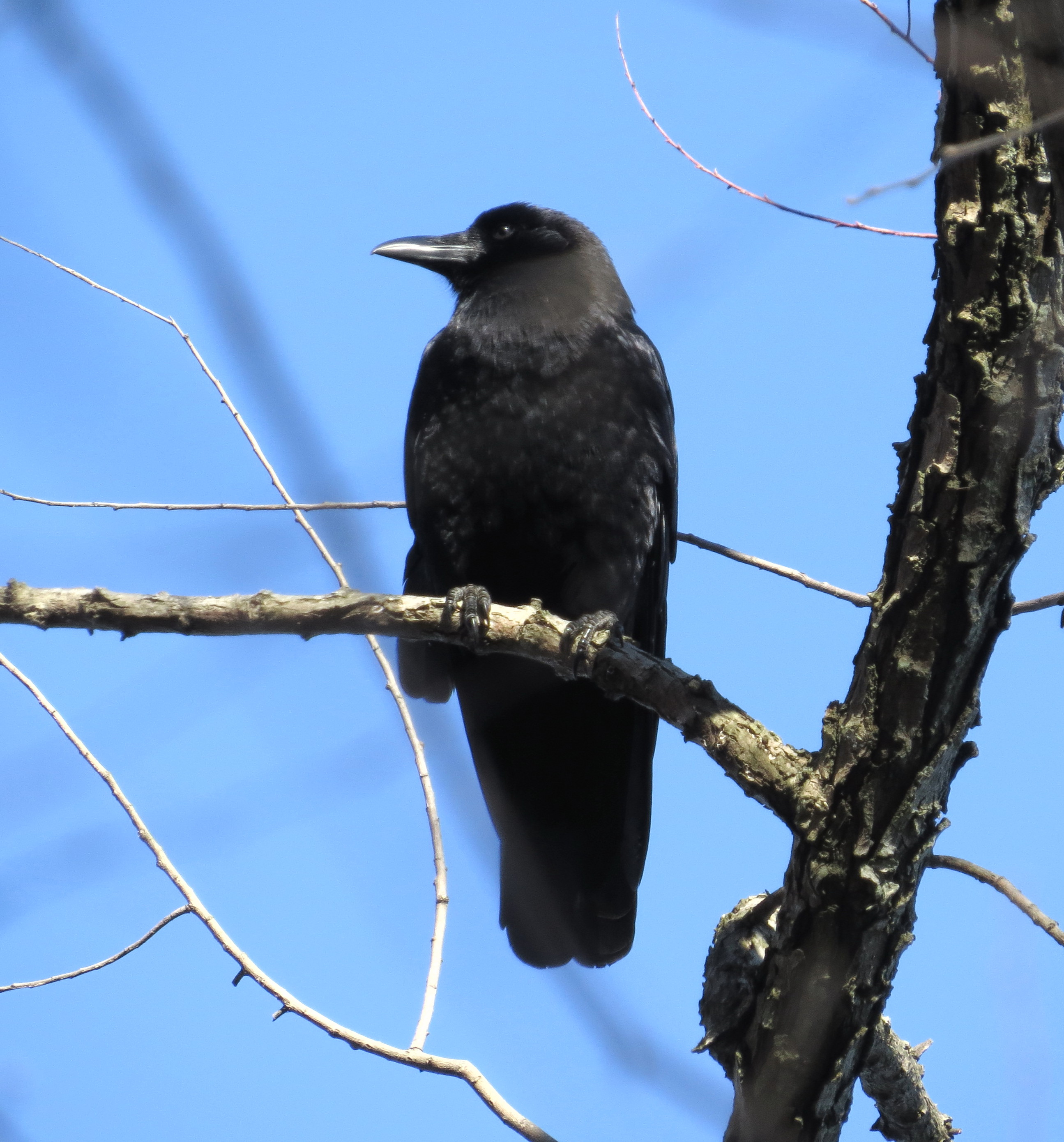
This morning (Sunday) at Pony Pasture a few crows stopped in a tree on the river’s edge. Believe it or not (see preceding paragraph) their official name is “American crow” (Corvus brachyrhynchos). Normally when I see crows at Pony Pasture it’s a mob of them harassing a hawk or an owl. This group was more staid:

Crow in the sun

Crow in the sun (with blurry branches, sorry)

 I’ve also put a lot (perhaps too many) pictures of Ring-billed gulls (Larus delawarensis) on this blog. But they’re easy to photograph and they’re attractive birds:

Ring-billed gull. I have a hard time shooting at a low angle on the water. But the bird looks great.

Ring-billed gull. I have a hard time with light when I’m shooting at a low angle on the water. But the bird looks great.

This is an appropriate space (see preceding photograph) to correct a misconception recently spread about me by the otherwise precise FoJRP. The gracious person who did the writeup about me in their newsletter referred to me as a “photographer.” I believe it’s more accurate (though long-winded) to say I’m a “person who takes pictures.” Because when I’m at Pony Pasture, I’m hiking or walking dogs or riding a bicycle and carrying a camera. Photographers (Lynda Richardson, Rich Young, etc.) take much better pictures than I do. I’m just out there a lot. With a mediocre camera. But I’m not afraid to use it. 

Last week (Happy New Year!, 4 January, 2015) I photographed and wrote about some of the plants that are invasive species at Pony Pasture. My friend Betsy, who has been traipsing around that park since before I even knew it existed, is helping me with identification. She’s helping me ID all plants, not just invasive species. But in January, other than evergreens and our beautiful sycamores, there aren’t a lot of plants that are obvious. At least to me. But one of the reasons these species are so invasive is they’re hard to kill. And winter doesn’t kill them either. So I’ve researched invasive species this week and compiled a few informative links if you’re inclined to learn more. This is a terrific article out of Virginia Wildlife Magazine: The Aliens Have Landed

Here’s another site called Weeds Gone Wild

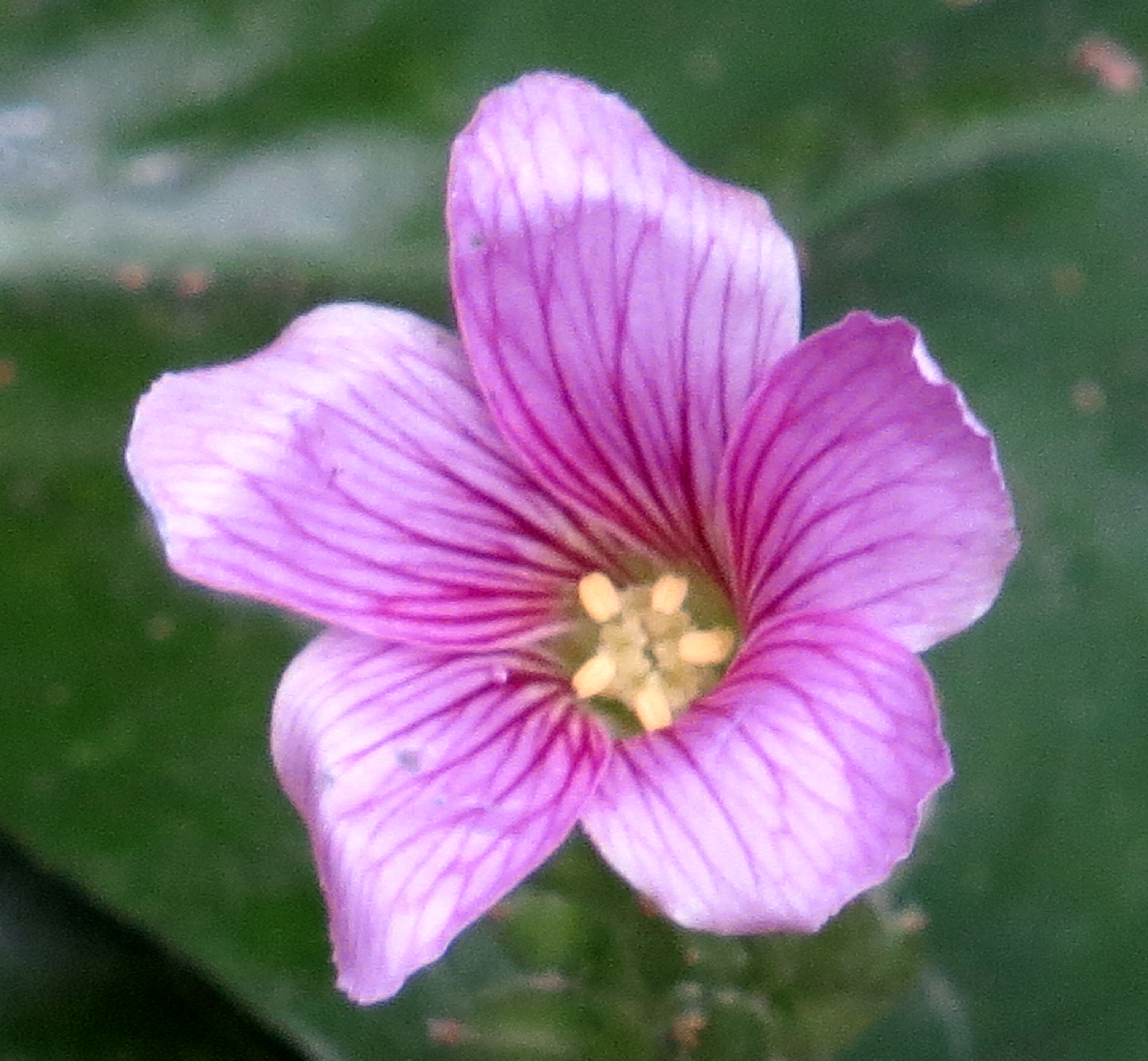
This little flower may or may not be invasive. And it is not from Pony Pasture – it’s growing under my (south-facing) wood pile. But I took this picture a week ago today and any flower blooming like this in January deserves to be seen:

It was very tiny. But what a cheerful sight in January.

It was very tiny. But what a cheerful sight in January.

I editorialized last week and I stay away from editorializing on this blog. Because all editorializing bores me. And my moral dilemmas have no place here either. The problem is – honeysuckle may be my favorite flower in the world. For looks and for smell. And I’m not as fond of the appearance of multiflora rose and of privet, but that might round out my top three favorite smells on this planet. Well, chocolate chip cookies baking and bread baking, but I mean outdoor smells. Honeysuckle and multiflora and privet are all invasive species. And they smell so delicious, all I want to do is stand there and breathe. They’ll be on here in a couple of months when they’re blooming. My conflict is they’re invasive but I love to smell them. Also – ponies were invasive here at some point. So Pony Pasture is named after an invasive species! Hmm. Try that one on for size. Back to a less controversial subject. 

Stepping out of the car this morning at Pony Pasture, the trees and bushes were filled with bluebirds. I’ve never seen them near the parking lot. It is just amazing how many bluebirds are in Pony Pasture these days. Amazing and gratifying. I didn’t get any pictures this morning, but this one was on the river bank Thursday morning drinking like it was his own private bowl:

Gulping ice water

Gulping ice water

Down the hatch

Down the hatch

Then he hopped up on a snag and gave me the eye: 

Checking me out from a safer vantage point

Checking me out from a safer vantage point

 If you tire easily of bluebird pictures, this is the wrong blog for you. I don’t put up a ton of pictures of crows or robins or seagulls but I love bluebirds. 

Have a great week! Come back next week! Pass this along to friends! Offer me your criticism, comments, questions, observations! And thanks for visiting!

All best,

Jay

Posted in Birds, Flowers, Fun, James River, Pony Pasture, Rivers | Tagged , , , , , , , | 1 Comment

Happy New Year!

4 January, 2015        Happy New Year!

I hope 2014 was a great year and 2015 will be even better. My first day of work for 2015 was Friday, January 2, and as I was pulling into my neighborhood on the way home, this handsome guy swooped across in front of my car:

Nice looking Red-shouldered hawk (Buteo lineatus)

Nice looking Red-shouldered hawk (Buteo lineatus)

I was fortunate to begin that day with such a nice reminder of the wildlife all around me. Because later that day – I’m not making this up – I was hiking in western Henrico and we came across this sign:

Isn't that amazing? Thank goodness I'd seen an actual wild hawk earlier in the day.

Isn’t that amazing? Thank goodness I’d seen an actual wild hawk earlier in the day.

Oy. I winced.

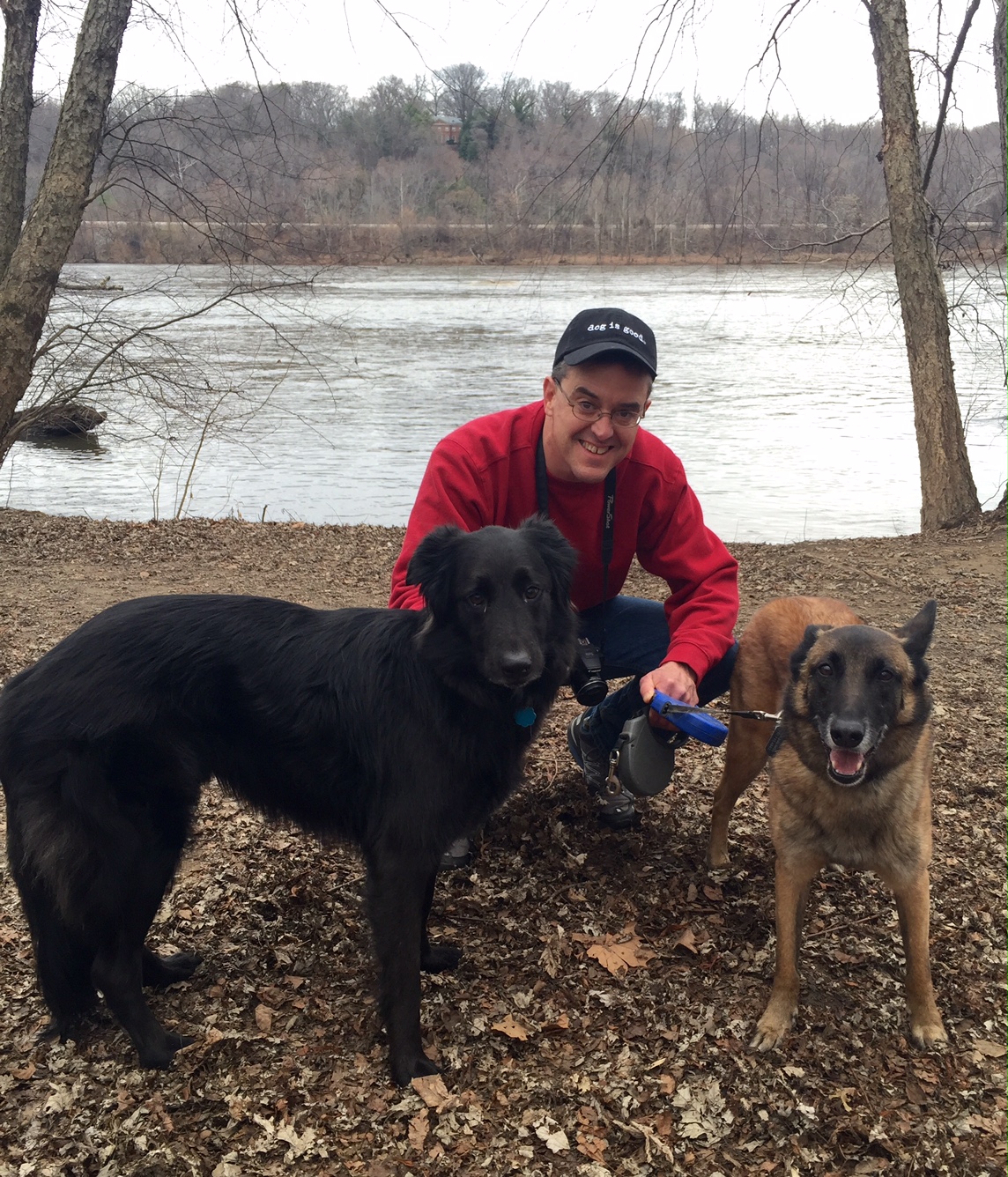
In my most recent post (What a present!, 28 December, 2014) I posted all pictures of a hike Mackey and Turner and I took on Christmas day. Our family Christmas was at my brother Kevin’s house in Doswell the following day. I got more great presents than anybody really deserves. One was this terrific hat from my sister Sheila. Look closely at the hat – click on it to enlarge it if you can’t read it. Hint: it doesn’t say “life is good.” But it might as well:

"dog is good"

“dog is good”

We were hiking at the river a week ago and met a person named Nadia and she graciously and skillfully took that picture.

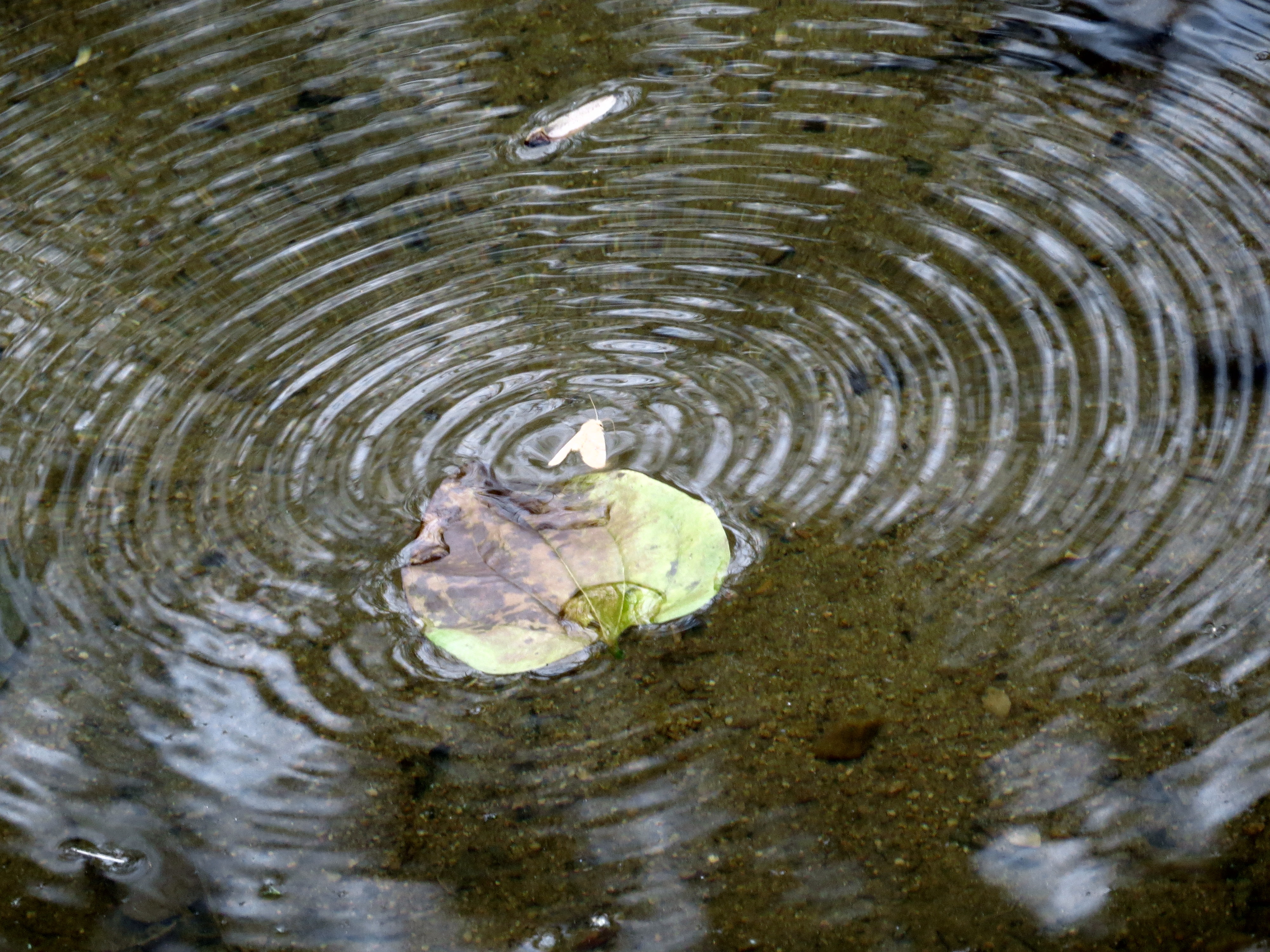
The same day (Sunday, 28 December, 2014) we were at the easternmost point in our hike (furthest downstream) and were hiking away from the river along the banks of the creek. I’m not even certain what the name of the creek is. Pony Pasture is on one side of it and Willow Oaks Country Club is on the other. I noticed unusual movement in the water and looked down and saw this moth:  

Moth ending its days making a pleasing pattern on the surface of the creek

Moth ending its days making a pleasing pattern on the surface of the creek

There are few living insects left. Non dormant, that is – there are plenty of living insects in various stages in the park. But they’re not visible now. It went up to nearly 70º today but the predicted high temperature this Thursday (8 January) is just 26º! That will be a great day for hiking if you don’t like bugs. Or mud. 

I’m learning about animals in the winter. The Wildlife Center of Virginia has an online book club. I just learned about it this week. Their next “meeting” is on Wednesday, 4 February, 2015 at 7:00 PM. The book they’re reading is Winter World: The Ingenuity of Animal Survival by Bernd Heinrich. I’m reading it now. And watching the animals in Pony Pasture prepare to survive the winter. Dr. Heinrich is an interesting human being. In addition to being an emeritus professor of behavioral ecology at the University of Vermont (great place to study winter survival), he is an elite ultra distance runner. This is a fascinating article: Bernd Heinrich: The Natural.

My research for PPFF is a bit dormant this time of year. Things are slow at the park. But I sent my friend Betsy a few plant pictures from our hike this morning and she enlightened me about them – mostly invasives.

This is a good place to insert – if you read a lot – you will often read “all errors are entirely the fault of the author (me)”. That is extra true in this case. Betsy gave me correct information. I have a lifelong habit of jumbling things up. Fortunately I also have a lifelong habit of rechecking. But here’s the info:

I called this “false honeysuckle” because it looks like honeysuckle but doesn’t smell like honeysuckle. Betsy told me it’s an invasive species called “bush honeysuckle” (Lonicera maakii or Lonicera morrowii). This bush is far down in the park and I believe it’s the biggest one there. But there are plenty around. It’ll be easy to see them when they leaf out and flower in April. They’ll go on my PPFF page soon: 

Bush honeysuckle (Lonicera maakii or Lonicera morrowii)

Bush honeysuckle (Lonicera maakii or Lonicera morrowii)

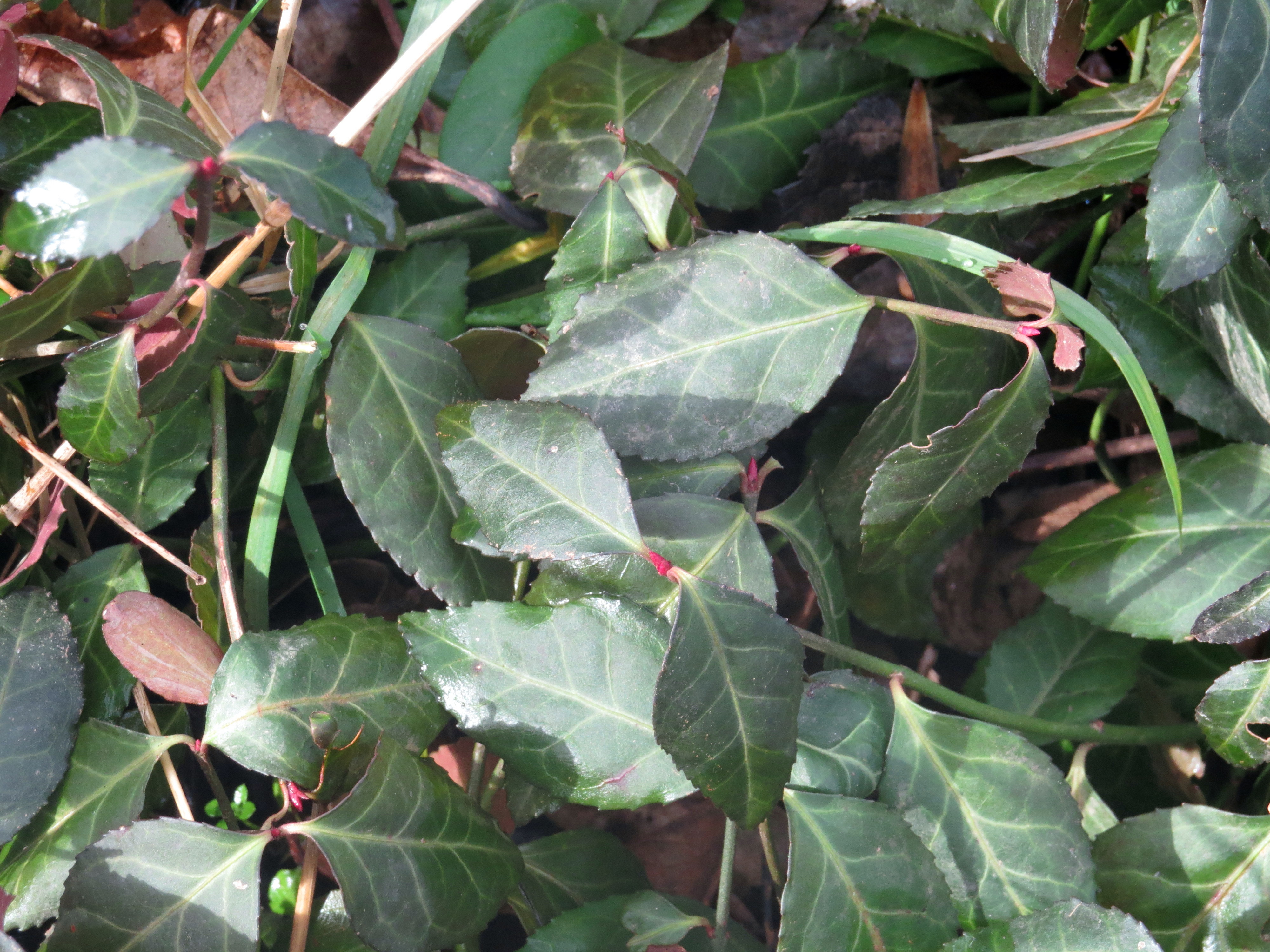
Next is another invasive (of course) that Betsy informs me is Wintercreeper (Euonymus fortunei). It’s all over the park right now (of course):

Wintercreeper (Euonymus fortunei)

Wintercreeper (Euonymus fortunei)

I photographed another groundcover this morning. Betsy tells me it’s Gill-over-the-ground (Glechoma hederacea), and it’s (can you guess?) not a native and not desirable:

Gill-over-the-Ground  (Glechoma hederacea)

Gill-over-the-Ground (Glechoma hederacea)

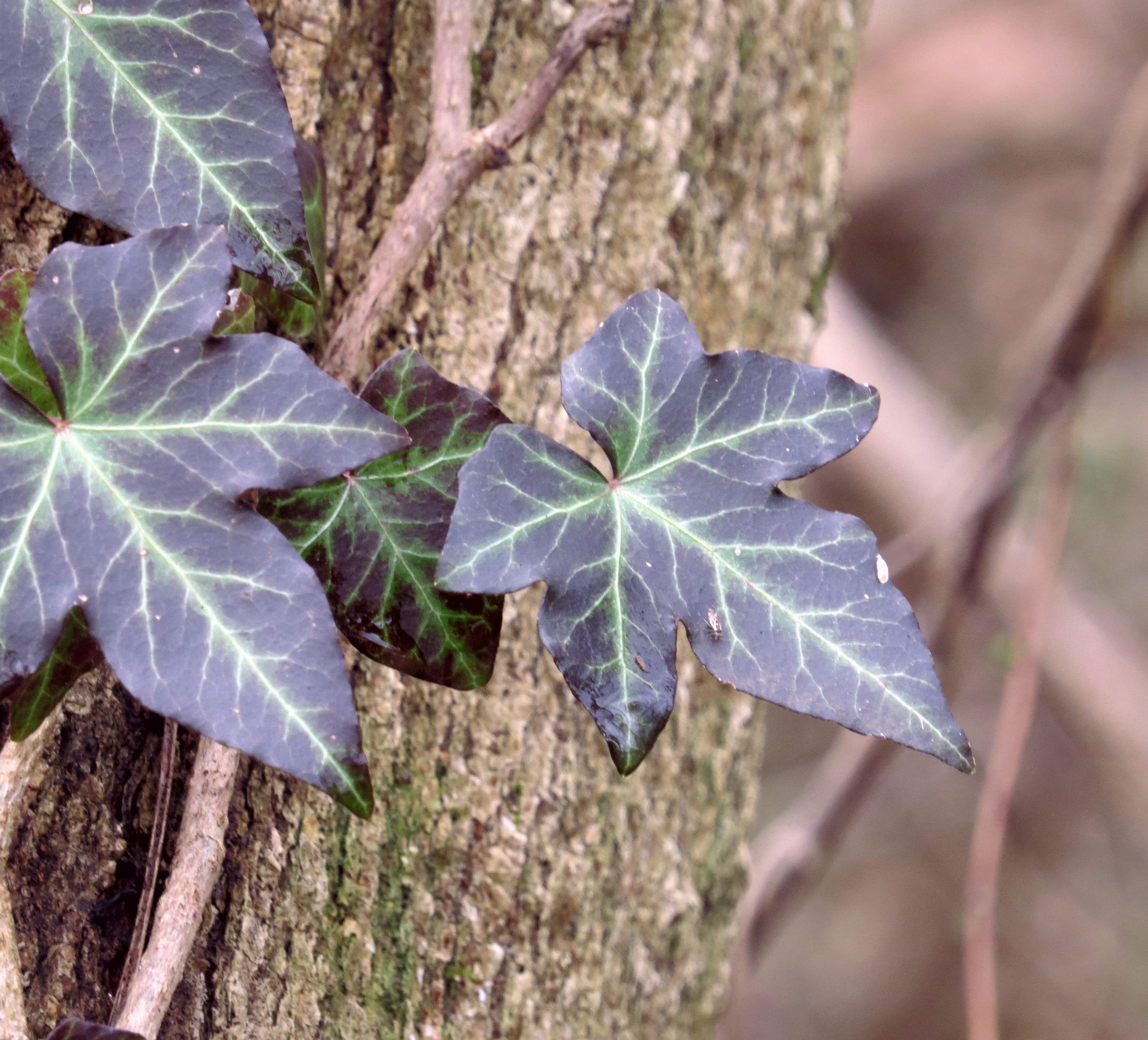
I also got a couple of pictures of English Ivy (Hedera helix). The two plants looked very different but Betsy says that the “leaves can be quite variable.” Also (as you perhaps have already surmised) she tells me that “All should be removed.” 

English Ivy (Hedera helix)

English Ivy (Hedera helix)

English Ivy (Hedera helix)

English Ivy (Hedera helix)

This stuff will all be incorporated into the PPFF section (Every living thing) over the coming weeks. 

My problem with “invasive species” is I’m a white male. The destruction wrought by every “invasive species” on this continent fades to insignificance when compared to the destruction wrought by white males. If something natural in North America is ruined or has gone extinct, it’s happened because of white males. DDT didn’t come from nowhere. Passenger pigeons didn’t shoot themselves. All these “invasive species” are here because white males brought them. Now we’re saying they should go away. But we should stay. Maybe we need to put ourselves on reservations or something. But. Here we are. The Invasive Species to end all Invasive Species. We’ll show them a thing or two. 

I spoke with a complete stranger about my blog a week or two ago and told him it has:

  1. no politics
  2. no religion
  3. no advertising

He laughed and said “ah, the wedge issues.” So enough ranting about invasive species. I think I need to fill my bird feeders. Put down some weed killer. Plant some grass. 

Have a great week,

Jay


Posted in Birds, Endurance, James River, People, Pony Pasture, Rivers, Smiles (including "dog smiles"!) | Tagged | 3 Comments