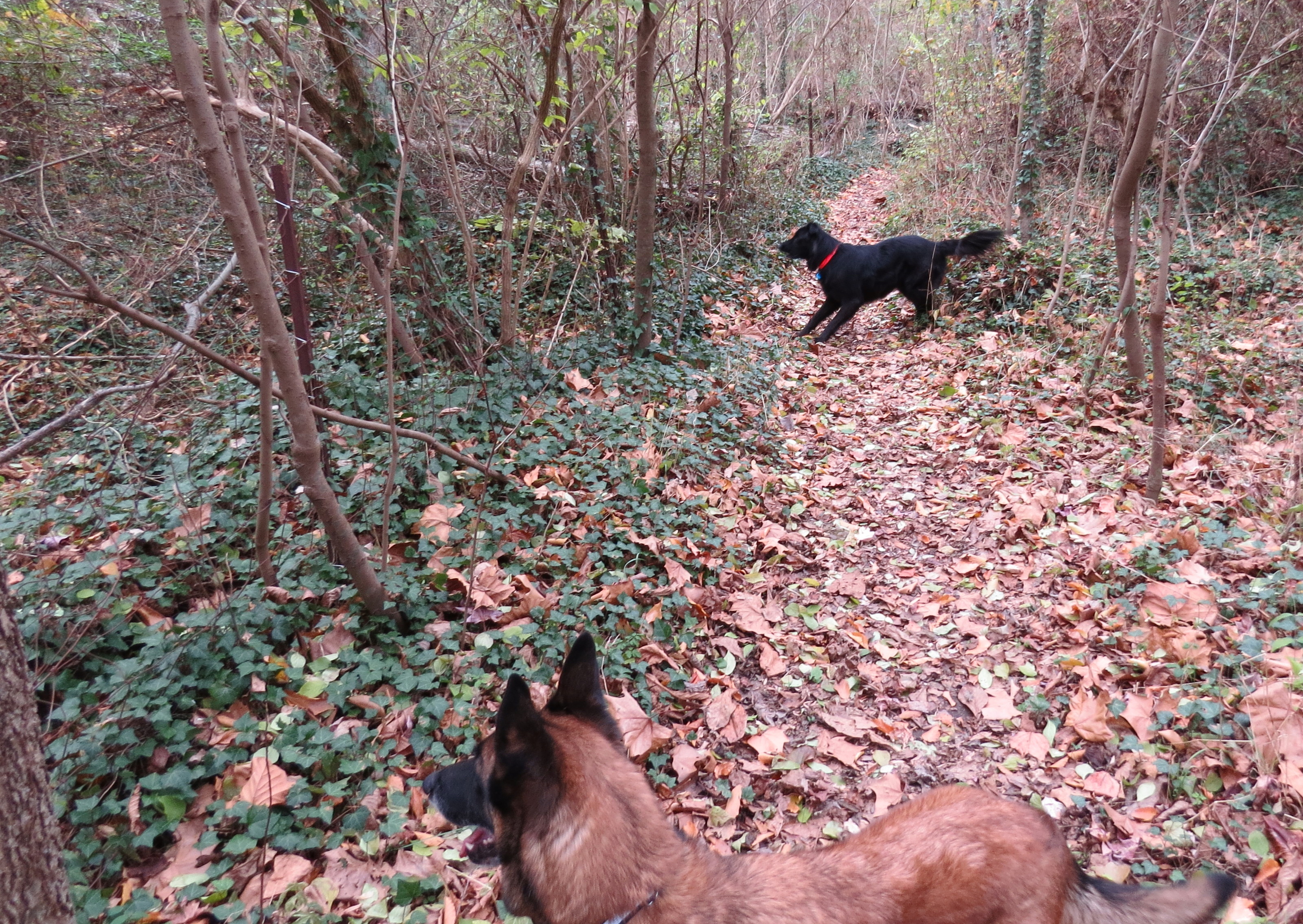
What a present!

28 December, 2014 What a present!  

Ev went to spend Christmas week with her family in NJ so I was here by myself! My friend Pat and his family invited me to have dinner with them here in Richmond and I gladly accepted. And was well-rewarded – it was remarkable. The company was the best part but the food was out of this world. Including but not limited to a childhood favorite called Yorkshire Pudding. I think the last time I ate it was around 1974 or so and it was as great as I remembered it.

But Christmas Day I had to myself and it was gorgeous and Turner and Mackey and I drove up to the Appalachian Trail just west of Charlottesville, VA. From here specifically we drove west on Interstate 64 and got off at Exit 99, where Skyline Drive ends and the Blue Ridge Parkway begins. If you’re driving west on 64 from Richmond, VA, when you get to Exit 99, the Shenandoah National Park is on your right and the George Washington National Forest is on your left. 

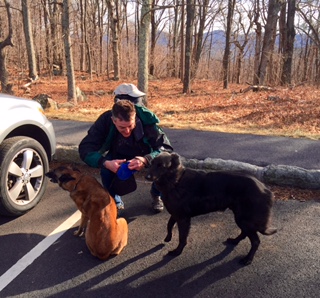
We headed south on the Blue Ridge Parkway about six miles to the Humpback Rocks parking area. A high pressure system was blowing in and clearing the clouds away. Humpback Rocks is in a notch on the ridge and the wind was blowing a gale through there. I asked a woman to take our picture before we set out on our hike. Here are a few in quick succession (keep your eye on my hat):
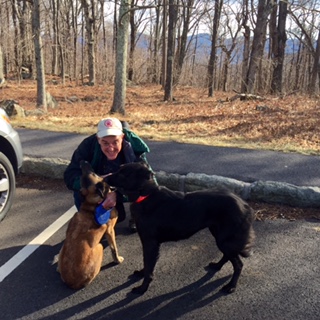
1hat001

1hat002

1hat003

1hat004

As soon as we hiked over the ridge the wind disappeared – and so did all the people. For the entire hike. I let Mackey and Turner run the entire time. We hiked out of the parking lot around 10:30 and got back up there around 2:30. If I live to be a hundred and hike every day I will never get tired of being in the Blue Ridge Mountains. In any season. Christmas Day was clear and crisp and blue and every moment was a treat. Best Christmas “present” I ever had. 

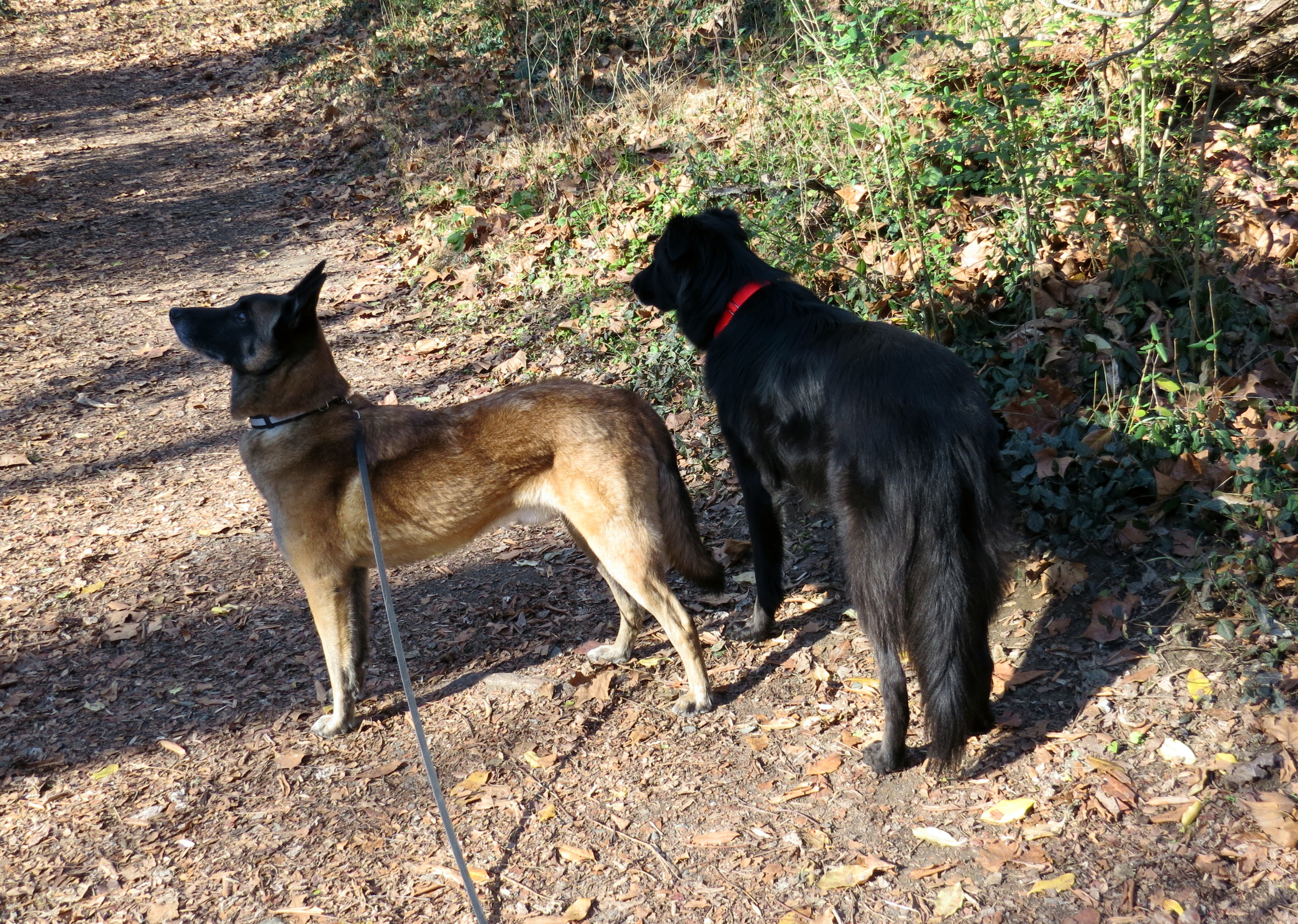
Since I’ve spent so much time on myEvery living thingproject, I haven’t paid as much attention to what’s inorganic. At this time of year on the Blue Ridge, there is granite in view in every direction. I’ve loved looking at it since we first bought the cabin in 1974. Here’s Mackey and Turner taking a breather in front of a large formation:

Great dogs, great day, great big piece of granite.

Great dogs, great day, great big piece of granite.

Mackey even found this naturally formed and naturally filled granite water bowl. Ivory and Nicky used to drink out of the same bowl every time we took this hike. Which was twenty times or more:
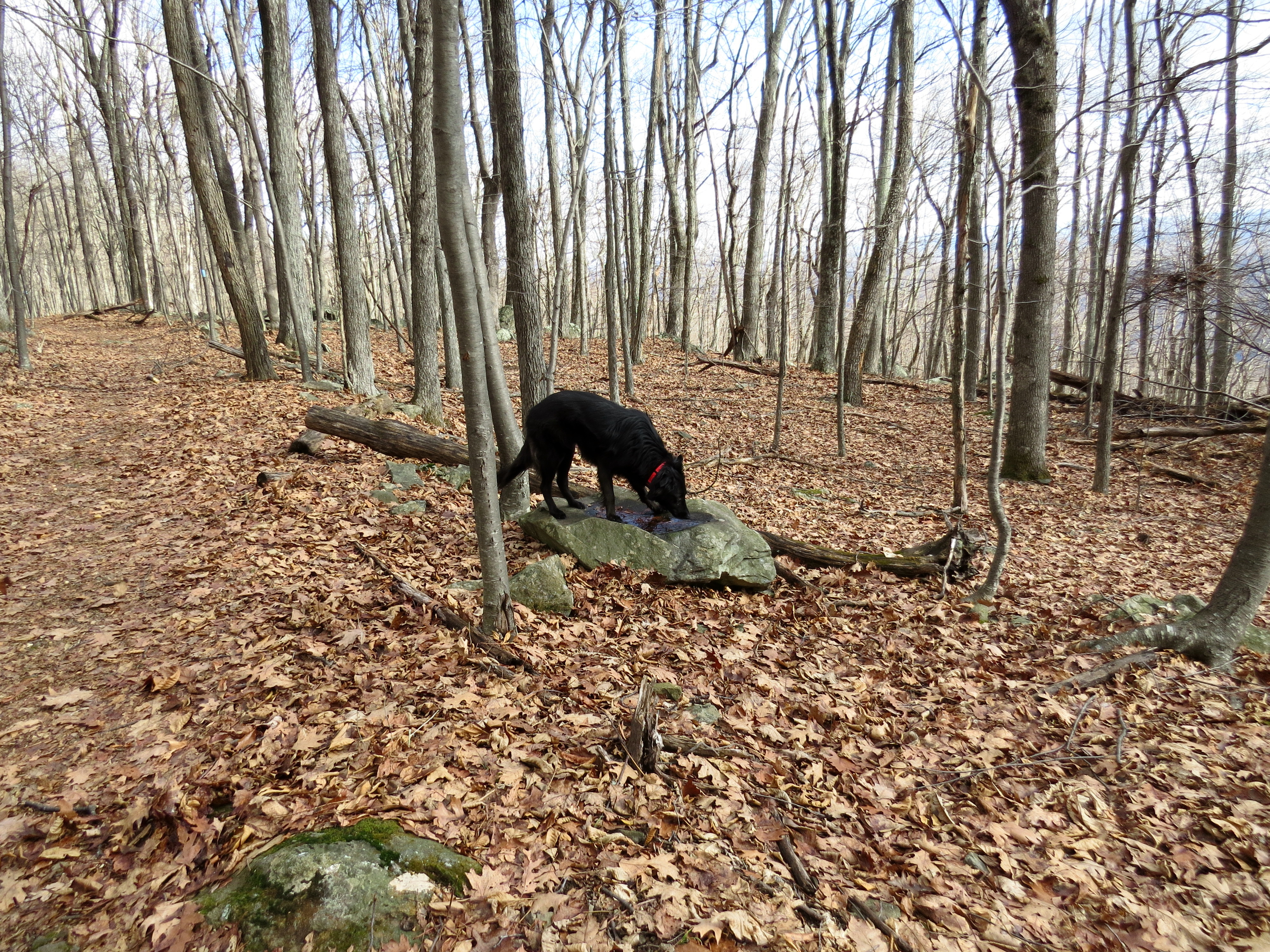
Terrific water bowl. Unless you need to carry it with you.

Terrific water bowl. Unless you need to carry it with you. 

In a couple of spots I found streaks of quartz in the granite:
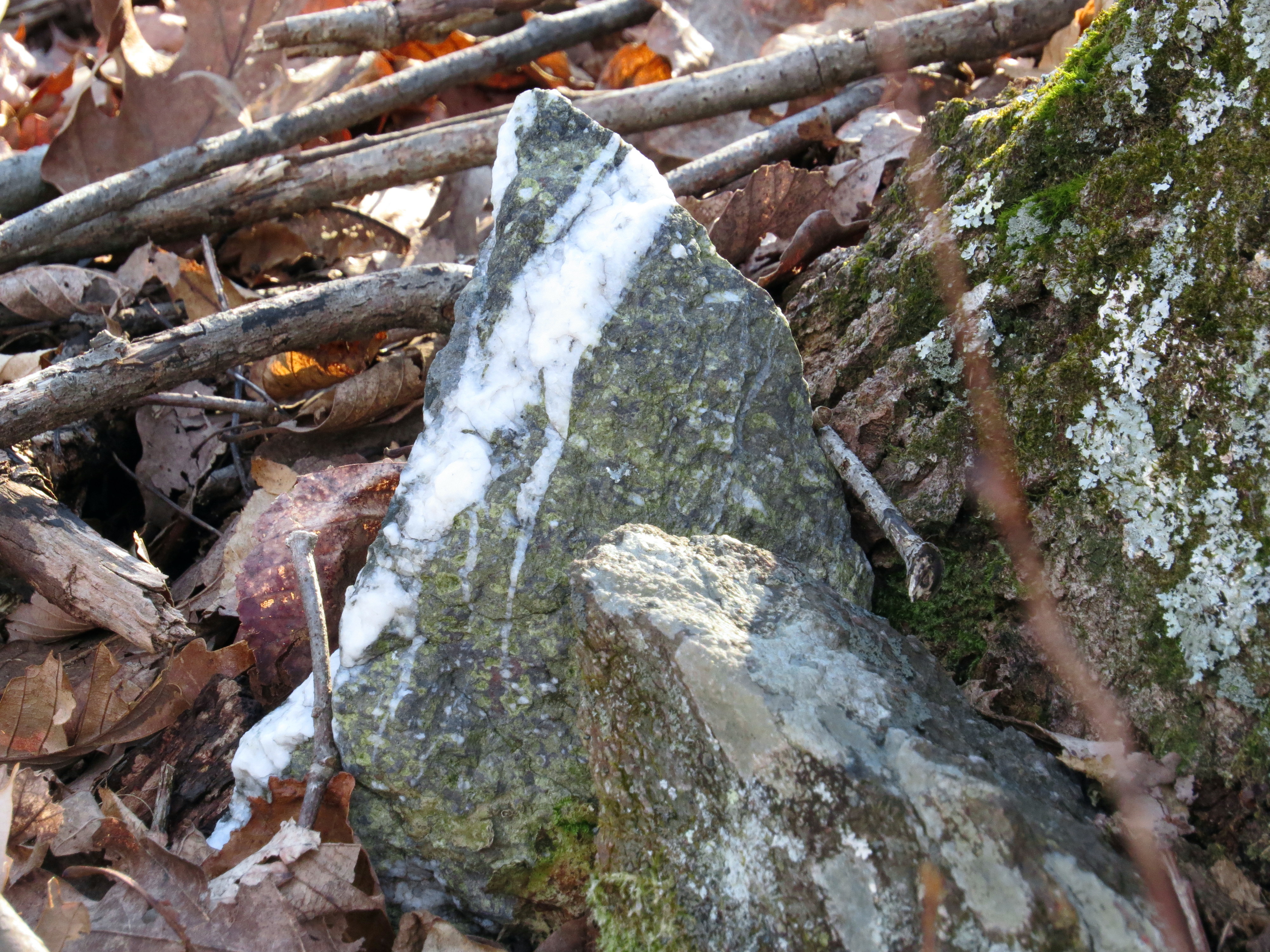
Granite with a streak of quartz.

Granite with a streak of quartz.

Wait – a fact I just learned. I love facts. You can never know too many. Until I began researching the last picture – on 28 December, 2014 – I thought quartz was a rock. But quartz is a mineral. Fifty three years old and until today I thought granite and quartz were both rocks. Now I know granite is a rock and quartz is a mineral. I wonder what else I don’t know? I’ll find out in 2015 and get back to you.

I know this is some lovely green moss – although I don’t (yet) know what kind:

Moss on granite

Moss on granite

Here is another moss. There is so much to know: 

More moss - so much to see

More moss – so much to see. And learn. 

Look how much different stuff is in the next picture. It looks boring (to me) at first glance. But there’s moss and lichen and granite and trees and leaves and sunlight and sky and dirt and even Turner’s in the background there, just above the rock, to the right. At least in my own case, I have to spend a couple of hours outdoors alone before this stuff begins to drift into my awareness:
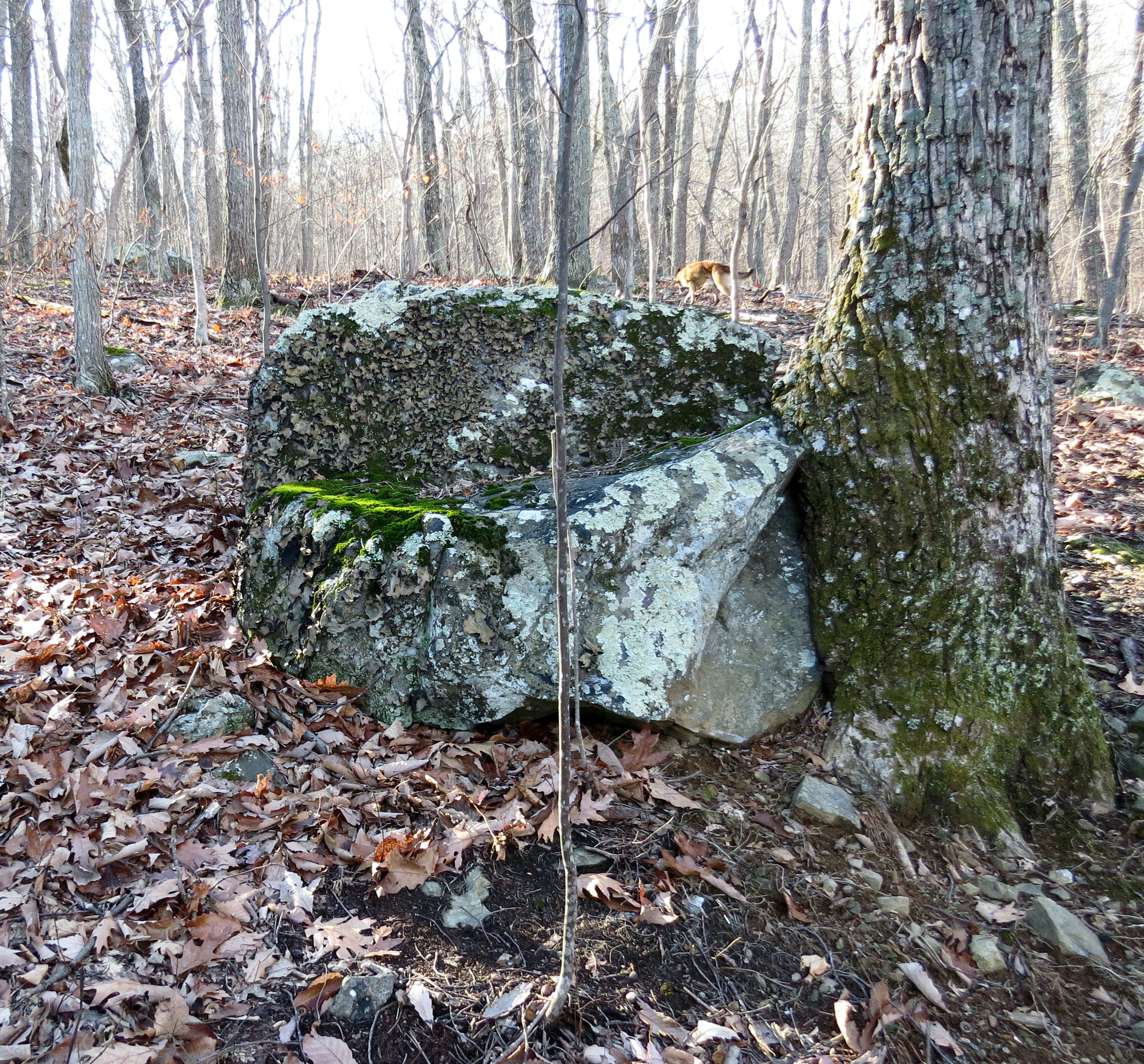
Nice mix.

Nice mix.

 I got lucky and walked around a bend in the trail just as the sun was shining on the back of this fern:

I took 230 (!) pictures on that hike. Some came out lucky like this one.

I took 230 (!) pictures on that hike. Some came out lucky like this one.

Of all the places I enjoyed seeing granite, my favorite (perhaps unsurprisingly) was in the creek:
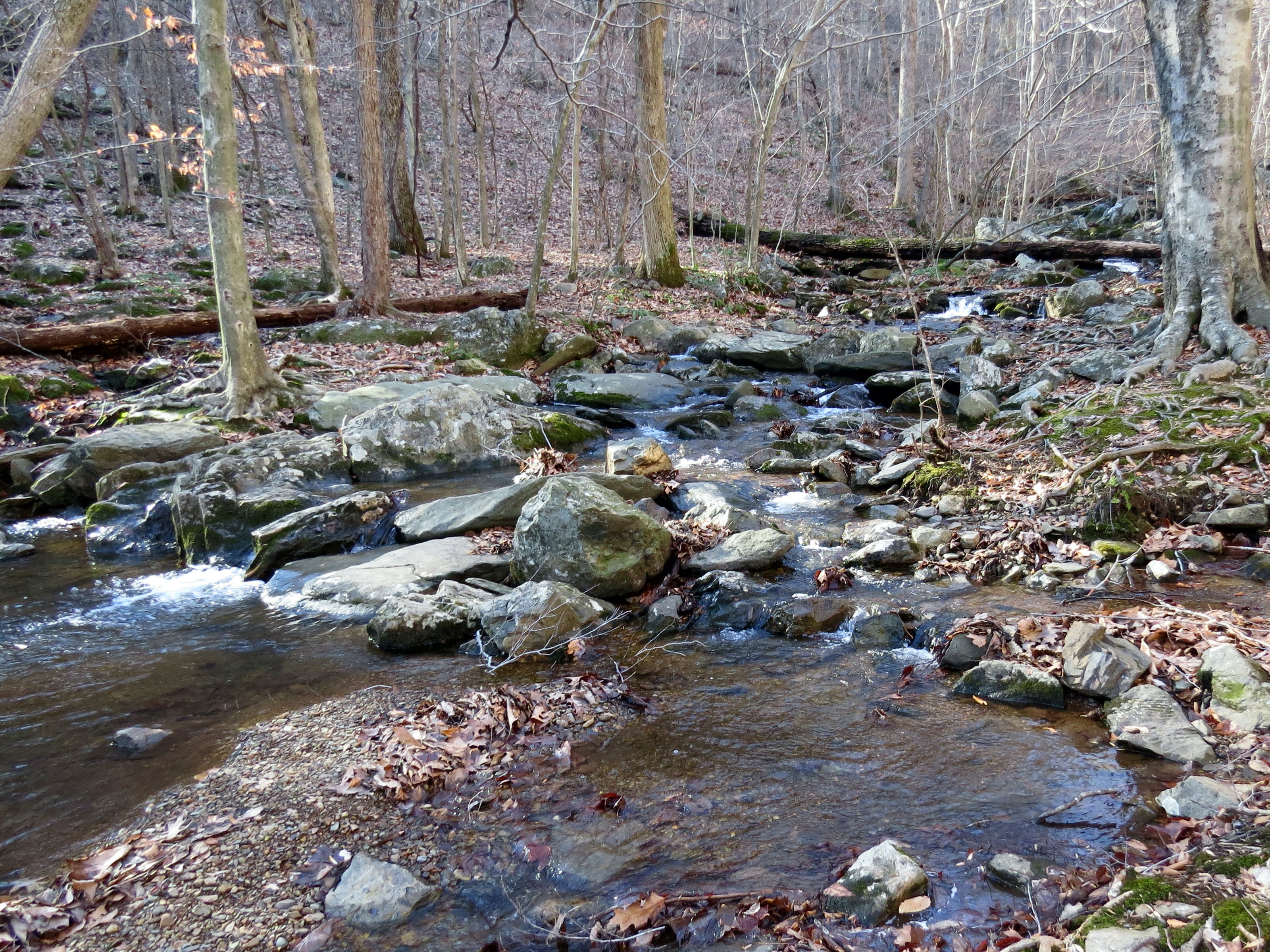
The water is wearing the granite away. VERY slowly.

The water is wearing the granite away. VERY slowly.

 Ivory and Nicky and I camped in and around that area for years and years and years. When you’re hiking with dogs (or when you’re not), it is a huge plus to have reliable year round running water. You still have to filter it. But if you’ve ever gone on a long hike, see how much a filter weighs compared to water.

There’s another significant benefit at that creek – the Paul C. Wolfe Shelter:
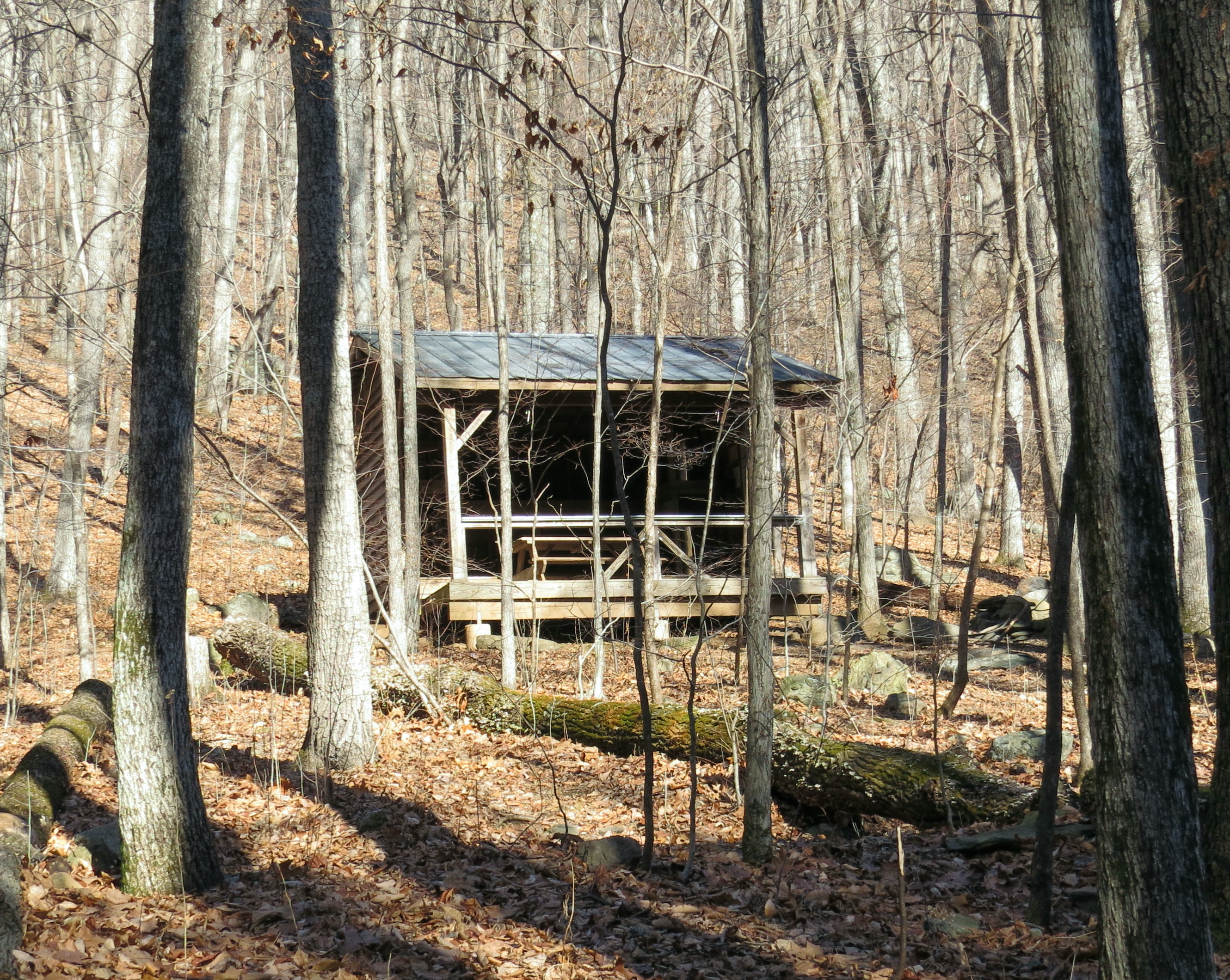
The Paul C. Wolfe Shelter

The Paul C. Wolfe Shelter 

If you’re just day hiking like we were, it’s a great stop. There’s a picnic table inside (you can just see it in the picture) and plenty of room to sit down. If it’s pouring rain it’s the perfect stop. Just up the hill is an outhouse with the most scenic view I’ve ever seen from an outhouse – now that I think about it, it’s the only time I’ve been in an outhouse with a view.

 This is another benefit of being there – notice the two beautiful words in the upper left hand corner: 

"No Service" - music to my ears, in a manner of speaking.

“No Service” – music to my ears, in a manner of speaking.

You can turn your phone off while you’re there or better yet not bring it with you. But I use it so much to take pictures and take notes, I like to bring it. But I love for no one to be able to call. And to not be able to call anyone.

We saw lots of attractive shelf fungus on our hike:
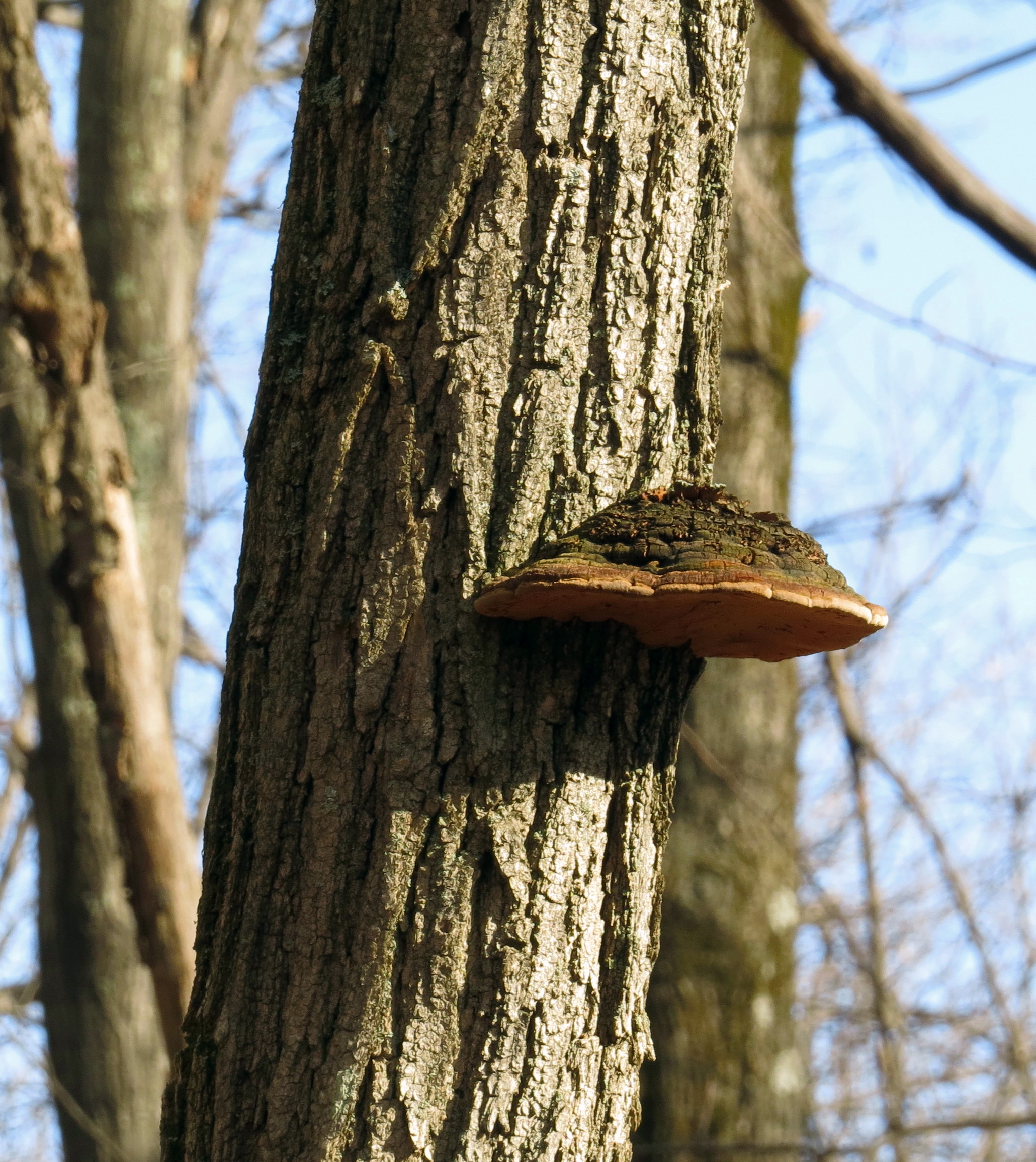
Nice piece of shelf fungus. I don't know much about it. Yet.

Nice piece of shelf fungus. I don’t know much about it. Yet. 

And no shortage of graceful mountain laurel. Which I am also learning about: 

Mountain Laurel, Kalmia latifolia

Mountain Laurel, Kalmia latifolia

The more I learn about all this, the more I learn how much there still is to learn. But it doesn’t get boring.

I’ll close with a picture (another picture, I know) of Mackey and Turner. They are very fond of one another. And I of them. Have a great week,

Jay
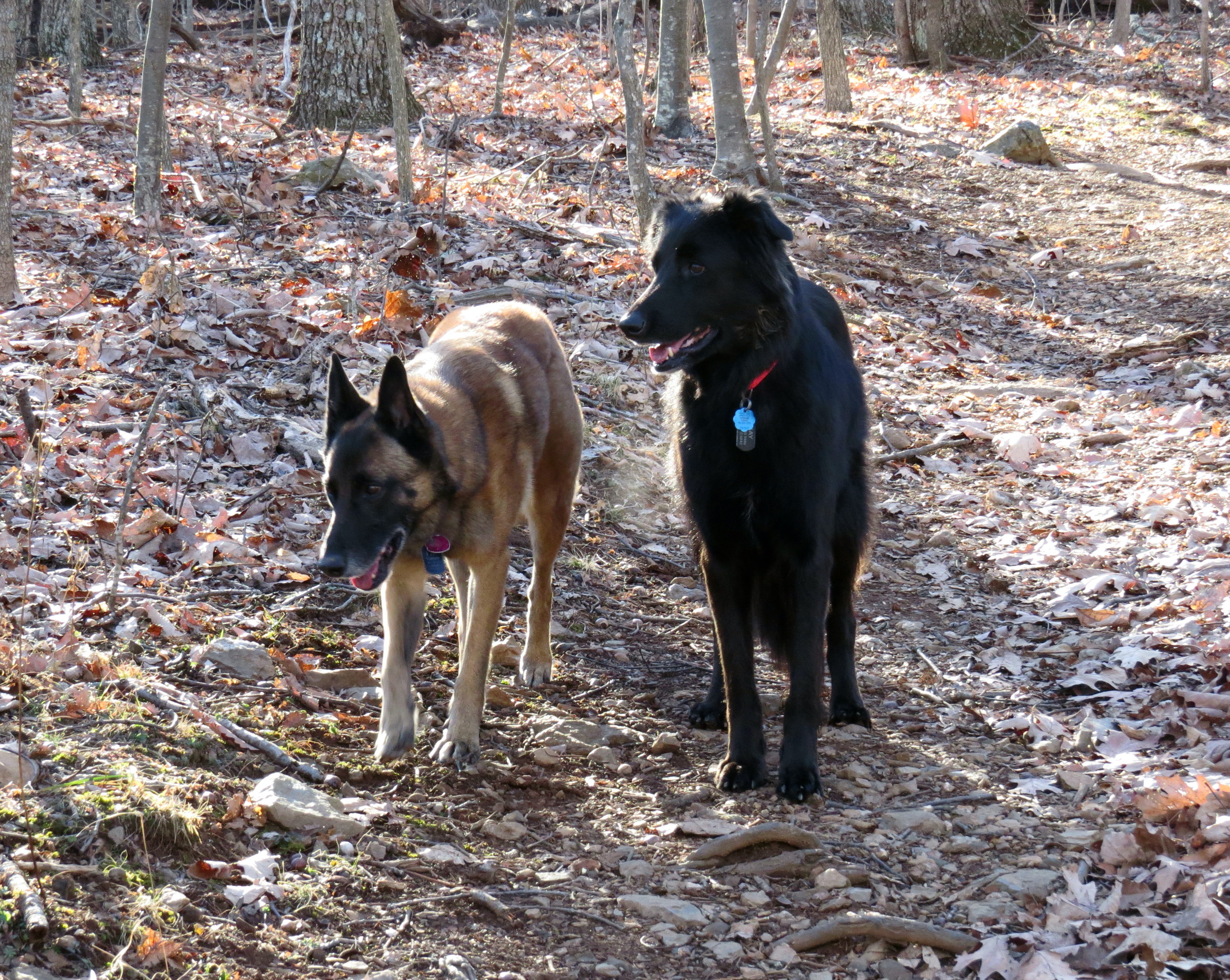
They are good, good buddies. To each other and to me.

They are good, good buddies. To each other and to me.
 

Posted in Dogs, Fun, Smiles (including "dog smiles"!) | Tagged , , , , , , , , , | 10 Comments

Unforeseen circumstances

21 December, 2014        Unforeseen circumstances

When I began this blog post earlier this week, the title was “I cannot tell a lie…”. It was about the fact that I haven’t taken all the pictures on this blog post. So let me put that first part in here:

= = = = = = = = =

I cannot tell a lie…

…I haven’t taken all the pictures on this blog post! I’ve mentioned my friend Ethan in the past – he took the unforgettable photograph of a Northern Water Snake (Nerodia sipedon). If you like snakes or great outdoor photography, look at that picture in my April 27 post from this year Guest photographer!

We’ve spent a lot of time at Bryan Park recently but this week we made a return to Pony Pasture. Ethan and I are both fond of Buffleheads (Bucephala albeola) and there are more at Pony Pasture this December than there have been in years. Bigger flocks and more flocks. When we see something that stays around for a while, Ethan and I pass the camera back and forth so we can both practice. We’ve taken lots of pictures of Buffleheads. The pictures all look pretty similar because nearly every Bufflehead we see is in the same position – about fifty feet offshore, floating on the water. Sometimes they fly, but not for long. I have never seen one on shore or on a rock or in a tree. Amazing.

The first bird we photographed was once again a male Pileated woodpecker (Dryocopus pileatus). He wasn’t very accommodating about posing for this shot, but it’s not bad:

A handsome male Pileated woodpecker, this time at Pony Pasture, close to the edge of the river

A handsome male Pileated woodpecker, this time at Pony Pasture, close to the edge of the river

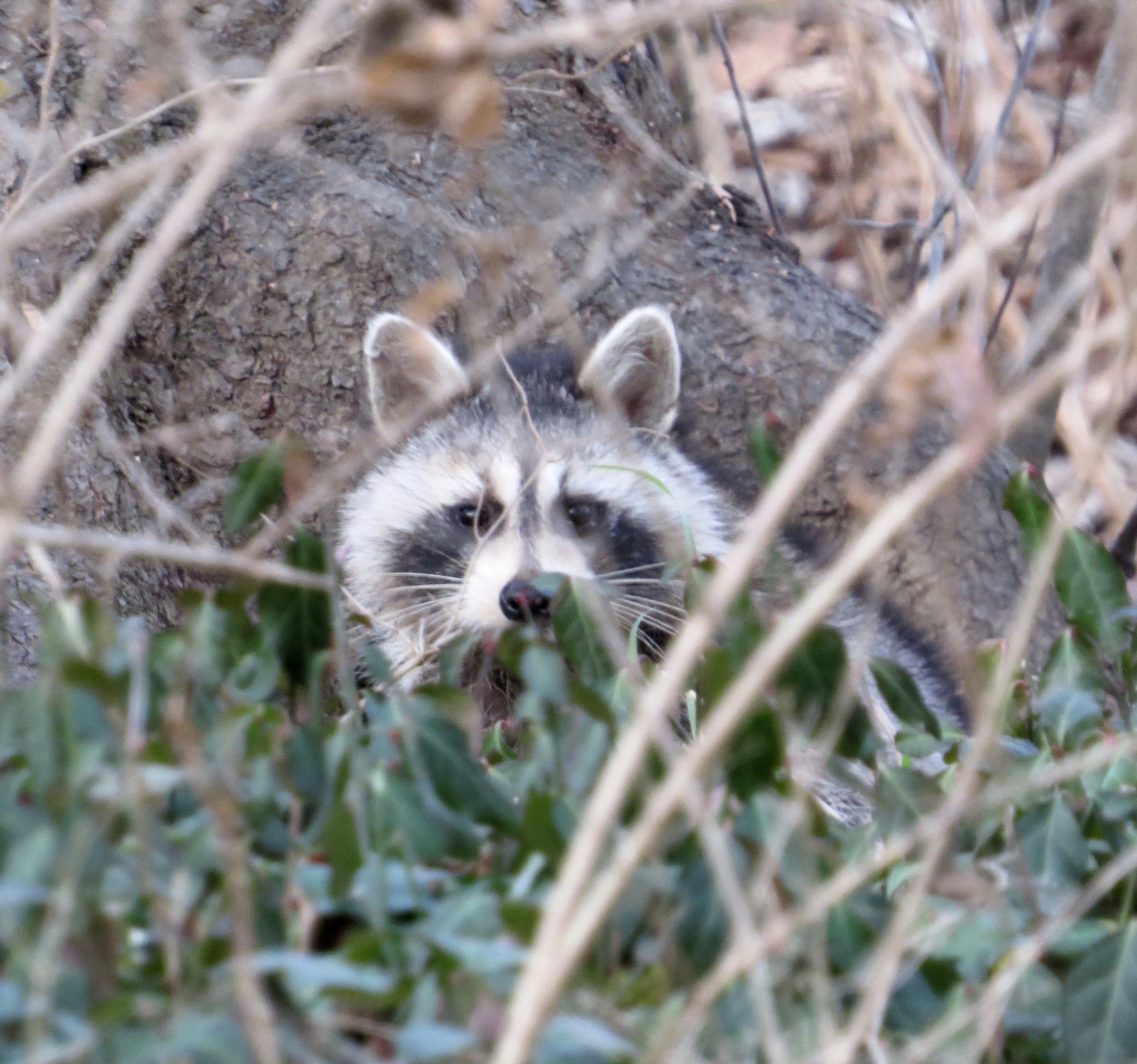
We were headed back up the trail toward the parking lot when we slowed down because we saw some unusual movement on the side of the trail. This little guy (possibly gal) was peering out at us. A raccoon (Procyon lotor). As it turned out, the raccoon was on one side of the trail and a trashcan was on the other. And we were in the middle. I suspect we interrupted its dinner plans. But no matter – we left, but the trashcan stayed. Cute pose:

Cute! And probably hungry.

Cute! And probably hungry.

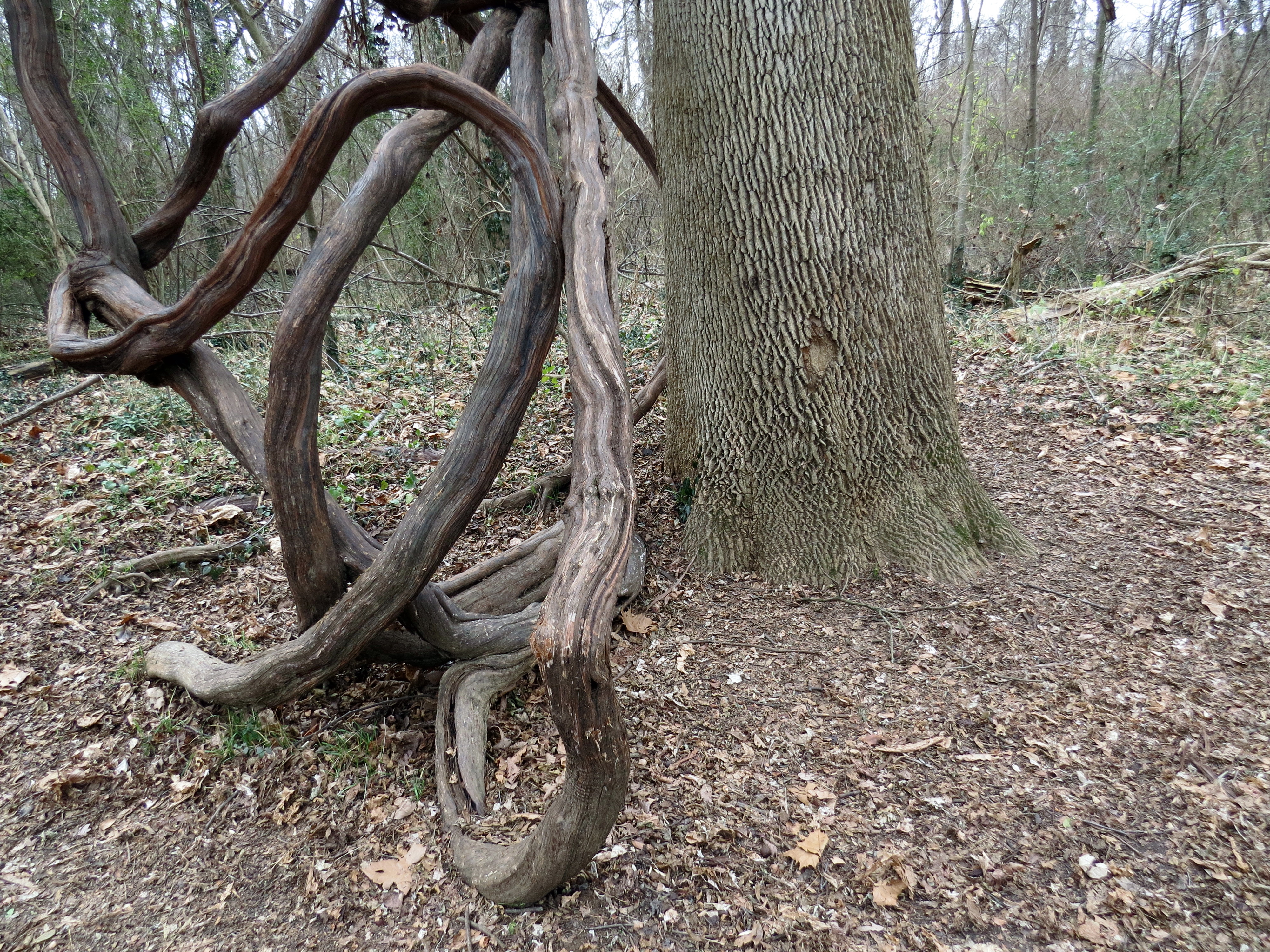
I’m slowly building (and modifying) my “PPFF” (Pony Pasture Flora and Fauna) page. It began as a single page but I’ve divided it in two, a dedicated page for Flora (plants, think “Florist”) and a dedicated page for Fauna (think “fawn”). I’ll add a bit from time to time. The research has been fascinating, and I’m learning new things every week. I’ve been hiking at Pony Pasture for nearly fifteen years. Anyone who has ever been down that main trail from the parking lot has seen the enormous, enormous vines on the right side of the trail, hanging from a huge tree. Maybe I’ll take a picture of Mackey and Turner with them, or my bike or my phone so you’ll get an idea of the scale. They’re easily as thick as my calf, perhaps my thigh. Anyway, I learned while researching this that they’re wild grape vines. I believe there are three different varieties in Virginia and they’re difficult (for me) to tell apart. Especially when there are no leaves or grapes. But I choose to believe this one is Riverbank Grape (Vitis riparia) because of its location. Check this thing out:

Massive grape vine, massive ash tree

Massive grape vine, massive ash tree

My information source says that’s a white ash tree (Fraxinus americana).  I’m guessing it’s a white ash but possibly it’s a green ash. I’ll have to wait until the leaves come out in the spring to determine more accurately.

= = = = = = = = = = =

Then earlier today my friend Pat called and asked if I wanted to go for a quick flight with him and his son – today! As in, I had to hurry up and get going! I’m not a pilot and I can’t fly any time I want so I said yes. I didn’t have to be to his house for a couple of hours so Mackey and Turner and I raced to Pony Pasture and had a quick hike. We saw deer! I know a spot where we can find them regularly now – this is a repeat performance by the deer and I can tell they like this spot. I was going to write more – a lot more – about Pony Pasture today. Although I write about it incessantly. And I’ve gathered a lot more data for my “PPFF/Every Living Thing” project. But that can wait for another time.

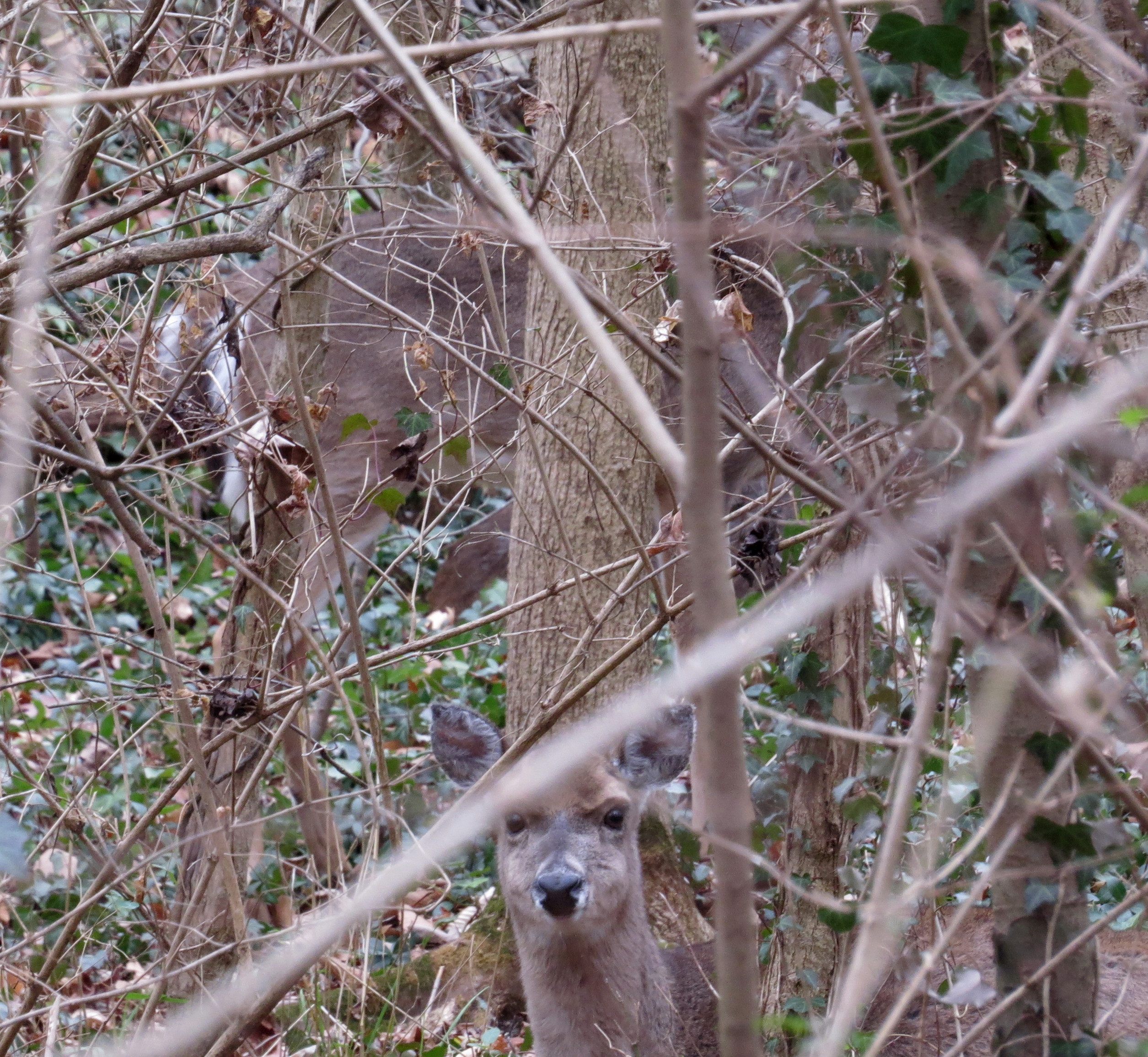
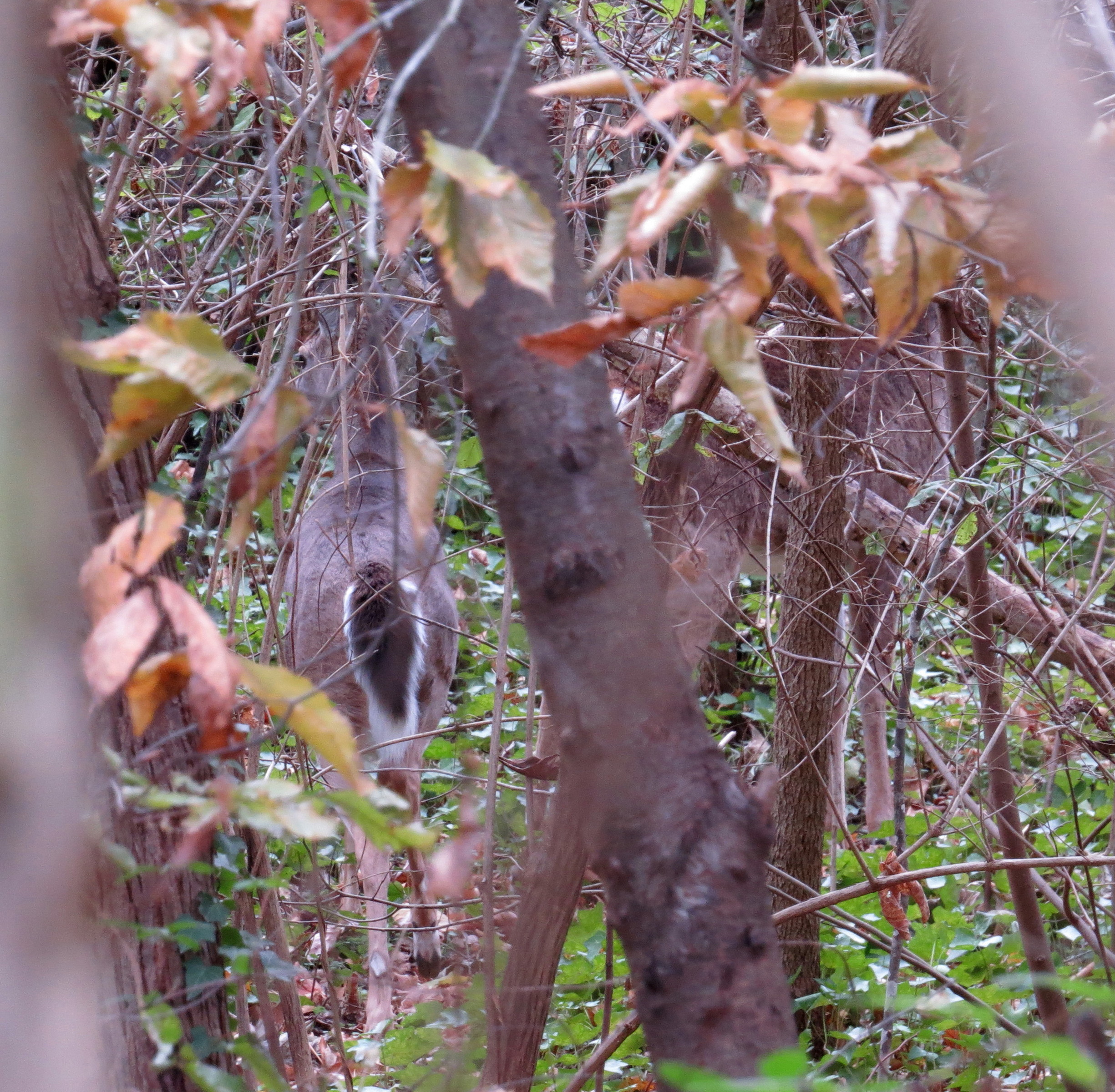
Here are the deer we saw. This is just two of them; I think there were three and maybe even four or five. But one thing about whitetail deer in hardwood forests in autumn or winter – they are nearly invisible. So see (or don’t see) for yourself. I’ve trimmed this picture way down – this is about a quarter of the original image. The rest was just more brown and a bit of green. In this picture in the bottom center you can see one deer’s face clearly – black nose, eyes, ears. You have to pay closer attention to see the one behind it – behind the tree. The deer is facing to the right in the picture, and you can see its tail to the left. Another unusual thing is you hardly see them any better when they move – they’re still practically invisible. Remarkable:

See the nose and two eyes at the bottom? And the tail and body behind that?

See the nose and two eyes at the bottom? And the tail and body behind that?

I took the last picture at Pony Pasture at 9:53 AM (according to my camera). That was in the woods, we probably weren’t back to the car until 10:15 or so. We hurried home and I gave snacks to the dogs and they went to sleep and I left for Pat’s. And we went to Williamsburg Jamestown Airport (JGG) and met Daniel. We flew the same plane as last time (I went flying yesterday!), a Cessna 172 Skyhawk, N256GP. Today we flew to Hummel Field W75 in Topping, VA, which if like me you never heard of it is in Middlesex County, VA, hard on the south bank of the Rappahannock River just before it enters the lower Chesapeake Bay.

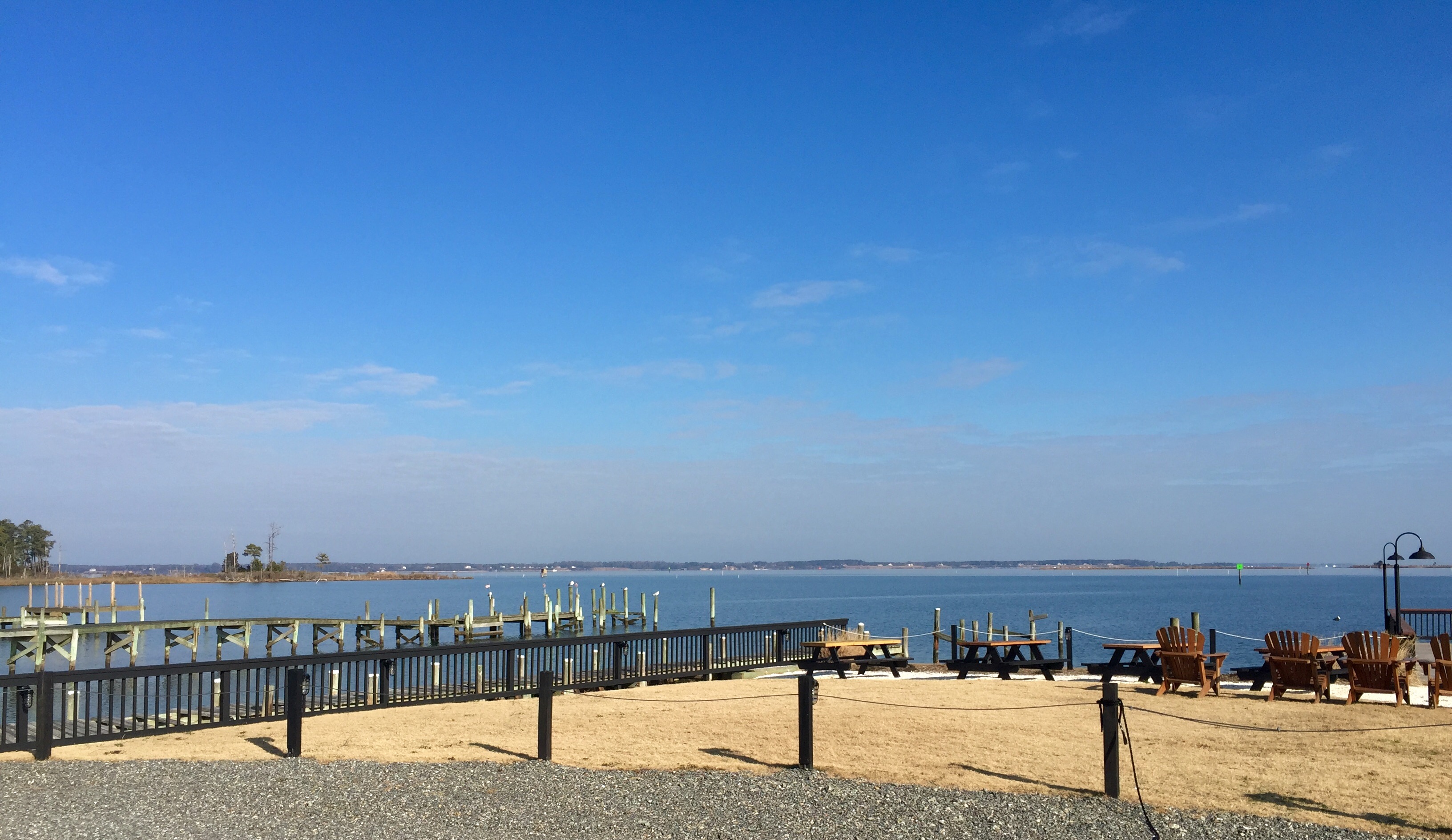
I’m later than I’d planned to be so let me put up a few pictures and close this up. First, our view from the restaurant – Merroir Tasting Room:

It was difficult, but someone had to do it.

It was difficult, but someone had to do it.

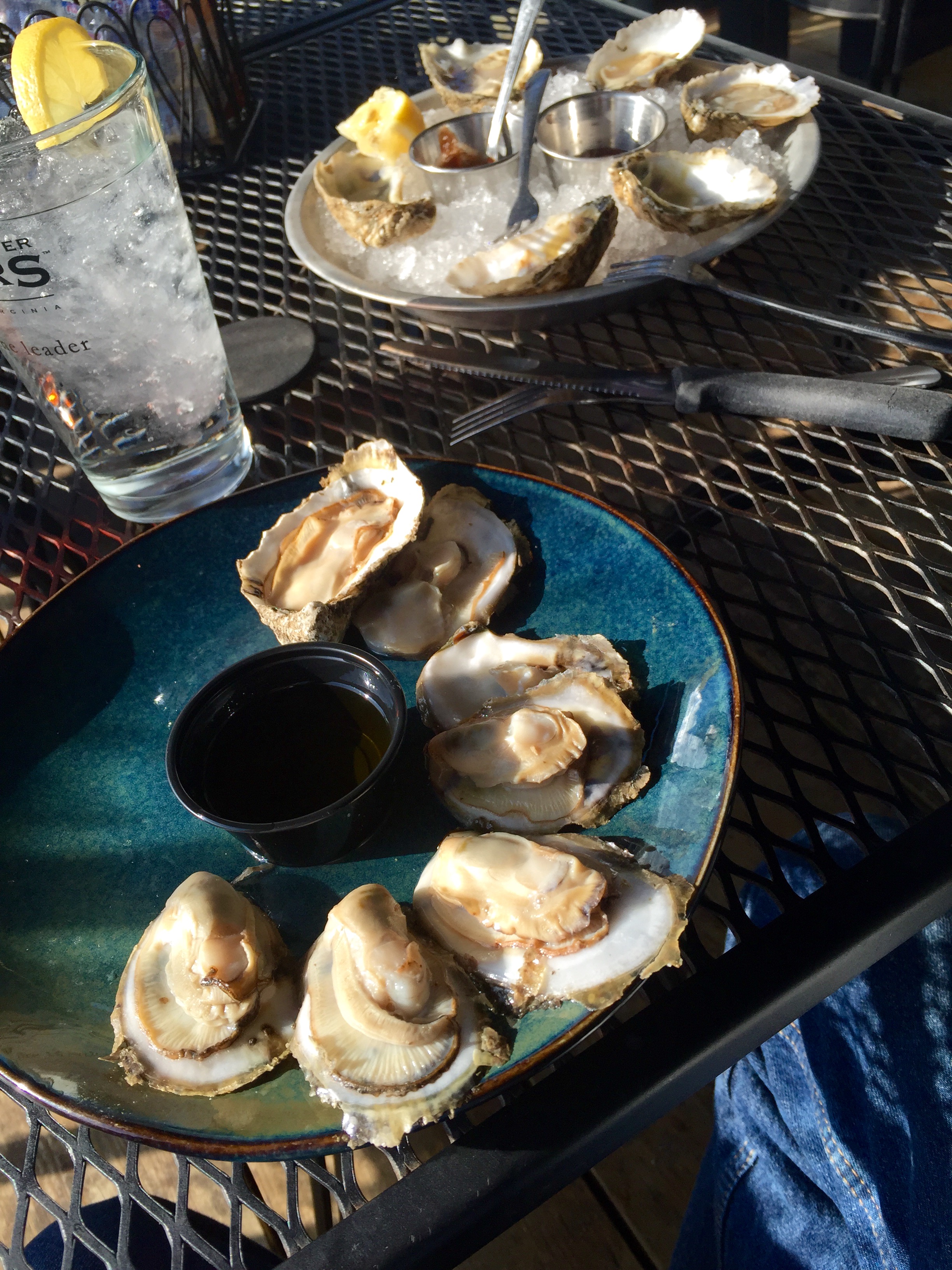
Second a view of my plate:

See preceding caption

See preceding caption

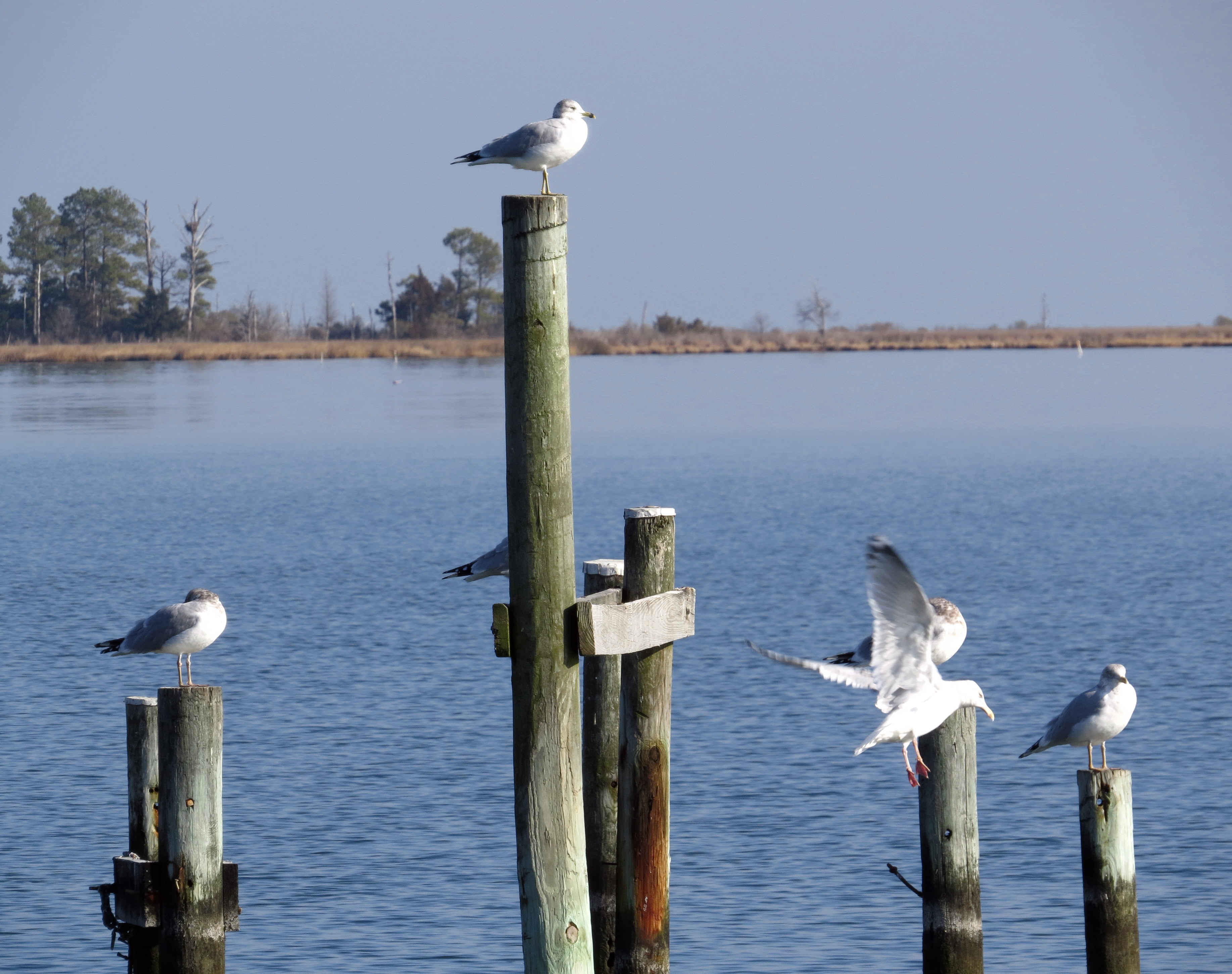
Late addition – gulls outside the restaurant: 

This seems like a more appropriate place for seagulls than a rock at Pony Pasture

This seems like a more appropriate place for seagulls than a rock at Pony Pasture

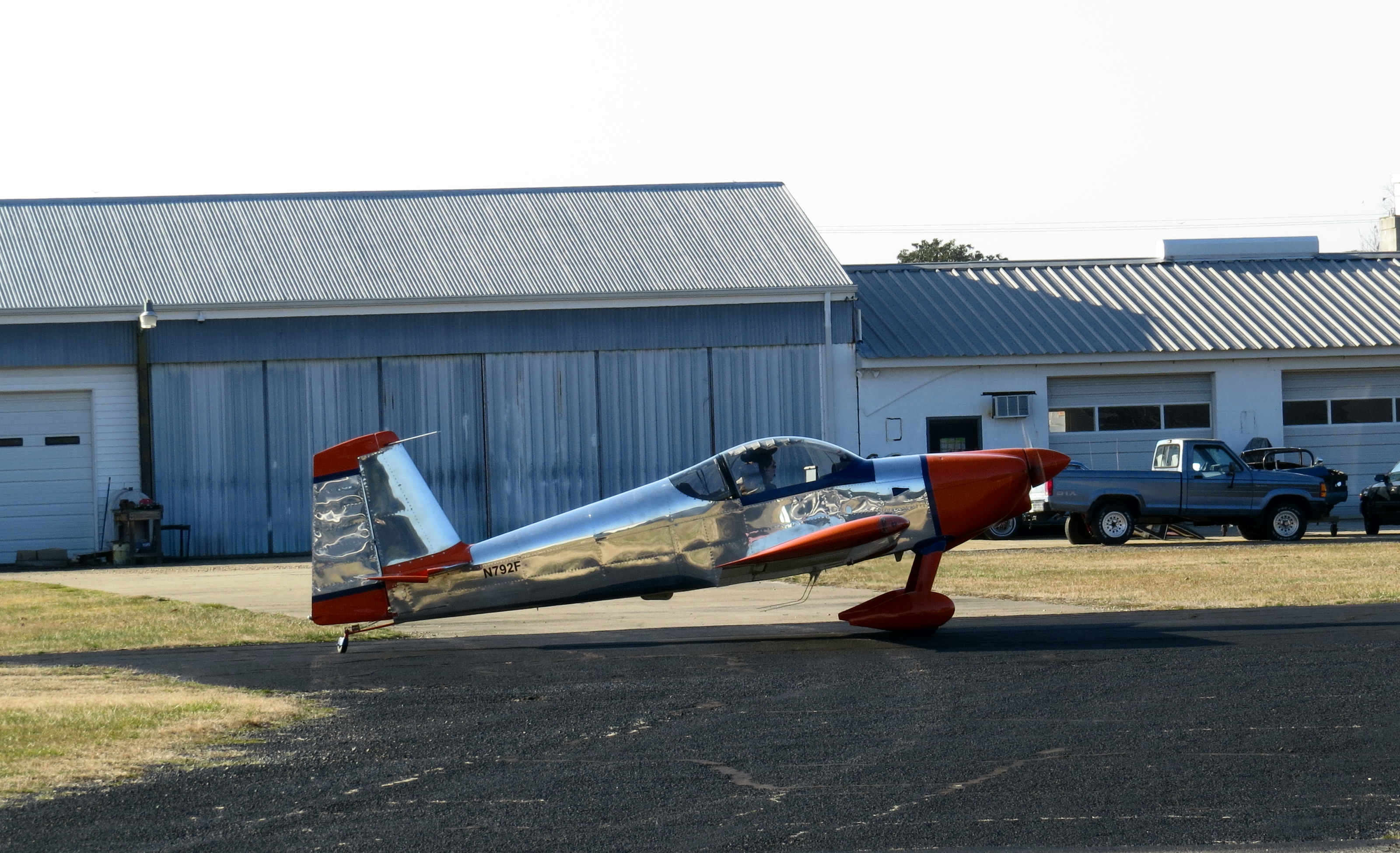
And fun planes – an RV-7 kit plane with a 200 HP engine:

RV7 - another very fun looking little plane

RV7 – another very fun looking little plane

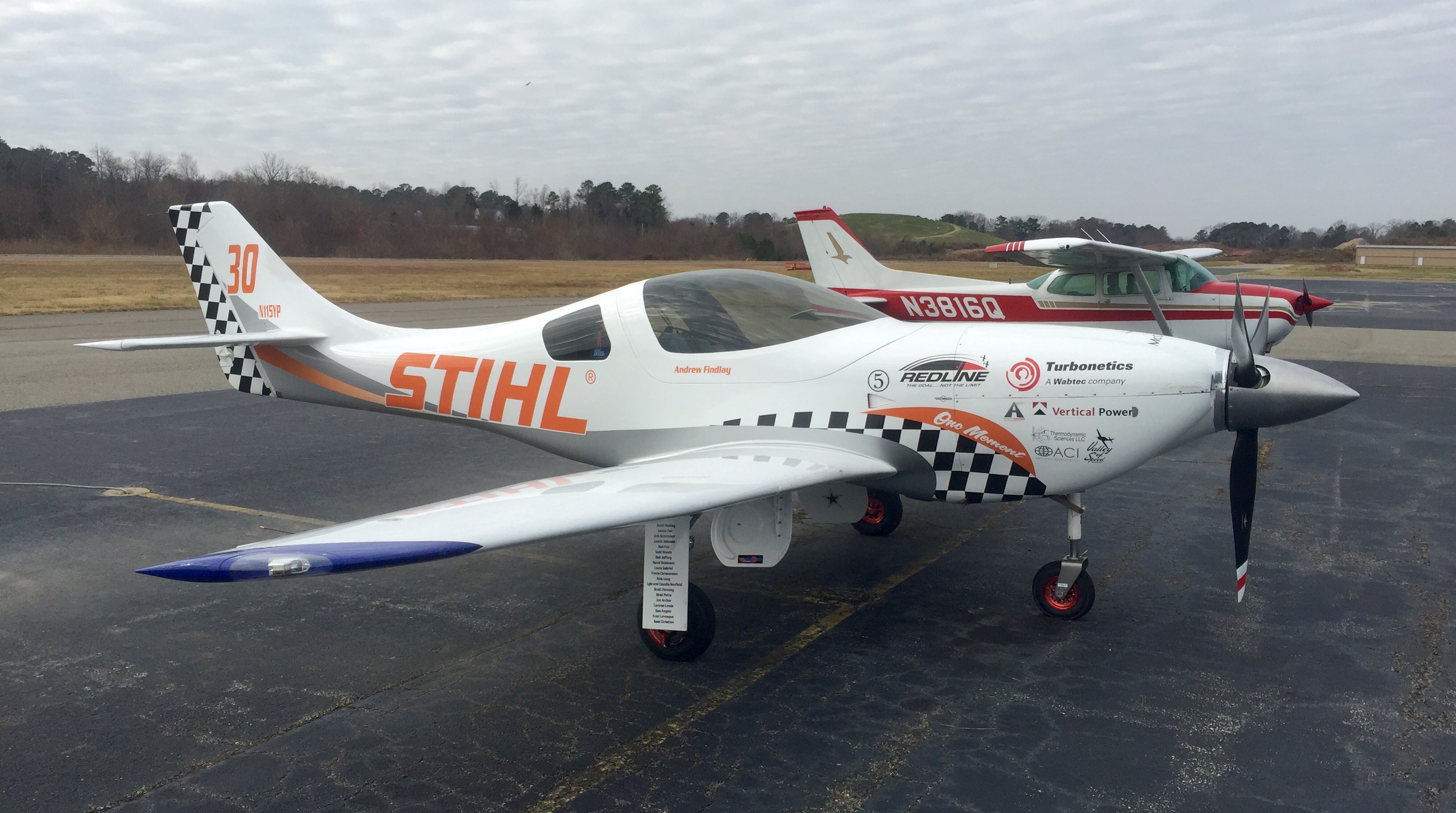
And a Lancair Legacy: 

A Lancair Legacy. That is an extremely sporty little plane.

A Lancair Legacy. That is an extremely sporty little plane.

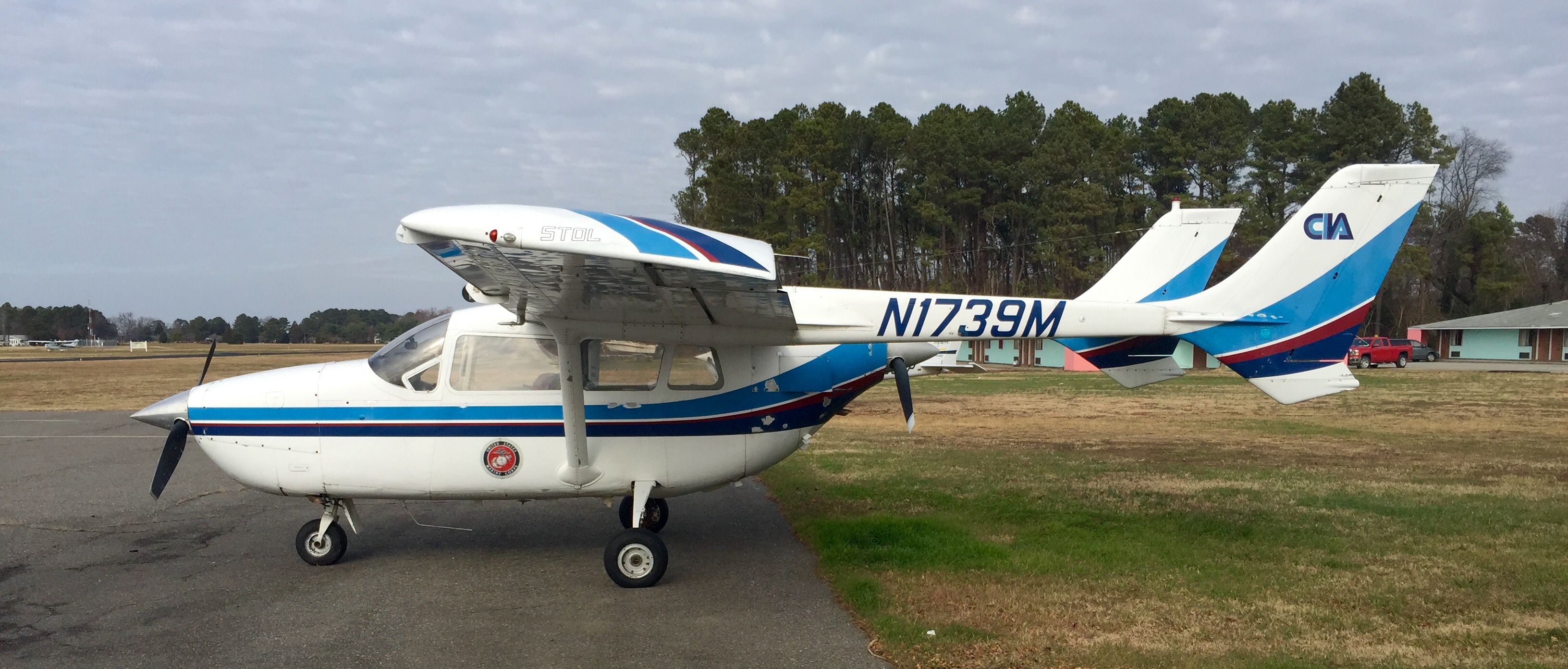
And a 1970 Cessna 337F Super Skymaster with a Marine Corps logo:

A 1970 Cessna 337F Super Skymaster. With a push prop and a pull prop! And two engines!

A 1970 Cessna 337F Super Skymaster. With a push prop and a pull prop! And two engines! And a Marine Corps insignia!

Enough for this week! More next week! Have a great week!

All best,

Jay

Posted in Birds, Fun, James River, People, Rivers | Tagged , , , , , , , , , | 4 Comments

PP Flora

Beginning December, 2014, this will be my page for “Flora” from Pony Pasture in Richmond, VA. The left hand column has the “common name” and leads to a blog post I’ve done with a picture I took of that plant. The right hand column has the “scientific name” or “binomial name” or “Latin name” and has a link to an authoritative resource regarding that plant: 

1. American sycamore                 Platanus occidentalis 

2. Loblolly pine                             Pinus taeda 

3. White oak                                   Quercus alba  

4. Black walnut                              Juglans nigra 

5. Black locust                               Robinia pseudoacacia 

6. Tulip poplar                               Liriodendron tulipfera 

7. Sweetgum                                   Liquidambar styraciflua

8. American holly                           Ilex opaca 

9. Green ash                                    Fraxinus pennsylvanica

10. Grape vine                                 Vitus riparia

11. English ivy                                  Hedera helix 

12. Bush honeysuckle                    Lonicera maakii or Lonicera morrowii

13. Wintercreeper                           Euonymus fortunei

14. Gill-over-the-ground               Glechoma hederacea

15. Honeysuckle                               Lonicera japonica 

16. Privet                                            Ligustrum vulgare

17. Multiflora rose                           Rosa multiflora 

18. Pawpaw                                      Asimina triloba   

19. Eastern Redcedar                    Juniperus virginiana  

20. Hornbeam or Ironwood        Carpinus caroliniana 

21. Sassafras                                    Sassafras albidum 

22. Virginia bluebell                      Mertensia virginica

23. River birch                                 Betula nigra

24. Tickseed sunflower                  Bidens aristosa

25. Cardinal flower                         Lobelia cardinalis

26. Fig buttercup                            Ficaria verna 

27. Common violet                         Viola soraria

28. Spring beauty                            Claytonia virginica 

29. Bleeding heart                           Dicentra spectabilis

30. Virginia bluebells                     Mertensia virginiana

31. Eastern redbud                          Cercis canadensis

32. Pawpaw                                      Asimina triloba 

33. Flowering dogwood                 Cornus florida

34. Princess tree                             Paulownia tomentosa

35. Bur sedge                                   Carex grayi 

36. Japanese honeysuckle            Lonicera japonica

37. Blue-eyed grass                        Sisyrinchium angustifolium

38. Wild pea                                    Still figuring it out – lots of wild peas here in VA

39. Red mulberry                           Morus rubra

40. Daylily                                       Hemerocallis fulva

41. Carolina horsenettle               Solanum carolinense

42. Southern magnolia                 Magnolia grandiflora

43. May apple                                 Podophyllum peltatum

44. American beech                       Fagus grandifolia

45. Liriope                                       Liriope muscari

46. Mahonia                                    Mahonia aquifolium

47. Witch’s butter                           Tremella mesenterica

48.

49.

50.

51.

52.

53.

Posted in Flowers, James River, Pony Pasture, Rivers | 3 Comments

PP Fauna

Beginning December, 2014, this will be my page for “Fauna” from Pony Pasture in Richmond, VA.

The left hand column has the “common name.” Clicking on that link will go to a blog  post with a photograph I’ve taken of that animal. The right hand column has the “Scientific name” or “Binomial name.” Clicking on that link will take you to a reputable source of information about that animal. Not wikipedia, not that there’s anything wrong with wikipedia.

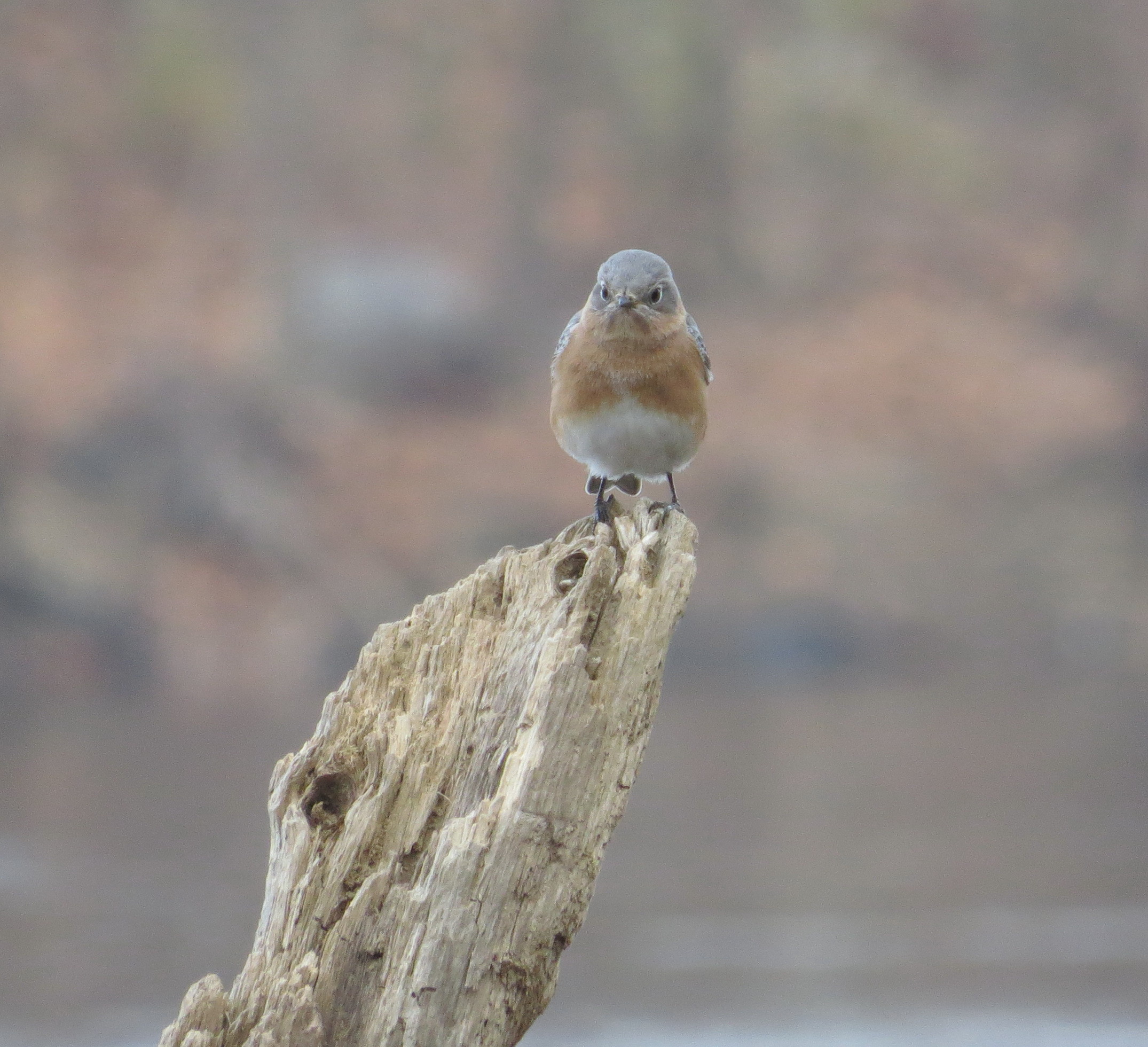
1. Eastern bluebird                        Sialia sialis 

2. Whitetail deer                            Odocoileus virginianus

3. Eastern gray squirrel                Sciurus carolinensis

4. Eastern box turtle                     Terrapene carolina

5. Red-shouldered hawk              Buteo lineatus 

6. Ring-billed gull                          Larus delawarensus

7. Mallard                                        Anas platyrhynchos

8. Canada goose                             Branta canadensis

9. Bufflehead                                   Bucephala albeola 

10. Marbled orbweaver                  Araneus marmoreus

11. Raccoon                                      Procyon lotor 

12. Northern river otter                Lontra canadensis 

13. Hooded merganser                 Lophodytes cucullatus

14. Red-bellied woodpecker        Melanerpes carolinus

15. Common merganser               Mergus merganser 

16. Downy woodpecker                Picoides pubescens

17. Carolina wren                           Thryothorus ludovicianus

18. Barred owl                                 Strix varia

19. Ebony jewelwing                      Calopteryx maculata

20. American robin                        Turdus migratorius

21. Northern cardinal                    Cardinalis cardinalis

22. Bald eagle                                  Haliaeetus leucocephalus

23. American goldfinch                 Spinus tristis

24. Turkey vulture                          Cathartes aura

25. Whitetail skimmer                   Plathemis lydia

26. Spotted sandpiper                    Actitis macularius

27. Double-crested cormorant     Phalacrocorax auritus

28. Eastern pondhawk                   Erythemis simplicicollis

29. Killdeer                                       Charadrius vociferus

30. Green heron                               Butorides virescens

31. Belted kingfisher                        Megaceryle alcyon

32. Longnose gar                              Lepisosteus osseus 

33. American rubyspot                   Hetaerina americana

34. American bullfrog                     Lithobates catesbeianus

35. Ring-necked duck                     Aythya collaris 

36. Red-tailed hawk                        Buteo jamaicensis

37. Zebra swallowtail                      Protographium marcellus

38. Tiger swallowtail                       Papilio glaucus

39. Luna moth                                  Actias luna

40. Blue-fronted dancer                 Argia apicalis

41. Praying mantis                           Mantis religiosa

42. Mute swan                                  Cygnus olor

43. Common housefly                     Musca domestica

44. Carolina Chickadee                   Poecile carolinensis

45. Great blue heron                        Ardea herodias

46. Pied-billed grebe                       Podilymbus podiceps

47. Hermit thrush                            Catharus guttatus

48. Ruby-crowned Kinglet             Regulus calendula

49. Northern Water Snake             Nerodia sipedon

50. Mourning dove                          Zenaida macroura

51. Eastern ratsnake                        Pantherophis alleghaniensis

52.

53.

Posted in Birds, Insects, James River, Pony Pasture, Rivers, Snakes, Spiders, squirrels, Turtles | Tagged , , , , , , , , , , | 3 Comments

Birds and trees

14 December, 2014      Birds and trees

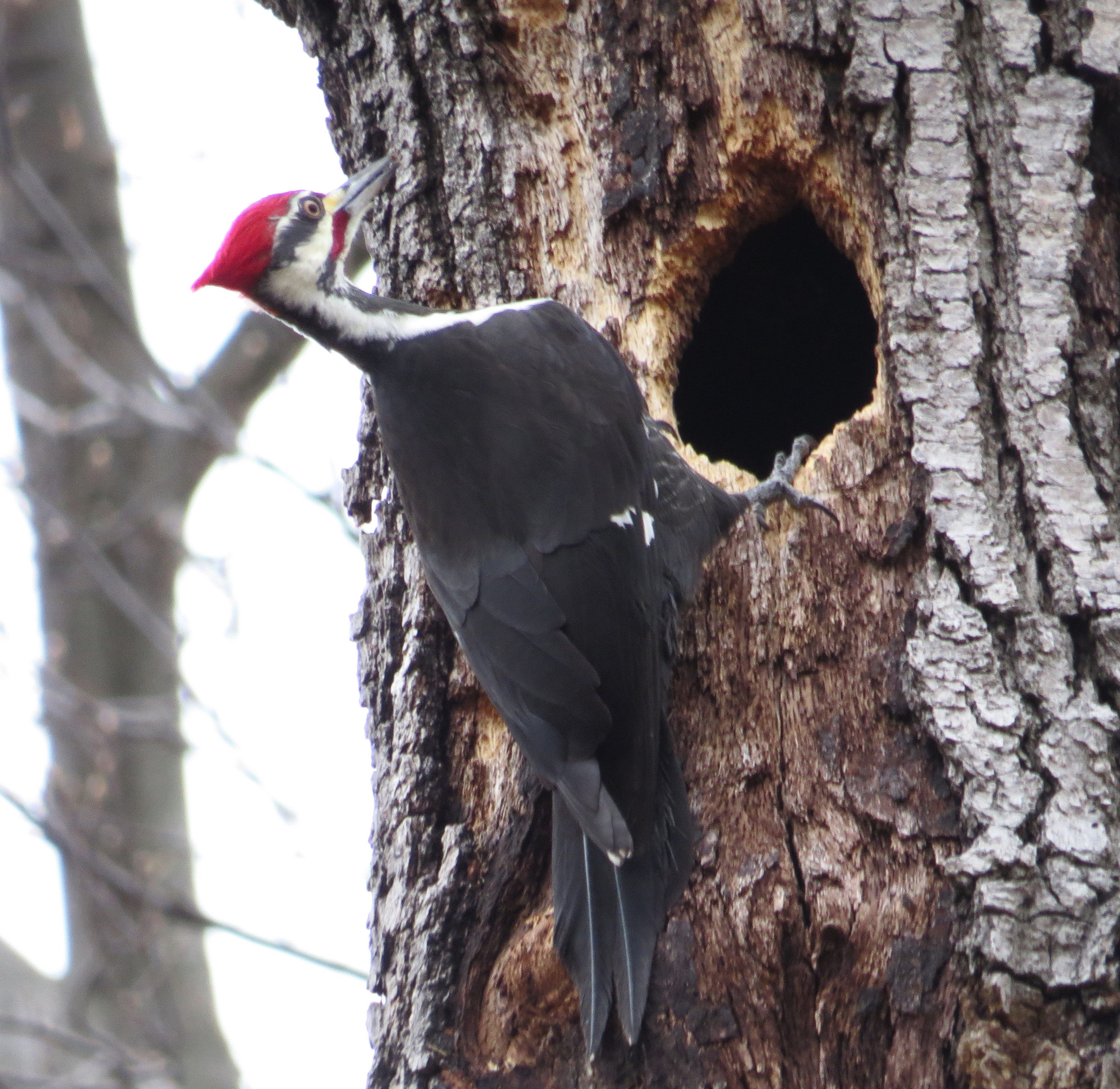
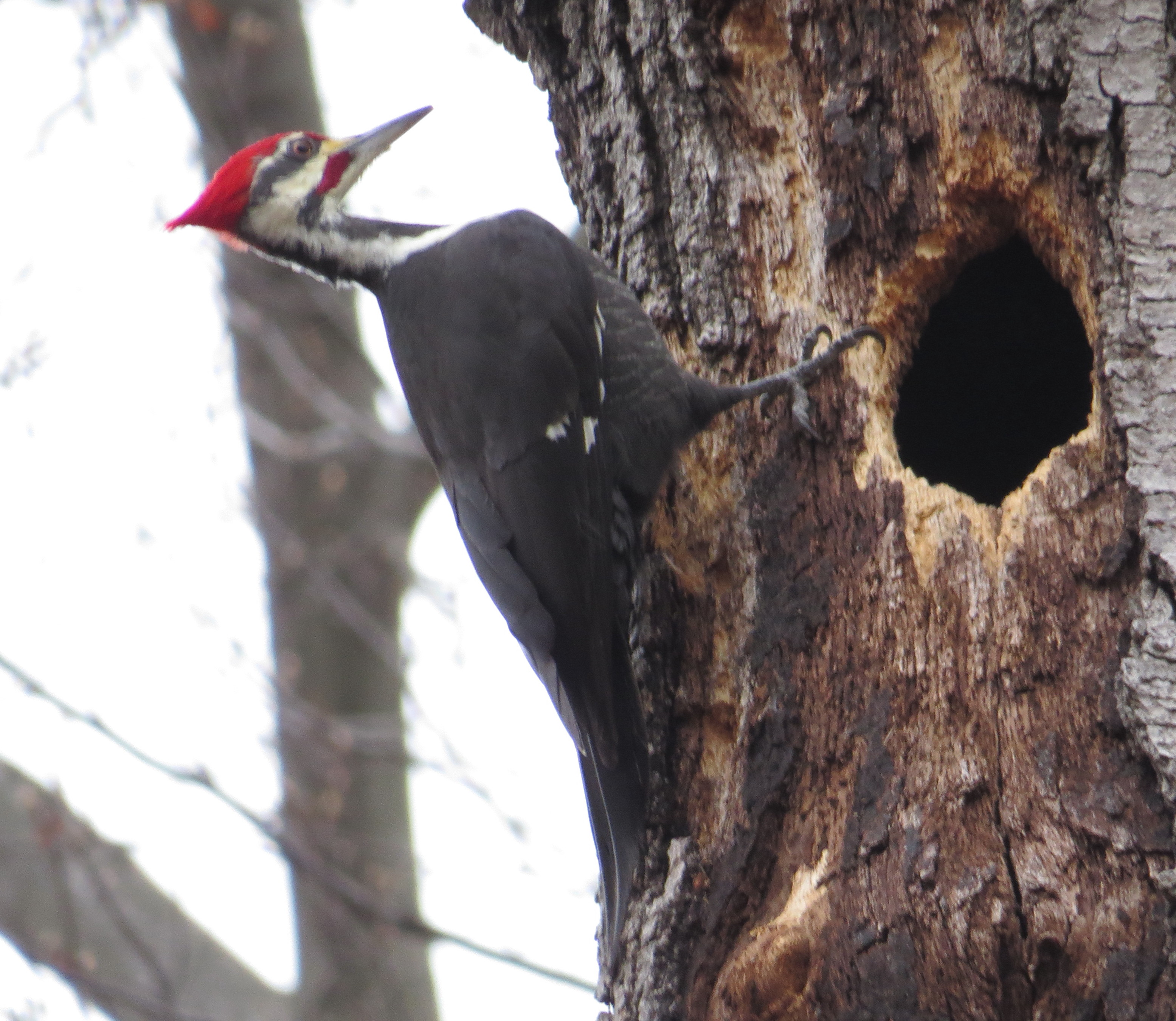
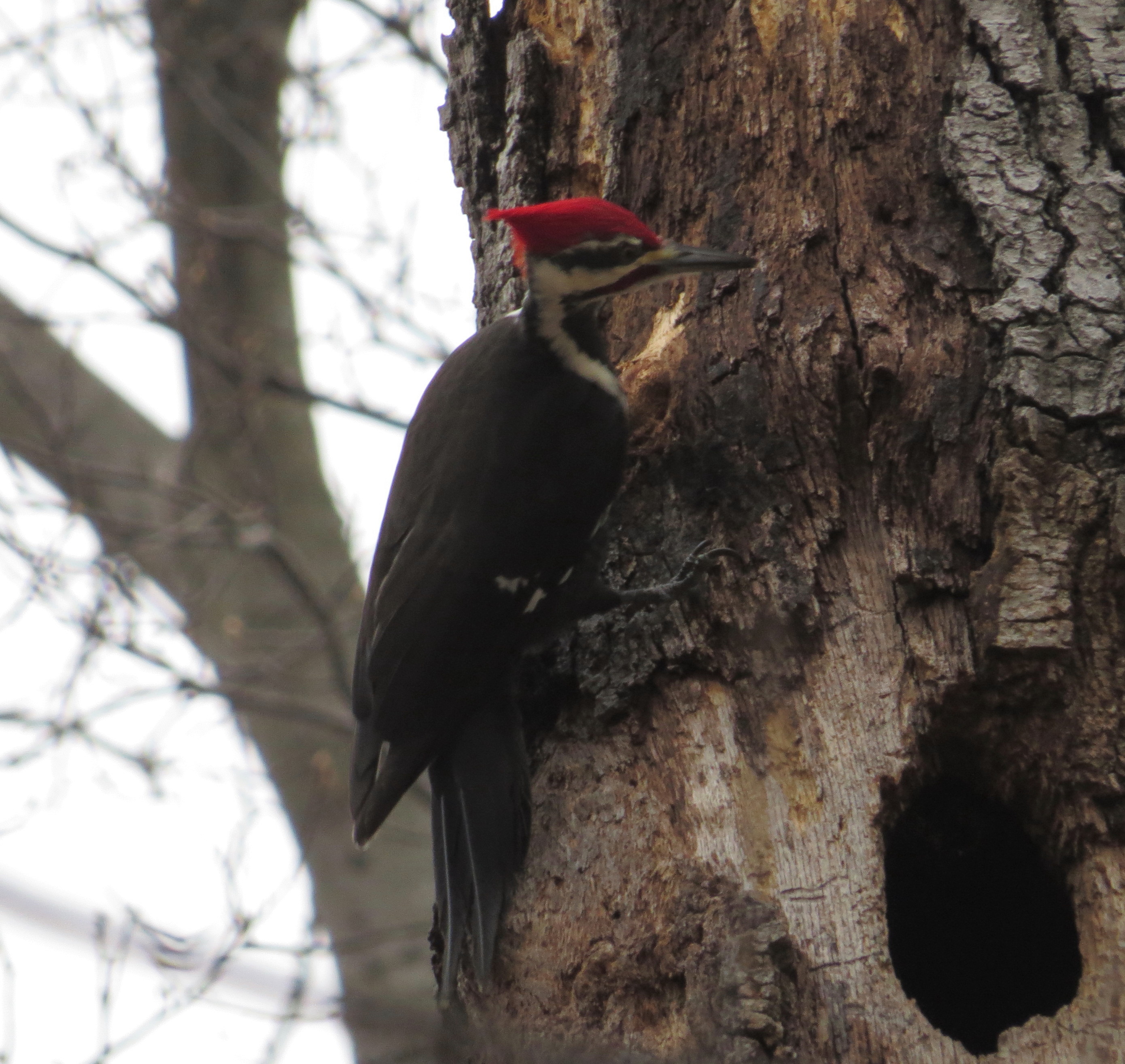
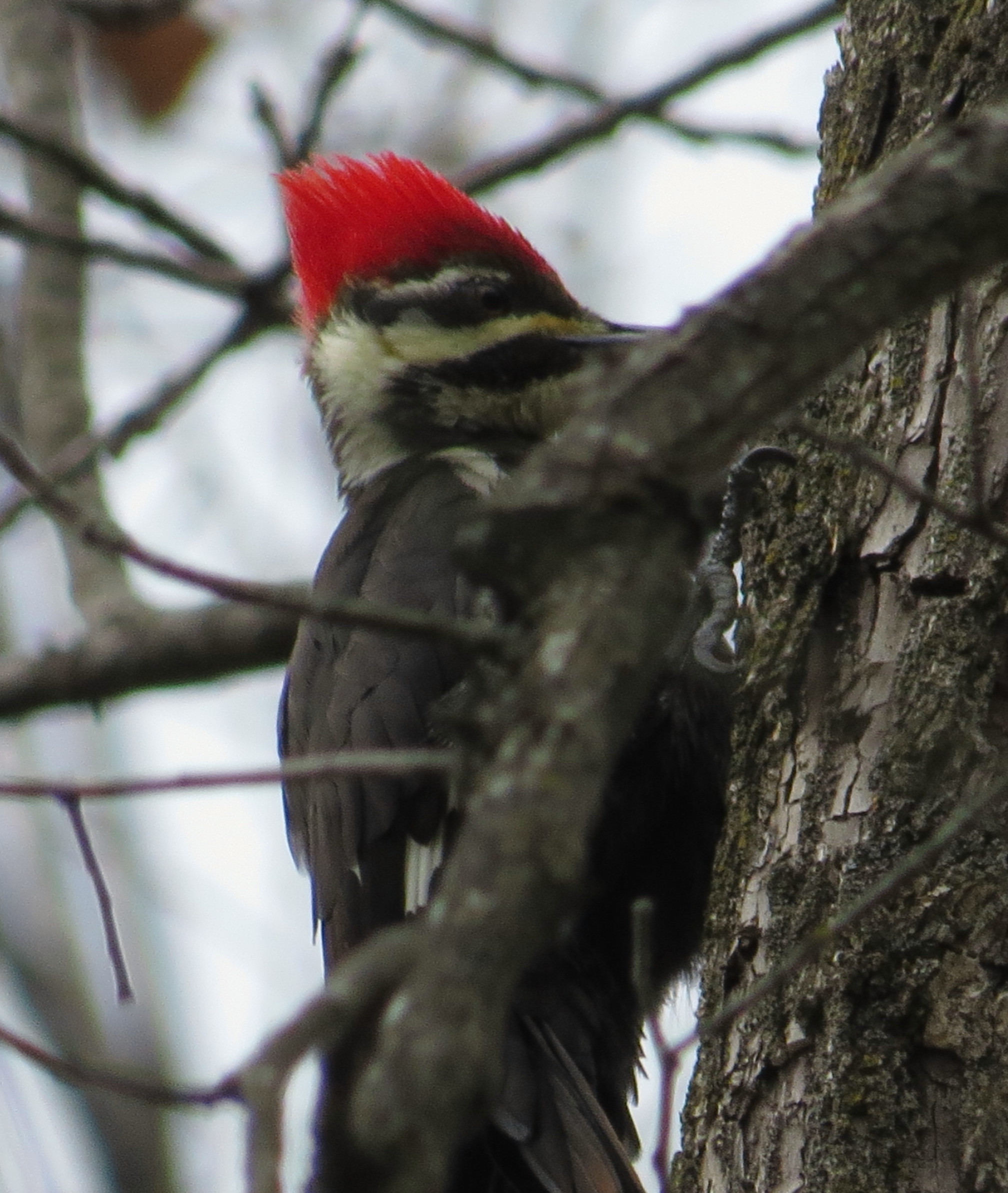
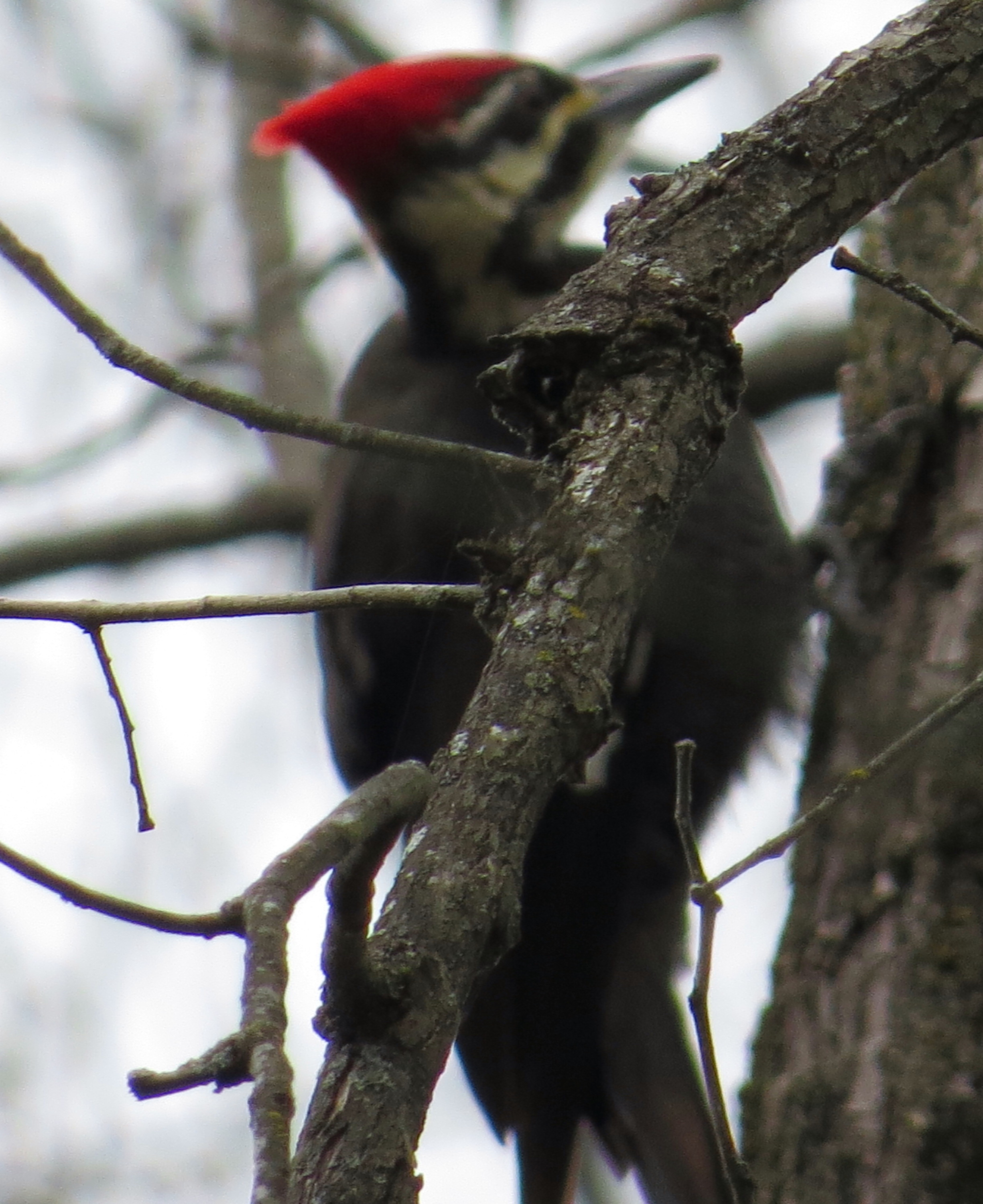
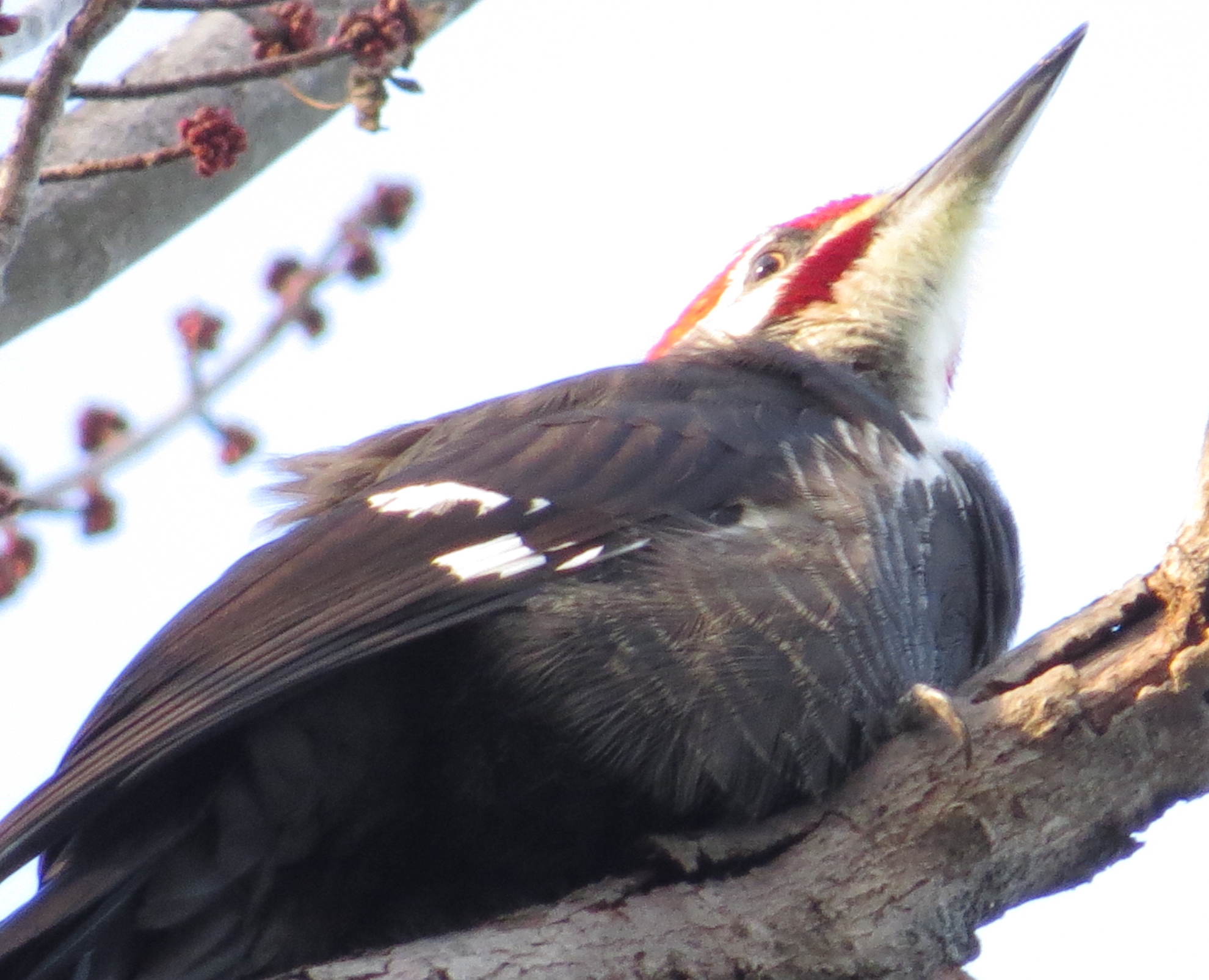
What can I say – an uninspired title. I did get a couple of decent pictures this week though. My favorite (possibly a tie) was hiking with Ethan at Bryan Park earlier this week. We saw (and heard) a male Pileated woodpecker (Dryocopus pileatus) hammering on a tree. The light wasn’t spectacular but he was high up and I got three reasonable pictures. Have a look:

Male Pileated woodpecker

Male Pileated woodpecker

Male Pileated woodpecker again - I was so fortunate to get these shots

Male Pileated woodpecker again – I was so fortunate to get these shots

Third (and final) male Pileated woodpecker. This was so much fun.

Third (and final) male Pileated woodpecker. This was so much fun.

They are by no means rare, and you obviously cannot miss them if you’re around. They are loud. They drum loudly on the trees and their calls are also very loud. They are good, good-looking birds. They’re roughly the size of a crow. There is nothing else like them in Virginia. They’re regulars at Pony Pasture and at Bryan Park. They’re abundant in wooded areas in central Virginia, though. Just listen and look around, you’ll be able to see one. Especially from now through early March, when there are no leaves on the trees. 

Here’s an interesting (to me) fact I learned while reading about Pileated woodpeckers. It probably applies to all woodpeckers. But you can really see it in these shots. Pileated woodpeckers have extra strong tail feathers so they can brace themselves against the trunk. Those strong tail feathers are very evident in these photos. 

You have to be really close or have binoculars or a telephoto lens, but it’s easy to tell males from females. It’s easiest to see here in the top two pictures. See at the base of his beak he has a red streak, just below his eye? Only males have that. The only red on a female’s head is on the crest. Incidentally – if you are, like me, interested in birds and the English language, here is where the word “pileated” comes from. According to Merriam-webster.com: “having a crest covering the pileum” 

Which of course I had no idea what a “pileum” was, but now I do, from the same source: “pileum: the top of the head of a bird from the bill to the nape”

Very, very fun.

Speaking of that. I’m gradually wading in to my “Every living thing” project. I’m spending roughly a year cataloging “every living thing” at Pony Pasture – plant and animal. The project is constantly evolving, not just in collecting pictures of “living things” but in how I’m going to organize it. The current loose structure is a link at the top of this page called “PPFF” which stands for “Pony Pasture Flora and Fauna.” You can see a permanent link to it in the black line just under the banner picture at the top of this page. Try it out! Make a suggestion! 

As I type the draft of this blog post on the evening of Sunday, December 14, 2014, it has twenty-eight plants and animals. They are currently not in any order. The “common name” is on the left and the “scientific name” or “binomial name” or “Latin name” is on the right. Both are (or will be) hyperlinks. The “common name” link will take you to a blog post with a picture I’ve taken of that plant or animal. The “scientific name” link will take you to a reputable source of information. Often it will be the Cornell Lab of Ornithology for birds or the Virginia Tech Department of Dendrology for trees. BugGuide.net for insects. The Virginia Herpetological Society for snakes and turtles and toads and lizards. Wikipedia is great but this is better.

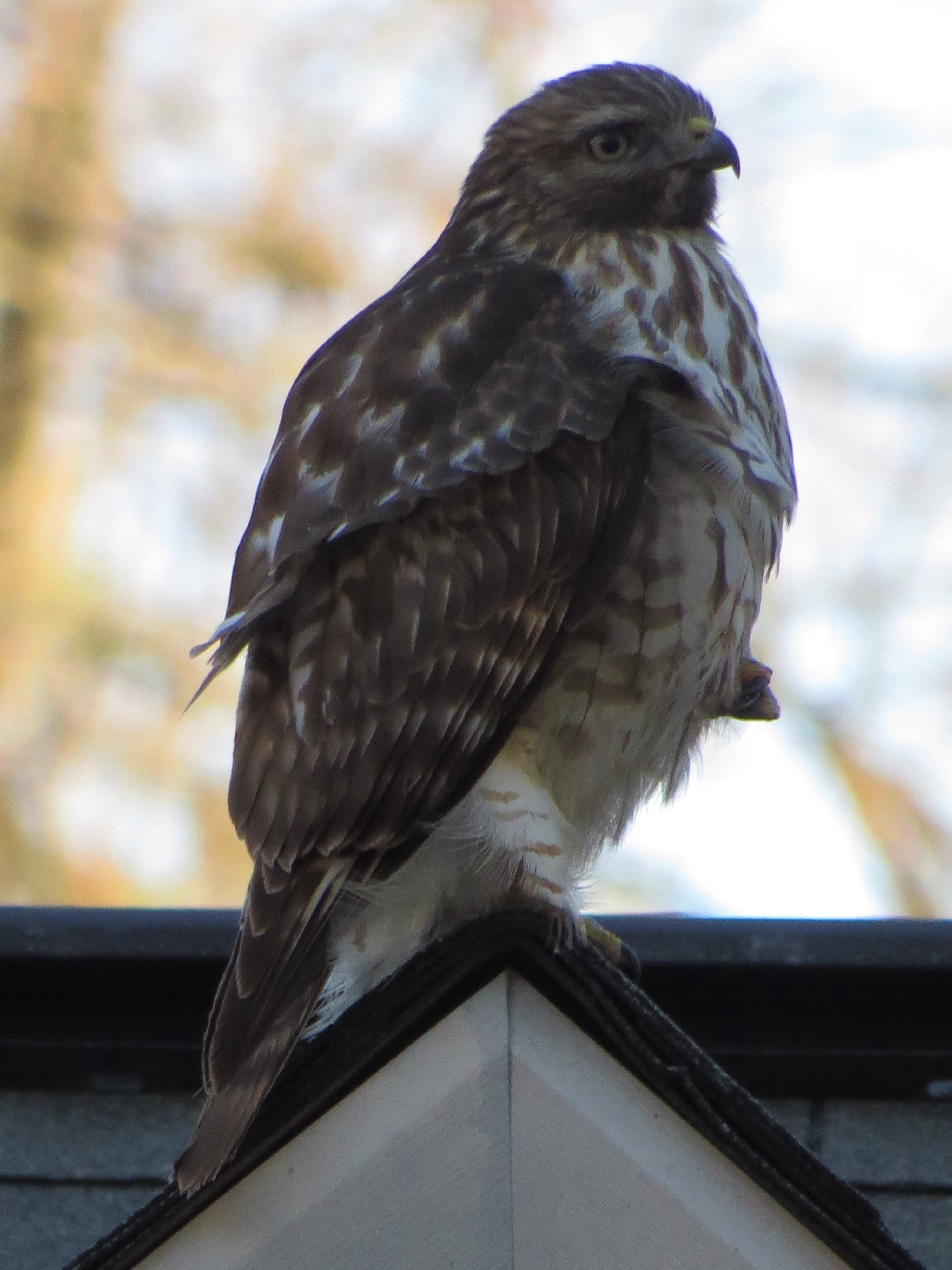
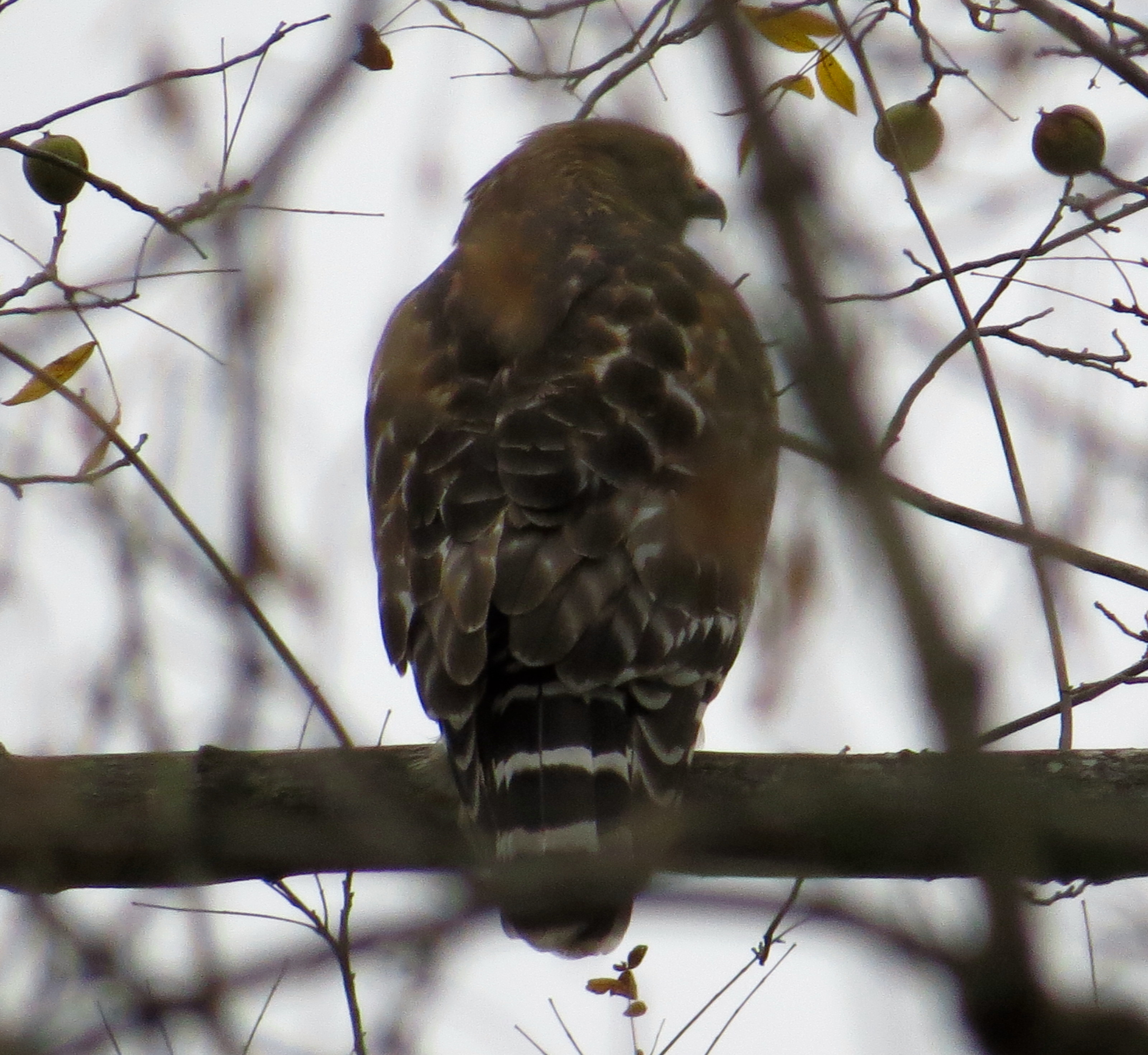
That being said – a hawk landed on the house across the street – I’m not making that up – from my house this week! And I haven’t ID’d it yet! I think it’s a Red-shouldered hawk because I’ve been seeing them all over town this week. But I’m not confident in that ID. Suggestions and corrections are as always welcome – have a look:

Very literally across the street from my extremely suburban home. I was and am amazed and gratified.

Very literally across the street from my extremely suburban home. I was and am amazed and gratified. 

Last week a hawk at a Mexican restaurant, this week one across the street from my house. I love it.

 PS – I do not know what that is on his front, just below his breast. 

On “PPFF” I have a few species – mostly trees but one turtle – that don’t have pictures on this blog yet. So I’m going to insert a handful this week to start. There are few to zero leaves on the trees in mid-December, and next to no fruit (acorns and walnuts and so forth) but I’ll get some bark and other pictures up. More as the trees leaf out in March and April and May.


When identifying trees at Pony Pasture, one tree stands out for its bark. It’s called the River Birch (Betula nigra) and this picture came out well:

River birch - Betula nigra - VERY distinctive

River birch – Betula nigra – VERY distinctive

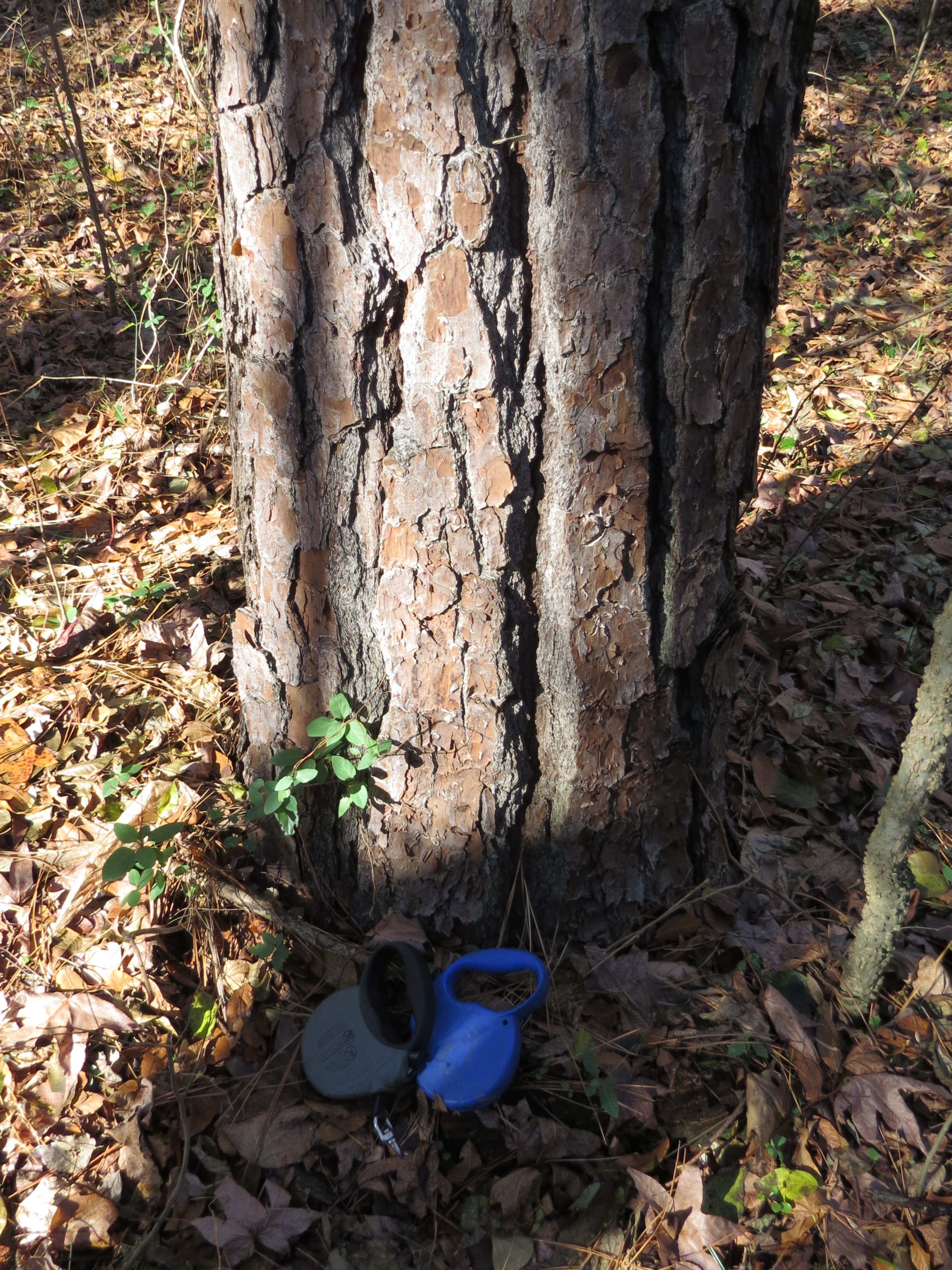
 I’ll also put in a Loblolly pine (Pinus taeda) – one of the commonest pine trees in this area. A picture of the trunk and bark with dog leashes for scale, and one of the needles and cones. If you’re just looking at trees for the first time, most hardwoods in our area are “deciduous” and their leaves fall off once each year. Pine trees are “coniferous” – they have cones! They’re also called “evergreens” because they’re green all year round.

The bark and trunk of a Loblolly pine, with dog leashes for scale. This one is medium-large.

The bark and trunk of a Loblolly pine, with dog leashes for scale. This one is medium-large.

I pointed my camera up at the top of that tree. This is what the needles and cones look like: 

Needles and cones of a Loblolly pine

Needles and cones of a Loblolly pine

I believe that’s enough for the time being – forgive me if this has been dry. I’ll close with a picture two of my favorite domestic animals at Pony Pasture. And have a great week!

All best,

Jay 

PS Please take a few minutes – if you have any free – to look at the “PPFF” page. And please suggest any revisions or additions or any other improvements that might come to mind. Because this is a work in progress in the truest sense of the word and it would be great to have some help. Suggest away!

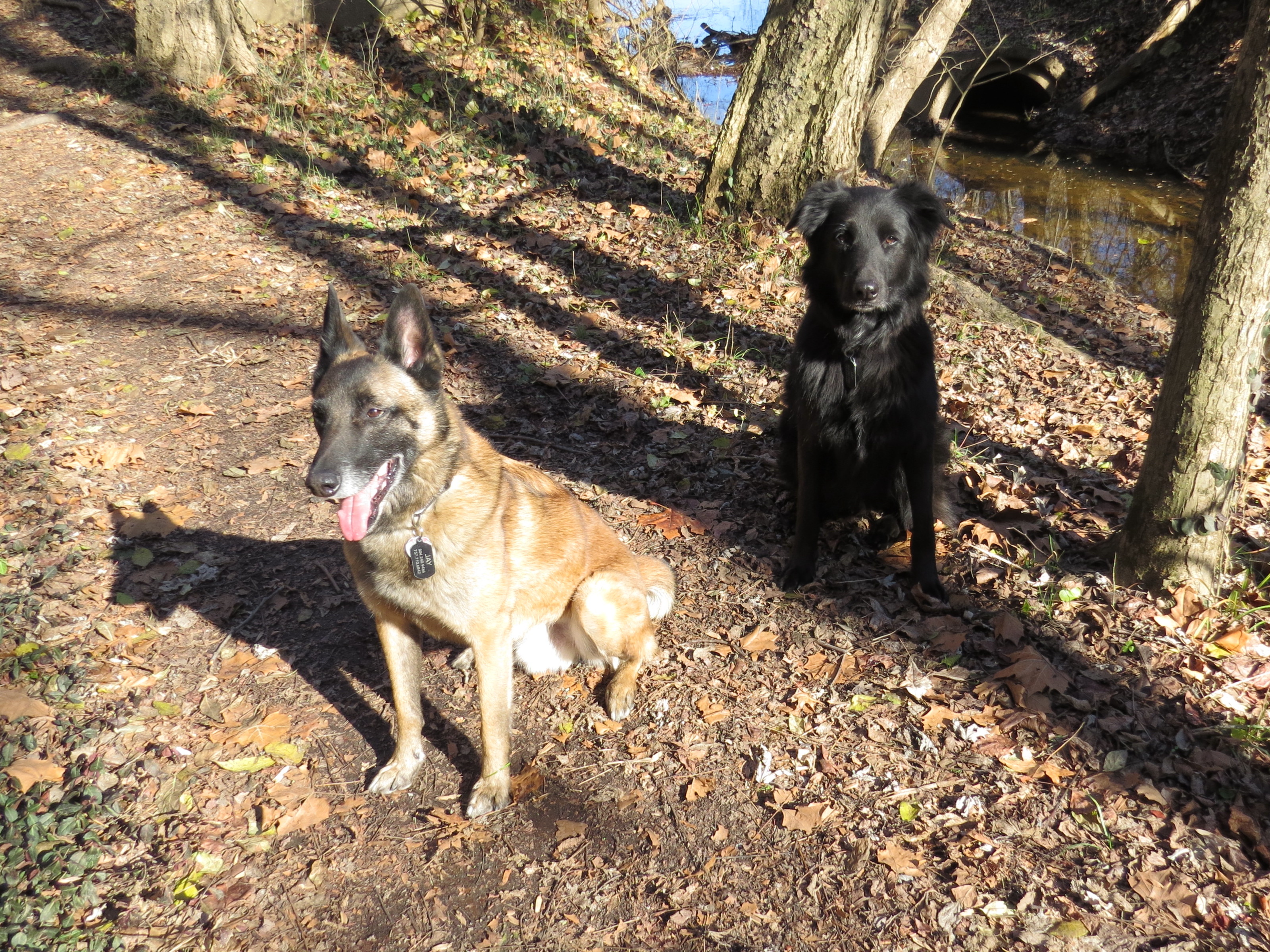
Two of my three boys (the only two that go to Pony Pasture): 

Turner (left) and Mackey (right) - regular blog contributors

Turner (left) and Mackey (right) – regular blog contributors


Posted in Birds, Dogs, Fun, James River, Rivers | Tagged , , , , , , , | 1 Comment

Every living thing – the prequel

7 December, 2014            Every living thing – the prequel

I’m learning about every living thing that’s in Pony Pasture. The biggest are the sycamores (Platanus occidentalis). The smallest are the mosquitoes (Aedes albopictus) (I think). Roughly. Mosquitoes are the smallest thing I’m likely to photograph. In between are whitetail deer, loblolly pines, Canada geese, pawpaw trees, gray squirrels, pileated woodpeckers, multiflora roses, Carolina wrens, White oaks, box turtles, garter snakes, painted turtles, sliders, longnose gars, snails, dragonflies, damselflies, raccoons, honeysuckle, otters, cardinals, robins, blackberries, bluebirds, the list seems endless. But it’s not. It’s only going to go on my list if I can photograph it. A friend used a hidden camera and got a picture of a mink at Pony Pasture – that’s incredible. But I’m not going to put anything on my list until I take a picture of it. I think this will take around a year. A hundred or two hundred different plants at the most. A hundred or two hundred different animals, even counting mosquitoes and snails and cardinals and cormorants and whitetail deer. Toads, turtles, bluebirds, all of it.  


I’m going to begin with things there are a lot of and that are easy to find – the ones that are easy to photograph. This (December) is a good time of year to begin. Because there are very few insects. And close to zero flowering plants.


The original title for this post was “When I obsess, I don’t do it halfway.” Hiking at the river Thursday morning I changed it (in my head) to “Every living thing.” It’s the same post though.


I’ve mentioned in earlier posts that I was imagining a page on this site called “ppff” for “Pony Pasture Flora and Fauna.” Which “Every living thing” is also just a different way of saying that. My “obsession” (my most recent obsession) began not at Pony Pasture but at Bryan Park. They have a great list of the trees there. Which of course there is a great deal of overlap between the trees of Bryan Park and the trees of Pony Pasture.  


I’ve written too much without pictures on this post. Now a few pictures. This one wasn’t even with my “real” camera, I took it with my phone at the river this morning. There’s a lot of great things about going to the river in December/January and one is how crisp and blue it occasionally looks. It’s so pretty. Feast your eyes:

"Brisk & breezy & blue & beautiful" - that's what I wrote when I posted this on fb

“Brisk & breezy & blue & beautiful” – that’s what I wrote when I posted this on fb

What is not to love about that picture? Stunning. 

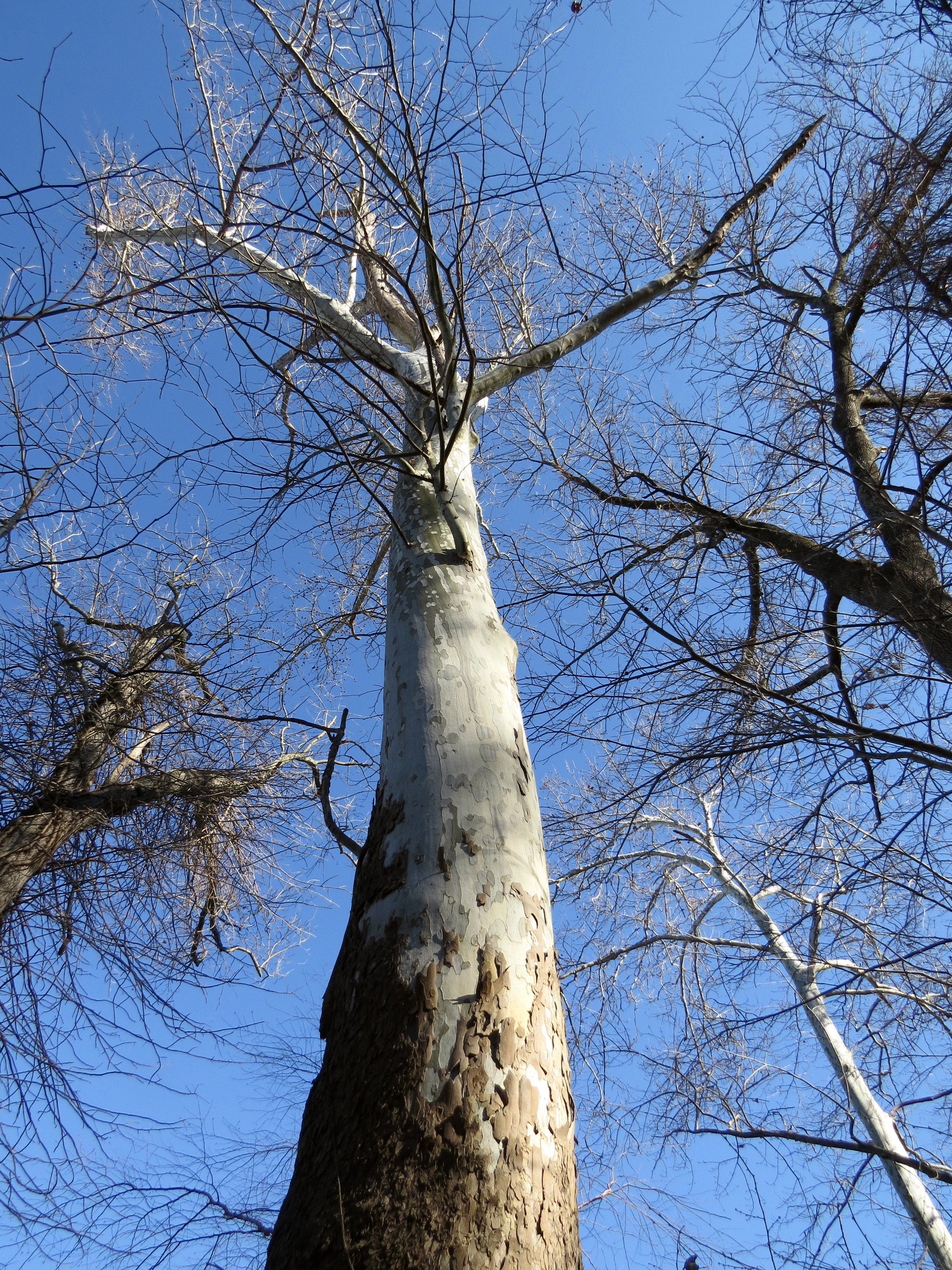
Also – since I’m talking about “every living thing” at Pony Pasture – I’ll insert here a picture of the biggest of all, the living thing that dwarfs all the others at Pony Pasture – an American Sycamore:

December sycamore, from the ground up

December sycamore, from the ground up

That’s at the bottom looking up. But those white tops are unmistakable along the riverbank. You can see them from the Willy Bridge, from the Huguenot Bridge, anytime you’re near the river in Richmond. If you’re near a river in the mid-Atlantic region, chances are you can spy a sycamore.


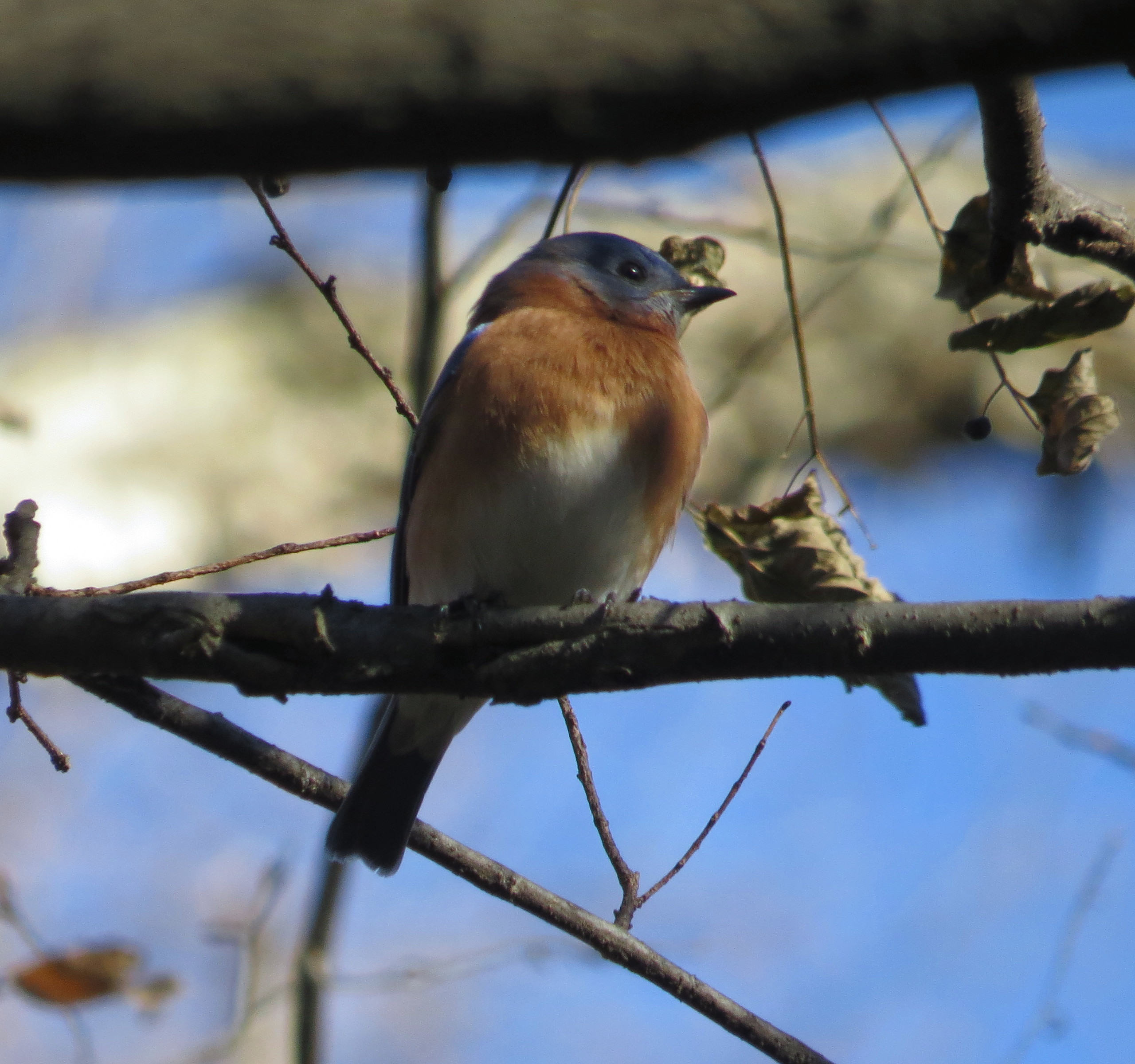
This is only a coincidence, that there were bluebirds this blue morning and I got a picture. I’m only going to put up one of the bluebird pictures that I took. But I was stopped at the edge of a creek talking with a birder friend who was hiking the opposite direction – we crossed paths. I had stopped because there was a big sycamore at the edge of the creek and the top of it was in the sun. And there was a swarm of bluebirds in it. From where I was standing, I could see more bluebirds at one time than I normally see in a month combined. I didn’t even know there were this many bluebirds in that entire park. I’ll bet there were twenty or more. There is no way to photograph that – it would just look like a picture of a tree. So here’s one of them. But it was a fun morning. Blue sky first, blue river at the same time, five minutes hike and a swarm of bluebirds:

I know this comes as no  surprise - I will NEVER tire of photographing bluebirds

I know this comes as no surprise – I will NEVER tire of photographing bluebirds

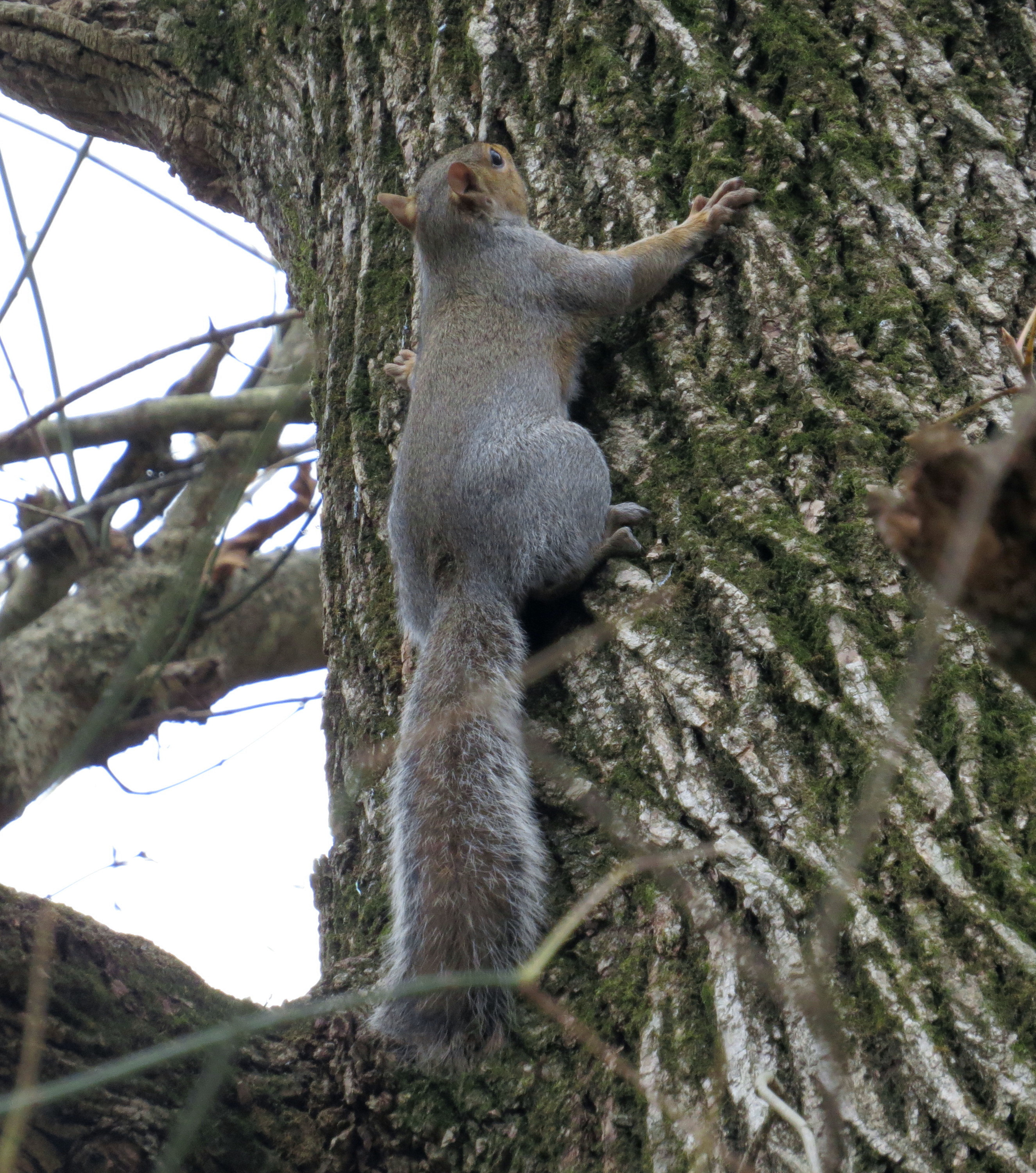
The really bitter, bitter long term cold around here (my lips will turn blue) doesn’t ever show up until January. And a few trees still have leaves. But the last of the leaves are going away fast. And there’s a lot more light. It becomes much easier to see, and to photograph – except that the sun sets before 5:00 PM. I was hiking earlier in the week and this Eastern gray squirrel (Sciurus carolinensis) was stopping to fatten himself (possibly herself) up some before the weather gets severe:

That's a nice looking little animal isn't it? They photograph well.

That’s a nice looking little animal isn’t it? They photograph well.

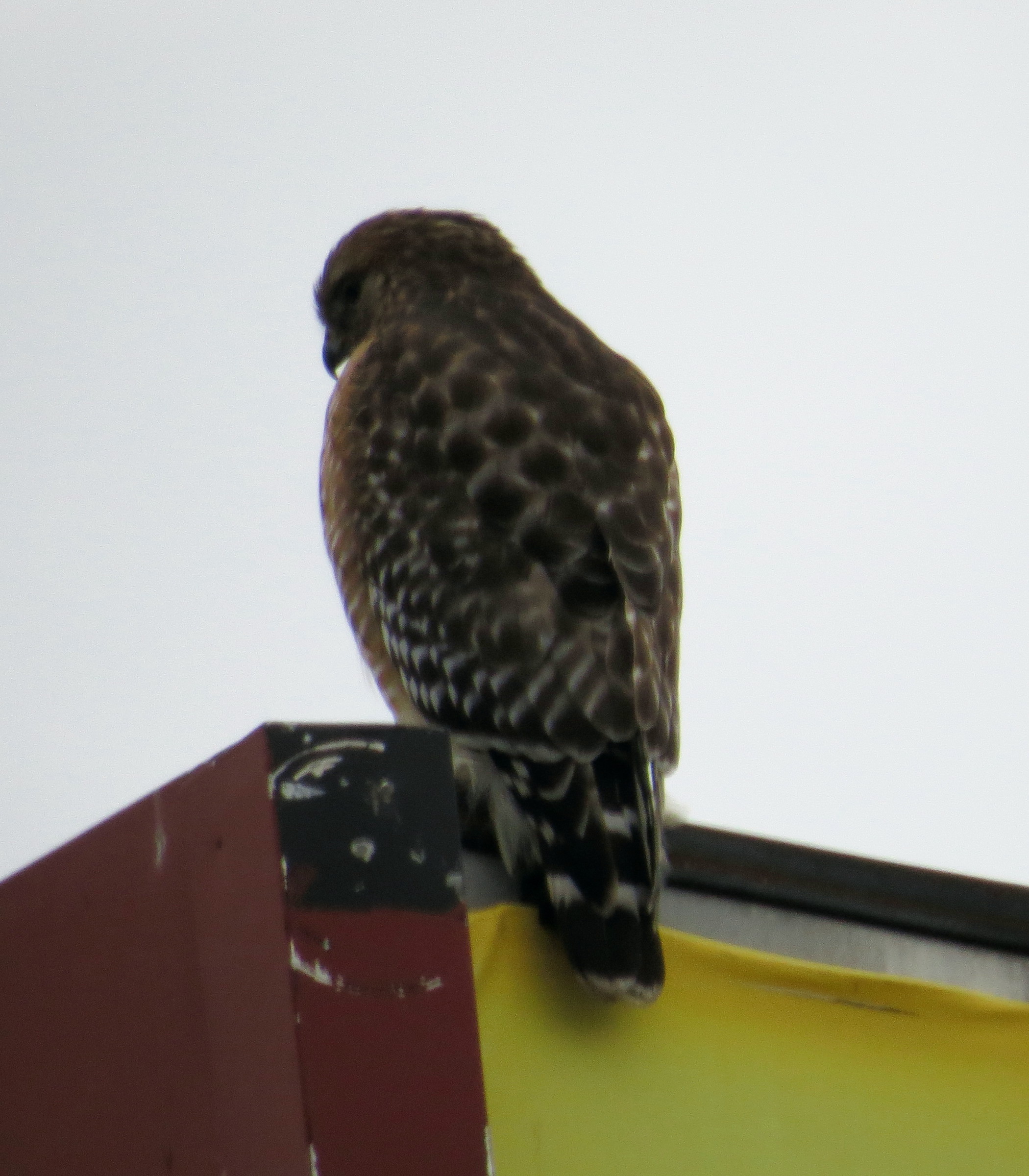
I believe this is not a coincidence – I spotted a Red-shouldered hawk (Buteo lineatus) this week right in the middle of town. Not a coincidence because prey is more and more visible every day. This is not (obviously) in Pony Pasture but Red-shouldered hawks are common visitors there. This one, however, was sitting on the sign at a busy Mexican restaurant at a busy intersection in the middle of town:

It's amazing. You should see how urban this spot is. There are SO many cars at this intersection. Amazing.

It’s amazing. You should see how urban this spot is. There are SO many cars at this intersection. Incredible. 

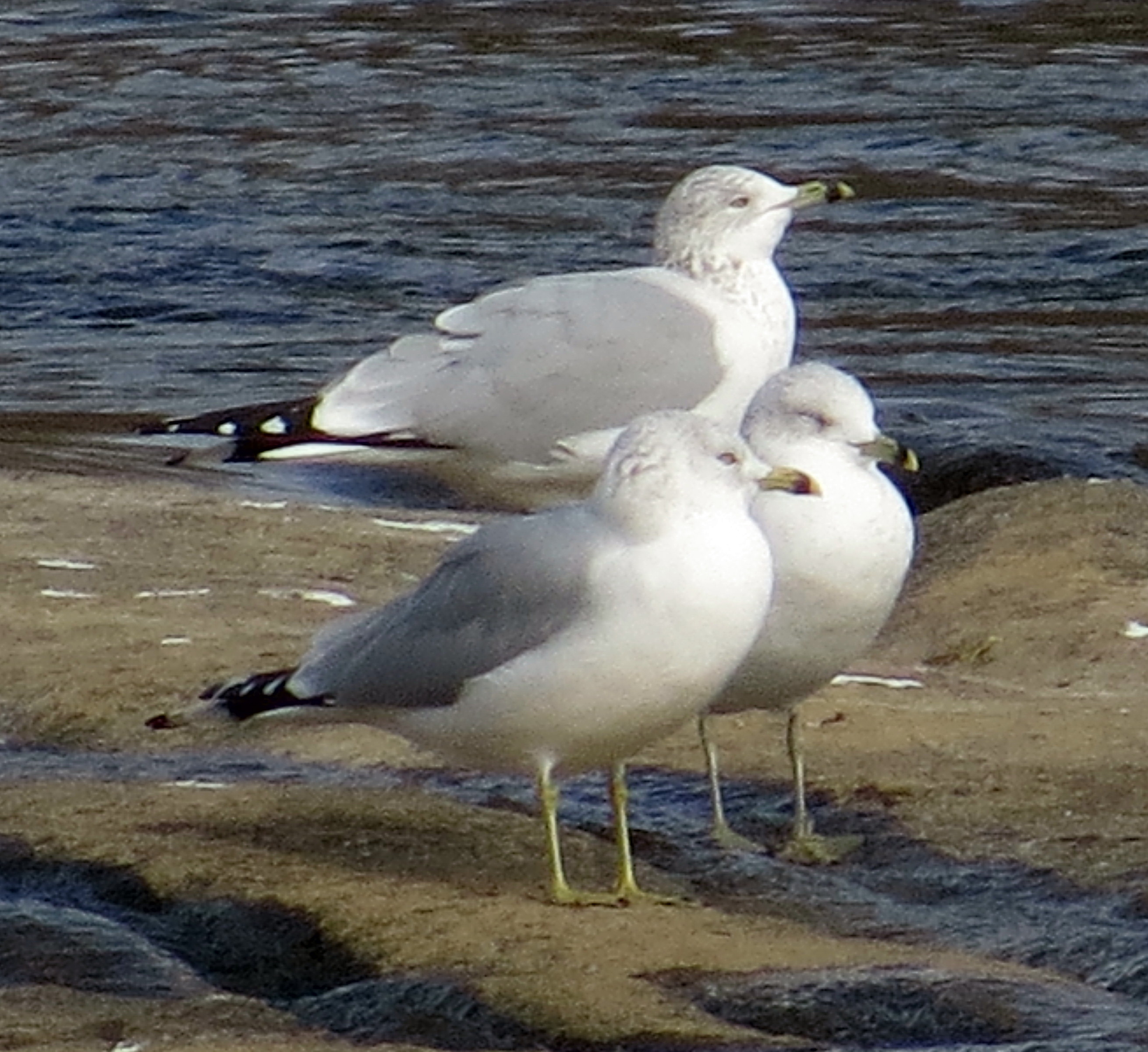
Here’s a “living thing” that’s currently spending lots of time hanging out at the rapids at Pony Pasture. They’re not a twelve month resident, though. These are Ring-billed Gulls (Larus delawarensis):

Winter visitors.

Winter visitors. 

Here’s a pair of twelve-month residents – an unmistakable male (green head) and female mallard (Anas platyrhynchos). Not my best picture ever, but they’re always nice to see:

An attractive pair

An attractive pair

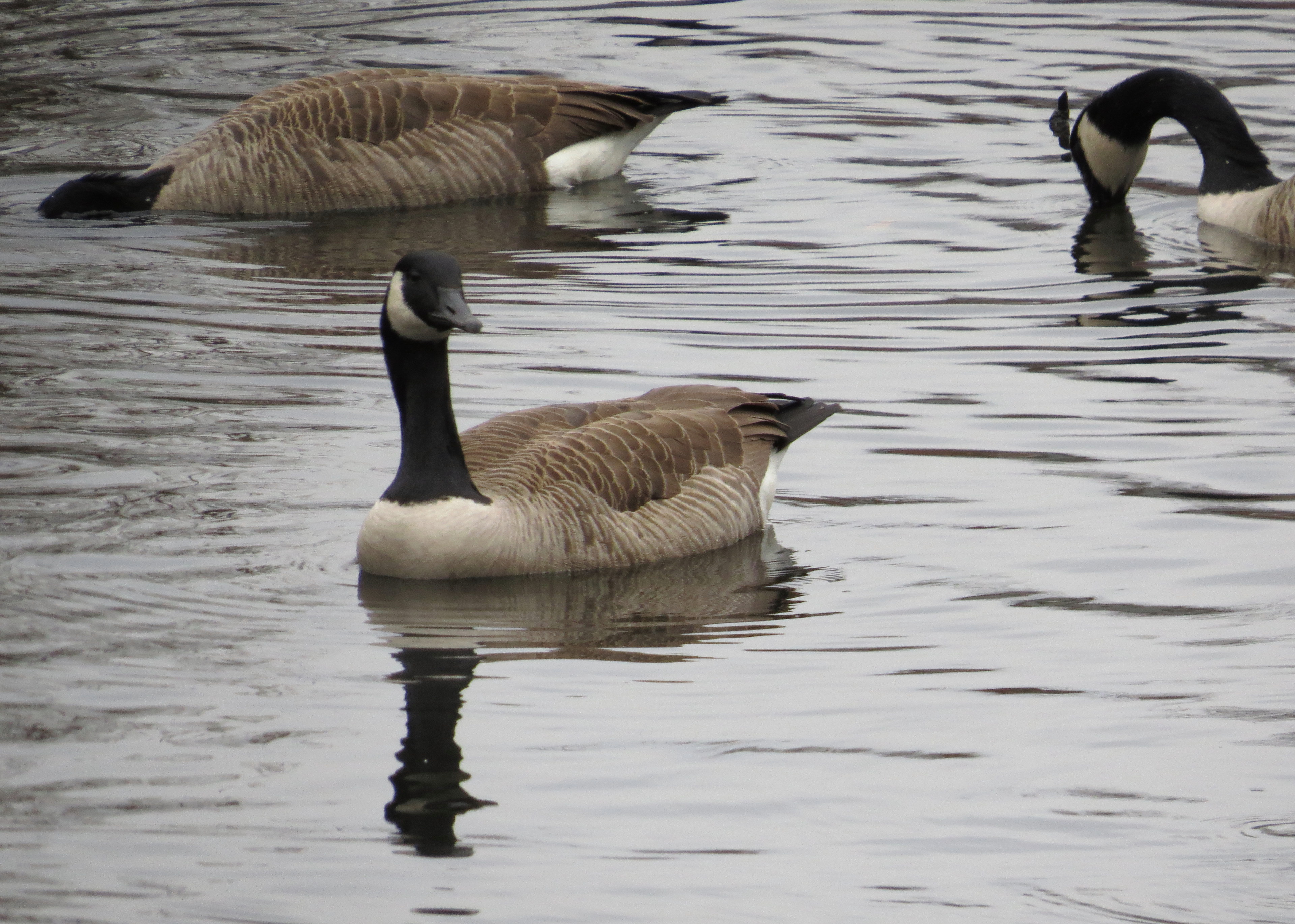
The most predictable – by far – living thing at Pony Pasture is a Canada Goose (Branta canadensis). Everybody knows what they look like. But here’s little handful:

I should be more open-minded. I am not the world's biggest fan of Canada geese.

I should be more open-minded. I am not the world’s biggest fan of Canada geese.

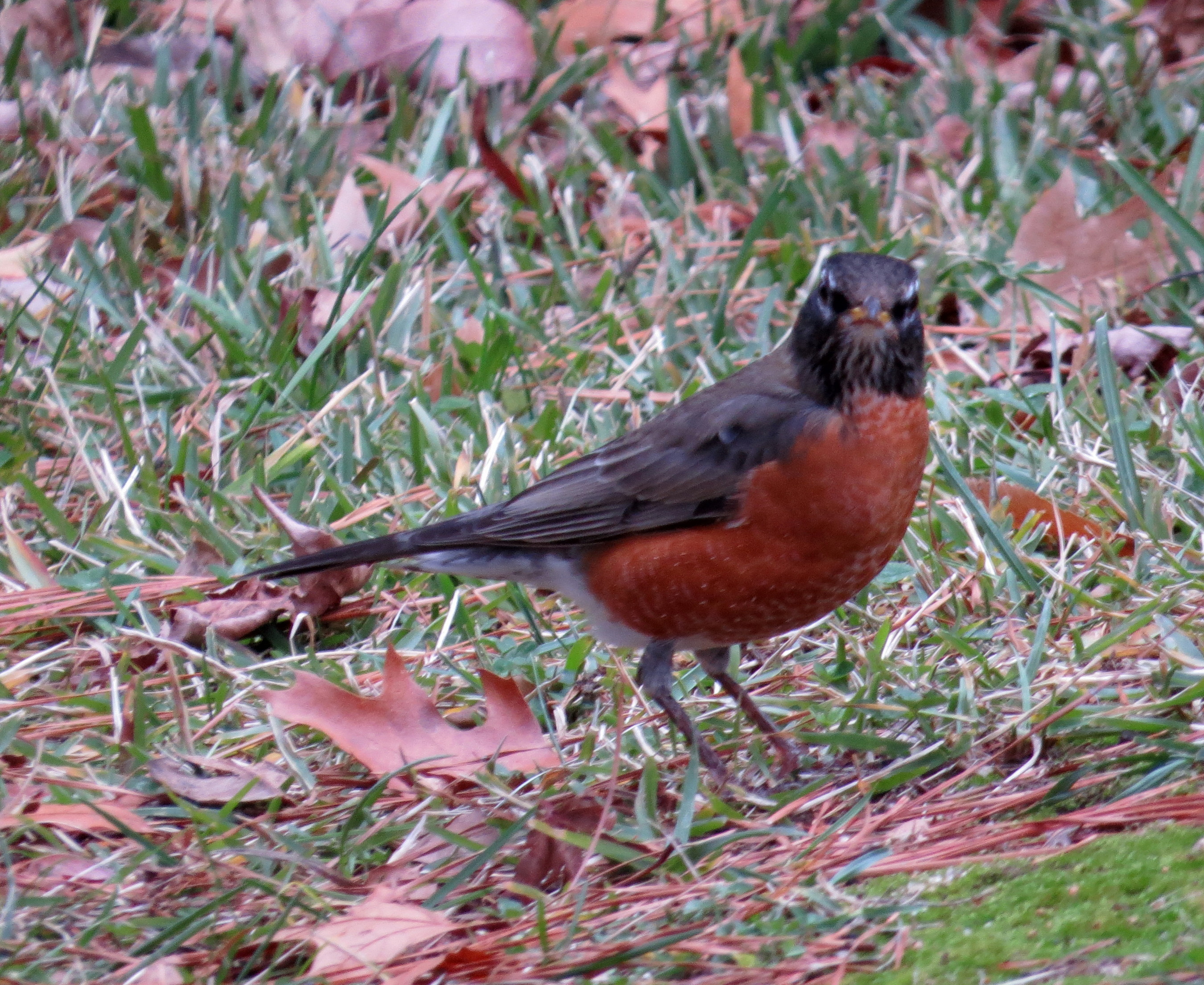
 American Robins (Turdus migratorius) are in the park year round:

Ubiquitous

Ubiquitous

 More trees later. But without leaves on them they get pretty non descript. Except of course for those sycamores. The fun thing about the trees for me is, I’m really beginning to notice them now – I never really noticed trees before. I can tell a white oak (that’s mostly what I use for firewood) from a black oak. I can tell a loblolly pine from a longleaf pine. I know there’s a difference between a loblolly pine and a longleaf pine. That’s a lot of the reason I started this “every living thing” project. I just began this week and I’m already learning a lot of things I never knew. So. Have a great week.


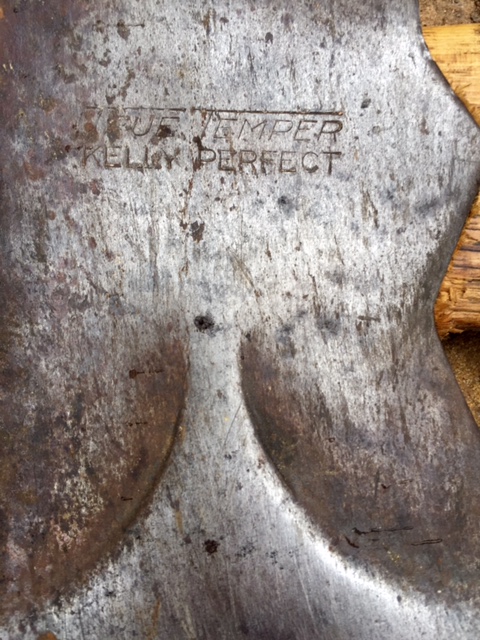
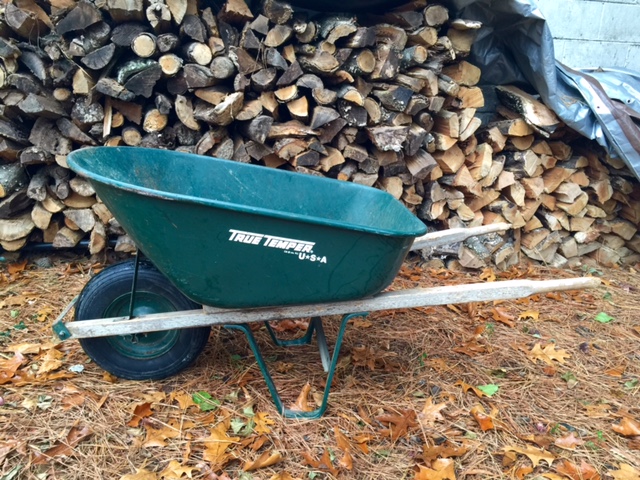
But before I go – a quick interlude. Fires in the woodstove is another of my favorite things about this time of year. My friend Tim brings me the wood, and I use my old ax to split up the kindling. “Old” is relative – I got it for Christmas in around 1976, when I was fifteen, from my mother’s mother and father. And when Tim brings me a load of wood, I haul it around to the woodpile in my wheelbarrow that I bought at Pleasants (back then it was Tom Brown Hardware) in around 1995. And I noticed this week for the first time – amazing – the two logos. Here they are – identical!:

TrueTemper ax (see the logo?) c. 1976

TrueTemper ax (see the logo?) c. 1976

TrueTemper wheelbarrow - matching logo - c. 1995!

TrueTemper wheelbarrow – matching logo – c. 1995!

So anyway – with the living things at Pony Pasture – it’s a work in progress. Maybe by this time next year I’ll have them all. Or all the big ones.

Meanwhile – see you next week! I hope! All best,

Jay

Posted in Birds, Fun, James River, Rivers, Smiles (including "dog smiles"!), squirrels | Tagged , , , , , , , , , | 6 Comments

Always on the move

30 November, 2014 Always on the move


The seasons are, that is. But the river is too, everything. I gave a book to my nieces recently, it’s called How to Sit by Thich Nhat Hanh, 2014. Here is the first sentence: “The first thing to do is to stop whatever else you are doing.” I like to sit; I’m sitting now. I like to stop whatever else I am doing. But it’s interesting when you’re at the river, as the dogs and I were this morning. Because you can be as still as a stone, but that river is still moving. It’s not going anywhere, but it’s always moving.


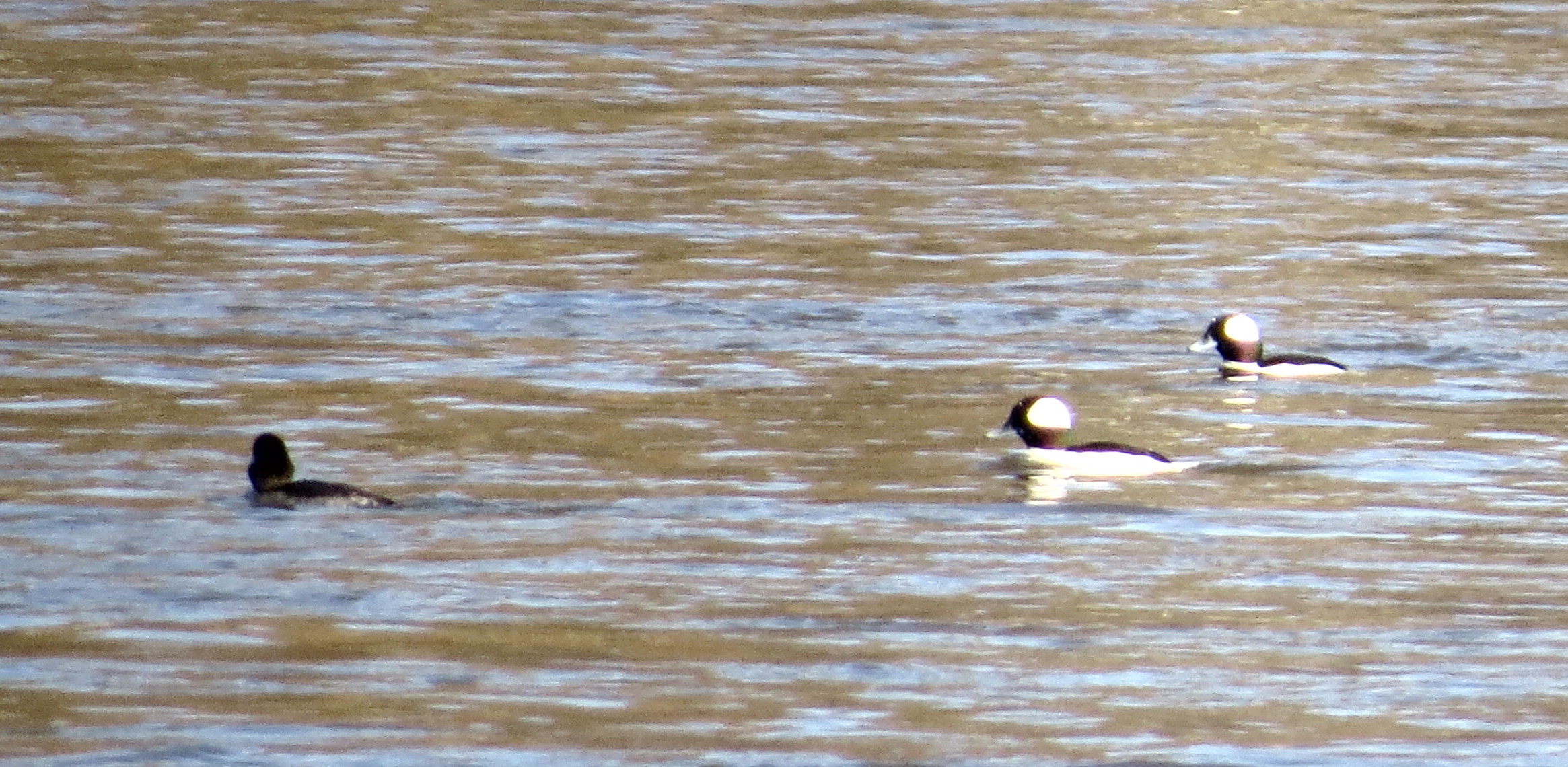
The movement I was thinking of when I began this post was the movement of the seasons, demonstrated by birds. Always, for me, the starkest bird-demonstration of the season change is Buffleheads. My friend Gilpin gets much better Bufflehead pictures than I do, but I always manage a shot or two. I saw this female with two males this morning. The thing about Buffleheads, the reason their picture (even a poor one) is so appropriate for an “Always on the move” blog post is they are a definite sign that the seasons move. Because you will never – not ever – see a Bufflehead in summer. Nice looking winter bird:

My bufflehead pictures are never great. But that is a winter-only picture. Buffleheads in VA are cold-weather birds.

My bufflehead pictures are not often lovely. But that is a winter-only picture. Buffleheads in VA are cold season birds.

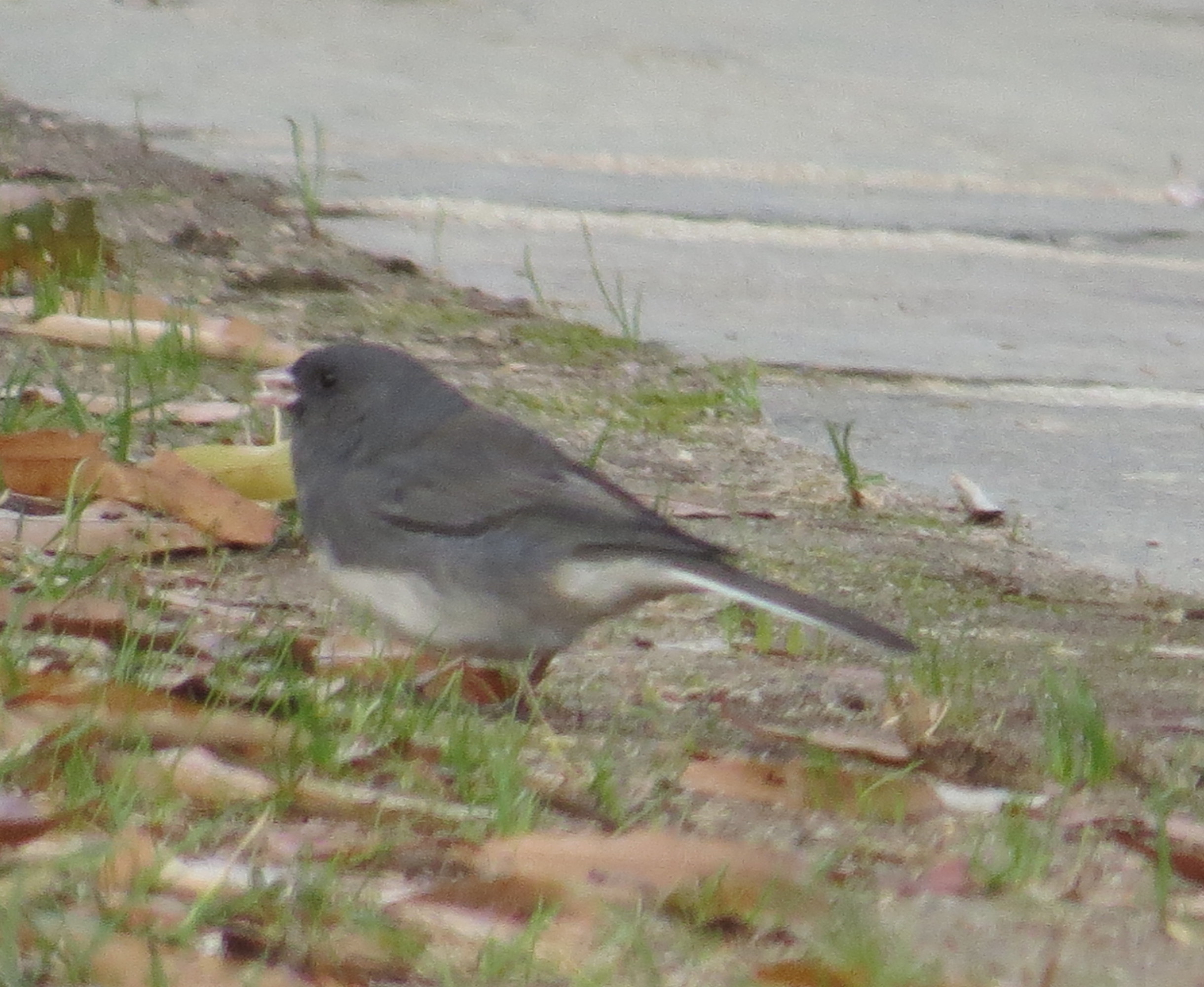
I’ve begun seeing another winter-only bird, a Dark-eyed Junco (Junco hyemalis). This is another less-than-spectacular image, although this one is my own fault. I can’t blame it on my camera. I do get better pictures of Juncos when I take my time but I rushed this one. I have old junco pictures I’ve taken that are better than this. But when I put up a blog post I like to use pictures I’ve taken recently if possible, and I took this one yesterday. Pat and I did about a 45 mile bike ride and we start and finish at a little church in eastern Goochland. There was a little flock of Juncos flitting around in front of the church when we got back to the car. I was cold and tired so I didn’t take the time to sneak in for a good shot. Just sat there really far away and zoomed in. That always makes lower quality pictures. They’re sweet little birds though:

Juncos are sweet little winter birds. Cute and sweet and cheerful.

Juncos are sweet little winter birds. Cute and sweet and cheerful.

Well, this is a thinly populated blog post. I got sick last week and missed work for the first time since I had my accident twenty-six years ago. I had “maxillary sinusitus” which thank goodness some antibiotics knocked it out quick. But I hardly got outdoors the whole week! So hardly any pictures! So here’s a picture of my buddies from this AM at Pony Pasture.  Hopefully next week I’ll have good pictures! Have a great week,


Jay

PS I should mention – there are some nice old blog posts on here if you’re interested. There are links to previous months on the upper right of this blog. There are over 150 blog posts covering nearly four years. They’re not all great – only maybe twenty of them are great – but there’s some good stuff to browse through if you have a minute. Pick a month of the year you like and click on that. There’s neat stuff. Have a great week.

My handsome buddies. They get me out no matter how I feel. And when I feel BETTER (like now) it's even MORE fun!

My handsome buddies. They get me out no matter how I feel. And when I feel BETTER (like now) it’s even MORE fun!

Posted in Birds, Dogs, James River, Rivers, Smiles (including "dog smiles"!) | Leave a comment

Restorative powers

23 November, 2014         Restorative powers

I have an upper respiratory thing and went down to the river this afternoon for some healing. I almost called this “Good for what ails ya’” but when I searched the blog I learned I’d used that expression eleven times! Oops! The blog is of course nearly four years old and has over 150 (!) posts on it but still. The river always makes me feel better. Unfortunately I still have whatever this is but it’s going away. And when given the choice of feeling awful at home or feeling awful when hiking with the dogs at the river, I’ll hike any time.

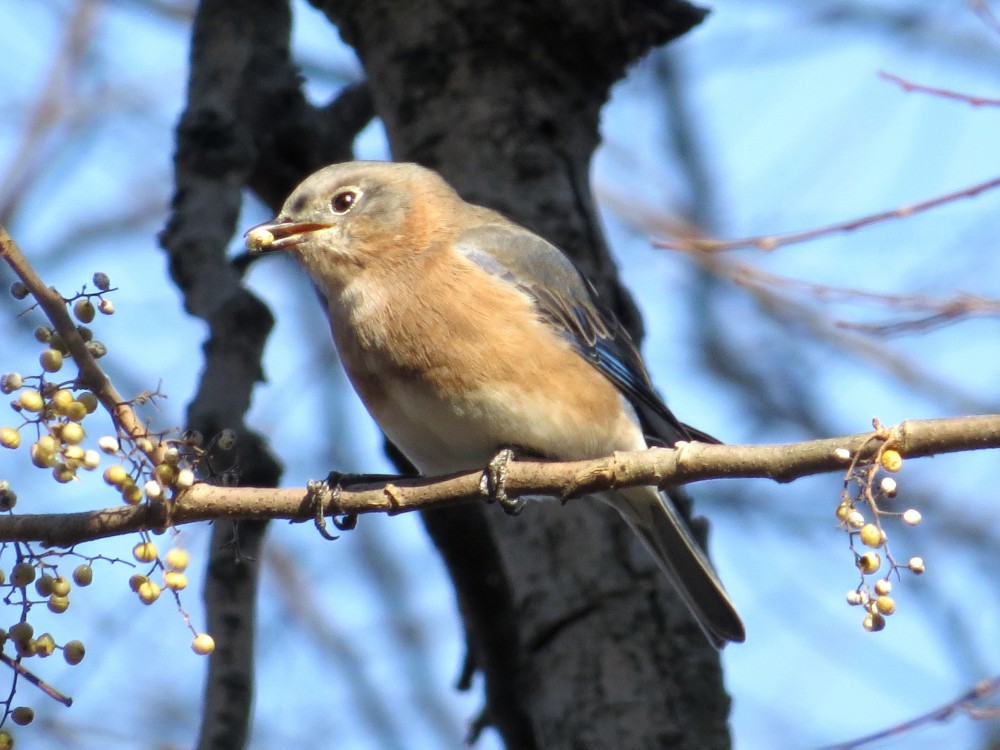
It’s always an encouraging sign when the first thing we see is a bluebird:

Another bluebird! First thing we saw at Pony Pasture today!

Another bluebird! First thing we saw at Pony Pasture today!

That’s not a spectacular picture but I got a nicer one on Thursday:

More bluebirds at Pony Pasture - yay!

More bluebirds at Pony Pasture – yay!

That may very well be the same bird. My brother Shane thinks it’s a female and I’m inclined to go along with him. I’ve never seen bluebirds so close to the parking lot before so this is nice. In the picture above, I believe she’s eating a poison ivy berry. I read one web site that seemed reputable and said “The berries are edible, but only if you’re a bird (the downy woodpecker eats the berries and spreads them through its droppings).” Bluebirds too, it appears.


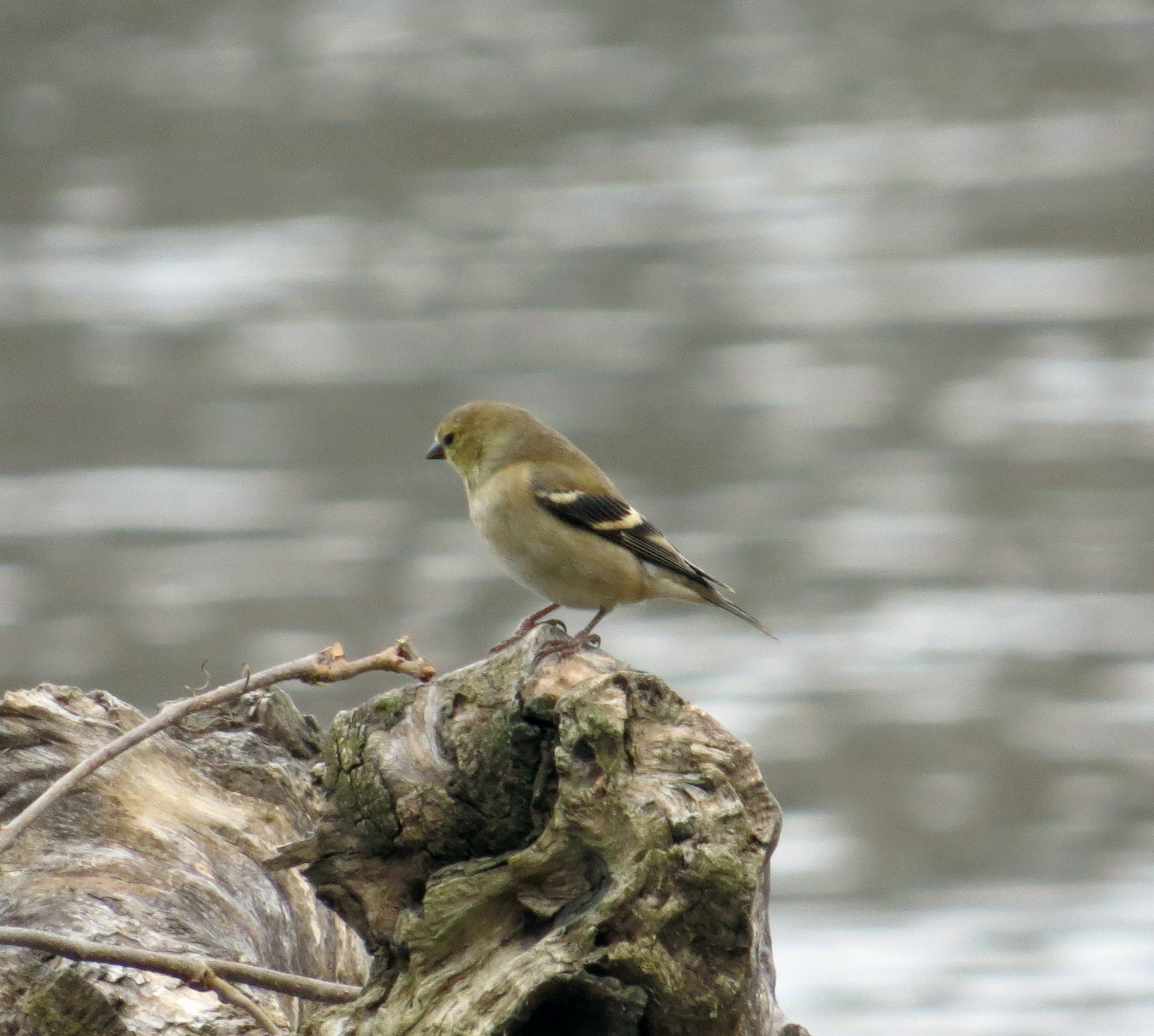
I didn’t even move from that spot this afternoon when I took this picture:

Could this be a female goldfinch in winter attire? It wasn't a very gold-finchy spot. Nice looking bird though.

Could this be a female goldfinch in winter attire? It wasn’t a very gold-finchy spot. Nice looking bird though.

This is a bird I am not expert on. It may be a female goldfinch in winter plumage. It was a nice picture though.

On second thought, as I look at it, perhaps it’s a warbler of some sort. I am also inexpert on warblers. But that head seems too round for a goldfinch. I’m not certain.

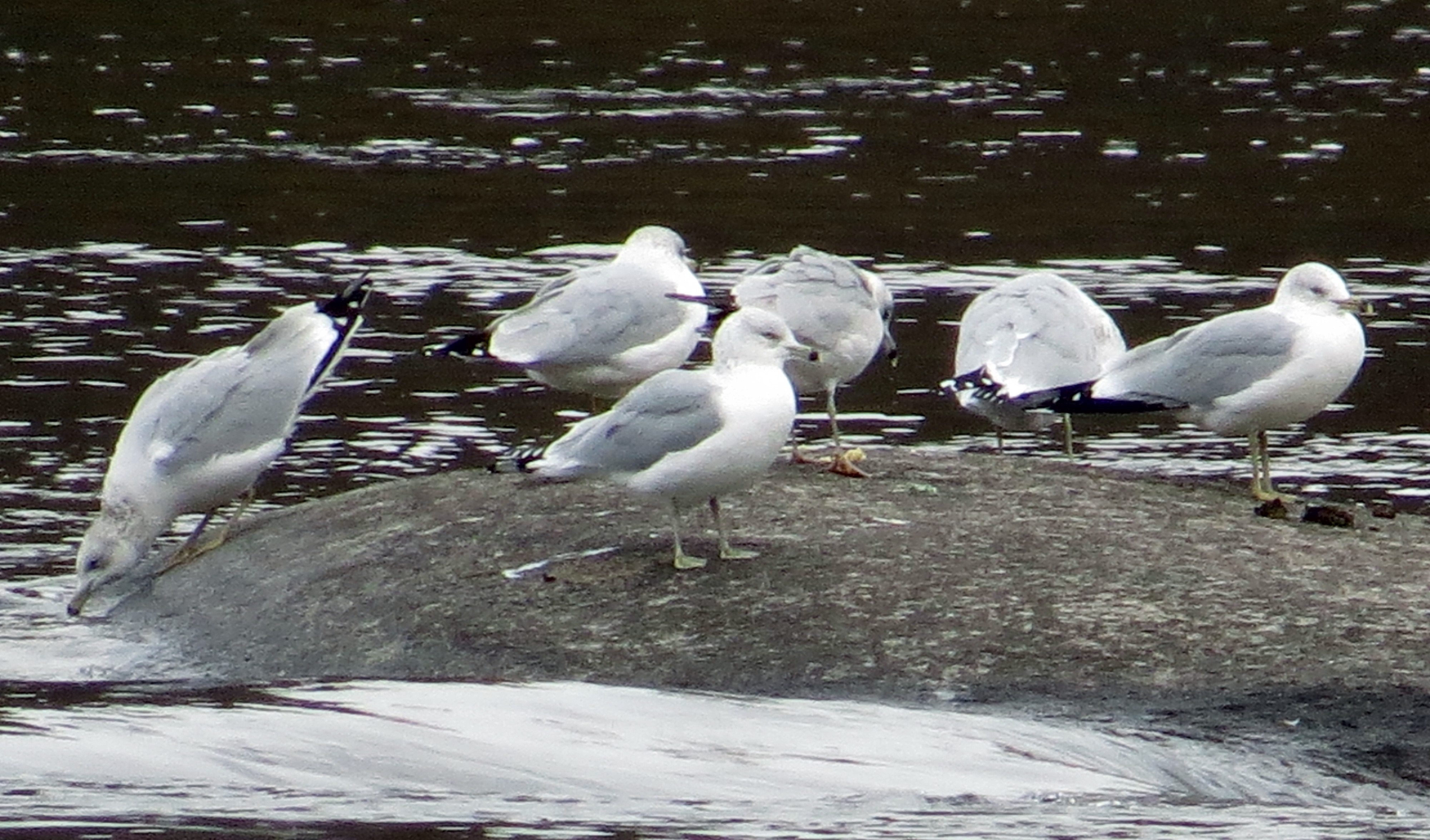
I’ve already noted (ad nauseam) the arrival of Buffleheads (Bucephala albeola) at Pony Pasture. They are a reliable harbinger of winter. For some reason, Ring-billed gulls (Larus delawarensis) are equally reliable. This little bunch is just the vanguard but soon there will be hundreds and hundreds. I see them a lot downtown too. If you click on that link about Ring-bills, you’ll read this:

“These are the gulls you’re most likely to see far away from coastal areas—in fact, most Ring-billed Gulls nest in the interior of the continent, near freshwater.” Here’s a little cluster of Ring-bills. Notice the one on the left getting a drink:

Cluster of Ring-billed gulls

Cluster of Ring-billed gulls

On the way back today we were on the trail leading up to Charlie’s Bridge. There’s a little old fence there and there were three does on the other side of it. They obviously knew the fence was there and just sauntered away about ten feet then just stood there in the woods. Mackey was going out of his mind:

Mackey tells those deer to KEEP MOVING. They ignored him.

Mackey tells those deer to KEEP MOVING. They ignored him.

I didn’t get any real fantastic pictures of the deer. But if you look at the picture below, you can see the tail of one deer very clearly. You can also see her eye, she’s looking to the left. Then look just to her right and another deer is standing there, facing away. I’m sure having Mackey barking his fool head off was not making it a relaxing afternoon.

Two deer tormenting Mackey and Turner

Two deer tormenting Mackey and Turner

Short post this week – possibly more next week. Meanwhile – have a great Thanksgiving! And a great week! All best,

Jay

Posted in Birds, Dogs, Fun, James River, Rivers, Smiles (including "dog smiles"!) | Tagged , , , , | 6 Comments

Stirring up a hornet’s nest

16 November, 2014      Stirring up a hornet’s nest


This post isn’t really about stirring up a hornet’s nest literally or figuratively. I took a gorgeous picture of a hornet’s nest near the river this week so what the heck. I haven’t seen one in many years, for whatever reason, and this one is a beauty. I’ll use it for my first picture:

Hornet's nest in a sweet gum tree

Hornet’s nest in a sweet gum tree

It was hanging in a Sweetgum tree (Liquidambar styraciflua) on the edge of Riverside Drive, a few minutes walk upstream from Pony Pasture. Sweetgum, if you’re interested, is in the top five deciduous trees at Pony Pasture and along that riverbank. The tree in that picture is easily identifiable as a Sweetgum by the spiny fruit (gum balls). The leaves on a Sweetgum tree are also very obvious but they’re difficult to see in that picture because it’s so late in the season.

I took a picture of a female Pileated Woodpecker (Dryocopus pileatus) while Evie and Turner and Mackey and I were hiking at the river this morning. We were nearly finished; you could almost see the car in the parking lot from there. Here she is:

Female Pileated Woodpecker

Female Pileated Woodpecker

I forgot at that time how to distinguish a male from a female, but it’s not that hard if you can get a close look. This image is more than sufficient. See how her eye is in that black line on her head? And just below that, a white line? Males are identical, including the red crest. But just below the white line, see another black line? In males, that black line has a red stripe in it. It’s quite obvious. If you click on the link in the paragraph above (Pileated Woodpecker), you can see it there. I’ll get a male sooner or later.


This may give you an idea of why I shoot a million pictures and even though I put my best ones on this blog, they’re not always great. I keep my camera on autofocus because normally that yields the best results. But if there’s something between me and my “target” (in this case, the woodpecker), the camera will focus on the first thing. In this case, a stick. Notice the stick in crisp focus, the woodpecker behind it blurred:

Stick in good focus, blurred woodpecker behind it

Stick in good focus, blurred woodpecker behind it

Such is the life of a hack nature-photographer. I have fun, anyway.


I learned while researching this that woodpeckers are not “passerines.” If you’ve read this blog much, you may have learned that around half of birds are passerines. I was looking at her feet; feet are a distinguishing feature of passerines. You can really see her feet in that picture; it’s a little disorienting to see they’re at around the level of her beak. Anyway, woodpeckers are “piciformes,” which are not vastly different from passerines. An interesting feature of piciformes (this I learned today) is they have very stiff tail feathers, which provide additional support while they climb tree trunks. Natural selection is so cool.


I got another picture of a female Pileated Woodpecker in April. It was near that spot, chances are it was the same one. I hope to get a male soon. Here’s the post from April. The picture is a bit better but far from great: Only the beginning


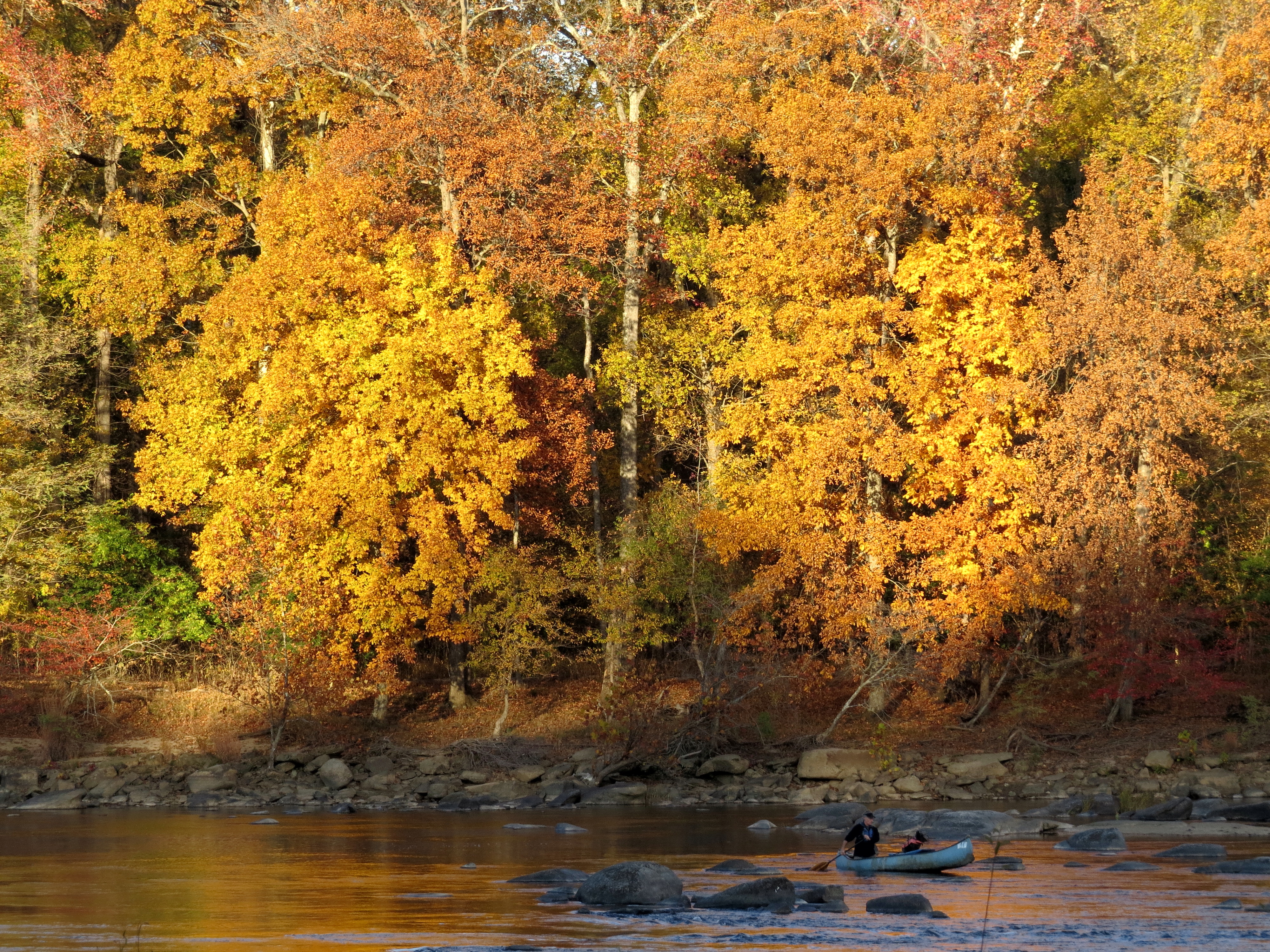
I think we’re going to get a lot of rain tomorrow and some wind then bitter cold Tuesday, so a lot of leaves will go away. The river was pretty earlier this week at the Z-dam:

It was pretty last Monday afternoon - I think tomorrow perhaps not so much

It was pretty last Monday afternoon – I think tomorrow perhaps not so much

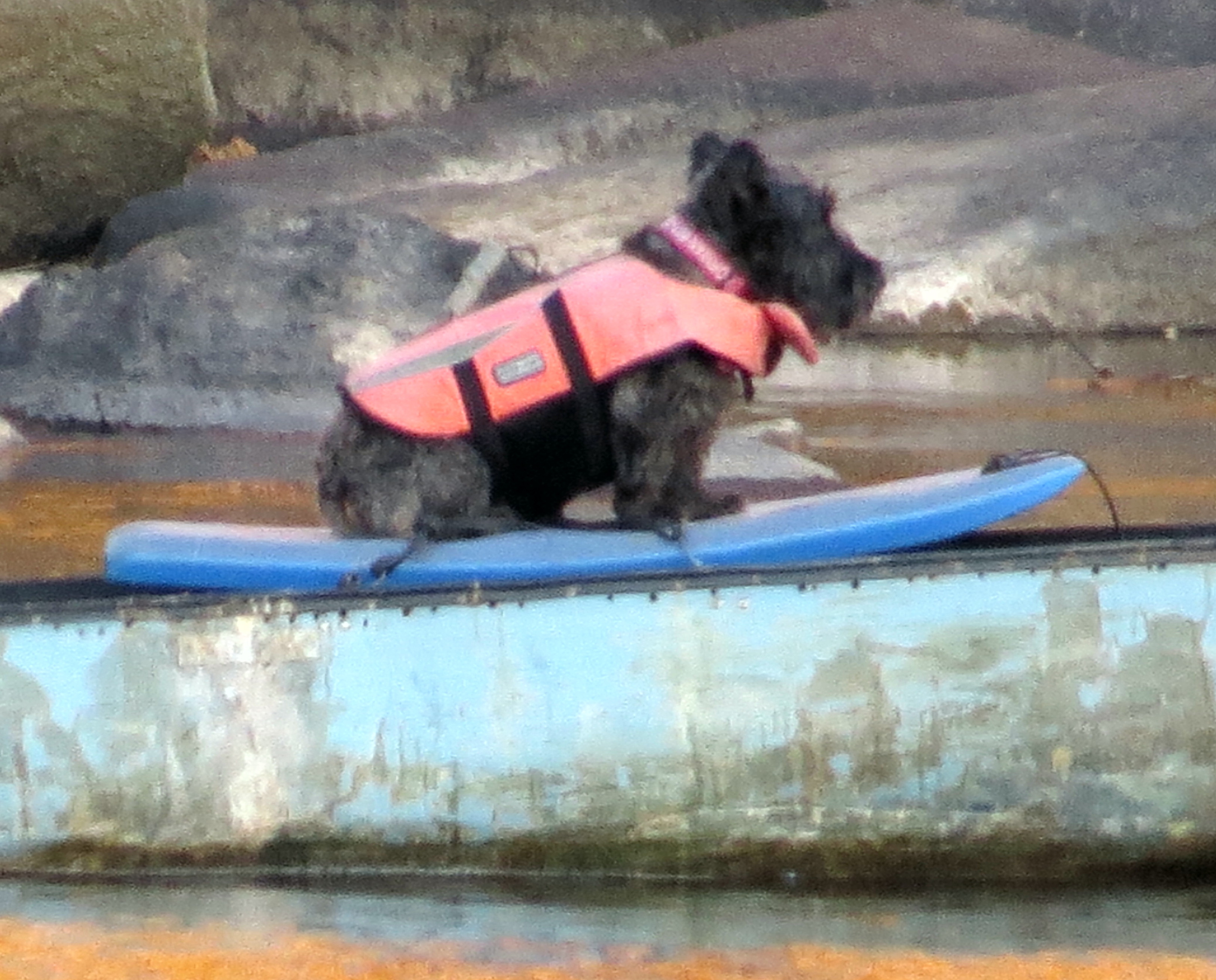
See that guy in the lower right paddling with his little dog? They’d been hanging out in the sun on Williams Island until it began to drop. They headed back for Pony Pasture. Check out the dog in its little life jacket on the boogie board on the canoe:

There is a lot of fun going on there. Paddling your canoe on the river with your dog. Fun way to spend an autumn afternoon.

There is a lot of fun going on there. Paddling your canoe on the river with your dog. Fun way to spend an autumn afternoon.

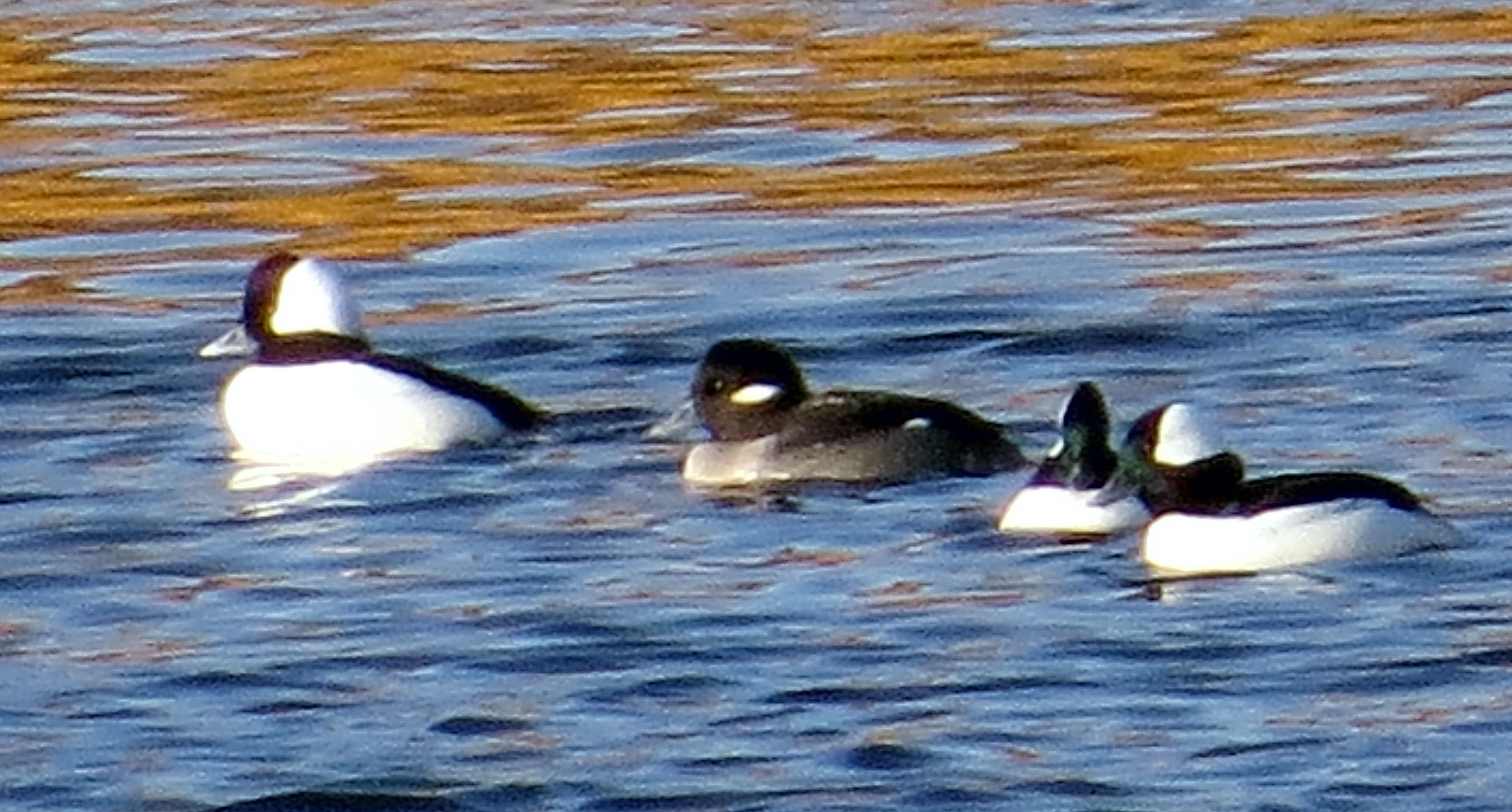
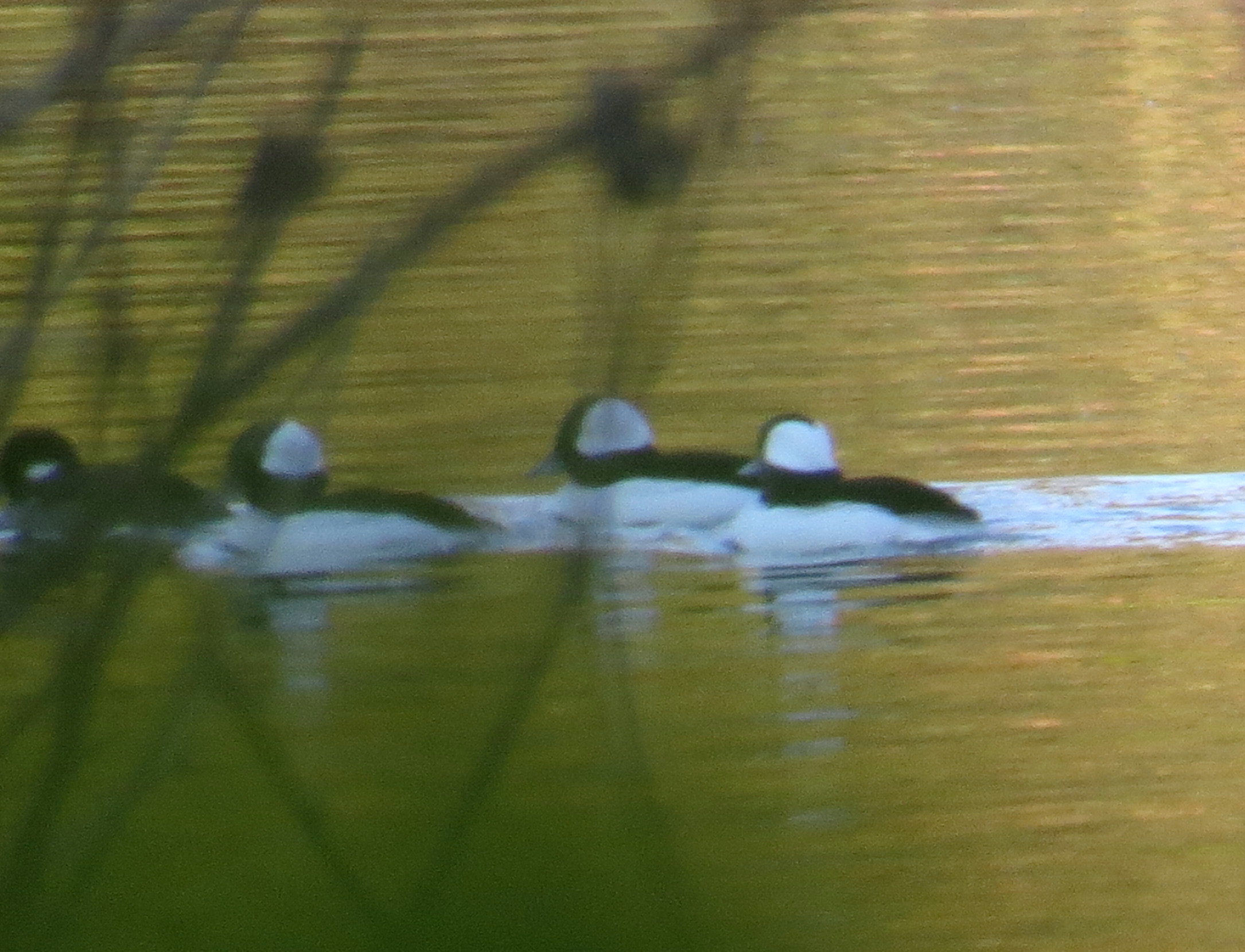
Also I got a little better shot of some buffleheads, although I have a long way to go before a great one. But here is one female hanging out with three males:

1 female (with Nike Swoosh) and three male Buffleheads

1 female (with Nike Swoosh) and three male Buffleheads

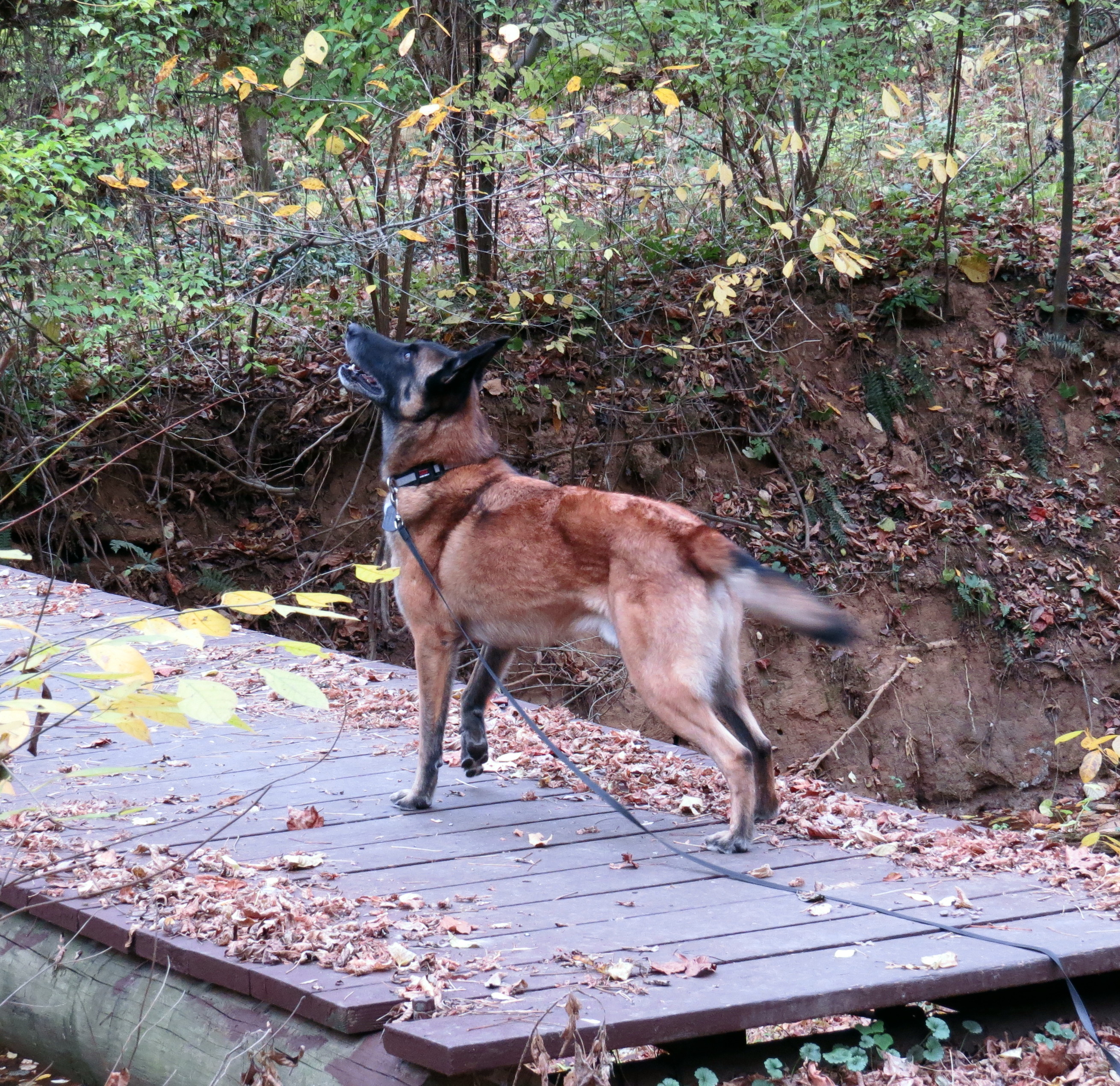
Also Turner and Mackey and I squeezed in a quick hike Thursday. I was trying to get a picture of a Red-shouldered Hawk (Buteo lineatus) as we made our way toward Charlie’s Bridge. Turner bolted out onto the bridge and a squirrel bolted up a tree. Here’s Turner looking up at the squirrel:

Turner making sure the squirrel doesn't come down

Turner making sure the squirrel doesn’t come down

Here’s the squirrel, wishing it was in a different area code:

This is how squirrels look when they're praying

This is how squirrels look when they’re praying

Here is the hawk, waiting above:

This squirrel is praying. This is a bird of prey.

The squirrel is praying. This is a bird of prey.

Kim ID’d the hawk for me. She is well informed about birds of prey and even knows a thing or two about falconry. She says squirrels are a bit too formidable for Red-shouldered Hawks. But she sent me a link (since no one could possibly make this stuff up) to a blog post about bison leather chaps for hawks who hunt squirrels. So the squirrels don’t scratch the hawk’s legs. I’m not even kidding. Check this out: Redesigned Bison Squirrel Chaps.
 

Since Redesigned Bison Squirrel Chaps are untoppable, I will close this post here. But before I do, my first slow motion video. Stay tuned, I’ve never tried this, I hope it will work. It’s Turner bolting out the back door hoping to get a squirrel before it gets to a tree. You can’t see the squirrel, only Turner. It’s cool to look at if it works; it only lasts 18 seconds:

Have a great week,

Jay


Posted in Birds, Dogs, Fun, James River, People, Rivers, Smiles (including "dog smiles"!), squirrels | Tagged , , , , , , , , , | 1 Comment

Greenspace

9 November, 2014           Greenspace

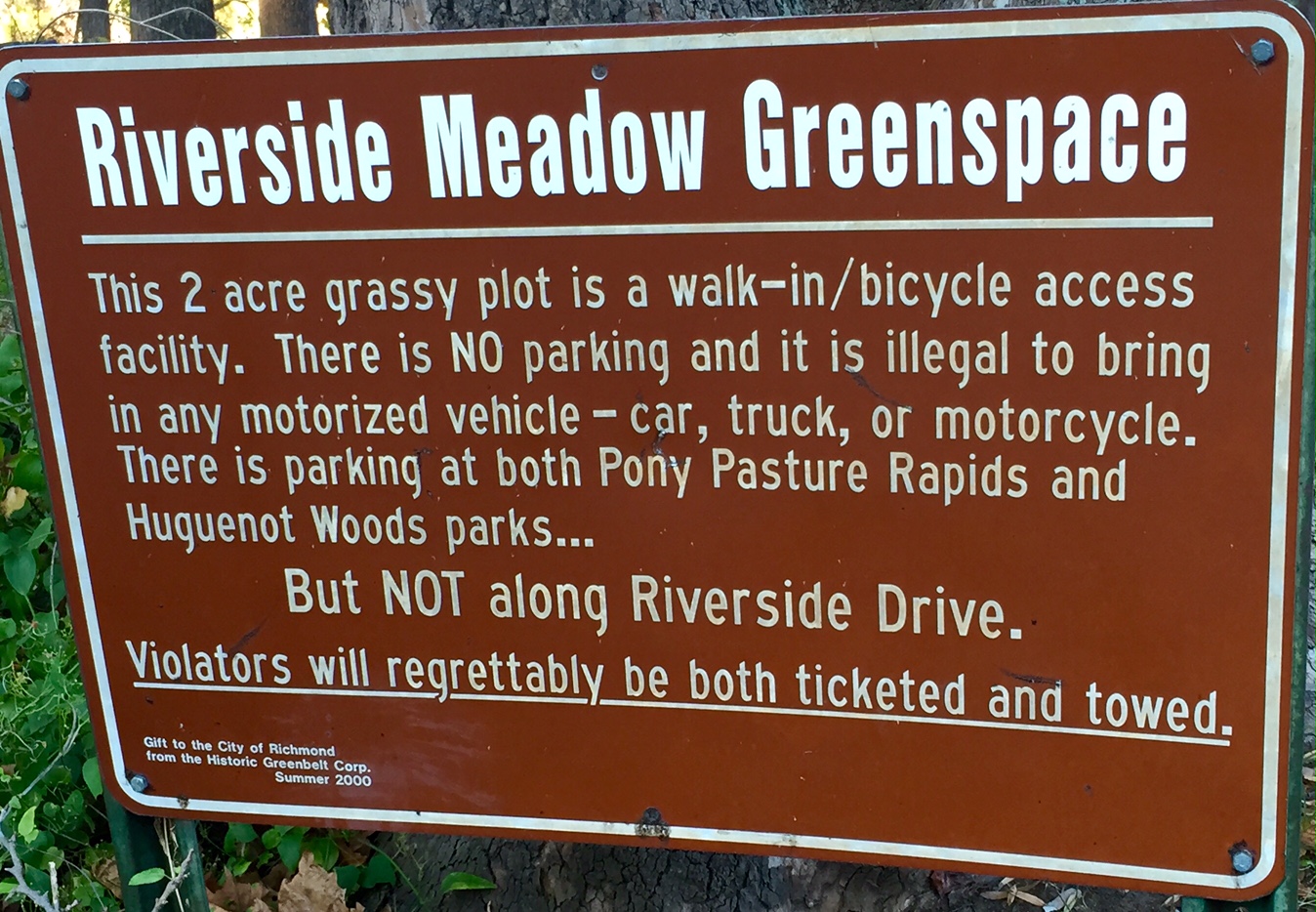
Isn’t “greenspace” a pleasant sounding word? This is the sign at the river:

Riverside Meadow Greenspace - I like all three of those words.

Riverside Meadow Greenspace – I like all three of those words.

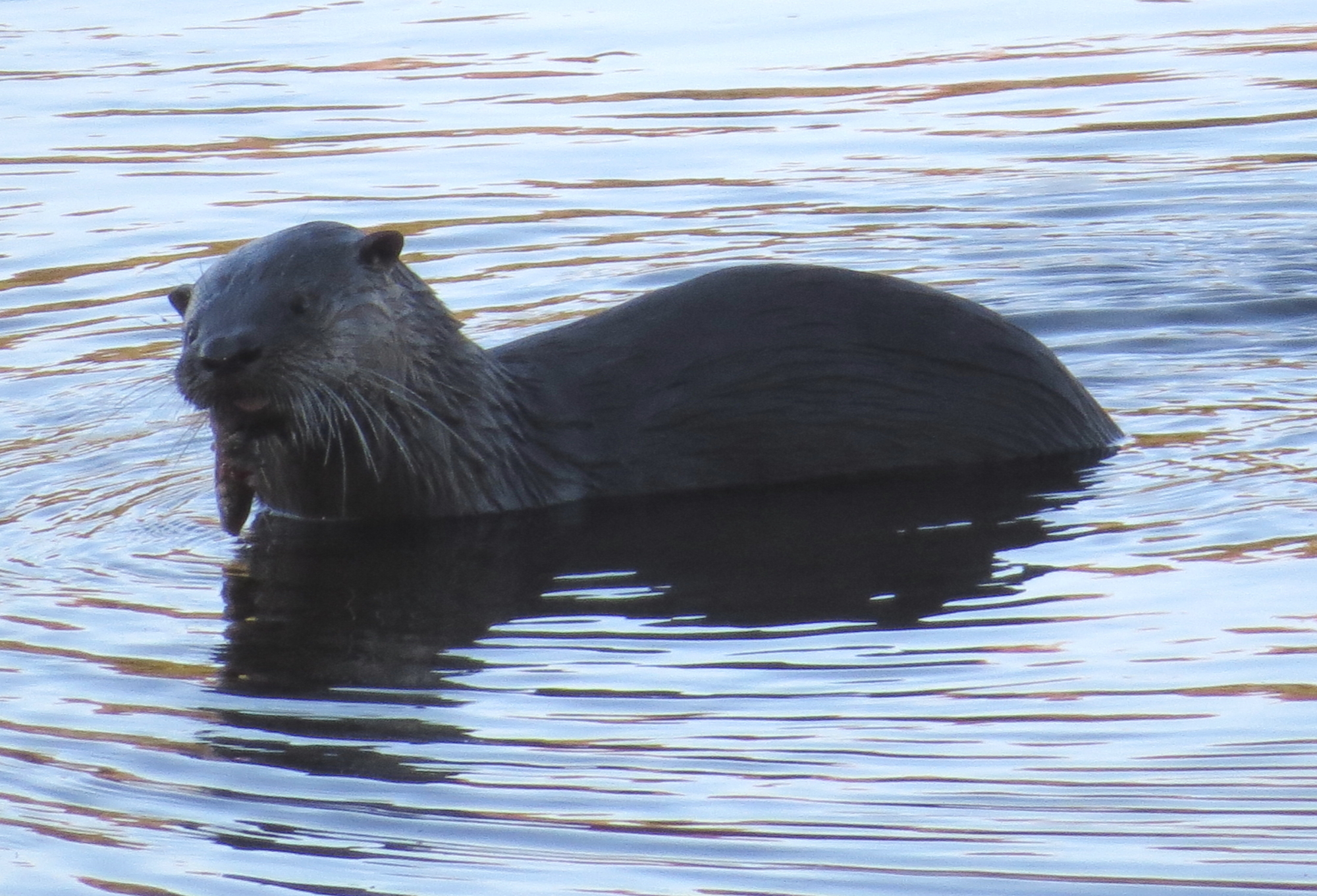
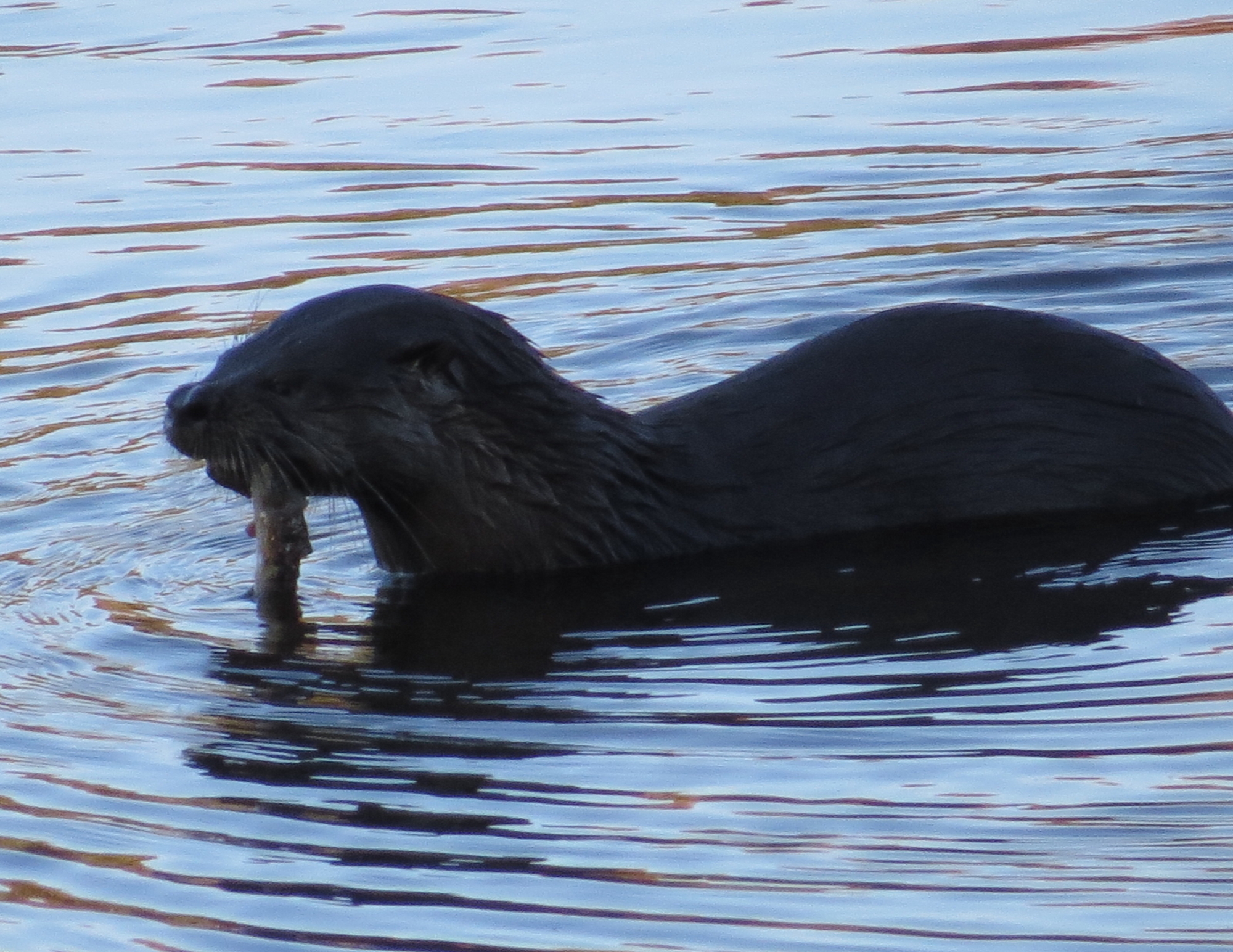
Ethan and I tried a new hike Monday afternoon and went upstream from Pony Pasture to the Riverside Meadow Greenspace. We hit the jackpot! I saw an unusual shape slip off a mid-river rock into the water. I asked Ethan to keep his eyes peeled and a few seconds later he pointed – look what popped up!:

We saw a North American River Otter! Inside Richmond city limits!

We saw a North American River Otter! Inside Richmond city limits!

It’s a North American River Otter (Lontra canadensis laxatina)! If you’ve followed this blog for a while, you can guess how many thousands of hours I’ve spent on that riverbank with a camera. And never saw an otter before! Amazing! The above link is to a National Geographic Magazine blurb about river otters. Here’s a slightly different image:

Same otter, different angle. I'm not sure what's in its mouth or what its gender is.

Same otter, different angle. I’m not sure what’s in its mouth or what its gender is.

And here’s a link to the Virginia Department of Game and Inland Fisheries (VDGIF) page about Northern river otters.

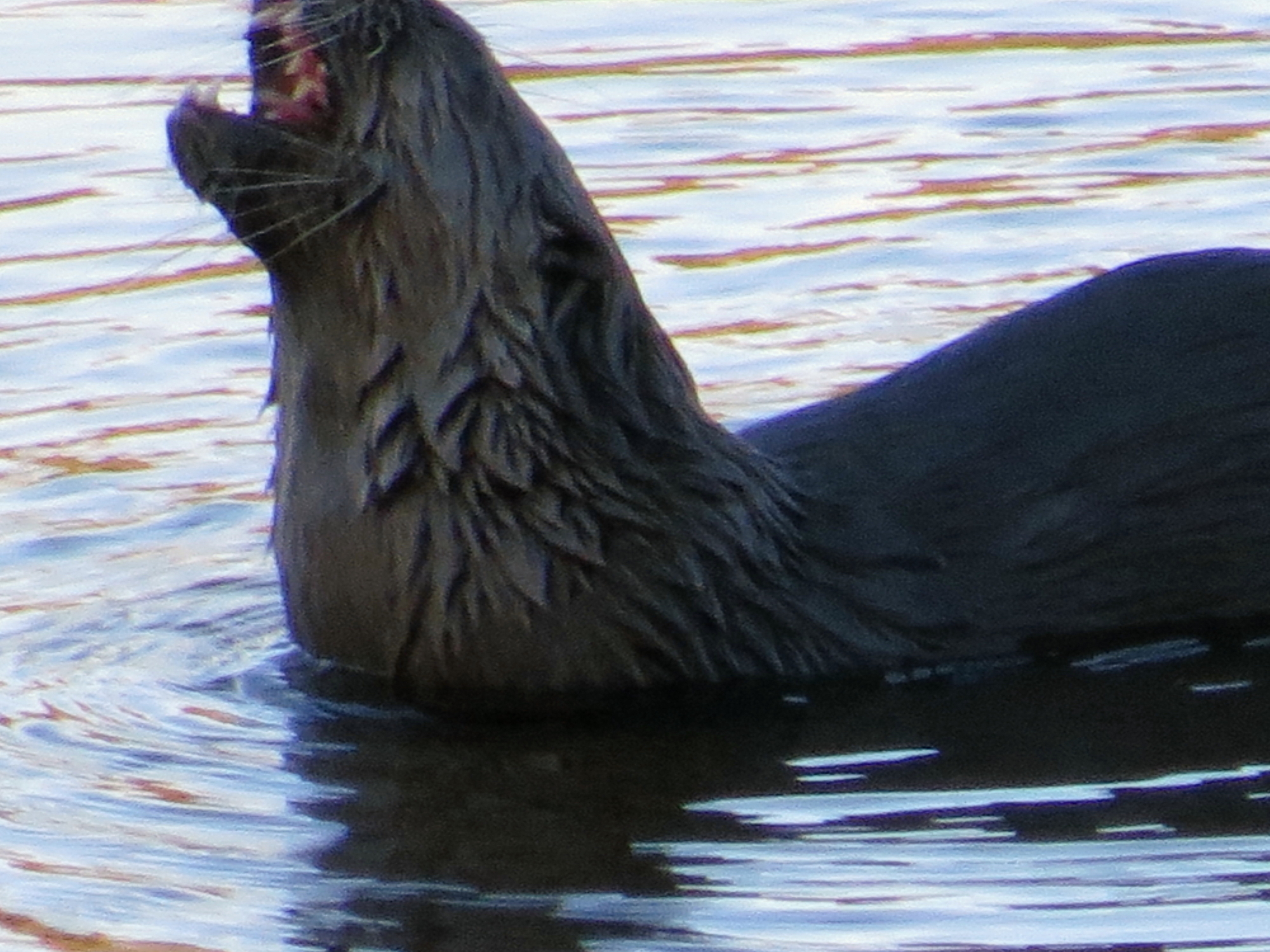
I suppose if you’d asked me before that day if I knew that river otters were carnivores I would have said yes. But when I think of otters I also think of beavers and muskrats so I don’t automatically default to carnivore. Then I took this picture. I will never forget that an otter is a carnivore:

Look at those TEETH!

Look at those TEETH!

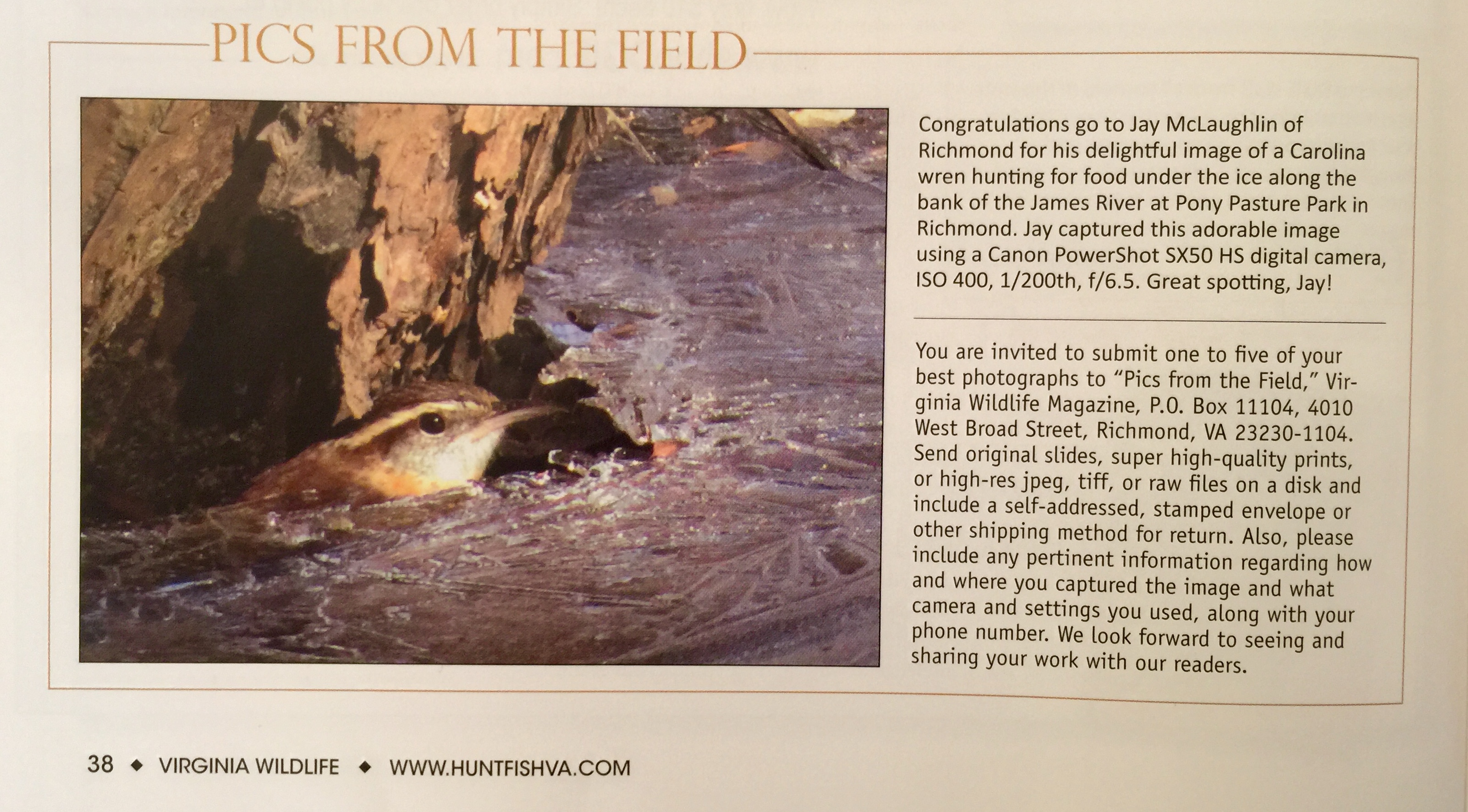
In other exciting (to me) wildlife photography news, I’M A PUBLISHED PHOTOGRAPHER! Thanks to Virginia Wildlife Magazine, a longtime favorite of our entire family. It’s one of the best magazine deals going – 40+ pages six times/year with NO ADS and beautiful photography and writing. It’s put out by the Virginia Department of Game and Inland Fisheries. I was fortunate to take this picture one cold February morning earlier this year at Pony Pasture (PS read the caption! It has my name in it!):

Carolina Wren at Pony Pasture - my first published photograph! Yay! Thank you Virginia Wildlife and VDGIF!

Carolina Wren at Pony Pasture – my first published photograph! Yay! Thank you Virginia Wildlife and VDGIF!

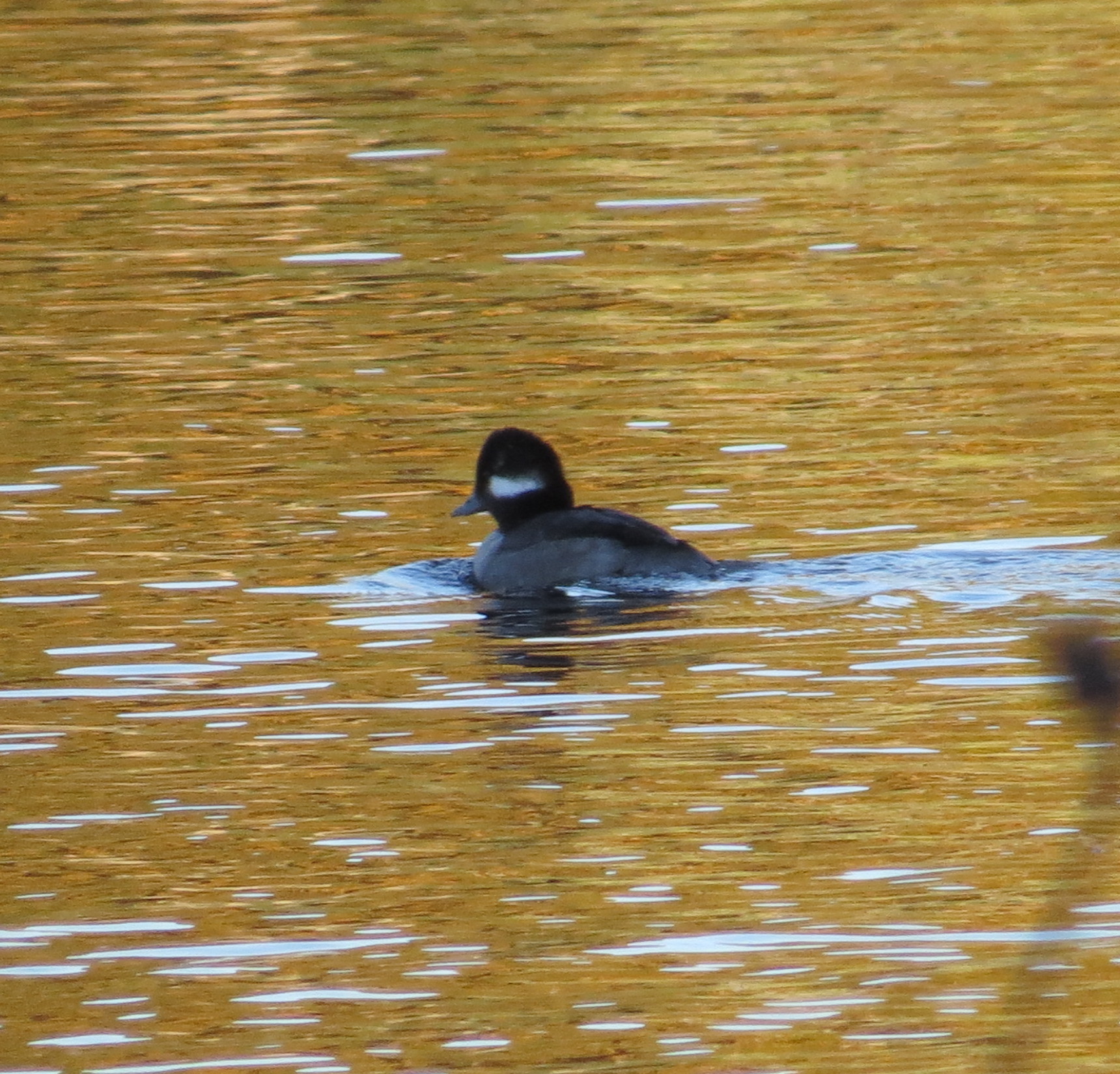
When Ethan and I saw the otter Monday afternoon we also saw our first buffleheads. We’ll get better pictures soon as more come south, but I’m always happy to see the first birds each autumn. We saw this bunch on November 3, that’s about their normal arrival time. Here’s an attractive female:
Female bufflehead (I think this is where Nike got the idea for their "swoosh" logo).

Female bufflehead (I think this is where Nike got the idea for their “swoosh” logo).

And a handsome male:

The males are attractive too. These guys are a bit shy. Later in the season I'll get better pictures. But buffleheads always stay out far where they can dive deep.

The males are attractive too. These guys are a bit shy. Later in the season I’ll get better pictures. But buffleheads always stay out far where they can dive deep.

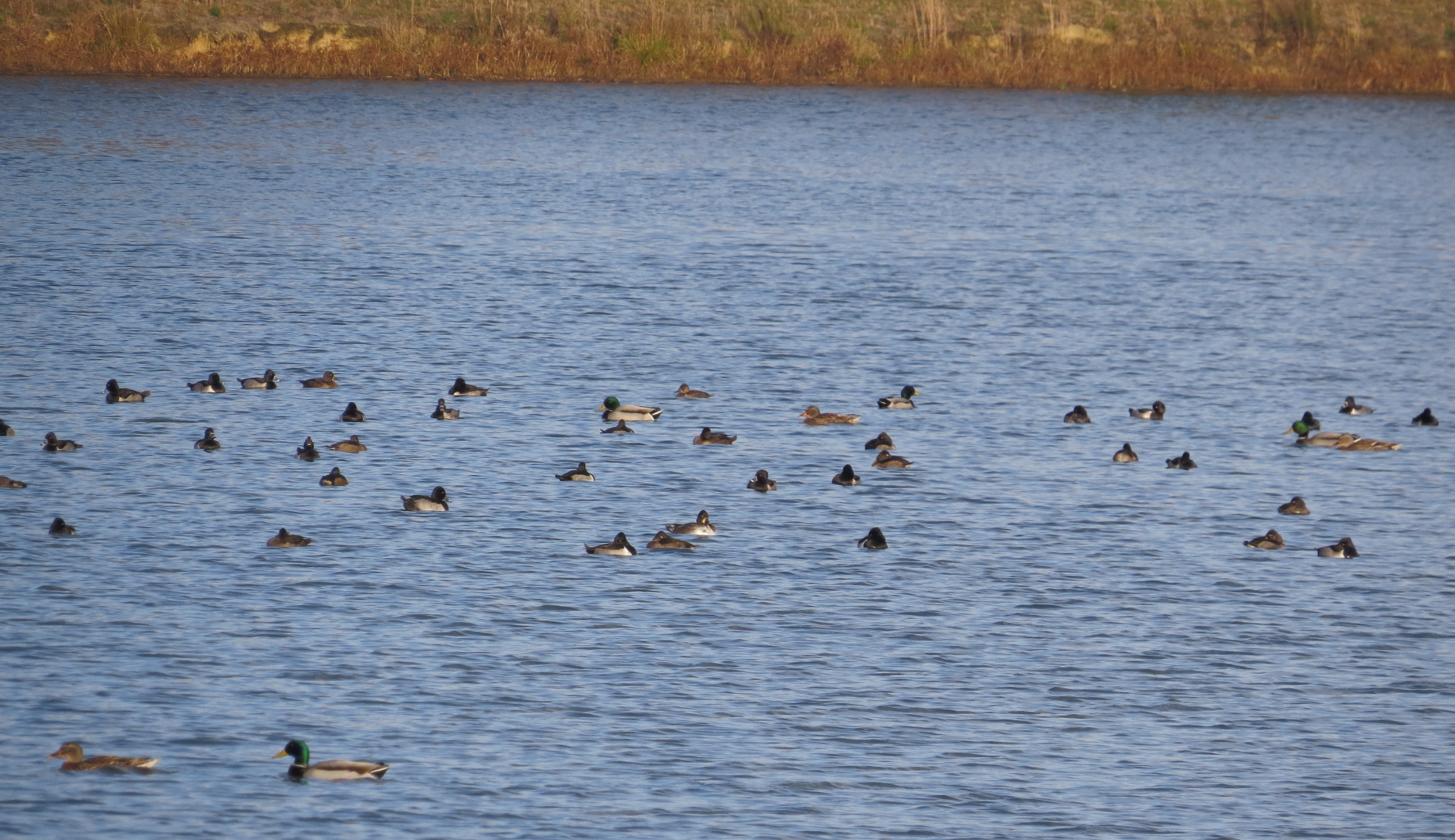
Another local body of water that (as I’ve mentioned) I visit occasionally is West Creek. As I’ve also mentioned, nearly every significant source in central Virginia has Canada Geese and mallards on it year round. That is true at West Creek. But yesterday when I went out to ride there was a huge flock of other ducks. I always ride before I get distracted with photography. The flock was still there when I finished. I have no talent for estimating these things. And I couldn’t zoom out far enough to catch the entire flock in one image. But if someone told me this was three hundred ducks, I wouldn’t argue. Look closely just below the shoreline. They’re so far away they look like flakes of pepper:
They're so far away they look like flakes of pepper

They’re so far away they look like flakes of pepper

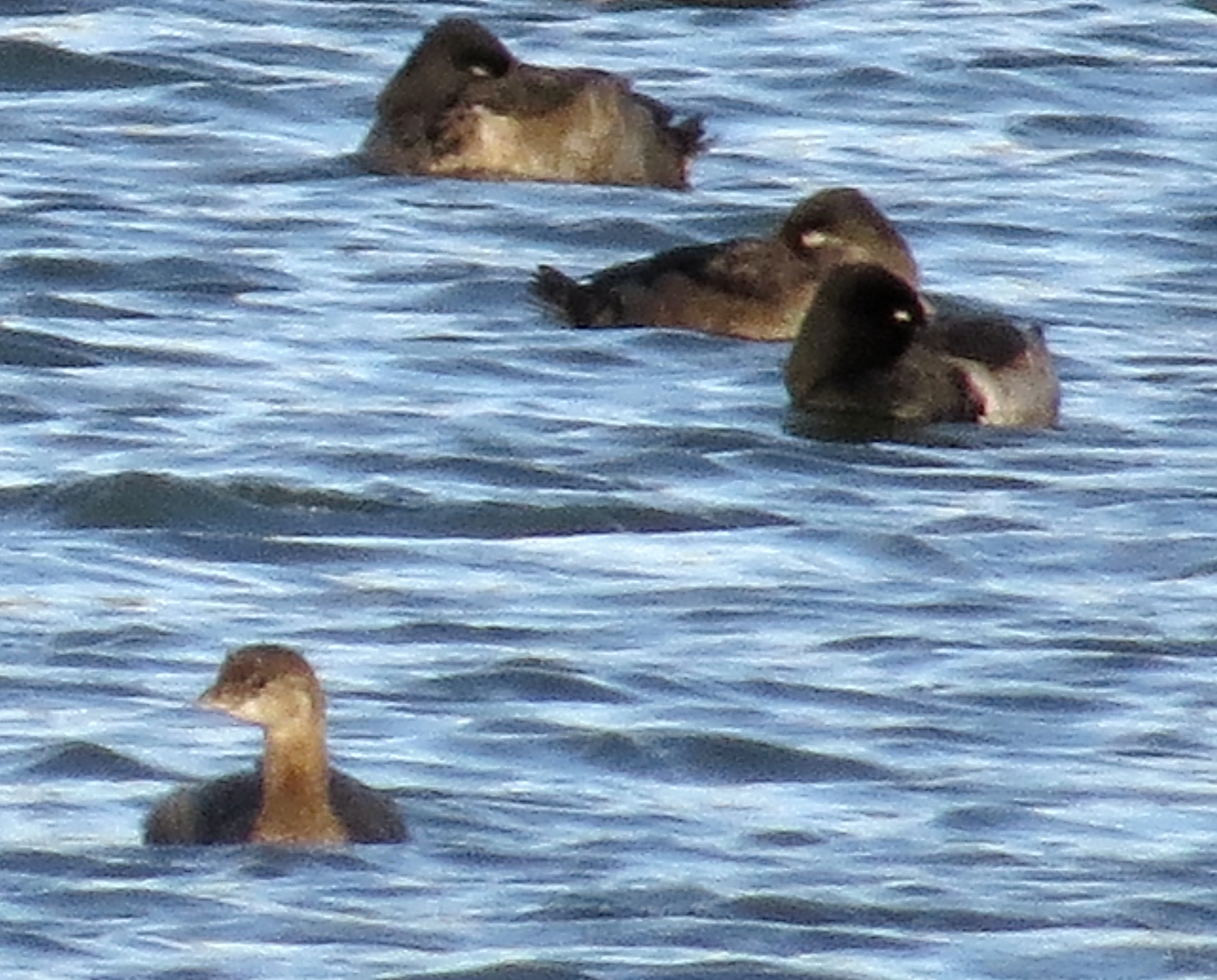
This is zoomed in slightly. You’ll notice a pair of mallards in the foreground and a few more inside the flock. If you look closely, the green heads on the males are a dead giveaway. But this flock is at least 85% Ring-necked ducks (Aythya collaris):

From this distance you can make out a bit more detail

From this distance you can make out a bit more detail

I see Ring-necks very occasionally at Pony Pasture, but I think the most I’ve ever seen at once is three. Maybe still water is better. Or they like the marsh behind West Creek. This group was really far away (for my camera) and the light was on a low angle. So regrettably the closeups are not crisp. But they’re identifiable.


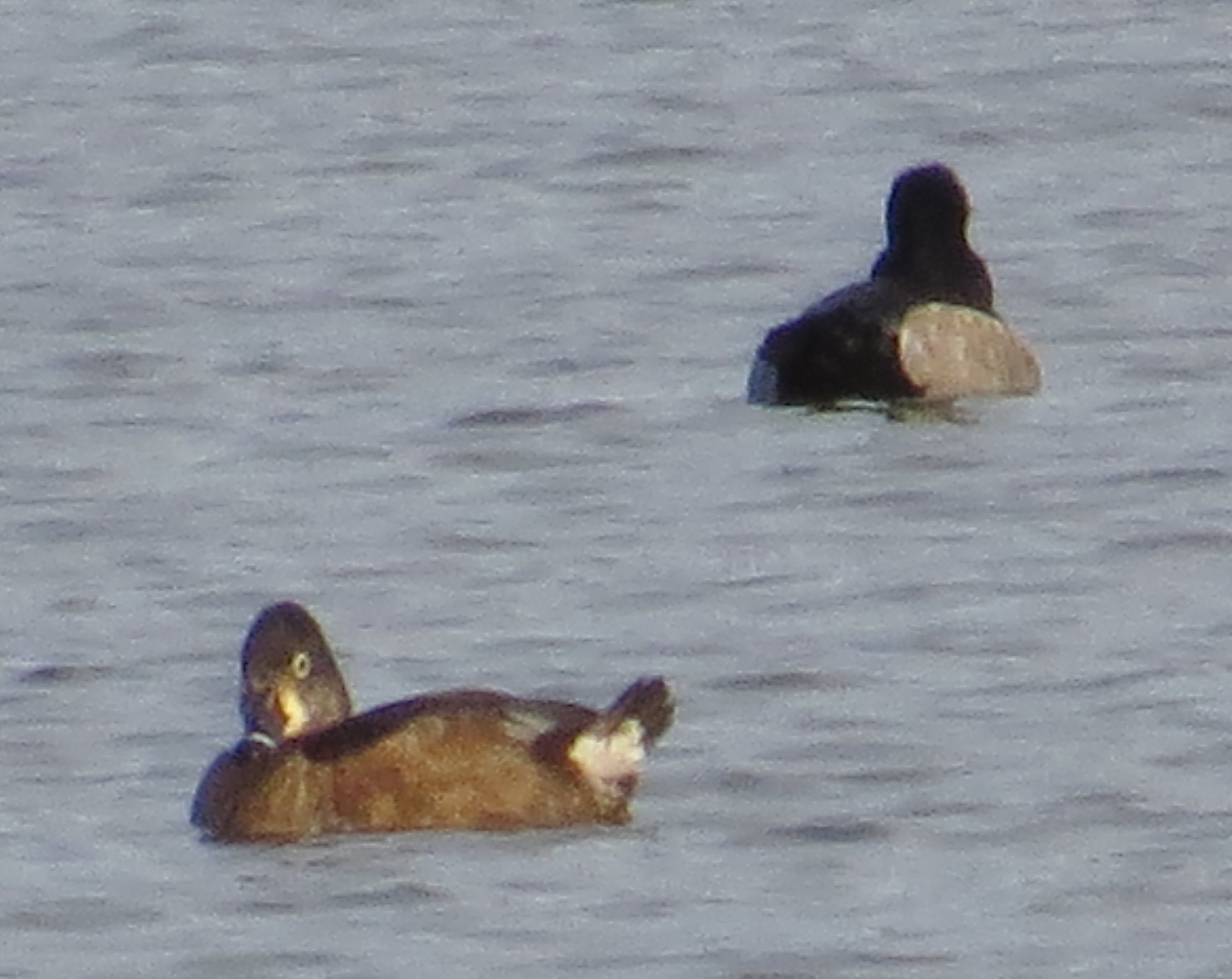
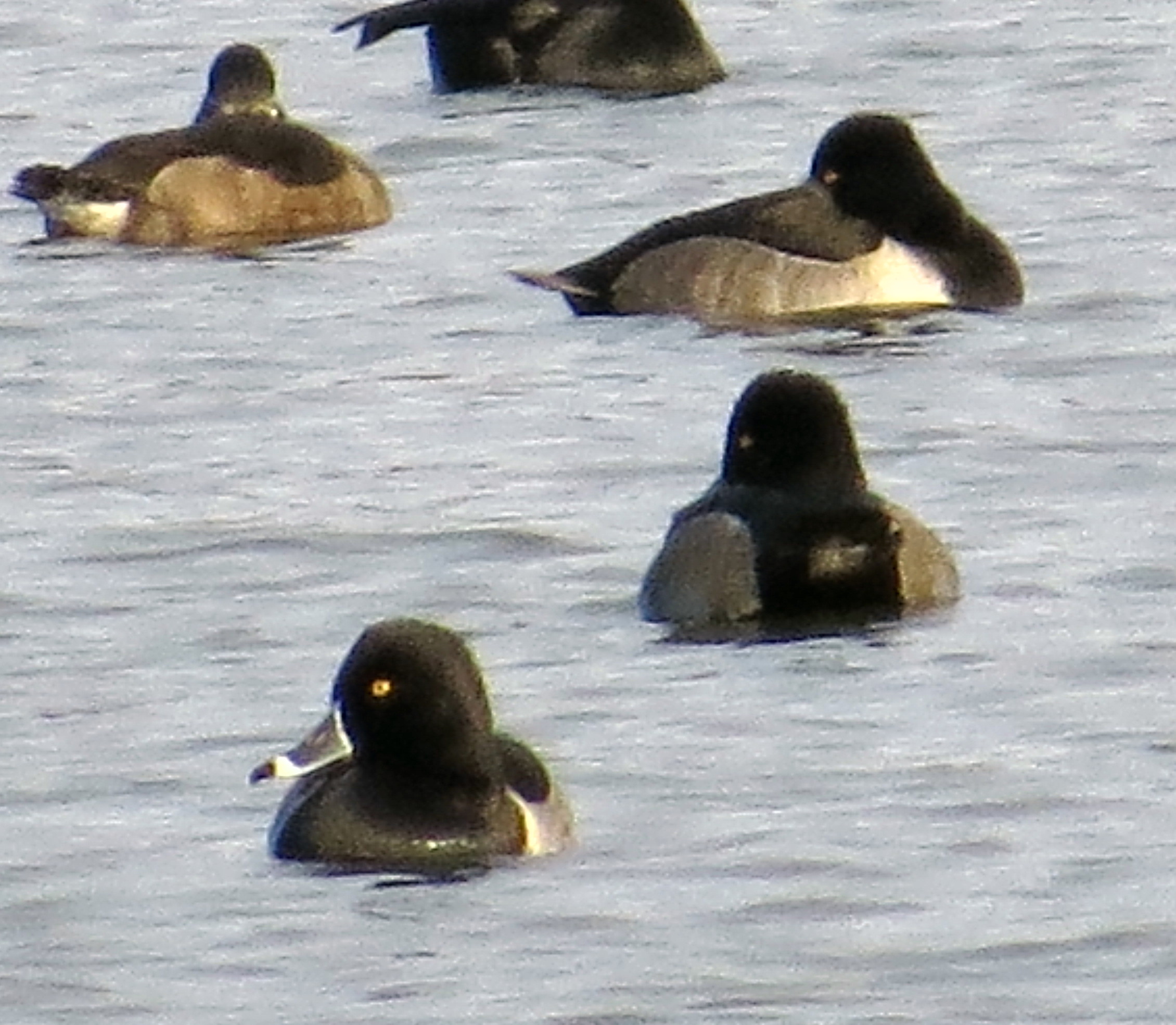
Here is a female Ring-neck from that flock (lower left):

Ringneck female

Ring-neck female

And here is a male:

Ring-necked male

Ring-necked male

This happens to me when I’m shooting big flocks from a long distance. I’ll get home and look at the pictures and find something I didn’t know was out there. See the duck in the lower left? I have no idea. It’s not a Ring-neck and not a mallard. Any guesses are welcome:

Oddball

Oddball

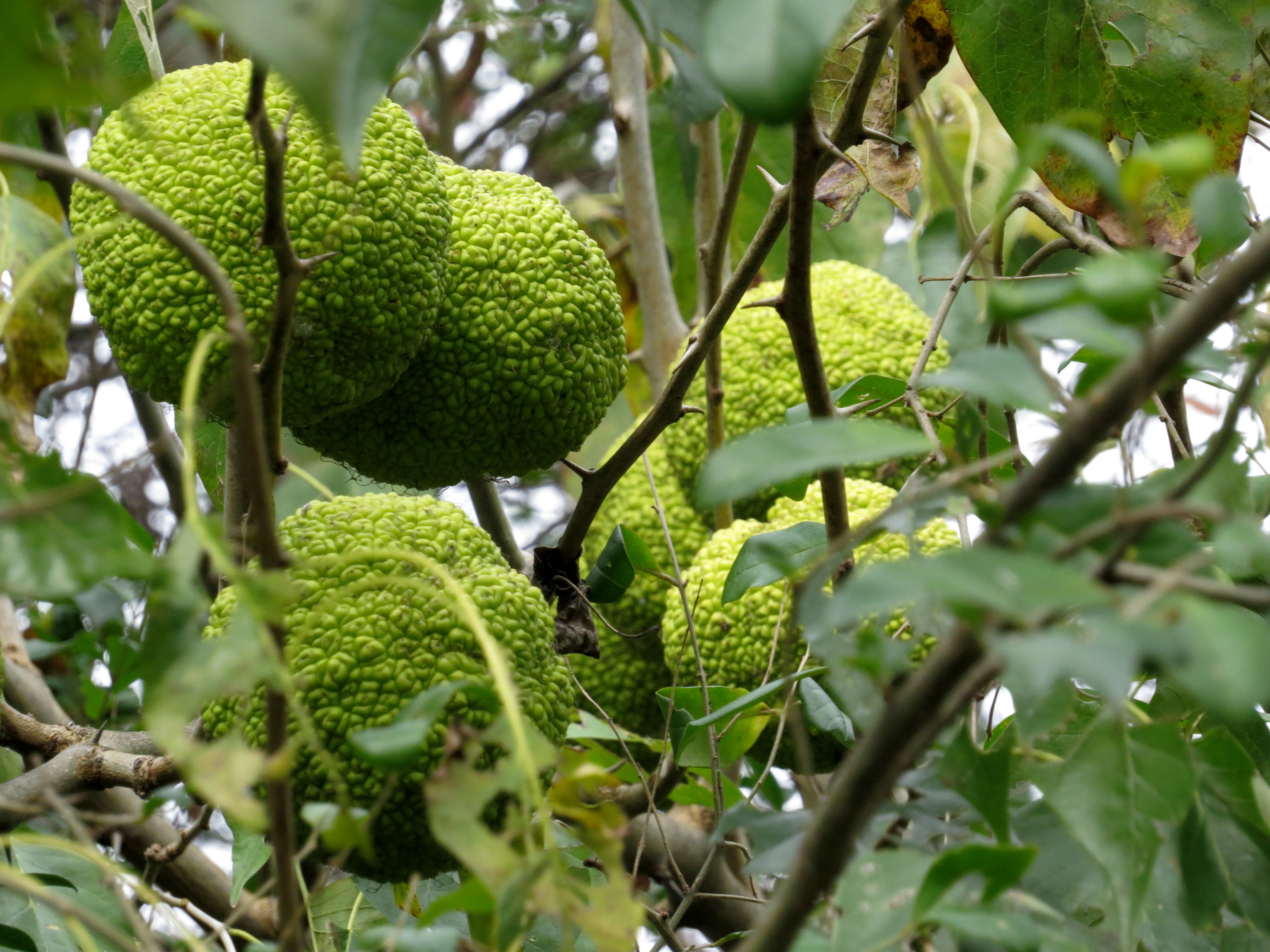
I think (no promises) that this will be my last post about Osage Oranges for 2014. But I got a couple more decent images on Wednesday. From what I’ve read, farmers in the midwest used them as natural fences. They were dense and they spread easily. Plus they had these major league thorns which if you’re going to have a natural fence, why not make it natural barbed wire:

Remember the teeth on that otter? Check out the thorns on this Osage Orange bush/tree.

Remember the teeth on that otter?Get a close look at the thorns on this Osage Orange bush/tree.

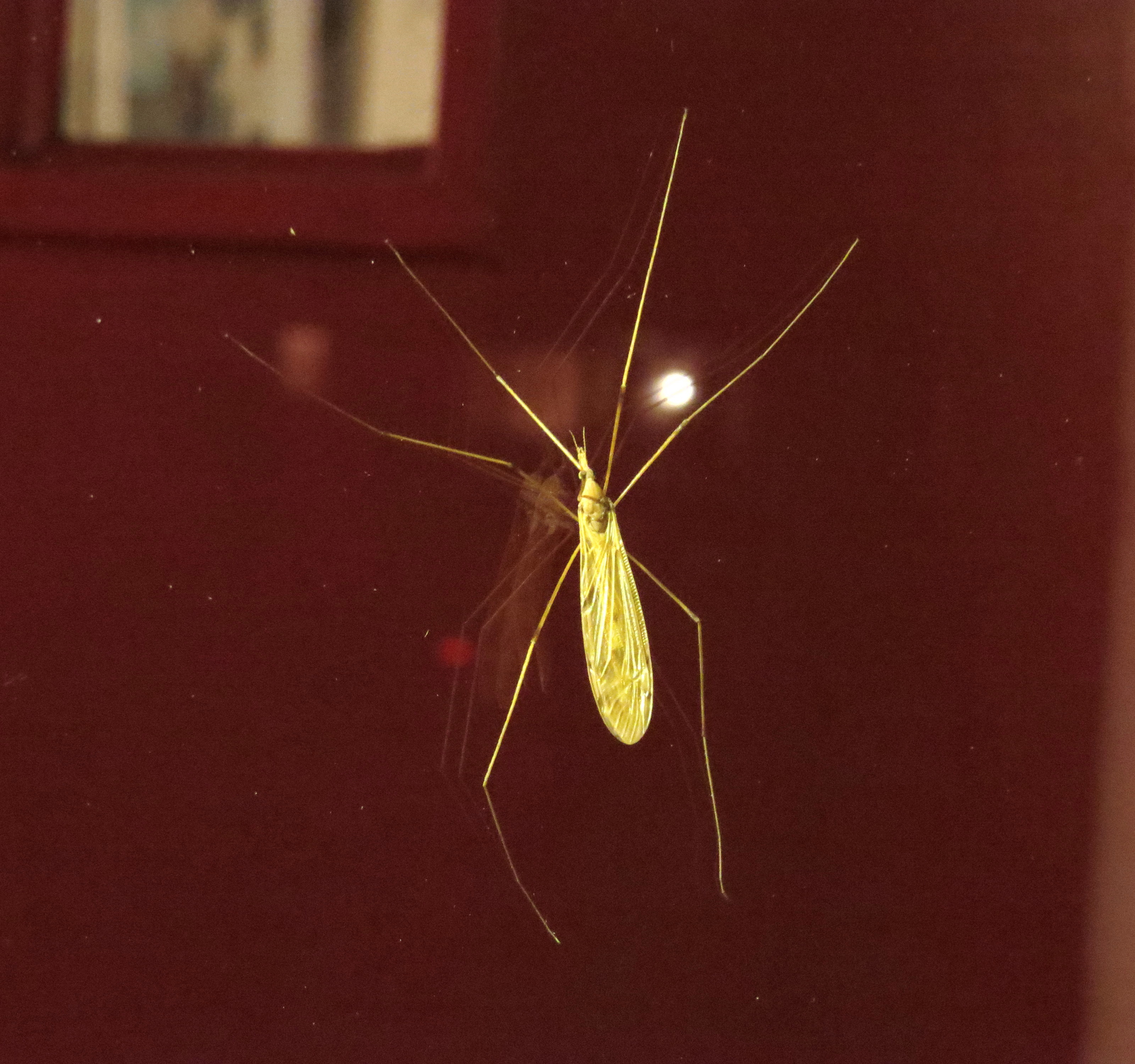
And I have another unidentified insect. I took this picture on my front door Thursday evening as I was leaving to walk the dogs. I haven’t sent it to bugguide.net for identification but I believe it’s a crane fly. Maybe I’ll find out and let you know in a later post. Speaking of that – a brief digression – I posted a spider picture on my October 19, 2014 blog post “There’s an echo in here.” I did not identify it then but sent it to bugguide.net for identification. They replied swiftly that it was a “Marbled Orbweaver” (Araneus marmoreus). This is one of the coolest things about the whole internet – you can not know something, and in just a few minutes you can know it. More concisely, you can move from ignorant to educated in a few keystrokes. That is priceless. Anyway, I’m still ignorant about this one. If I make the effort to become educated, I’ll share it with you. Here is the insect:

Crane fly of some sort.

Crane fly of some sort.

I think we’re going to get a hard frost this week then it’s no more insects until spring.

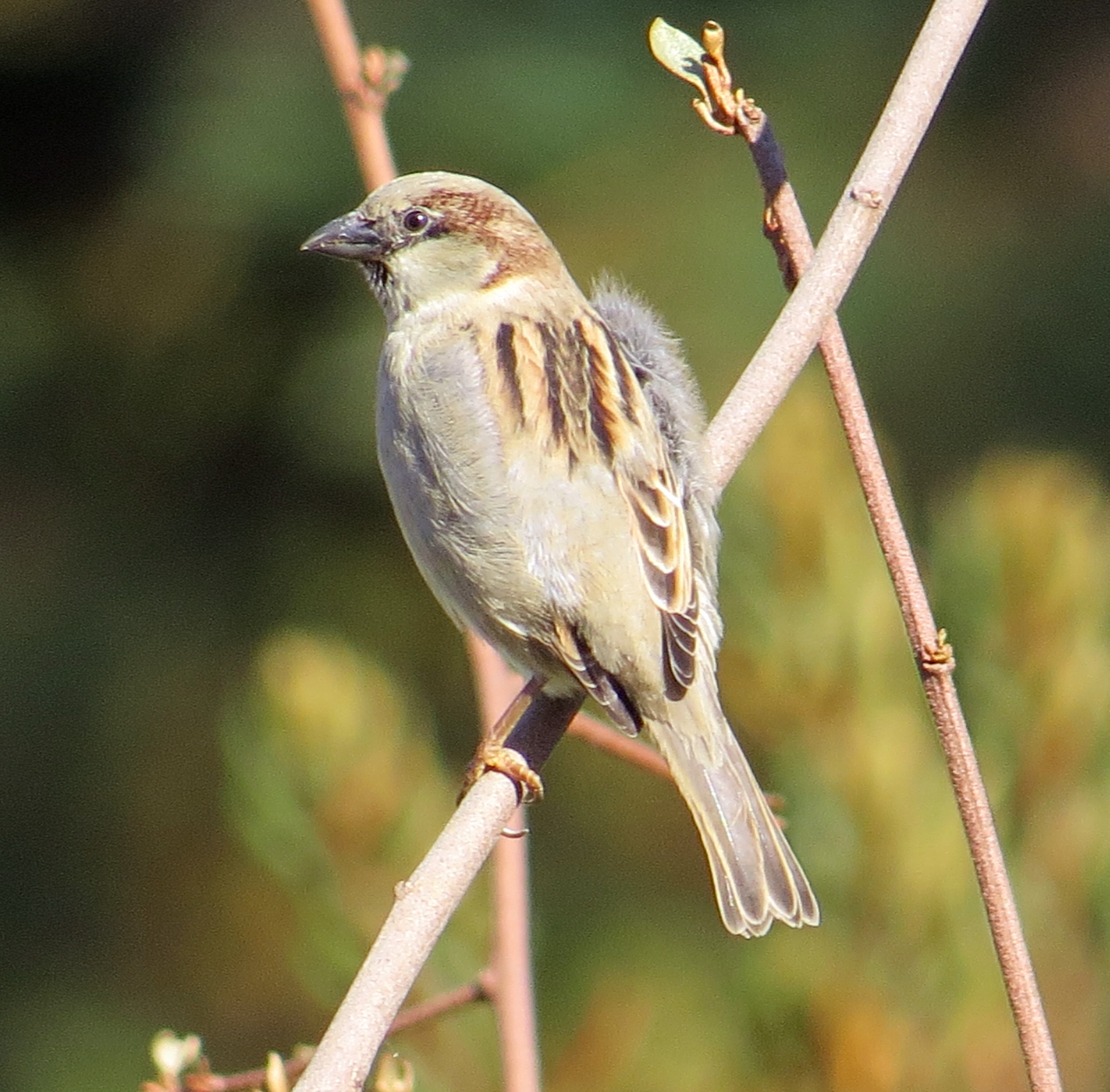
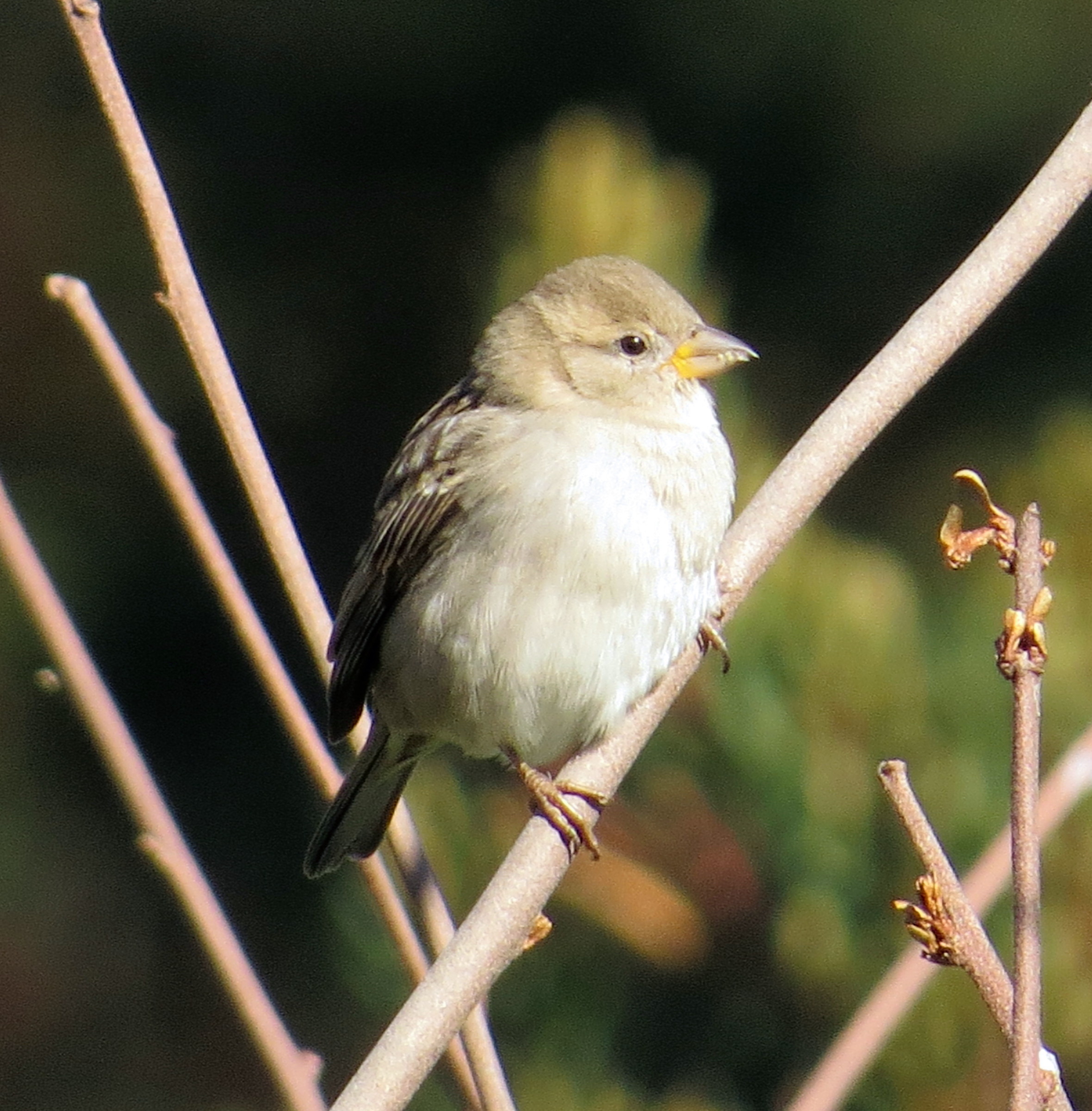
I’ll close with pictures of two sparrows (perhaps finches) warming up in the sun Friday morning at the Y:

One bird warming up in the morning sun

One bird warming up in the morning sun

Another bird warming up. See the toes?

Another bird warming up. See the toes?

Perhaps you are uncurious about this. But I’m gradually moving from ignorant to educated about matters involving birds. One matter I’m learning about is that roughly half of all birds are “passerines.” Both of those birds are passerines. Passerines have special feet for perching, and you can see them in those pictures. All passerines are distinguished by their four toes. The first one – I suspect it’s analogous to our thumb – goes toward the back on a perch and the other three to the front. Woodpeckers are not passerines, neither are ducks, hawks, gulls, herons, etc. But most songbirds are.


It’s possible I’ve mentioned this in the past, but the reality is coming closer. I’m going to add (soon) a link at the top of this page called “ppff.” Which stands for “Pony Pasture Flora and Fauna.” Because as you’ve perhaps seen I’m amassing a nice collection of pictures from Pony Pasture. And each time I “capture” something new I learn a lot about it. The northern river otter this week is a perfect example. Osage oranges too. I’ll compile them a little at a time.

Meanwhile, I hope you enjoy this post and I hope you come back often! Have a great week,

Jay

Posted in Birds, Fun, James River, Rivers | Tagged , , , , , , , , , , | 7 Comments